Who Is Cazú Zegers? The Chilean Architect Who Reads The Territory Through Architecture
For Cazú Zegers, architecture begins not with a building but with listening to the land, its landscape and the stories already written into it
There are architects who look at a piece of land and immediately start thinking about what they can put on it. Cazú Zegers seems to prefer the rather more sensible approach of asking what the land wants in the first place. For more than three decades, the Chilean architect has developed a distinctive body of work rooted in an unusually intimate reading of territory, landscape and culture. Working across a country that stretches dramatically between the Andes and the Pacific, Zegers treats geography almost as a collaborator. Mountains, forests, lakes, wind and even the seemingly inconvenient bits of terrain are not obstacles to be conquered but essential parts of the architecture. Her philosophy, often described through the idea of geopoetics, brings geography and poetry together, allowing buildings to emerge from their surroundings rather than simply sitting on top of them. It is an approach that sounds wonderfully romantic until you realise it also produces some extraordinarily practical architecture. At Tierra Patagonia, on the shores of Lake Sarmiento beside Torres del Paine, the building appears to have been persuaded by the Patagonian landscape rather than imposed upon it. At Casa Pyr, beside Lake Panguipulli, a difficult twelve metre cliff becomes the organising principle of the home. Zegers therefore offers something increasingly rare in contemporary architecture: buildings that do not demand that nature move out of the way.
Tierra Patagonia
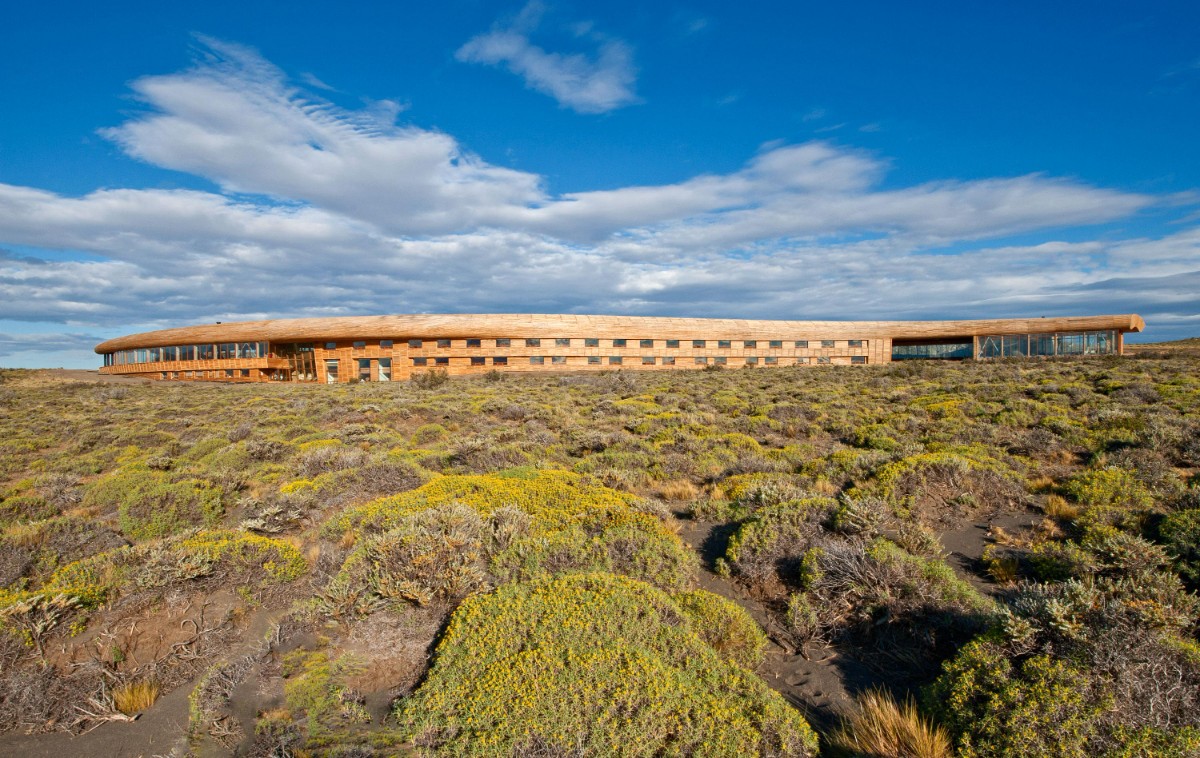
Completed on the shores of Lake Sarmiento, with the extraordinary Torres del Paine landscape beyond, Tierra Patagonia is perhaps the clearest expression of Zegers’ belief that architecture should belong to its territory. The long timber structure follows the landscape and responds to the powerful Patagonian winds, creating a building that feels less like a conventional hotel and more like something that has been shaped by the forces surrounding it. Its low tech, environmentally conscious approach is deliberately restrained, allowing the timber exterior to weather naturally and gradually become part of the landscape. The building does not attempt to compete with the Paine massif, which would be rather like trying to win an argument with a mountain. Instead, it frames the landscape, shelters its occupants and lets Patagonia remain the star of the show.
Casa Pyr
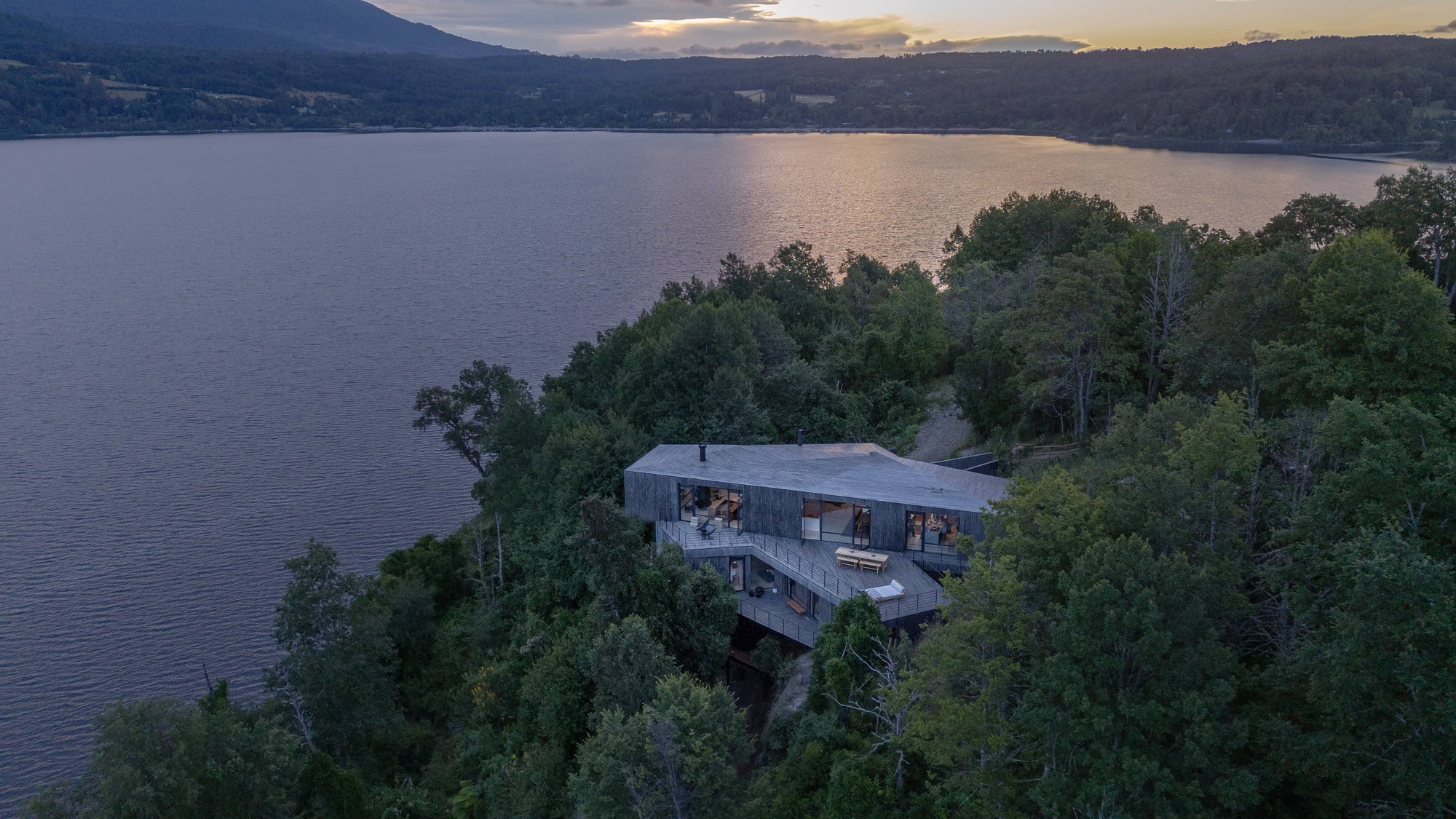
At Casa Pyr, completed in 2024 beside Lake Panguipulli, Zegers brings the same territorial sensitivity into a private residence. The site presented an awkward twelve metre cliff and a complicated relationship between sunlight, topography and views. Rather than flattening the terrain or forcing the house into a conventional arrangement, Zegers allowed the geography to dictate the organisation of the home. A central staircase becomes the architectural spine, descending towards the water and connecting the different levels of the house with the landscape beyond. The result is not architecture fighting against the site but architecture negotiating with it. The cliff becomes an advantage, the changing levels become part of the experience and the lake is not simply something to admire through a window. It becomes part of the way the house is inhabited.
Her Idea Of Geopoetics Makes The Landscape More Than A Backdrop

What distinguishes Zegers is not simply her use of timber, dramatic landscapes or environmentally sensitive construction. It is the thinking behind them. Her concept of geopoetics suggests that architecture can emerge from the meeting of geography and poetry, allowing a territory to influence the emotional and physical character of a building. In her work, landscape is therefore not decoration. It is material, context, memory and inspiration all at once. This becomes particularly significant in Chile, where the sheer variety and scale of the geography can make conventional architectural gestures feel strangely inadequate. From the Andes to the Pacific, from Patagonia to the forests and lakes of the south, Zegers’ architecture responds to the specific character of each place rather than attempting to impose a universal aesthetic upon it.
Also Read: Why Wang Shu And Lu Wenyu Believe Architecture Begins Before Construction
When The Territory Is Already Extraordinary
There is a wonderfully unfashionable lesson in Zegers’ architecture. Not everything needs to be bigger, louder or more technologically complicated. Sometimes the smartest architectural move is simply to understand where you are. Her buildings demonstrate that sustainability can be about more than adding technology to a project; it can begin with the decision to work with the land rather than against it. Materials can age rather than constantly demand replacement, structures can follow topography rather than erase it, and views can be framed rather than overwhelmed. In an era when architecture can occasionally become an exercise in proving how much can be done, Cazú Zegers appears interested in proving how much can be achieved by listening first.
Cazú Zegers Is Building Belongs To Chile
The enduring strength of Zegers’ work lies in its sense of belonging. Her buildings do not merely occupy Chilean landscapes; they attempt to understand them. Tierra Patagonia responds to the enormous scale and violence of Patagonia, while Casa Pyr turns the intimate geography of a lakeside site into the organising language of a home. Across both projects, the same principle remains: architecture should not silence the territory. It should give it another way to speak. As Zegers puts it, “The territory is to America what monuments are to Europe.” And perhaps that is the most compelling thing about her work. She is not simply designing buildings in Chile. She is allowing Chile itself to become part of the architecture.