Beyond Hands and Dials: How Watchmakers Have Reimagined Time
Beyond the balance wheel: the constant force mechanisms, deadbeat seconds, unusual escapements and oscillators that push mechanical timekeeping toward true precision
Some watches keep time with a balance wheel ticking back and forth, a system so familiar it barely registers as remarkable anymore. Others use mechanisms that seem almost impossible at first glance, gear trains and springs arranged in configurations that look less like timekeeping and more like small acts of engineering defiance. From constant force mechanisms and remontoirs to deadbeat seconds, unusual escapements and unconventional oscillators, watchmakers have spent centuries asking the same question: how can mechanical timekeeping be made more stable, precise and reliable? None of these solutions exist for novelty’s sake. Each one answers a real, persistent problem in how a mainspring delivers energy and how that energy is measured into seconds. This is horology at its most fascinating, the point where tiny springs, wheels, escapements and oscillators quietly rewrite how a watch actually keeps time.
Constant Force
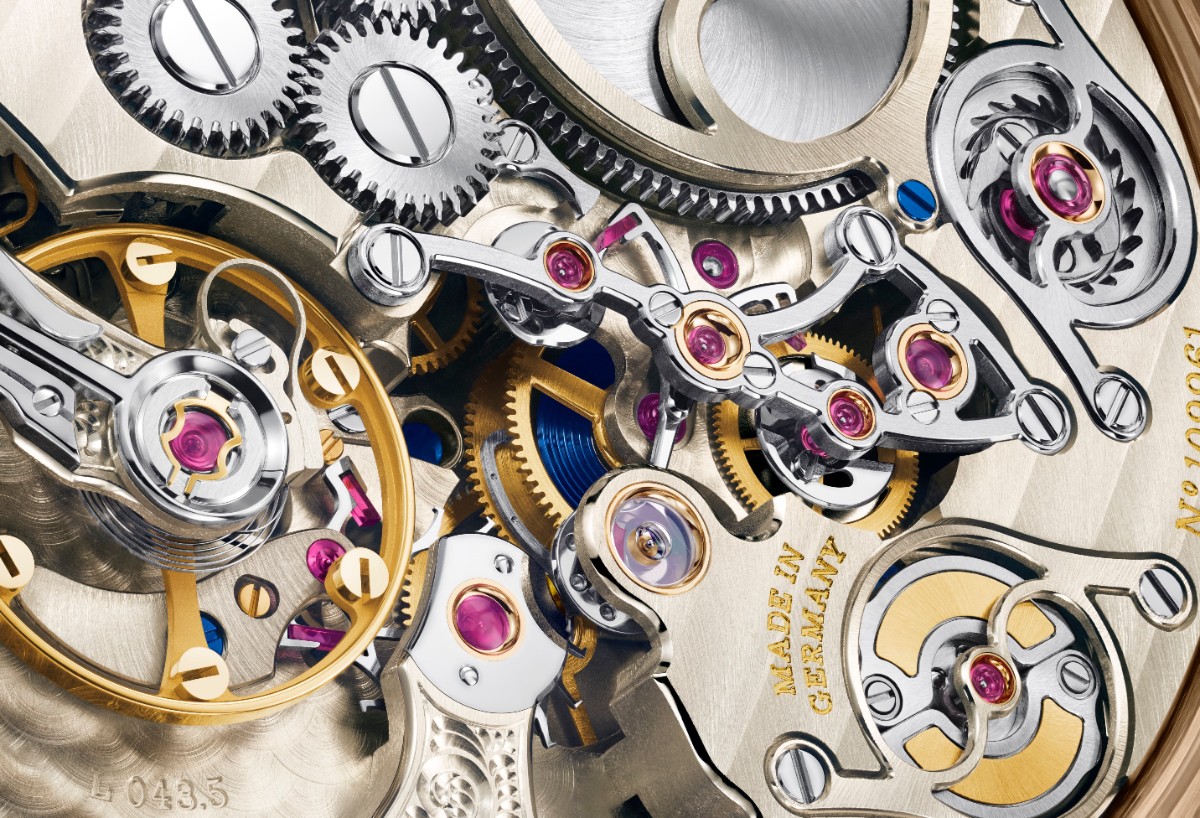
A mainspring does not deliver energy evenly. Fully wound, it pushes hard; nearly spent, it pushes weakly, and that fluctuating torque can subtly affect a watch’s rate across its power reserve. A constant force mechanism, often built as a remontoir, solves this by inserting a small secondary spring between the mainspring and the escapement. The mainspring periodically rewinds this secondary spring, which then releases its stored energy to the escapement in equal, regular doses, typically once per second. The escapement never knows whether the mainspring is full or nearly exhausted, because it always receives the same measured force. This matters because a stable amplitude at the balance wheel translates directly into a more consistent rate, which is why some of haute horlogerie’s most celebrated complications are built entirely around a remontoir d’égalité. The trade-off is added complexity, cost and assembly precision, which is why this mechanism has historically stayed confined to the finest watches, solving a problem that fine regulation alone cannot fix.
Also Read: Timekeepers Since 1935: Gangoly Brothers’ Enduring Watchmaking Legacy In Delhi
Deadbeat Seconds
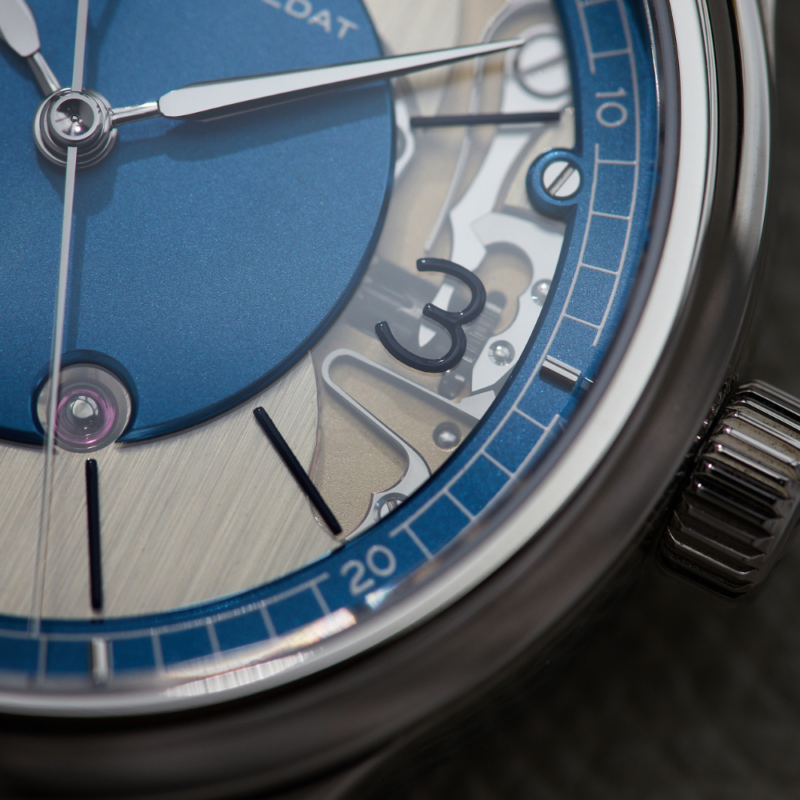
In a standard mechanical watch, the seconds hand sweeps continuously, a motion carried directly from the balance wheel’s oscillation through the gear train. Deadbeat seconds abandons that smoothness, making the hand advance in distinct one-second steps instead, mimicking a quartz tick despite running on a fully mechanical movement. An additional wheel and a specially shaped jumper release the hand once per second, decoupling it from the continuous oscillation driving the rest of the movement. Historically, this mattered for practical reasons: a seconds hand that jumps cleanly to each marking is easier to read precisely, which was essential for marine chronometers, observatory clocks and astronomical timing, where ambiguity of even a fraction of a second could matter. Today the complication survives largely as a nod to that heritage, sought by collectors precisely because it demands real watchmaking skill and offers a deliberate visual departure from the sweeping hand most mechanical watches take for granted.
Escapements

The escapement is the heart of a mechanical watch, releasing the mainspring’s stored energy in controlled increments and transferring impulses to the balance wheel. The Swiss lever escapement has become the industry default, prized for reliability and ease of production, but its dominance has never stopped watchmakers exploring alternatives, each attempting to reduce friction and the energy lost at the moment of impulse. The detent escapement, historically used in marine chronometers, minimises contact points to improve accuracy at the cost of shock resistance. The co-axial escapement, developed by George Daniels and later adopted by Omega, uses radial friction to reduce the need for lubrication and improve long-term stability. Independent watchmakers have pushed further still, building escapements from silicon to exploit its near-frictionless, anti-magnetic properties. Each approach answers the same question differently: how do you release energy with the least loss and the greatest consistency, which is precisely why escapement design remains one of horology’s most active areas of genuine innovation.
Also Read: Five Elegant Dress Watches That Define Timeless Style
Oscillators
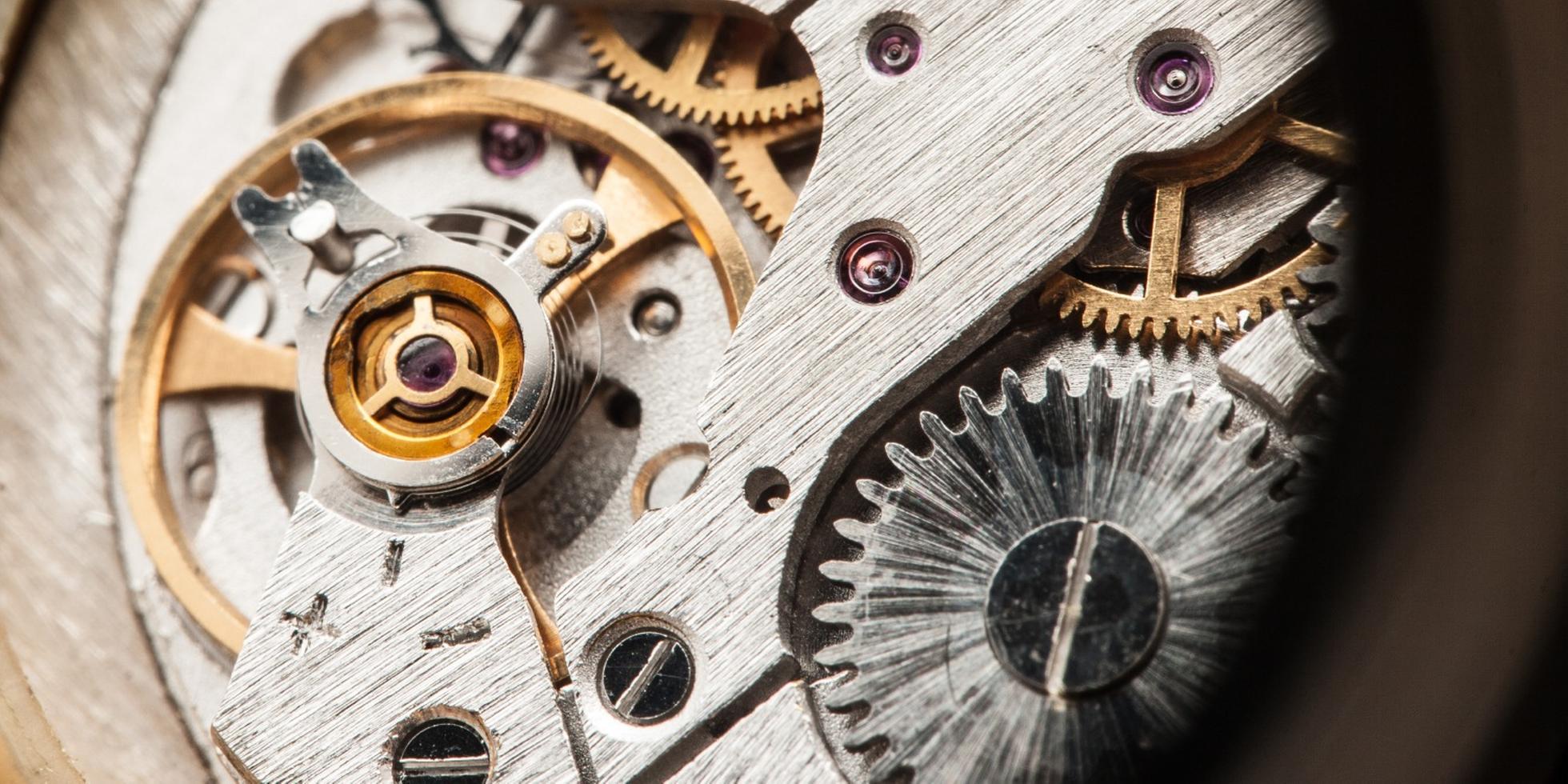
If the escapement is the heart, the oscillator is the watch’s actual timekeeping reference, dividing time into measurable units through regular back-and-forth motion. For most of modern watchmaking, that oscillator has been a balance wheel and hairspring, refined to extraordinary precision but still sensitive to gravity, temperature and magnetic fields. Unconventional oscillators challenge this foundation, replacing the traditional circular balance with alternative geometries or materials designed to resist these factors, or abandoning the balance wheel altogether in favour of flexible blades, resonating structures, or coupled systems that cancel out timing errors through resonance. These approaches often trade practicality, harder servicing, higher cost, more fragile construction, for genuine gains in stability. It remains horology’s most ambitious frontier, refusing to accept the balance wheel as a finished solution even after three centuries of refinement.