Cartier Cheich: The Rare Timepiece That Became A Legend In Luxury Watchmaking
Inspired by the Sahara Desert and born out of the legendary Paris-Dakar Rally, the Cartier Cheich is an extraordinary gold timepiece whose rarity, unusual design and sporting heritage have made it one of the most fascinating creations in the maison's history
Luxury watchmaking has produced its fair share of extraordinary creations, but not every remarkable timepiece owes its existence to a sporting competition. The Cartier Cheich is an exception. Conceived as a trophy for one of motorsport’s most demanding endurance challenges, this unusual gold watch carries a story that is as fascinating as its unconventional silhouette. It is a reminder that sometimes the most desirable objects are not born in a design studio alone, but out of extraordinary human achievements.
The story began in 1983, when Alain Dominique Perrin, then president of Cartier, joined hands with Thierry Sabine, the founder of the Paris-Dakar Rally, to introduce the Cartier Challenge. The proposition was simple in theory but extraordinarily difficult in practice. Competitors had to win the gruelling rally twice consecutively in the same vehicle category, whether motorcycle, car or truck. The reward was a specially commissioned Cartier timepiece, which would eventually become known as the Cheich. Winning the Paris-Dakar once was already an achievement requiring remarkable endurance, mechanical reliability and navigational skill. Repeating that success the following year was an entirely different matter. Cartier wanted the reward to reflect the magnitude of such an accomplishment, and an ordinary trophy would hardly have done justice to the occasion.
The Sahara Desert Inspires An Unconventional Design
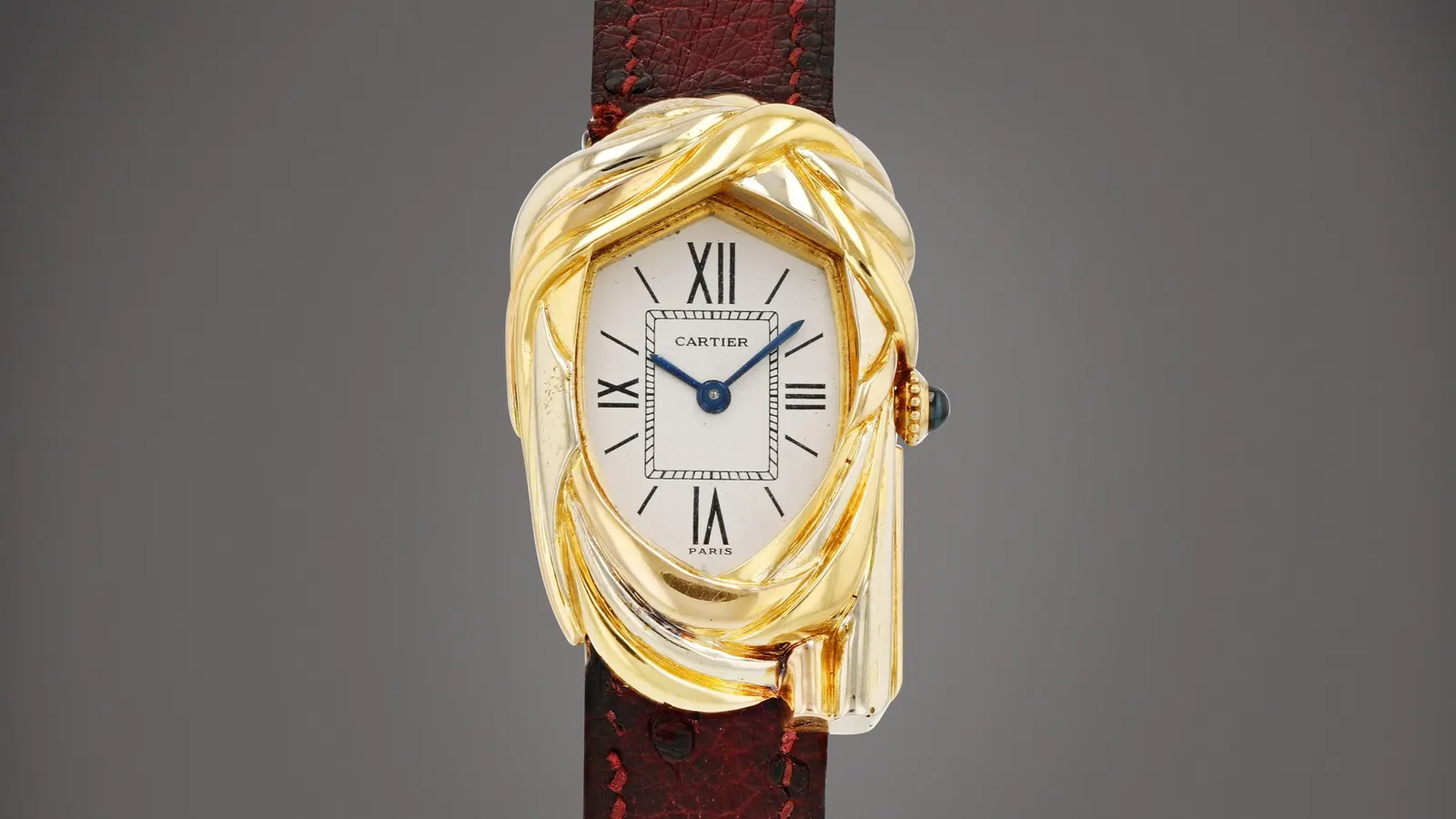
The creative direction for the watch came from Jacques Diltoer, Cartier’s creative director at the time. Rather than designing a conventional wristwatch, he looked towards the visual identity of the Paris-Dakar Rally, particularly its emblem depicting a Tuareg figure wearing a traditional cheich. A cheich is a long head covering traditionally worn by Tuareg communities across the Sahara. Designed to protect against the harsh desert sun, wind and sand, it is also an important element of their cultural identity. Its distinctive folds became the inspiration for the watch’s unusual case architecture.
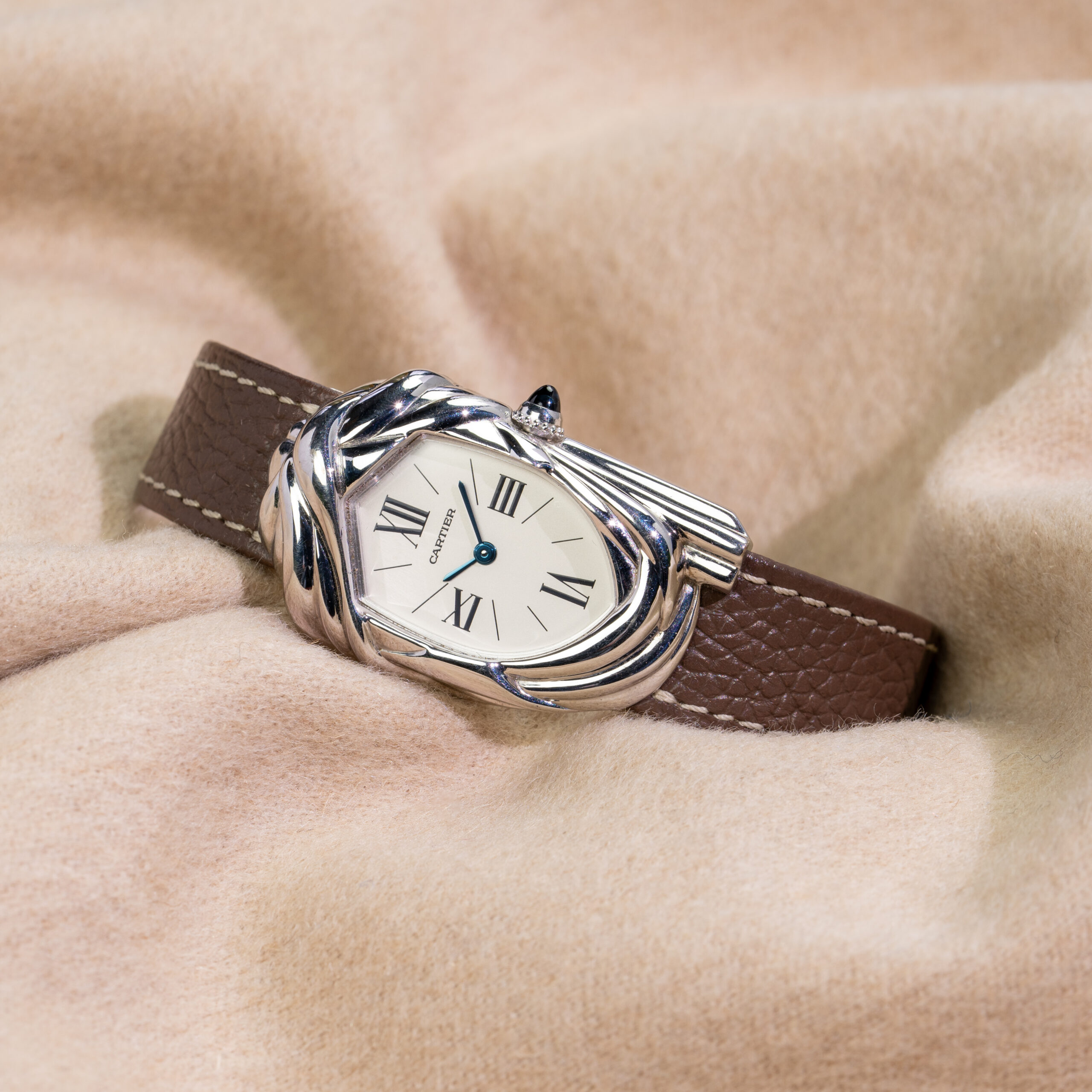
Crafted in gold, the Cartier Cheich translates the flowing silhouette of the head covering into a sculptural wristwatch. Its layered contours give the case an almost architectural quality, while the dial incorporates Roman numerals and a railway-style minute track. The result is a design that sits somewhere between fine jewellery and haute horlogerie. Unlike the familiar proportions of the Tank or Santos, the Cheich makes no attempt to follow conventional watchmaking codes. It is bold, distinctive and immediately recognisable, demonstrating Cartier’s long-standing ability to approach watch design with an artistic sensibility.
Also Read: Outlook Luxe Recommends: 6 Timepieces That Embody Timeless Design
Gaston Rahier And The Victory Of A Lifetime
The Cartier Challenge eventually found its champion in Belgian motorcycle racer Gaston Rahier. Already an accomplished motocross competitor, Rahier had won three 125cc motocross world championships before turning his attention to rally raid racing. Riding BMW motorcycles, he won the motorcycle category of the Paris-Dakar Rally in 1984. Rather remarkably, he returned the following year and repeated the achievement, securing consecutive victories and fulfilling the conditions of the Cartier Challenge.
Rahier became the only competitor to accomplish this feat and receive the Cheich as originally intended. His achievement gave the watch an extraordinary sporting provenance, transforming it from an unusual Cartier creation into a tangible piece of Paris-Dakar history. The timepiece remained with his family following his death in 2005, preserving its connection to the man whose achievement had made it legendary.
Why The Cartier Cheich Is So Rare
The Cheich’s exclusivity is not the result of a conventional limited-edition strategy. Its rarity is directly connected to the circumstances surrounding the Cartier Challenge. Only four examples were produced during the original period, including men’s and women’s versions.
A larger men’s model and a smaller diamond-set women’s version were conceived when the challenge was introduced. Another men’s example was prepared in anticipation of a future winner, while a separate piece was presented to Thierry Sabine. The women’s version was never awarded, and two examples remain in Cartier’s collection. Sabine’s watch is believed to have been lost. The challenge itself came to an abrupt end in January 1986, when Sabine died in a helicopter crash during the Paris-Dakar Rally in Mali. His death marked the end of an extraordinary chapter in the competition’s history and effectively brought the Cartier Challenge to a close.
From Motorsport Trophy To Million-Dollar Collectible
For decades, Rahier’s Cheich remained a treasured family possession. Its appearance at Sotheby’s in Paris in September 2022 brought renewed attention to this unusual creation. The watch achieved €1,003,000 at auction, demonstrating the extraordinary appeal of its rarity, provenance and association with motorsport history.
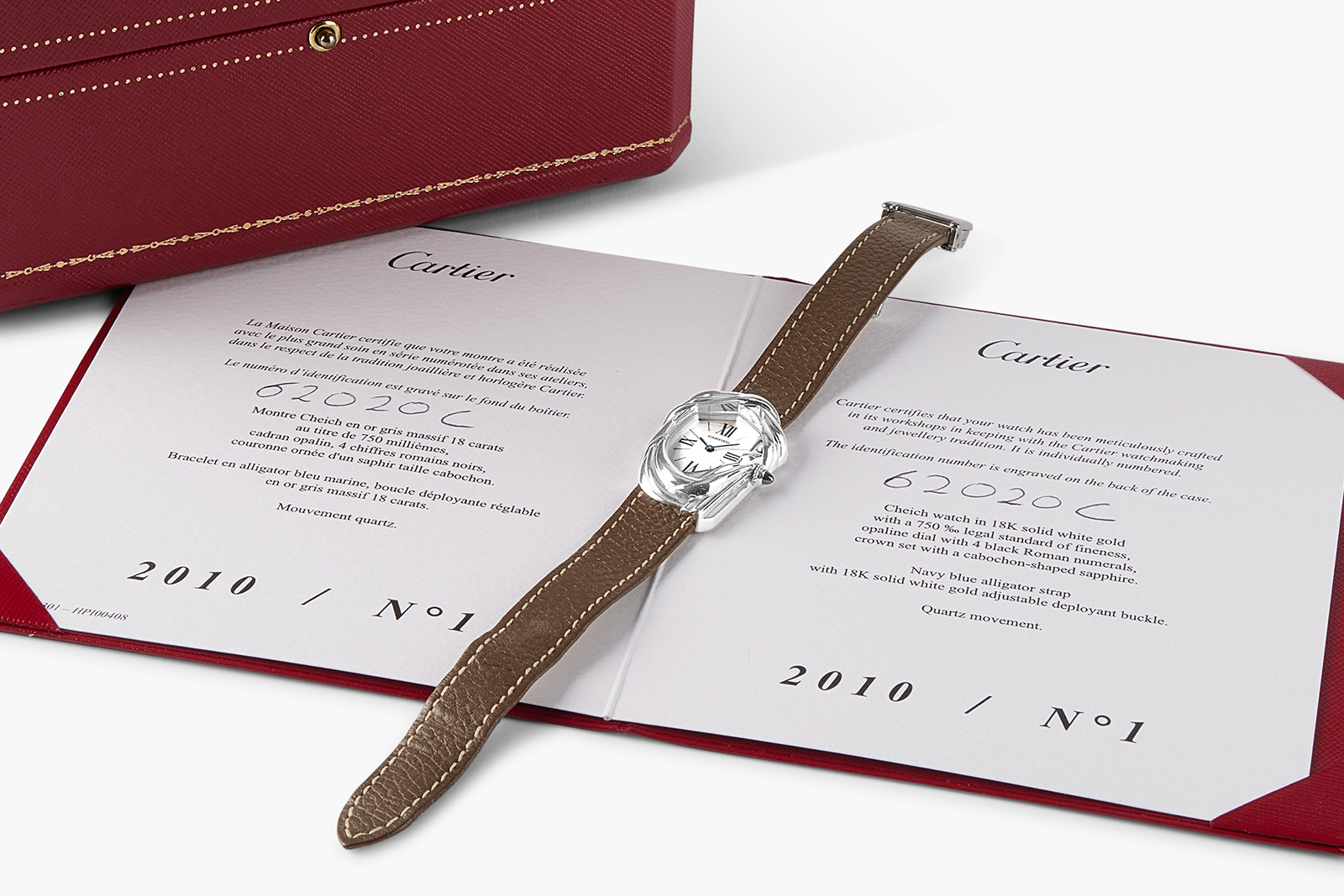
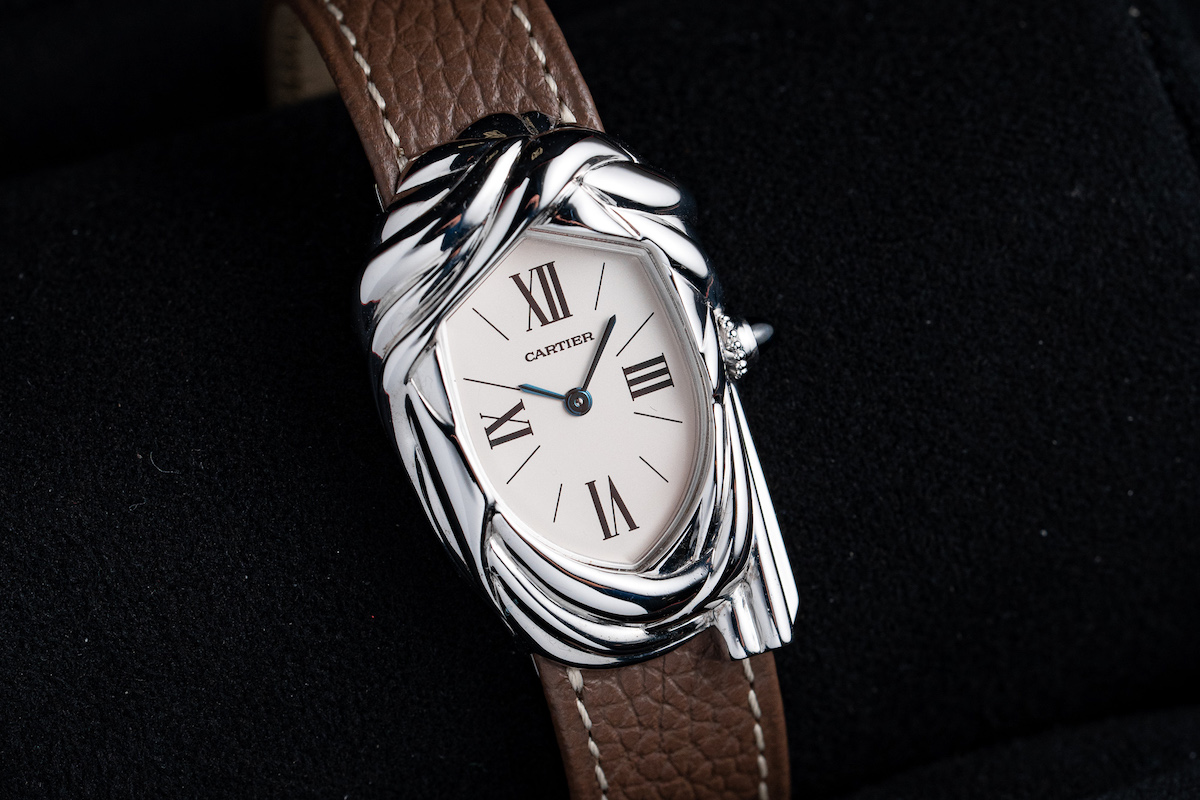
The story did not end there. In 2010, Cartier created a unique white-gold Cheich for Italian collector Giorgio Seragnoli, revisiting the distinctive design nearly three decades after the original challenge. When this exceptional commission appeared at Sotheby’s Hong Kong in September 2026, it achieved approximately HK$26.52 million, equivalent to around US$3.4 million, setting an auction record for a Cartier wristwatch.
A Legend That Goes Beyond Watchmaking
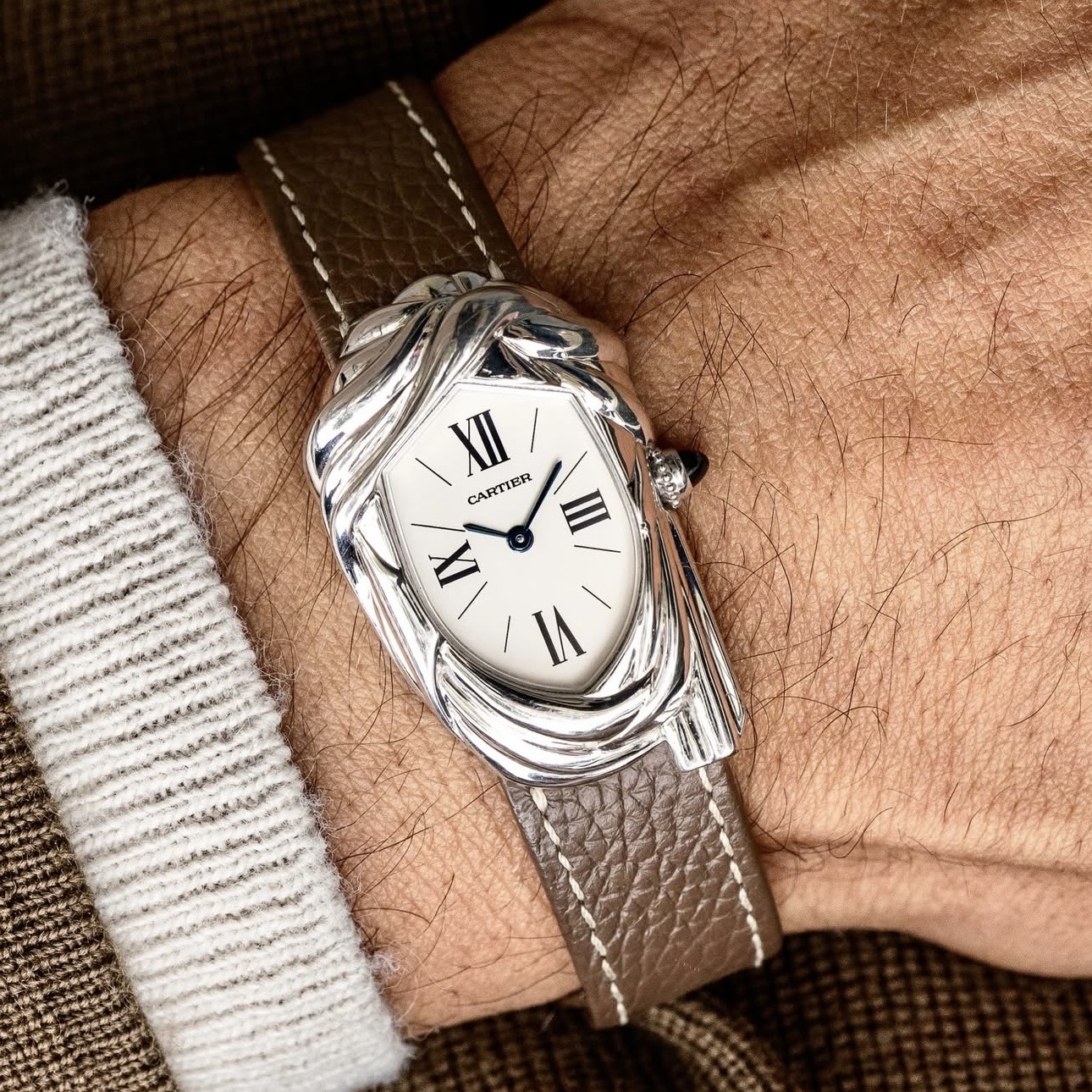
The Cartier Cheich occupies a rather unusual position in the world of luxury watches. It is a creation shaped by the harshness of the Sahara, inspired by cultural heritage and immortalised through an extraordinary sporting achievement. In an industry where limited editions and exclusive releases are frequently used to generate desirability, the Cheich represents something considerably different. Its scarcity was never simply a marketing exercise. It was the consequence of a challenge that proved almost impossible to conquer.
For collectors, the appeal extends well beyond its gold construction or unconventional case. It is the story of a motorcycle champion, an ambitious challenge and a moment in motorsport history that could never quite be recreated. Cartier may have created the Cheich as a reward for victory, but time has turned it into something much more enduring: a legend in luxury watchmaking.