Three Rare IWC Chronograph Watches That Go Beyond Telling Time
Explore three rare IWC watches that combine distinctive design, ambitious mechanical engineering and sophisticated complications, including the Da Vinci, Il Destriero Scafusia and Le Petit Prince
A watch can tell you the time, but the truly fascinating ones have rather more to say. Some reveal their character through precious metals and unusual design, others through the sheer audacity of the mechanism ticking beneath the dial. And then there are those that combine technical complexity with the sort of purposeful aesthetic that makes them instantly recognisable. At IWC Schaffhausen, these different approaches to watchmaking have produced creations that deserve attention well beyond their ability to keep time.
The three watches explored here illustrate this diversity particularly well. The Da Vinci Perpetual Calendar with its gold woven bracelet offers a distinctive interpretation of precious metal luxury. The Il Destriero Scafusia Grand Complication represents a landmark in mechanical ambition. Meanwhile, the Pilot’s Watch Perpetual Calendar Chronograph Le Petit Prince brings sophisticated complications into the world of aviation inspired design. Each takes a different route towards the same destination: making a mechanical watch far more interesting than a device strapped to the wrist.
IWC Da Vinci Perpetual Calendar Gold Woven Bracelet
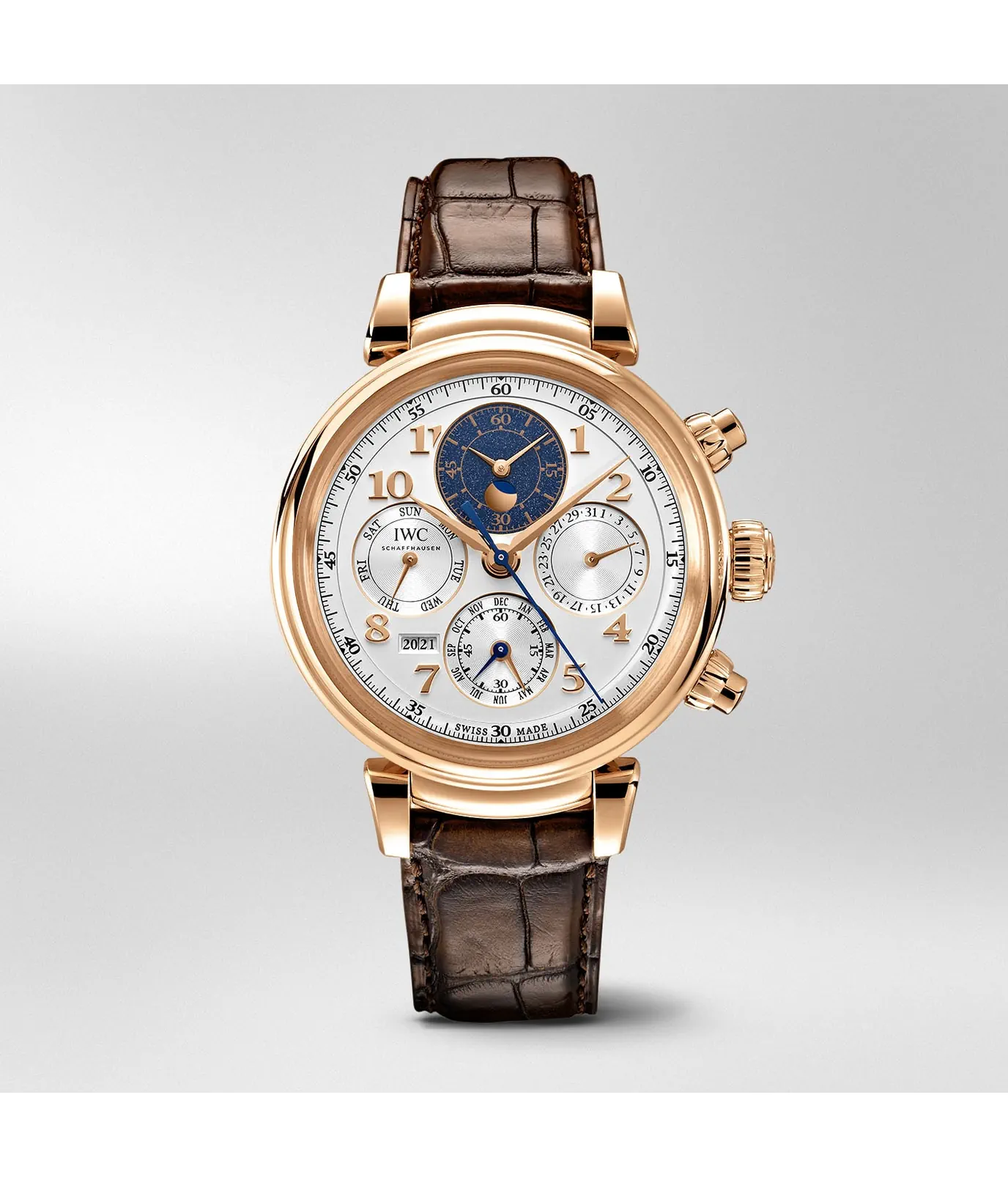
The IWC Da Vinci Perpetual Calendar Gold Woven Bracelet makes an impression through a combination of material and construction rather than conventional ostentation. Its defining feature is the woven gold bracelet, which gives the watch a distinctive character and separates it from the familiar pairing of a precious metal case with a conventional leather strap. Gold has long been associated with luxury watchmaking, but the way it is handled can make all the difference. Here, the woven construction introduces texture and visual complexity, giving the bracelet a character of its own. It is not merely an accessory attached to the watch; it is an important part of the overall design.
The perpetual calendar adds another layer of horological interest. Designed to account for variations in the length of months and the leap year cycle, a perpetual calendar is among the more demanding complications in traditional watchmaking. It transforms the passage of time into a mechanical calculation, allowing the calendar to remain accurate for extended periods without routine manual correction, subject to the movement’s design and correct operation. Together, the precious metal construction and calendar complication give this Da Vinci a personality that sits between jewellery inspired design and mechanical watchmaking. Its appeal lies in the details, particularly the interplay between the bracelet’s texture and the sophistication of the calendar mechanism.
IWC Il Destriero Scafusia Grand Complication
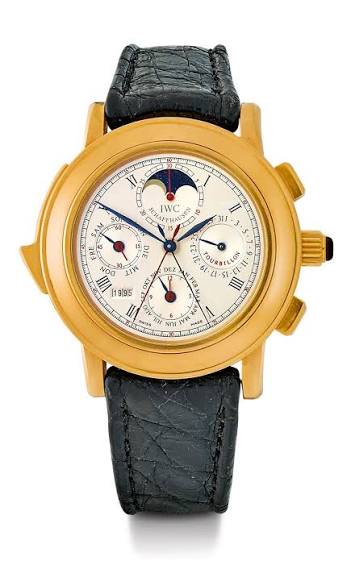
Introduced in 1993 to mark IWC’s 125th anniversary, the Il Destriero Scafusia Grand Complication occupies an important place in the manufacture’s history. Its name is associated with an ambitious undertaking: bringing an extraordinary concentration of mechanical watchmaking into a single wristwatch. Grand complications represent the more demanding end of traditional horology, requiring different mechanisms to work together within a carefully engineered movement. Their significance is not simply a matter of counting complications. The challenge lies in coordinating them, managing the available space and ensuring that the watch remains a functioning instrument rather than a collection of impressive ideas.
The Il Destriero Scafusia embodies this ambition. Created for a milestone in IWC’s history, it reflects a period when complicated mechanical watches were becoming powerful demonstrations of what established manufactures could achieve through engineering and traditional craftsmanship. Its place in the story of IWC is therefore larger than that of an unusual collector’s piece. It represents a statement of mechanical intent, illustrating how far a manufacture can push the boundaries of miniature engineering while remaining rooted in the principles of classical watchmaking.
Also Read: 5 Cushion-Shaped Watches That Blend Heritage With Modern Design
IWC Pilot’s Watch Perpetual Calendar Chronograph Le Petit Prince
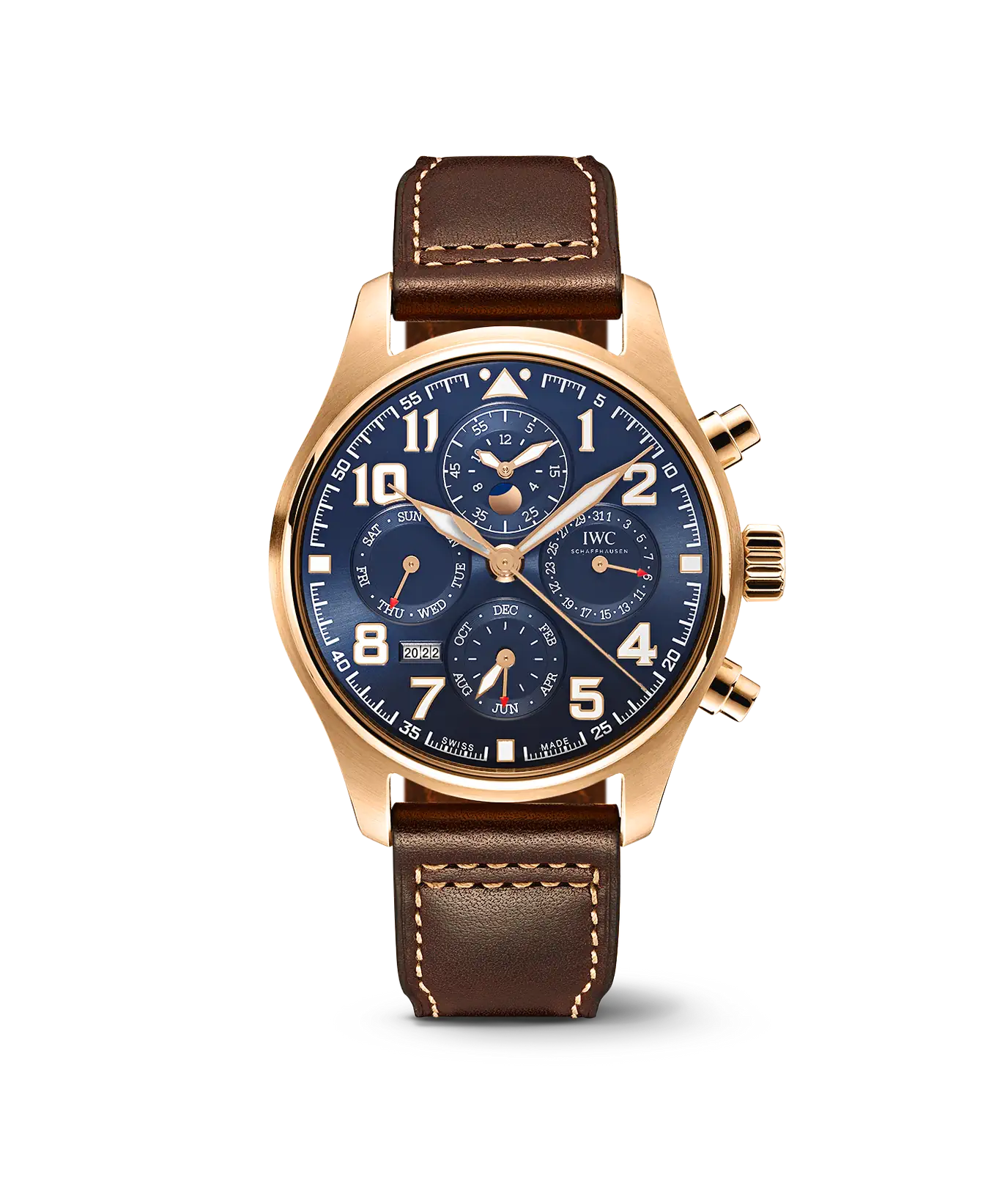
The Pilot’s Watch Perpetual Calendar Chronograph Le Petit Prince takes a different approach. Rather than emphasising jewellery like construction or the spectacle of a grand complication, it combines sophisticated mechanics with the clear, instrument inspired aesthetic associated with aviation watches. The chronograph provides a means of measuring elapsed time, while the perpetual calendar introduces a considerably more elaborate way of tracking the date and calendar cycle. Bringing these functions together creates a watch that balances practical timing with mechanical sophistication.
The Le Petit Prince connection adds another dimension to its identity. Inspired by Antoine de Saint Exupéry’s celebrated literary work, the edition brings a cultural reference into IWC’s aviation focused watchmaking universe. The result is a timepiece that combines a recognisable pilot’s watch character with complications more commonly associated with dressier or technically ambitious mechanical watches. Its appeal rests on this contrast. The design retains the purposeful character of an aviation instrument, while the movement offers considerably more than straightforward timekeeping and chronograph functionality.