Six Architect Friends Rethinking How Spain Lives Together
Six women who met in architecture school now question, project by project, whether a home needs a hierarchy at all
There is something rather lovely about the notion that a friendship forged over shared deadlines and borrowed coffee money could, a decade on, reshape the very grammar of how a country houses itself. This is, in essence, the story of Cierto Estudio, the Barcelona practice founded in 2014 by six women, Marta Benedicto, Ivet Gasol, Carlota de Gispert, Anna Llonch, Lucia Millet and Clara Vidal, who met not in some grand professional setting but as students at Barcelona’s Technical School of Architecture, ETSAB, helping one another survive the particular tyranny of final-year graduation projects. What began as a rented studio where six friends could work alongside one another has, over the past decade, grown into a practice of nineteen staff members, one that has made Spain’s housing crisis, and the social fractures it has exposed, the central preoccupation of its architectural imagination.
Born of Necessity, Sustained by Conviction
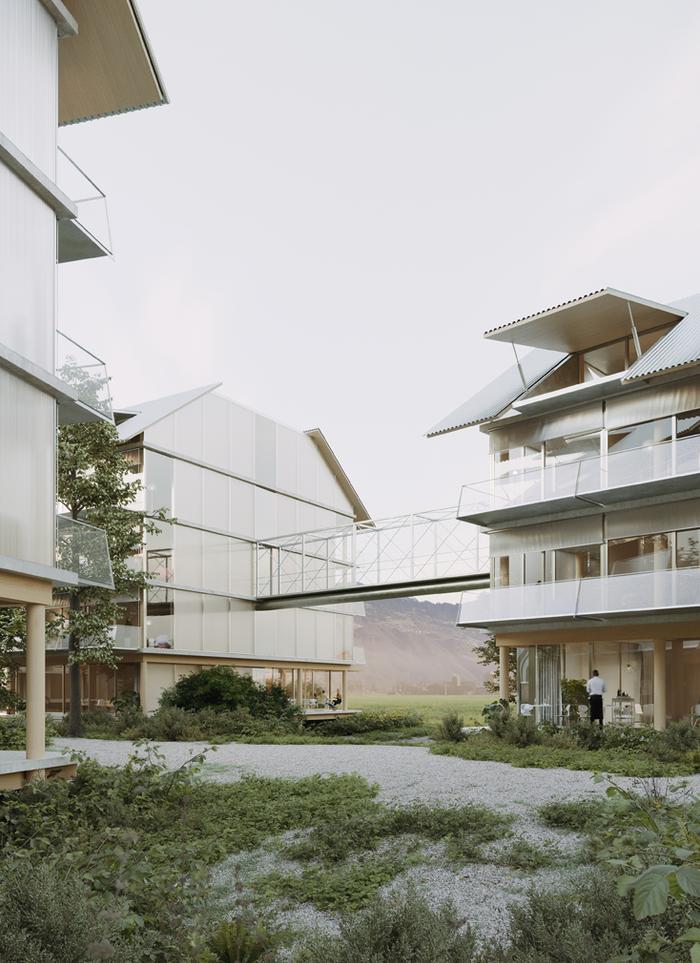
The timing of their beginning was, by any conventional measure, rather inauspicious. Spain was still reeling from the consequences of its economic crisis when the six graduated, and opportunities for young architects were scarce enough that leaving Barcelona altogether would have been the entirely sensible choice. They chose, instead, to stay together, a decision that reads now as less a professional gamble than a quiet act of faith in collaboration itself. That founding instinct, that difficulty is best faced collectively rather than alone, has never really left the studio’s work. It shows up, time and again, in a portfolio built almost obsessively around the question of how people might live together more generously than convention typically allows.
Also Read: The Sacred In Architecture: The Lifelong Vision Of Paolo Portoghesi
Illa Glòries: Dismantling the Hierarchy of Rooms
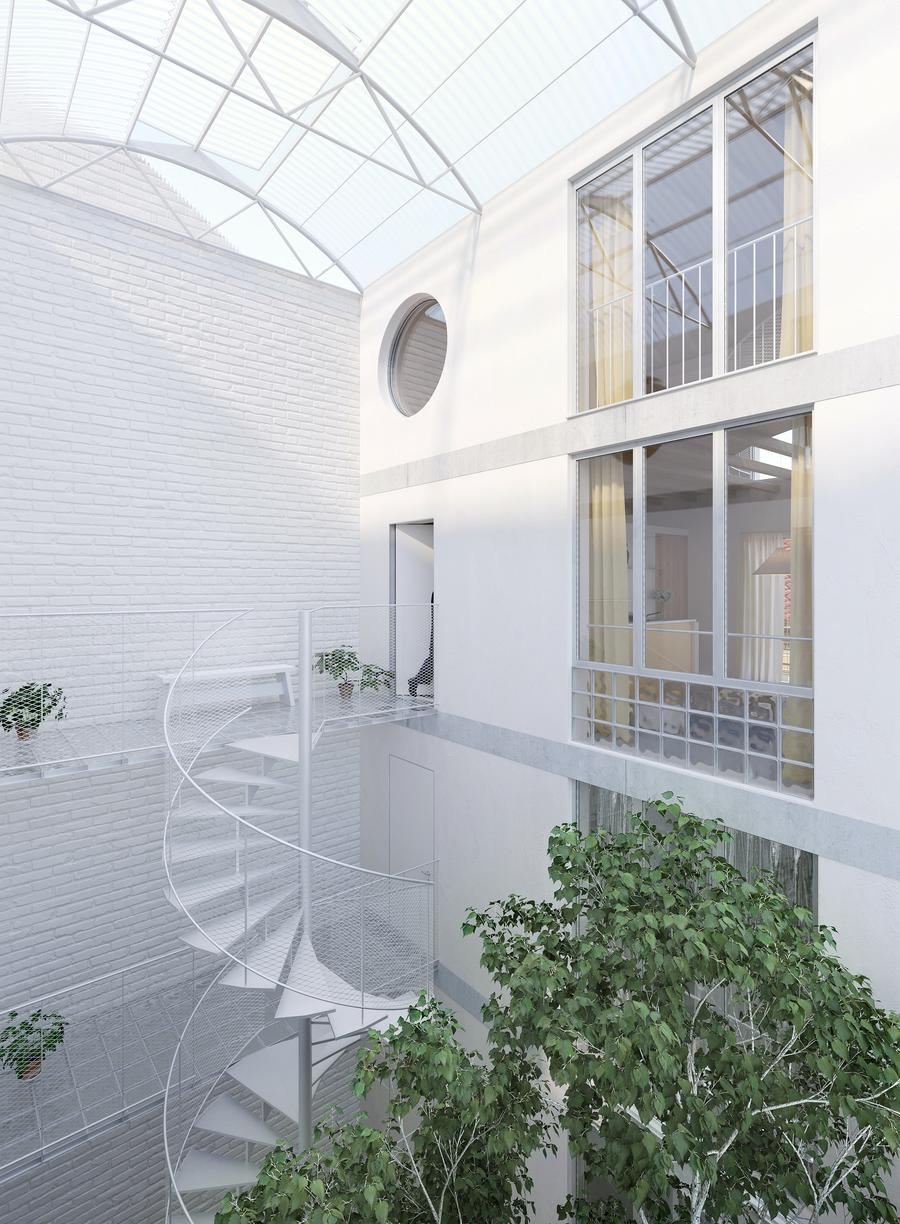
Nowhere is this preoccupation more fully realised than at Illa Glòries, the award-winning social housing project situated at the meeting point of Barcelona’s Eixample neighbourhood and its 22@ technological district. Winning the 2017 international competition organised by the city’s housing institute, Cierto Estudio’s 51 dwellings, part of a larger 238-apartment complex completed in 2024, set out to dismantle something most of us never think to question: the quiet hierarchy that governs a traditional home, where the living room dominates and the kitchen hides, where certain rooms matter more than others by unspoken consensus. Cierto Estudio calls their alternative the casa des-jerarquizada, the de-hierarchised house, a dwelling where spaces are permitted to shift purpose as families themselves evolve, where the Spanish kitchen, traditionally cloistered away, is instead pulled toward the home’s open public-access galleries, placed deliberately beside the walkways and courtyards where neighbours might actually encounter one another. It is architecture conceived with a distinctly gendered attentiveness too, designed to make caregiving labour visible rather than hidden, and to distribute domestic responsibility more equitably through the very shape of the rooms themselves.
Ca l’Ocell: The Same Generosity, A Smaller Scale
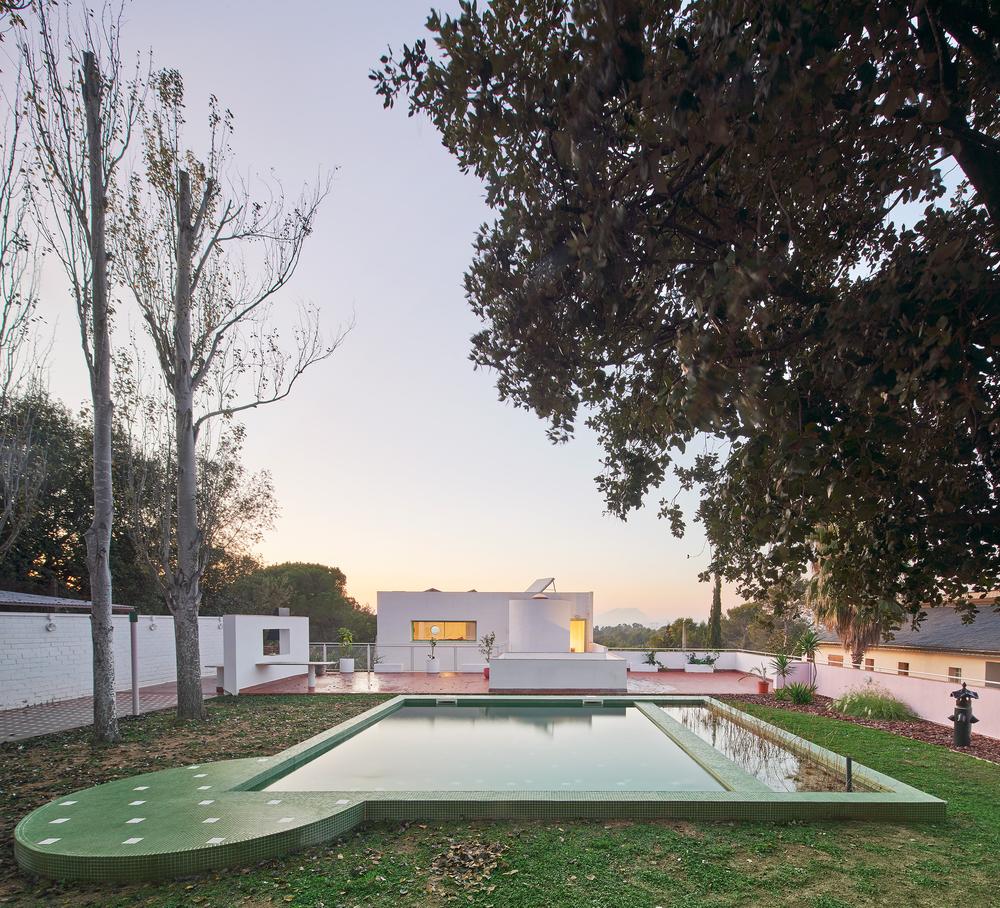
That same generosity of spirit, translated from the scale of a city block to the scale of a single family home, finds its expression at Ca l’Ocell, a house built near the port of Mahón on the island of Menorca. Here, fragmented volumes assemble into a whole that deliberately recalls the island’s traditional constructions, each piece containing rooms shaped by faceted, thirty-degree geometries that refuse the ordinary rectangle. At its heart rises a striking core clad in vivid green enamelled ceramic, around which a staircase winds its way upward, the house’s visual and emotional centre of gravity. As with Illa Glòries, the organising principle remains gathering: spaces conceived not merely to shelter a family but to open its life outward, toward others, toward connection, toward the simple, underrated pleasure of being in company.
A Collective Practice, A Collective Philosophy
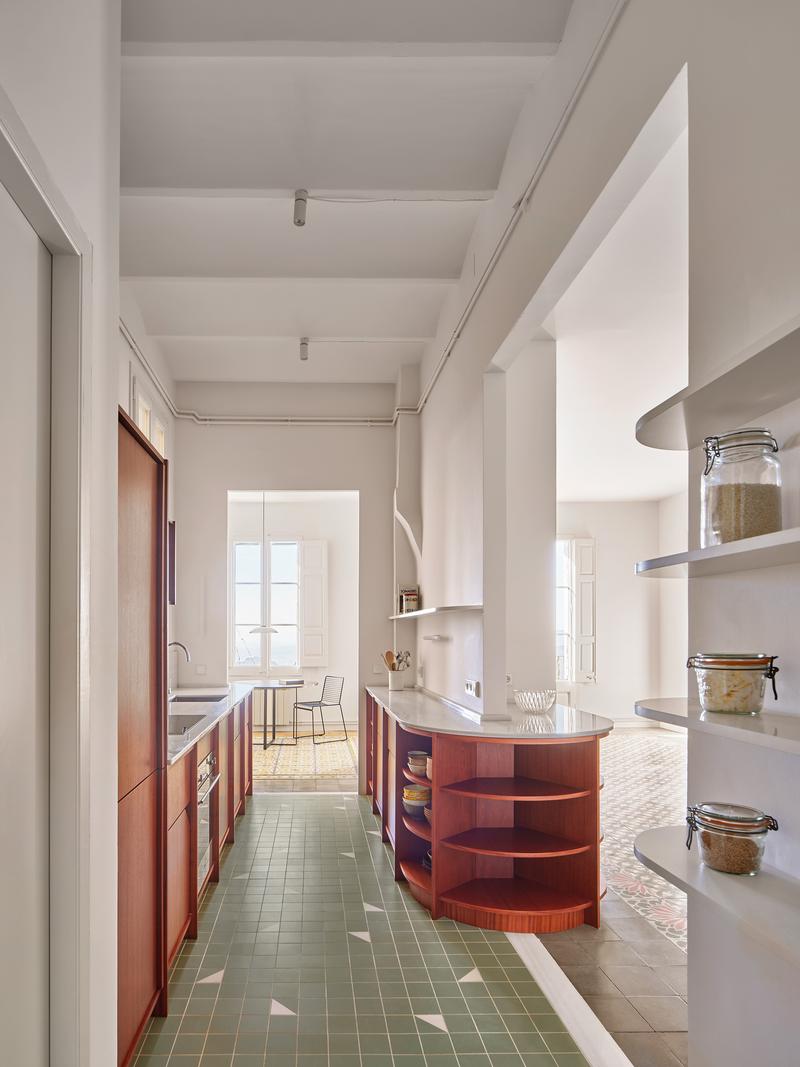
What distinguishes Cierto Estudio, ultimately, is not merely the quality of their built work, considerable though it is, but the way their own founding experience has become the very method through which they design. Having built their practice on the conviction that collaboration outlasts crisis, they now extend that same conviction outward into the buildings themselves, structures that ask whether Spanish society, in an era of changing family structures and genuine housing scarcity, might benefit from architecture willing to question its own inherited assumptions. There is freedom in this work, certainly, but there is also something more enduring: a genuine, infectious pleasure in imagining how life might be shared differently, and the rare confidence to build that imagination, quite literally, into the walls.