How Raseel Gujral Is Carrying Forward Satish Gujral’s Enduring Artistic Legacy
Indian interior architect and curator Raseel Gujral Ansal reflects on her father Satish Gujral’s enduring artistic legacy as India Post marks his birth centenary with a commemorative stamp
Bikaner House in New Delhi serves as a hub of art, quiet and serene, yet intently placed at the heart of the capital. Arzaani Atelier, run by Indian interior architect and curator Raseel Gujral Ansal, Co-Founder of Raseel Gujral Art Legacy (RGAL) and associated with luxury lifestyle brands including Casa Paradox Luxe and Casa Pop, remains a testament to curated collections and limited-edition art prints of works by the legendary Indian polymath, painter and sculptor Satish Gujral, alongside traditional temple art such as Pichwais, Tanjore works and South Indian sacred textiles.
Ansal has built a world where art, heritage and design naturally come together. It was fitting, then, that Bikaner House became the setting for a centenary tribute to her father, whose influence continues to shape India’s visual and architectural landscape.
Portrait of Legacy
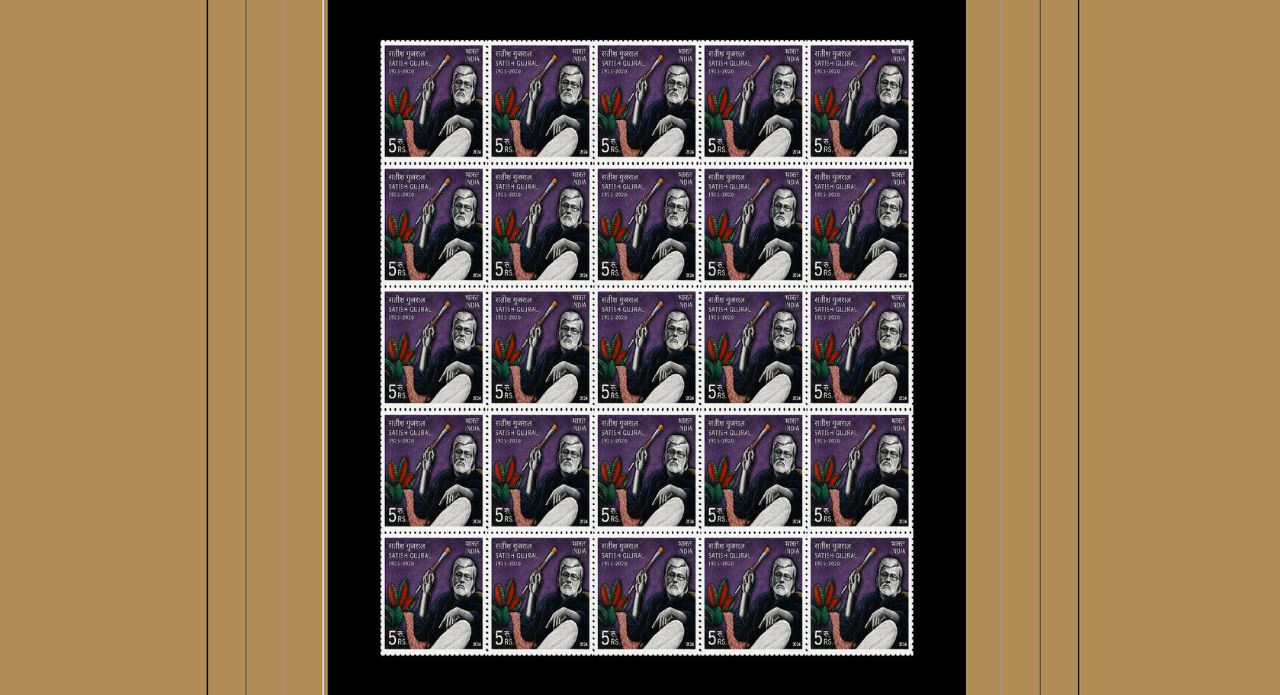
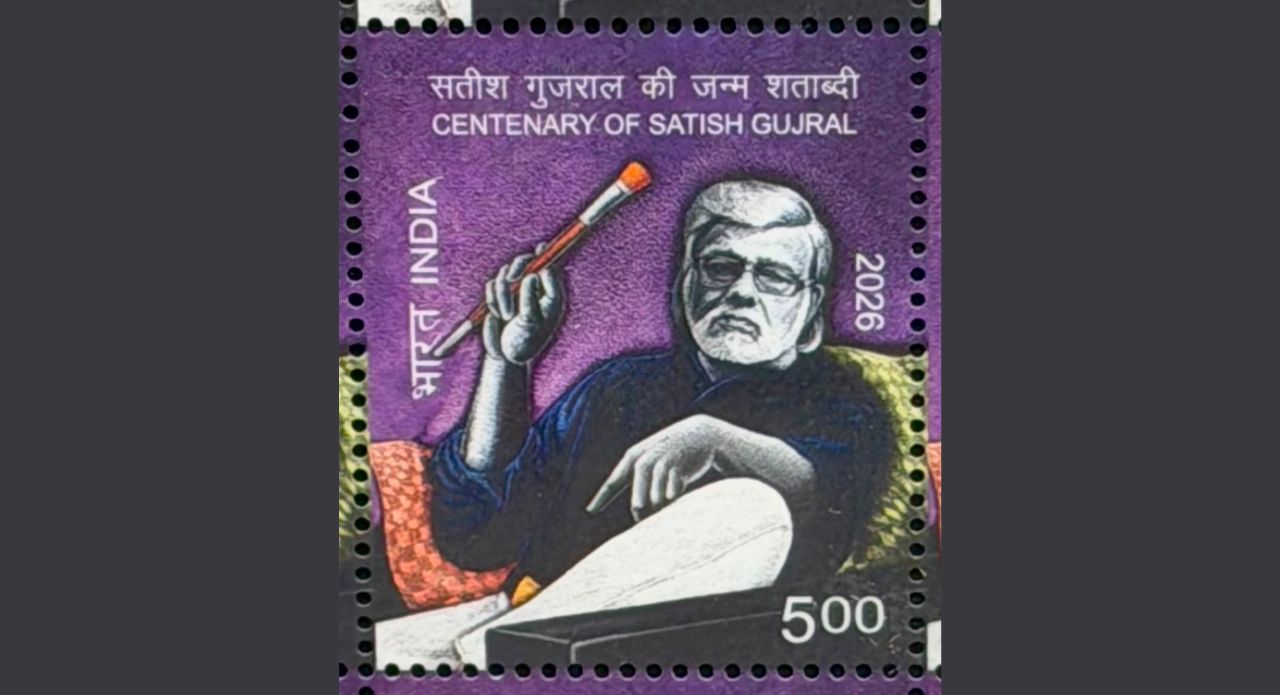
The occasion marked the release of a commemorative postage stamp by the Department of Posts, Government of India, celebrating the birth centenary of Padma Vibhushan Satish Gujral. Unveiled by Union Minister of Communications Jyotiraditya M Scindia, the Satish Gujral postage stamp features a rare self-portrait painted around 2010, one of only four self-portraits created by the artist during his career.
Held in Ansal’s private collection, the painting was gifted by Satish and Kiran Gujral to Ansal and her husband, Navin Ansal, making its selection for the stamp particularly intimate. Rendered in photorealistic black and white against a fully coloured composition, the portrait captures more than the artist’s likeness. For Ansal, it reflects the gaze through which her father understood and interpreted the world, making the image a fitting representation of his artistic sensibility.
Also Read: Why Harpreet Narula Believes Art Should Make You Look Within
The Satish Gujral memorial stamp is part of a wider centenary celebration that includes a curated public exhibition of rare, limited-edition Satish Gujral Centenary Stamp Collectibles at Bikaner House from August 4 to 9. Conceived around the number 25, referencing Gujral’s December 25 birth date, the collection includes a Centenary Edition featuring 25 commemorative stamps and a Centenary Master Edition with 100 commemorative stamps. The framed editions are available in different colourways at Arzaani Atelier Prive, while the official postage stamp will also be available through 72 Philately Bureaux across India.
For Ansal, the tribute is also an opportunity to remember the person behind the celebrated Satish Gujral paintings, sculptures and architecture. She recalls a father whose formidable artistic reputation existed alongside a playful personality and a sharp sense of humour. “I wish everyone knew how funny he was,” she said, reflecting on his remarkable sense of timing and ability to keep those around him entertained.
Satish Gujral was among the defining figures of post-Independence Indian art, a polymath whose seven-decade career moved fluidly between painting, sculpture, murals, architecture and writing. His work responded to some of the country’s most significant cultural shifts, including Partition, while helping shape India’s modern visual and architectural language. Understanding his legacy also means understanding the perspective that shaped it, believes Ansal. She added that losing his hearing at the age of eight altered the way he experienced the world, creating a shift in perspective that eventually became part of his creative expression. His family recognised his sensitivity towards literature and the arts and supported him in nurturing that difference. Ansal also acknowledged her mother, Kiran Gujral, whose partnership and support remained an important part of her father’s life and creative journey.
Beyond The Boundaries
Gujral’s practice eventually spanned multiple disciplines, with each medium offering another way to engage with India’s changing cultural landscape. Ansal sees her father’s influence as extending beyond the conventional boundaries of art. His architecture, in particular, demonstrated how space itself could become an artistic medium, while his paintings, sculptures and murals established a distinctive visual vocabulary that continues to resonate.
Also Read: Kiran Nadar’s Art Powerhouse: The Art Collector Building India’s MoMA Moment
This is what makes the Satish Gujral creative legacy particularly enduring for Ansal. His work did not simply document the cultural shifts of his time; it also participated in shaping how India saw itself. His approach to form, material, space and storytelling continues to offer a reference point for conversations around Indian contemporary art and design.
Through RGAL, Ansal is helping bring that body of work into new contexts. Her work involves preserving, presenting and contextualising her father’s artistic contributions while introducing them to audiences who may encounter his work for the first time. In doing so, she is ensuring that the Satish Gujral legacy remains not only preserved, but actively engaged with by a new generation.