How the Rakhi Is Going From a Festival Thread to a Luxury Keepsake
Premium rakhis in silver, Swarovski and jewellery-inspired designs are transforming Raksha Bandhan gifting into a more luxurious and lasting ritual
A rakhi used to have a short shelf life by design: cotton or silk thread, a few sequins, tied once and rarely thought about again after Raksha Bandhan week ended. That’s no longer the only option on the table. This season’s rakhis are showing up in silver, Swarovski crystal, Kundan and Meenakari work, finished less like festive trinkets and more like jewellery someone would choose to wear again.
The appetite for this shift is unmistakable: interest in names like Kalyan Jewellers and PALMONAS has tripled in the run-up to Raksha Bandhan 2026, a clear signal that shoppers are treating the rakhi with the same consideration once reserved for fine jewellery. It marks a quieter recalibration in how India gifts during its festivals, a move away from the seasonal and interchangeable, toward pieces chosen with the same deliberation as any fine gift.
Threads Take Jewellery Form
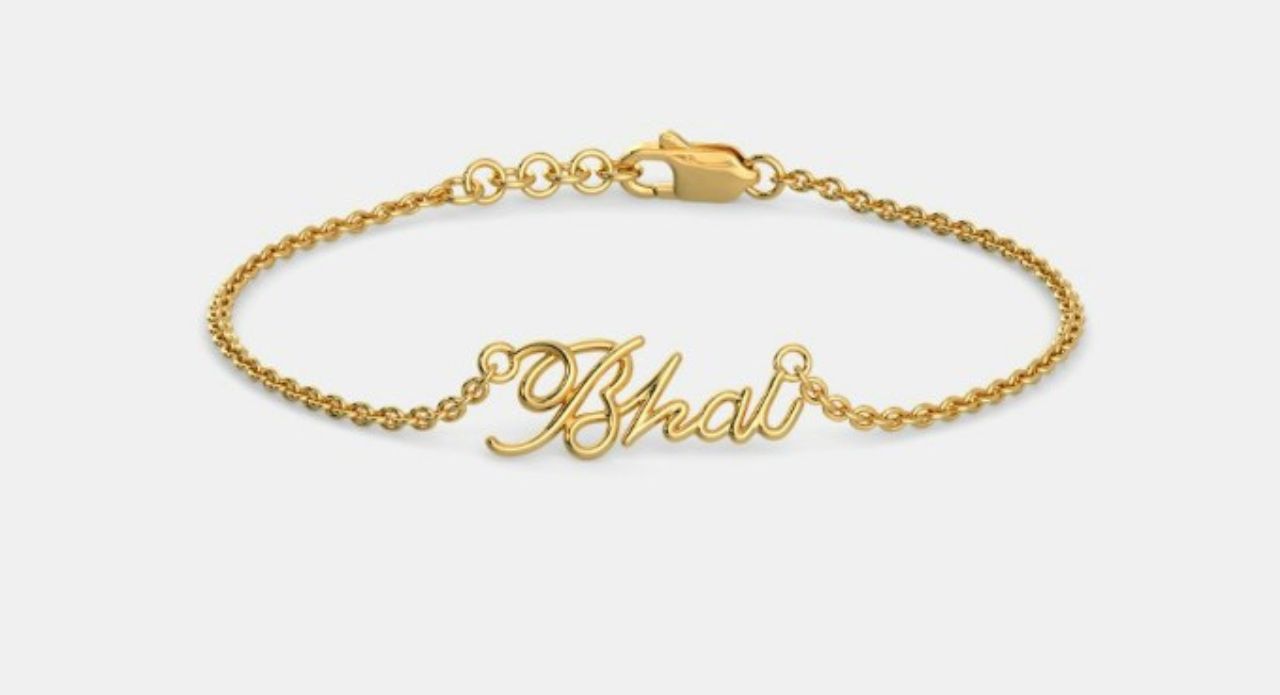
The evolution of Raksha Bandhan gifting is visible in the materials now being used to reinterpret the festival staple. Sterling and fine silver, Swarovski crystals, pearls, Kundan and Meenakari details give these designs the finish of jewellery rather than conventional festive threads.
Also Read: Raksha Bandhan 2026: Fine Jewellery Gifts That Last Beyond the Occasion
Some are deliberately styled as bracelets, making the rakhi easier to retain as an everyday accessory. The result is a modern Raksha Bandhan object that sits comfortably between ritual, adornment and gifting.
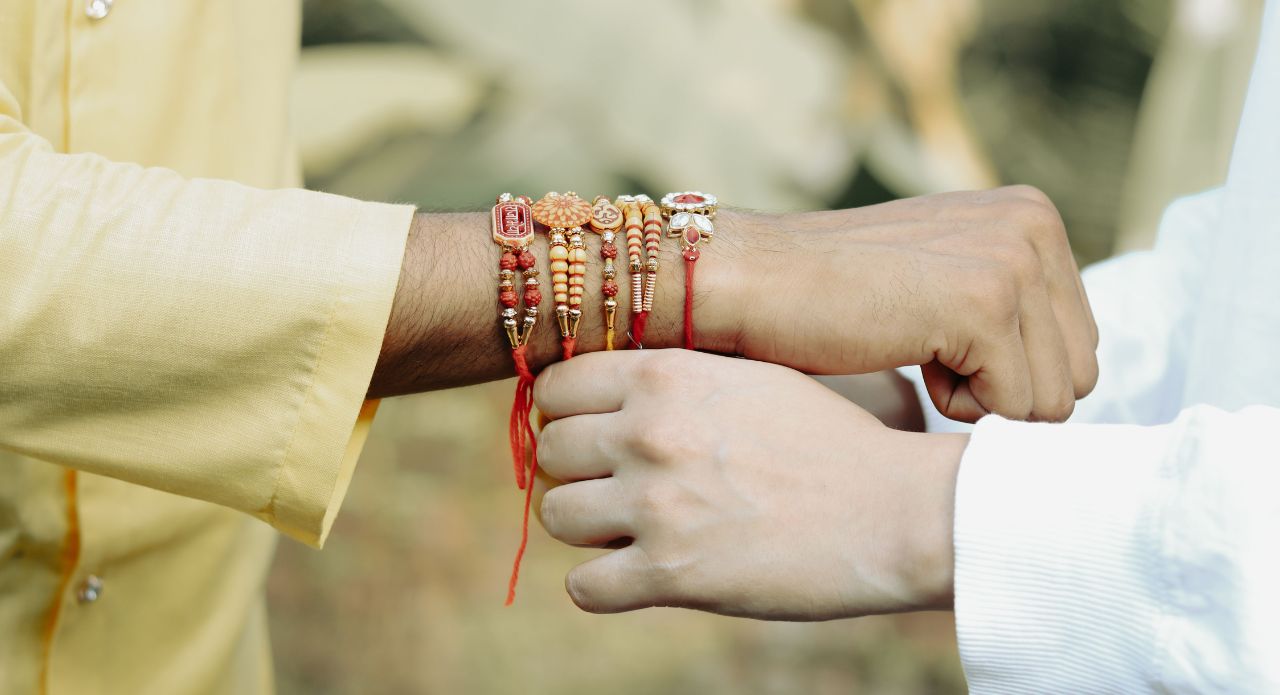
That change also reflects how luxury festive gifting is evolving in India. Consumers are increasingly drawn to presents that feel distinctive rather than interchangeable, and a premium Rakhi offers a way to make a familiar tradition feel more personal without abandoning its cultural significance. The design can carry a religious motif, a protective symbol, a message between siblings or simply a refined aesthetic, giving the gift an emotional dimension that extends beyond its material value.
Keepsakes With Emotional Value
The appeal of a designer rakhi, then, is not simply its price. A thread may be tied for the occasion and removed soon after; a silver rakhi bracelet can remain in a wardrobe or jewellery box as a tangible reminder of the bond it represents. This is where the idea of an heirloom rakhi becomes interesting. It gives the ritual an afterlife, allowing an object associated with one Raksha Bandhan to acquire sentimental value over the years.
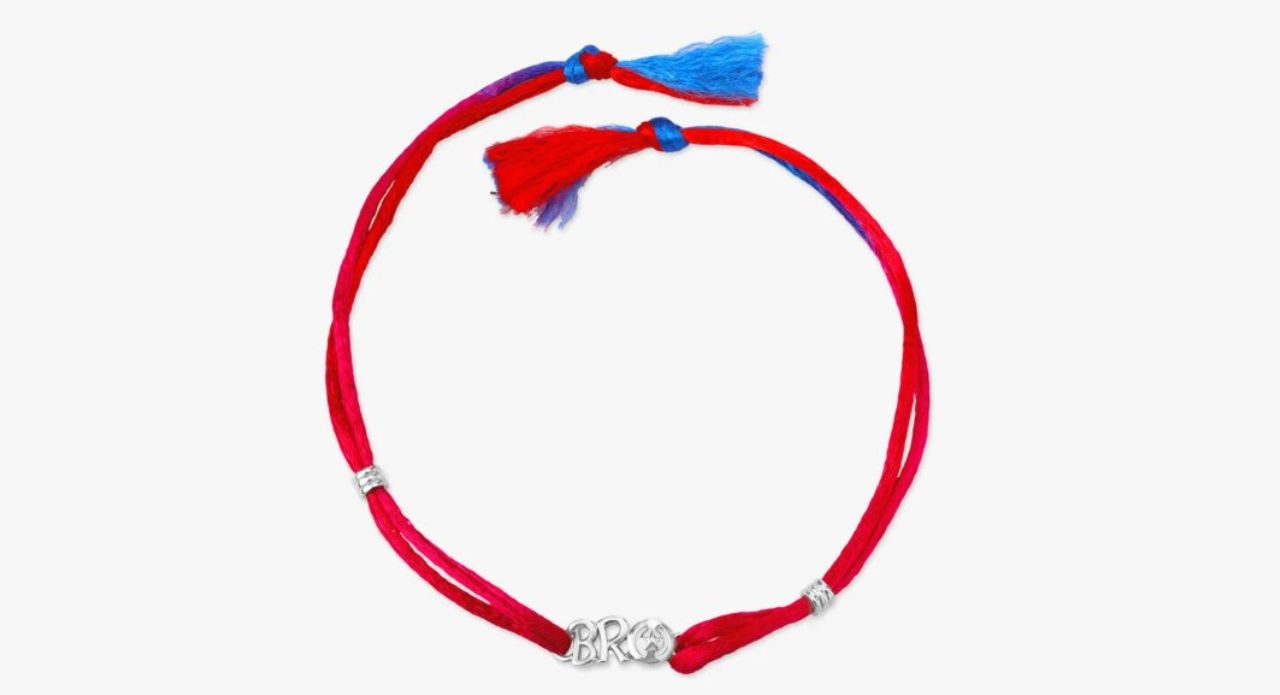
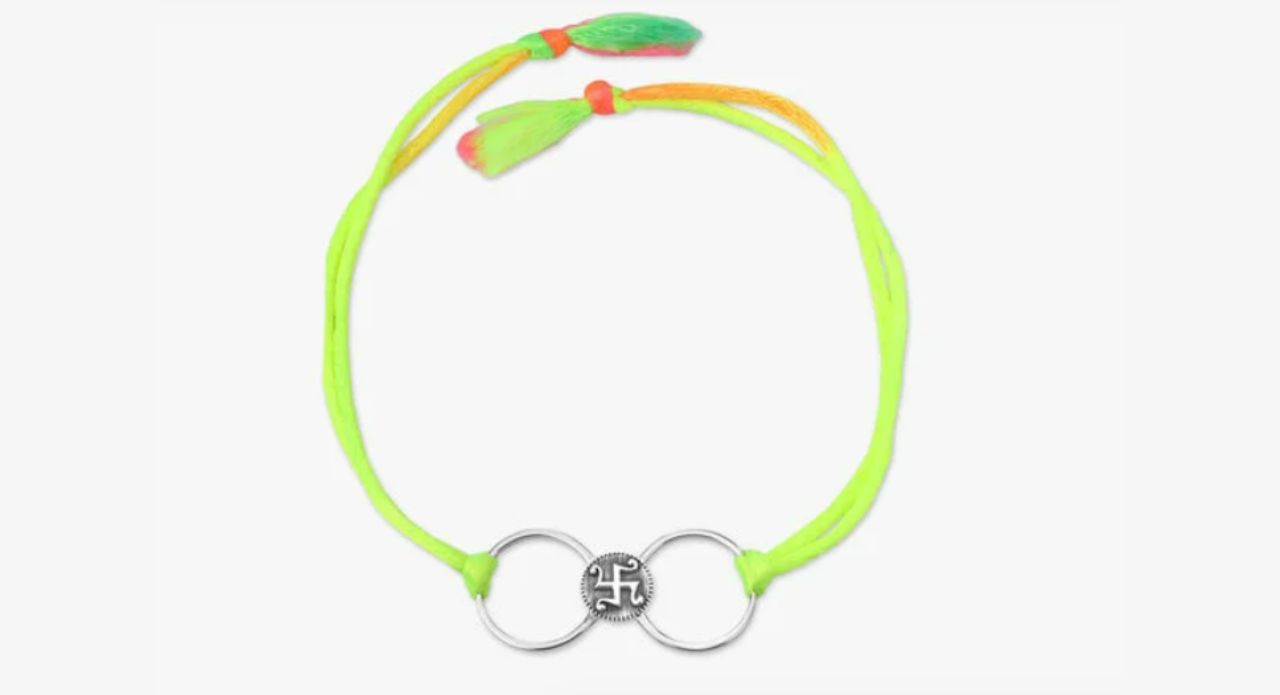
Five premium options currently listed by Indian brands illustrate the shift. Tanishq’s Tree of Life Silver Rakhi leads at INR 5,358 (approx.), followed by its Stellar Embrace Silver Rakhi at INR 4,027 (approx.). Its Swastik Grace Silver Rakhi is priced at INR 2,814 (approx.), while Cherished Connection Silver Rakhi costs INR 2,436 (approx.). Shaya by CaratLane’s Kolam Sikku 925 Silver Rakhi rounds out the selection at INR 1,498 (approx.). Prices are as listed by the brands at the time of writing and may change with availability or offers.
Also Read: Why Paraiba Tourmaline Is the World’s Most Coveted Coloured Gemstone
The traditional thread is unlikely to disappear, nor does it need to. The premium Rakhi simply represents another expression of the same ritual, one shaped by India’s changing luxury vocabulary. What was once bought as a small festive token is increasingly being selected with the care given to jewellery or other meaningful gifts. The transformation is subtle but telling: in modern Indian luxury, even the smallest symbols of family can become objects designed to last.