Audemars Piguet Unveils New Royal Oak Joaillerie Collection
Gerald Genta’s 1972 steel icon has evolved into gem set bracelets inspired by frozen lakes and solar eclipses, taking the Royal Oak into its most audacious chapter yet
Few watch designs have earned the right to call themselves an icon quite as decisively as the Royal Oak. Since Gérald Genta sketched its octagonal bezel and exposed screws in 1972, defying convention by rendering a luxury watch in stainless steel, the Royal Oak has spent more than five decades being reinterpreted, reimagined and pushed into territory its original design never strictly anticipated: skeletonised movements, complications of staggering complexity, and now, in its boldest expansion yet, fine jewellery in its own right. The new Royal Oak Joaillerie collection takes the model’s geometry, its play of light across angular surfaces, and its unmistakable architectural confidence, and translates all of it into a language of gemstones, gold and hand-finishing, arguing that the line separating a watch from a piece of jewellery was always more porous than it appeared.
An Icon Reimagined as Bold Jewellery
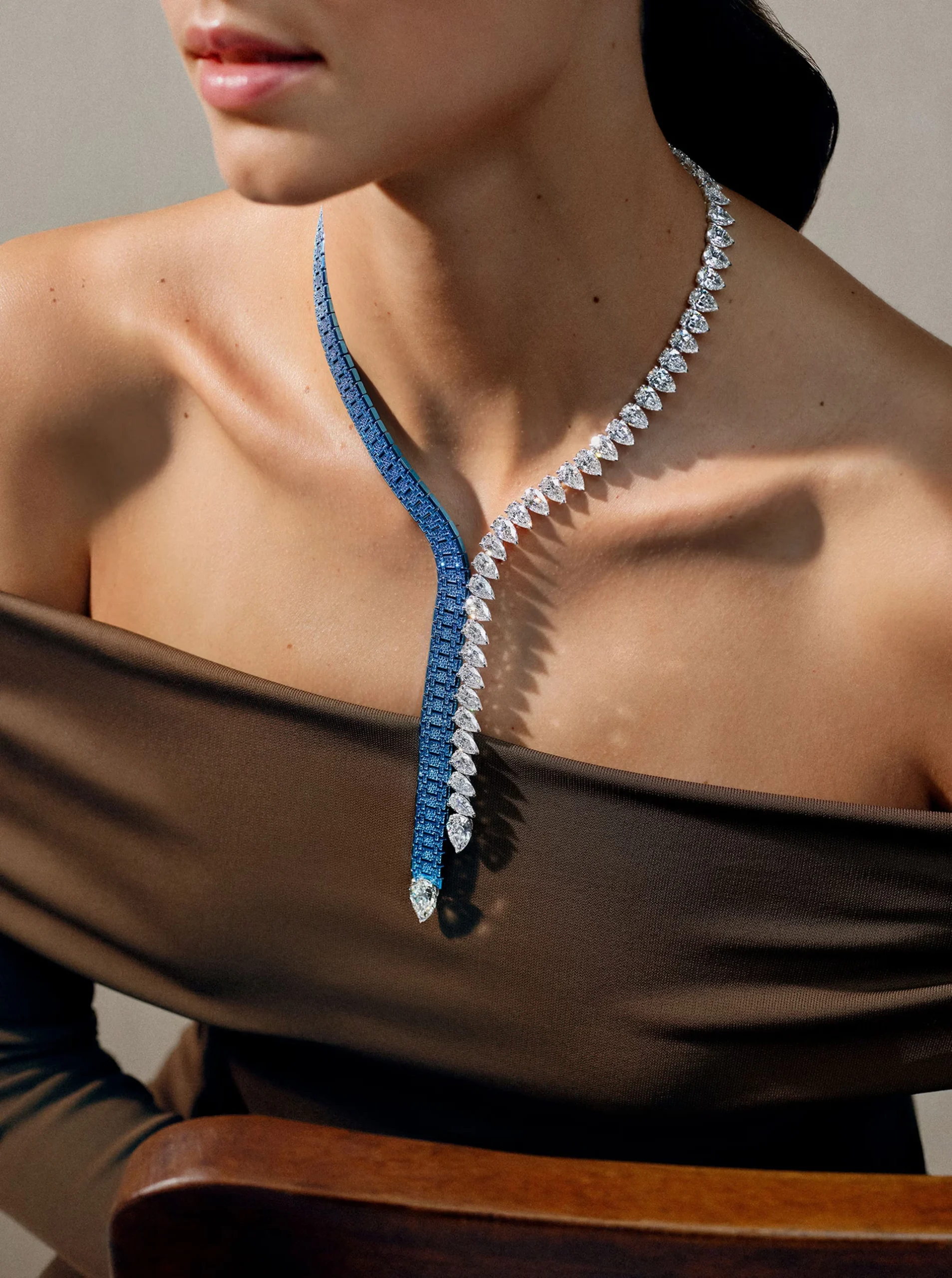
The Royal Oak’s affinity with jewellery is not an afterthought grafted onto an unrelated design. Its striking geometry and daring character, the collection argues, have always carried an intrinsic kinship with the jeweller’s craft, one that has continuously evolved since the model’s 1972 debut. What the Royal Oak Joaillerie collection does is formalise that relationship, taking the brand’s expertise in hand-finishing, precision and the interplay of light, honed over decades on watch cases and dials, and reimagining it through contemporary jewellery craftsmanship. The result is presented not as a spin-off but as a single expression where watchmaking and jewellery genuinely converge.
Also Read: Pranav Saboo Interview: GPHG And Ethos Celebrate Contemporary Watchmaking In India
The Evolution of a Jewellery Legacy
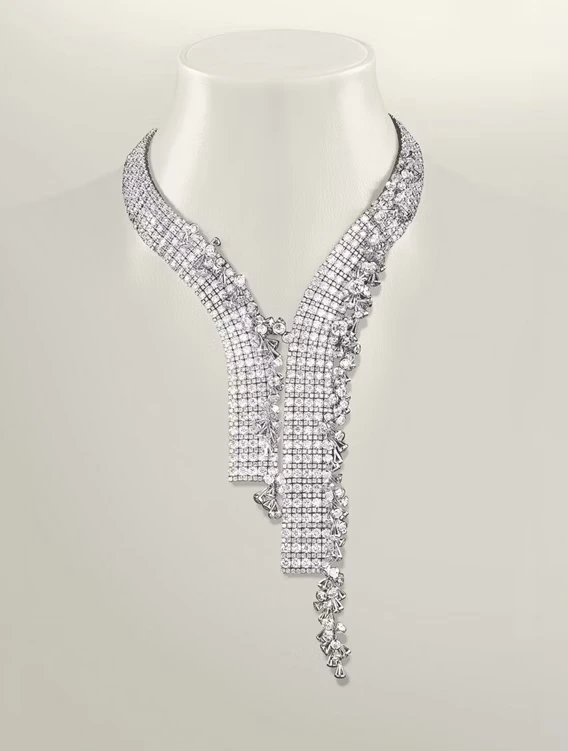
This is not Audemars Piguet’s first conversation with the world of fine jewellery. That dialogue stretches back to the late 19th century, when the maison collaborated with renowned names including Tiffany, Cartier, Oscar Heyman and Bvlgari on pendant, brooch and ring watches, culminating in emblematic pieces such as the 1929 “Tutti Frutti” timepiece, a creation still referenced today as a high point of early 20th-century gem-setting ambition. That lineage deepened considerably in the 1980s with the establishment of an in-house jewellery workshop, which gave rise to increasingly expressive designs, from the Baroque cuff watch to the Millenary Précieuse and the brand’s broader Haute Joaillerie collections. The new Royal Oak Joaillerie collection positions itself as the natural continuation of that century-long trajectory, bringing the Royal Oak’s distinct aesthetic codes into direct dialogue with the Vallée de Joux, the remote Swiss Jura valley that has been Audemars Piguet’s home since its founding, drawing on the valley’s landscape for its motifs, its textures and its contrasts of material and light.
Dream of Joux: The Valley Rendered in Gemstones
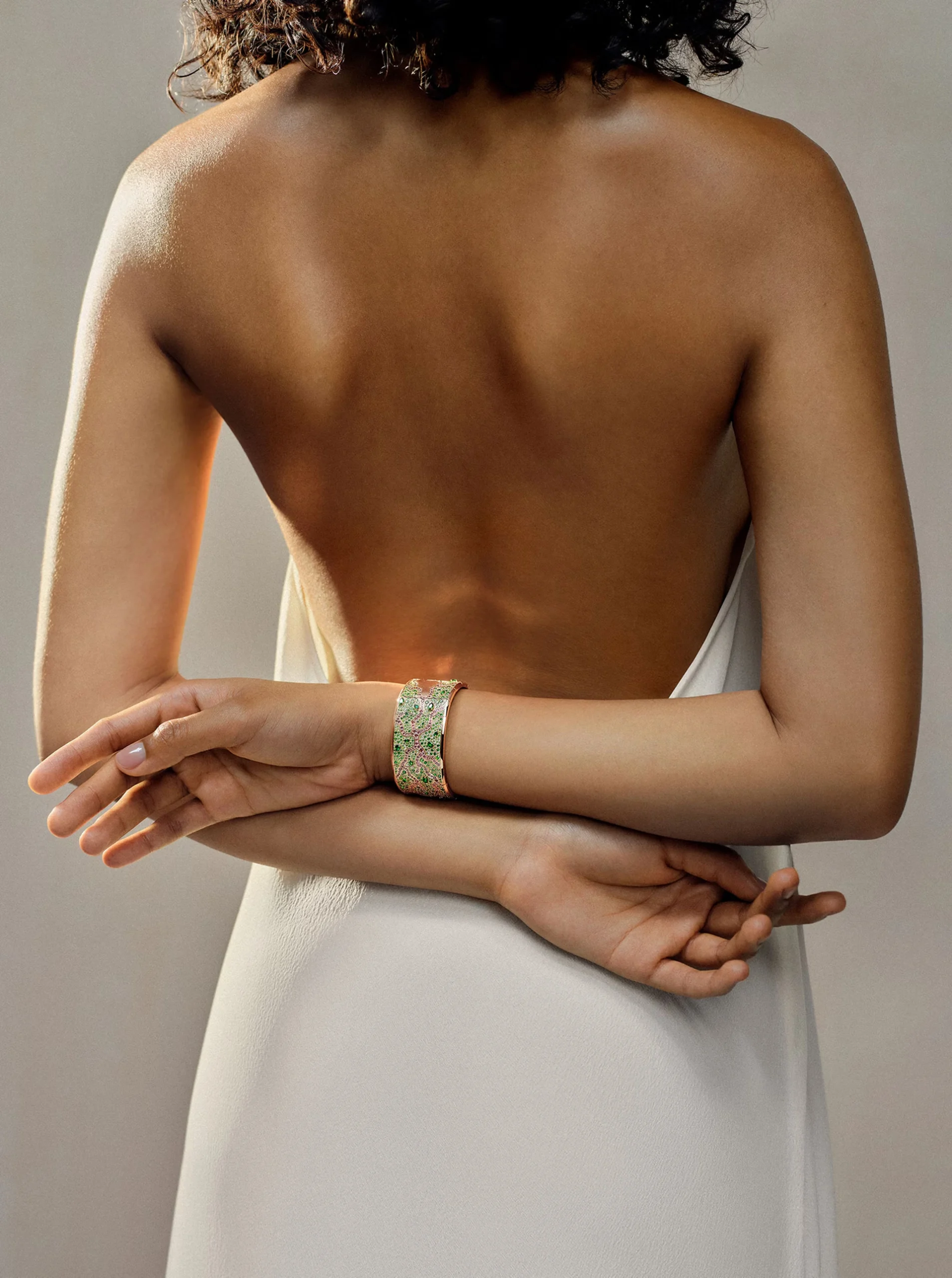
The Dream of Joux line interprets the Vallée de Joux’s shifting, multifaceted landscape through intricate gem-setting, adding depth, rhythm and a kind of sensual resonance to the Royal Oak’s already-bold architecture. Spanning vibrant gemstone bracelets alongside matching necklaces and earrings, the line evokes frozen lakes, night skies and floral motifs entirely through colour, texture and the careful choreography of light across faceted stones, translating a very specific sense of place into wearable form.
Also Read: Opal Jewellery: Why October’s Birthstone Makes the Perfect Buy
Frosted Gold Series: Light Captured in Texture
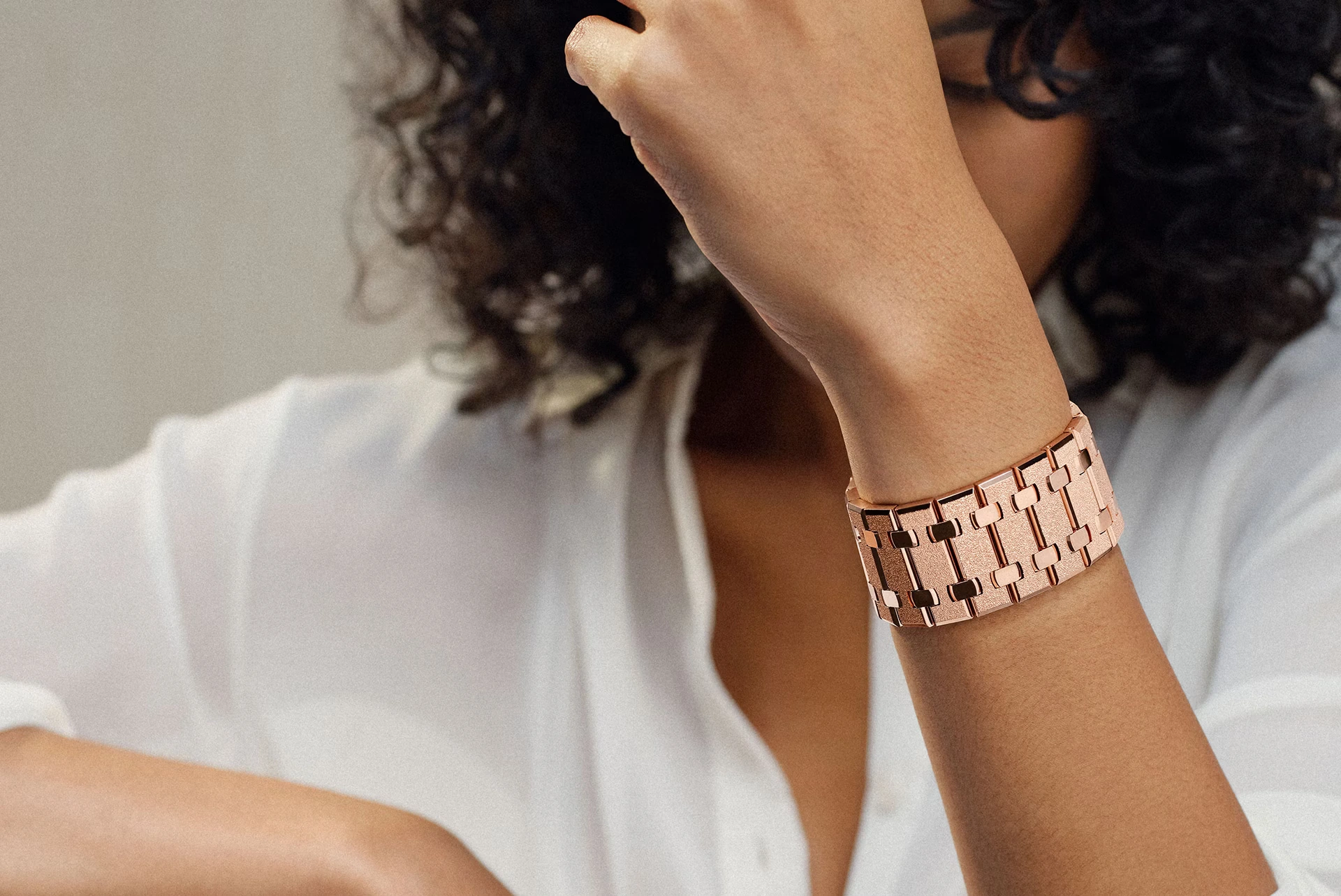
The Frosted Gold creations take a different approach to the same landscape, capturing the Vallée de Joux’s ever-changing luminosity through texture rather than colour. Developed in collaboration with jewellery designer Carolina Bucci, the series draws on an ancient Florentine hand-finishing technique to produce a radiant diamond-dust effect across the gold surface, lending each piece a subtle, shifting brilliance that changes character depending on how the light catches it, a signature finish that has become closely associated with Bucci’s own work and now finds a new home within the Royal Oak’s architecture.
Risoud Eclipse: Celestial Drama in Titanium
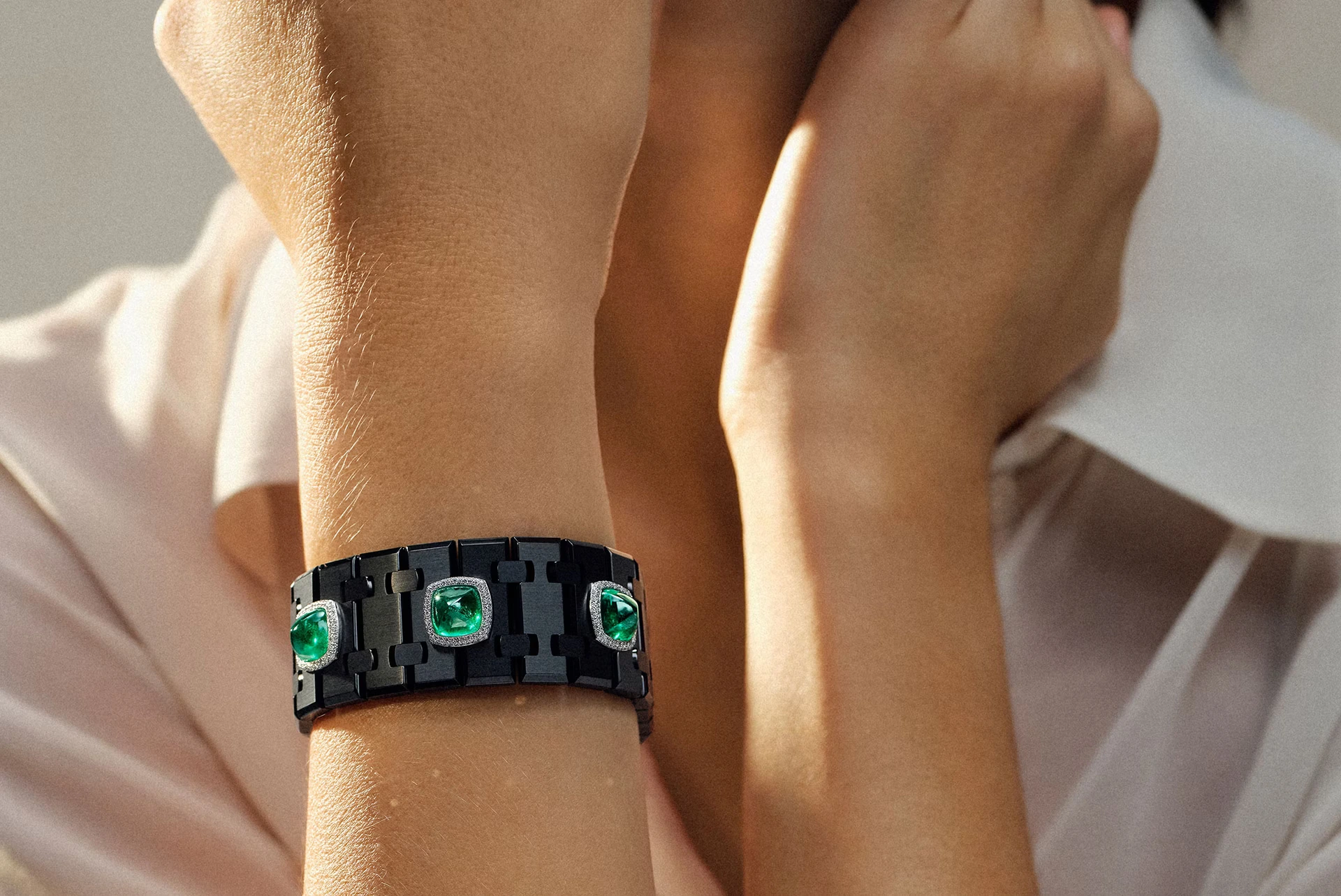
The third line, Risoud Eclipse, draws on the Vallée de Joux’s historic role in celestial observation, reimagining the region’s Risoud Forest as it might appear beneath the glow of a solar eclipse. Here, the palette turns deliberately dramatic: black titanium set against emeralds and diamonds, finished with refined techniques that produce a subtle, almost smouldering interplay of light and shadow across the piece, a markedly different mood from the brighter, more luminous Dream of Joux and Frosted Gold lines, but one that draws from exactly the same source material.
A Single Expression of Watchmaking and Jewellery
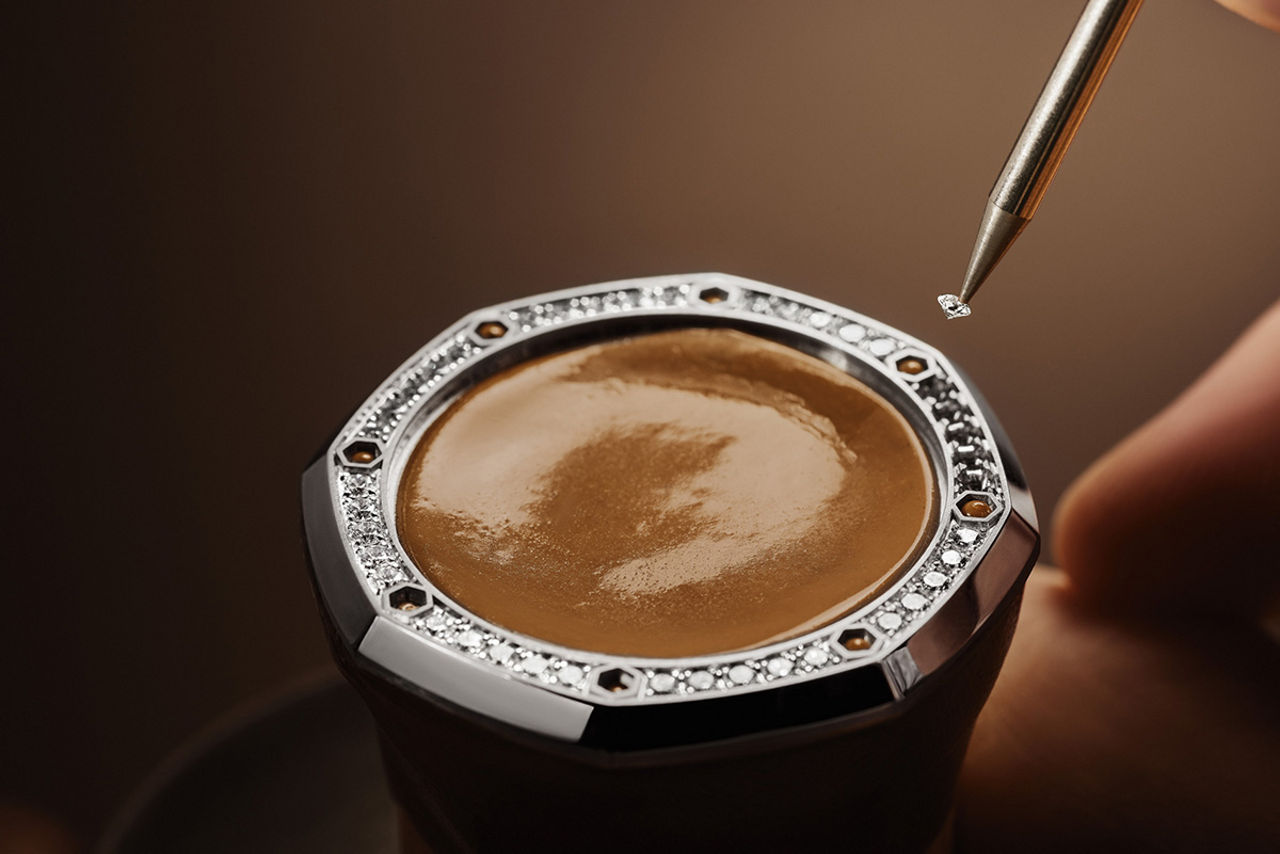
Taken together, the three lines of the Royal Oak Joaillerie collection make a coherent argument rather than three disconnected experiments: that the same geometry which made the Royal Oak a watchmaking icon in 1972 can carry an equally compelling identity as fine jewellery, provided it is handled with the same obsessive attention to finishing, proportion and material honesty that has defined the model for more than fifty years. For a design that has already reinvented itself across skeleton movements, complications and countless material variations, jewellery may be less a departure than simply the next, rather inevitable chapter.