Five Stylish Ceramic Watches Worth Adding To Your Collection
Scratch-resistant, featherlight and increasingly sculptural, ceramic has quietly become fine watchmaking's most ambitious material of choice
There exists, within the long history of watchmaking, a recurring pattern worth noting: every generation of craftsmen eventually grows restless with the materials their predecessors considered sacred. Steel gave way to titanium’s lightness, gold yielded occasionally to platinum’s gravity, and now, in our own rather more experimental era, an entirely different substance has quietly claimed the industry’s imagination: ceramic. It is a material with none of the romantic pedigree of precious metal, no centuries of aristocratic association to lean upon, and yet it has, through sheer technical virtue, scratch resistance bordering on the absolute, a lightness that borders on the implausible, and a capacity to hold colour and finish with uncanny permanence, earned itself a place at horology’s highest table. What follows is less a simple survey than an argument: that ceramic, once dismissed as merely practical, has become one of contemporary watchmaking’s most genuinely creative frontiers. Outlook Luxe takes a look at five watches making precisely that case.
Bremont Supermarine Full Ceramic Deep Blue
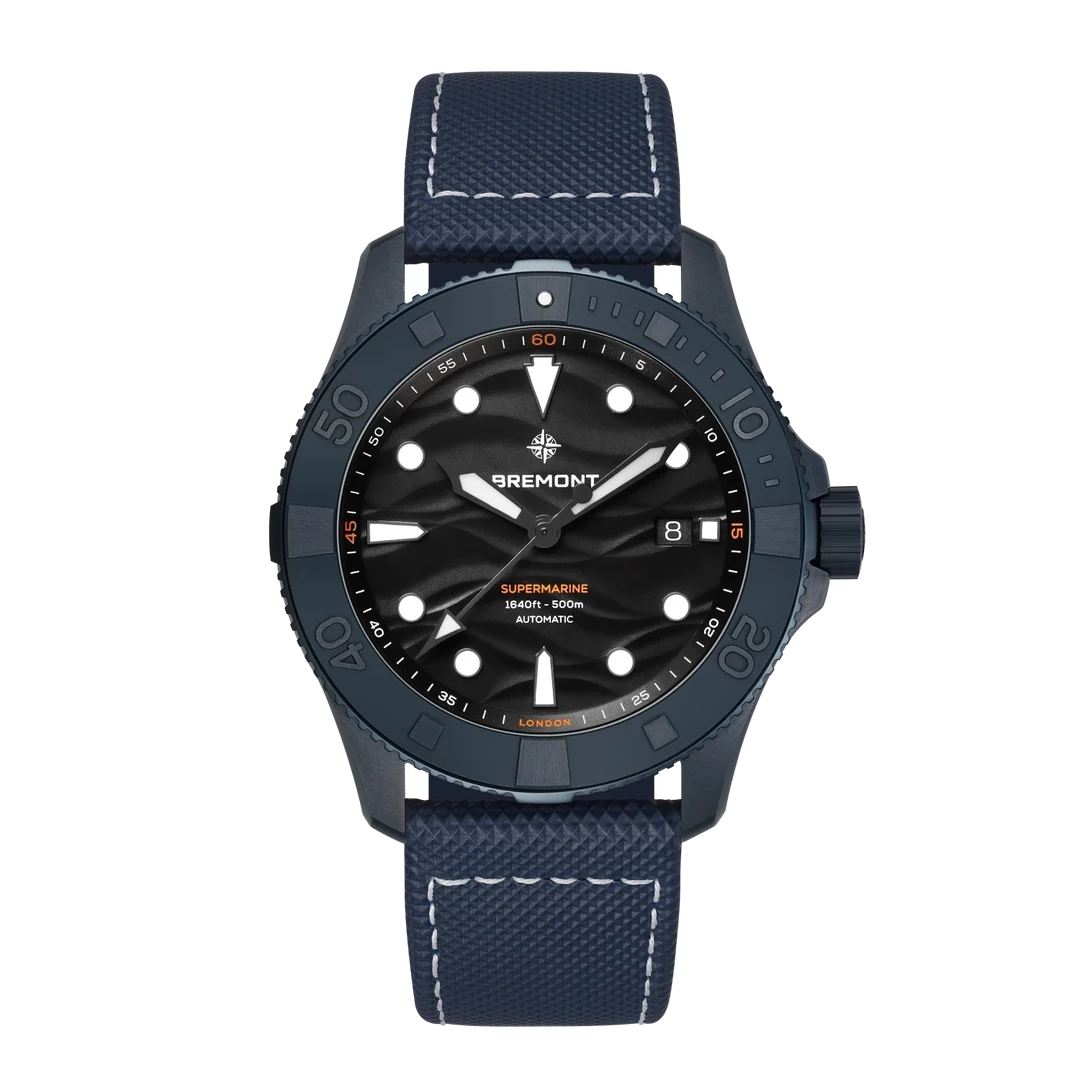
Bremont’s latest chapter in its Supermarine Full Ceramic line draws its inspiration from the meeting point of ocean and ice, a fittingly elemental concept for a dive watch built to withstand the planet’s harshest environments. The 43mm mono-block blue ceramic case, paired with a titanium inner case, delivers both remarkable scratch resistance and genuine lightness on the wrist, while a helium escape valve and 500 metres of water resistance confirm this is engineering built for serious depth rather than decorative pretence. A knurled titanium unidirectional bezel holds a matching blue ceramic insert, and the black wave-effect dial carries trapezoid indexes flowing from the bezel into a naval-inspired crosshair, filled with blue-emission Super-LumiNova. The automatic BB64AH movement offers a 56-hour power reserve, and the watch was tested in suitably brutal fashion by Bremont Ambassador Aldo Kane across Iceland’s glacial lakes and ice fields. Limited to 250 pieces and presented on a blue embossed rubber strap with leather lining, it is a watch built as much for genuine expedition as for admiration.
Also Read: How Micro Watch Brands Are Taking Risks The Big Names Won’t
Titoni Impetus CeramTech
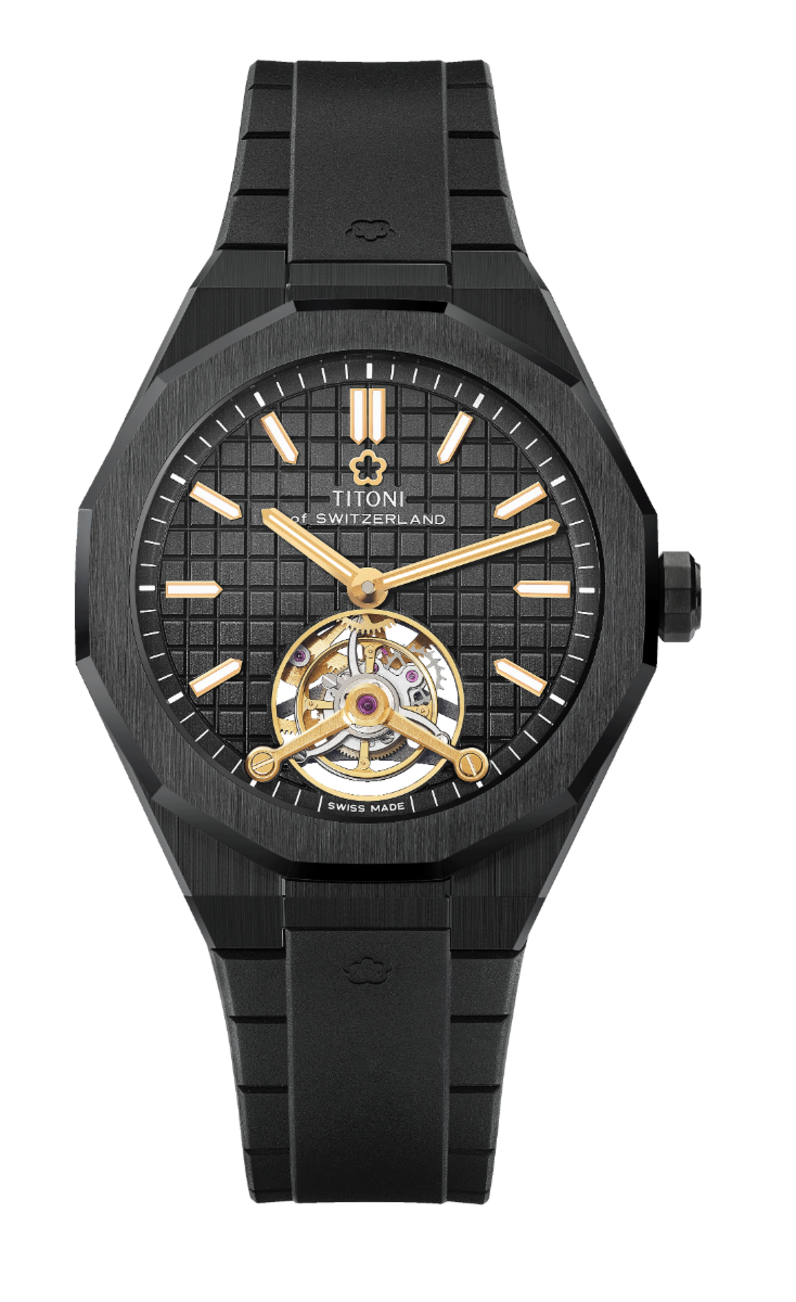
The Titoni Impetus CeramTech takes ceramic’s structural possibilities and pushes them toward genuine architecture. Its 41mm case, crafted entirely from black high-tech ceramic, pairs vertically brushed surfaces with polished facets to accentuate a distinctly polygonal bezel, while the vertically brushed black dial gains further depth from a finely executed quadro pattern. Rose gold-plated hands and indexes introduce a warm contrast against the black ceramic, a detail that extends into the movement itself: the hand-wound Calibre T1000, finished in anthracite Anthradec coating with a rose gold-plated tourbillon bridge visible through the transparent caseback. With a power reserve exceeding 100 hours and regulation across six positions, the tourbillon at 6 o’clock forms both the mechanical and visual heart of the watch, hand-assembled in Titoni’s own atelier in Grenchen.
Urwerk UR-100V “LightSpeed” Ceramic
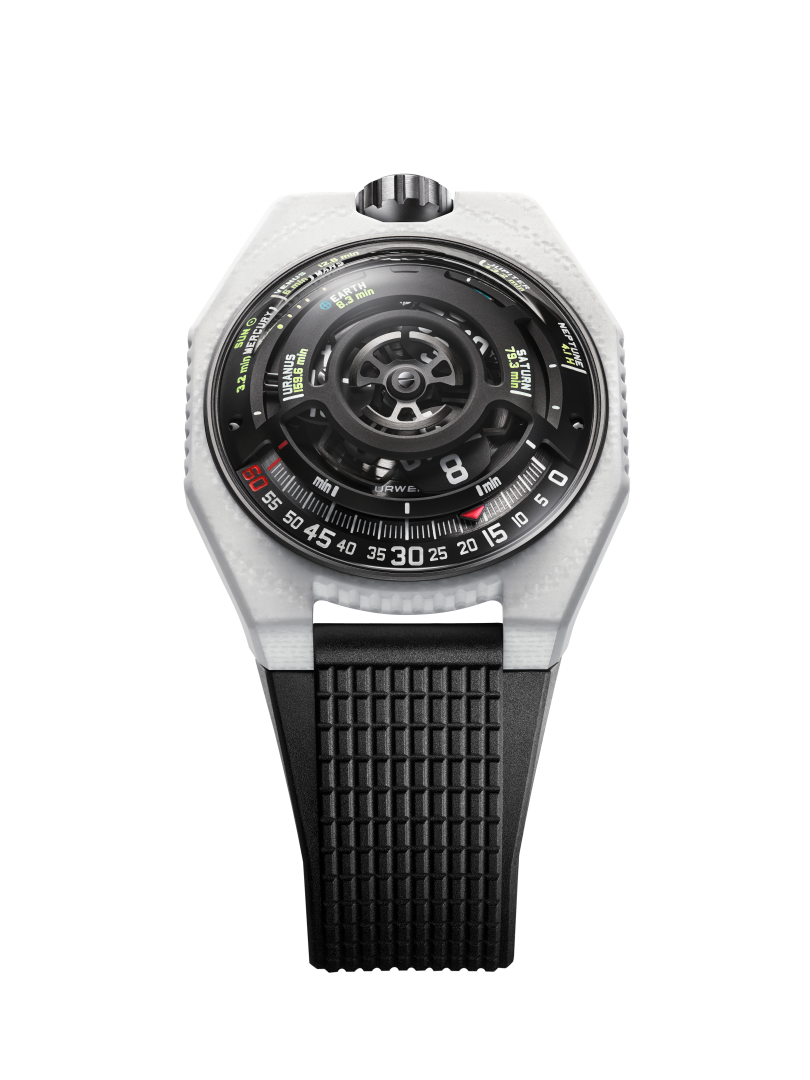
Where other brands use ceramic, Urwerk has reinvented it entirely. Rather than relying on conventional sintered ceramic, prized for hardness but prone to shattering under violent impact, Urwerk developed its own ceramic composite, a polymer matrix woven with ceramic fibres, glass fibre and carbon, using techniques borrowed from aeronautics and medical laser-guided processes. The result, as co-founder Felix Baumgartner explains, is a material engineered specifically not to break. That innovation serves a genuinely cosmic concept: the UR-100V LS Ceramic’s wandering hour satellite, upon leaving its minutes track, traces the journey of a photon travelling from the sun to each of the solar system’s eight planets, translating measurable astronomical distances into mechanical motion on a 43mm DLC-treated titanium and white ceramic composite case. Powered by the automatic UR 12.02 calibre with its distinctive Windfänger air-resistance turbine, delivering a 48-hour power reserve, the watch stands as proof that ceramic’s evolution is as much about reimagining the substance itself as applying it decoratively.
Also Read: Jacob & Co. Palatial Flying Tourbillon Minute Repeater: The Art of Chiming Time
Tudor Black Bay Ceramic
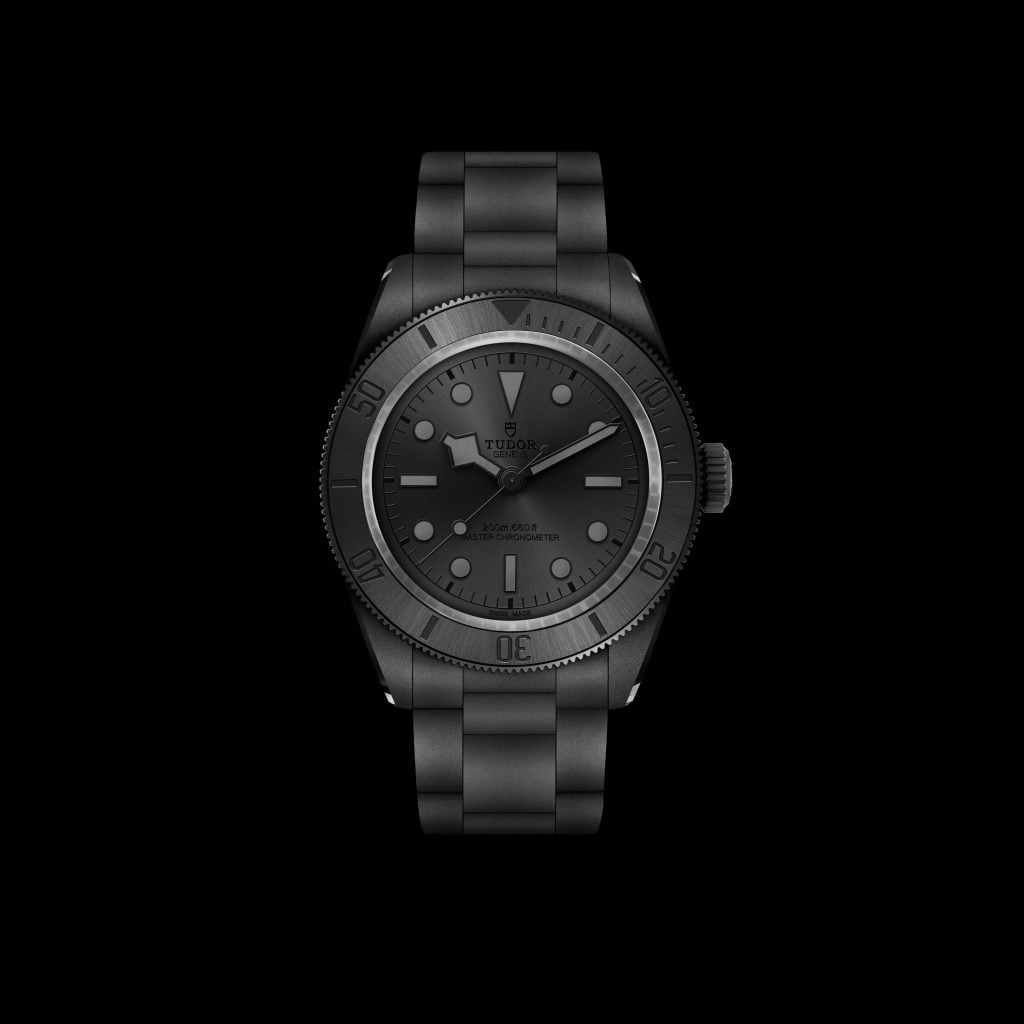
The Tudor Black Bay Ceramic commits entirely to monochrome, its 41mm matt black ceramic case micro-blasted to a muted, almost tactical finish that absorbs light rather than reflects it. An all-ceramic three-link bracelet continues the theme, feather-light yet visually substantial, flowing into a unidirectional bezel whose black ceramic insert carries a subtle sunray satin texture. The black-on-charcoal dial, domed and quietly complex, features Tudor’s signature Snowflake hands glowing with restrained intensity through darkened luminescent material. Beneath it all beats the Manufacture Calibre MT5602-U, Master Chronometer certified with a silicon hairspring and a 70-hour power reserve, its openworked tungsten rotor echoing the watch’s purposeful, unapologetically dark aesthetic throughout.
Audemars Piguet Royal Oak Selfwinding Flying Tourbillon

Audemars Piguet demonstrates ceramic’s colour potential with its Royal Oak Selfwinding Flying Tourbillon, executed entirely in “Bleu Nuit, Nuage 50” ceramic across case, bracelet and the brand’s signature Grande Tapisserie dial. The 41mm case, water-resistant to 50 metres, pairs a glareproofed sapphire crystal and caseback with 18-carat white gold hands and hour markers, filled with luminescent material against a blue inner bezel. At 6 o’clock, the rhodium-toned flying tourbillon appears to float beneath the dial thanks to its bridge-free construction, powered by the automatic Calibre 2950 with a 65-hour power reserve, a watch that proves ceramic’s monochrome discipline can coexist beautifully with genuine mechanical theatre.