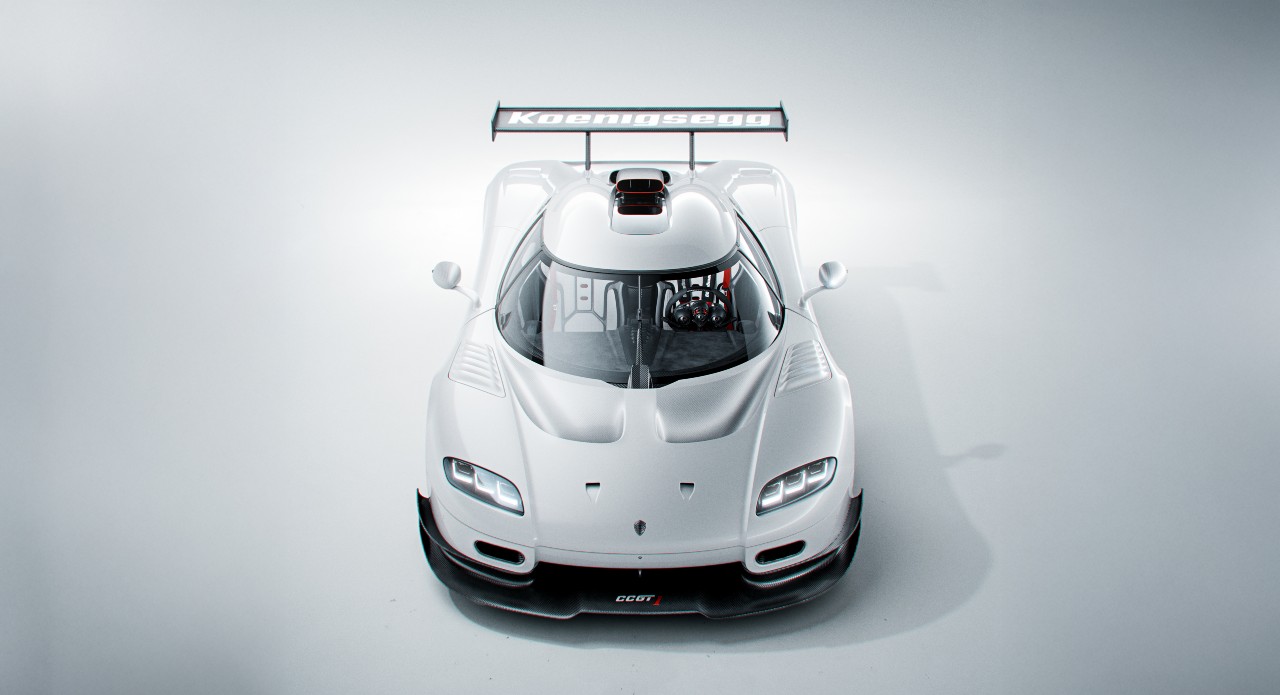


There are many ways to build a hypercar. You can spend several years designing something impossibly fast, add some enormous wings, give it a name nobody can pronounce and then discover that the tyres are the only things stopping it from becoming a very expensive aircraft. Or you can do what Christian von Koenigsegg did nearly two decades ago and decide that your new supercar company should go endurance racing. The result was the CCGT, a machine conceived for the GT1 class and engineered with such seriousness that Koenigsegg had studied the regulations before it had even finished its first prototype. The car was light, powerful and aerodynamically aggressive. It looked ready to go racing. There was just one small problem. The FIA changed the rules. The CCGT never got to compete. And now, almost 20 years later, Koenigsegg has decided to settle the argument properly with the CCGT1.
The Race Car That Never Got Its Race
The original CCGT was not some marketing exercise dreamed up after lunch. Christian von Koenigsegg had been thinking about endurance racing from the very beginning, studying the GT1 regulations while developing the first CC prototype and ensuring its dimensions would already comply with the class. When the actual racing programme began, Koenigsegg worked with legendary engineer and fabricator Dag Bölenius to build a machine that weighed roughly 1,000kg, comfortably below the 1,100kg class limit. That left room for ballast to be positioned wherever it was needed to optimise balance. Underneath the bodywork was a naturally aspirated 5.0 litre Koenigsegg V8 producing 600hp, driving the rear wheels through a magnesium sequential gearbox, while its aerodynamic package generated more than 600kg of downforce. This was not a car that intended to participate. It intended to win.
Also Read: Automobili Lamborghini Unveils The Revuelto SV To The World
And Then The FIA Ruined Everything
The CCGT was tested by renowned driver Loris Bicocchi, and from its first laps it demonstrated genuine competitive pace. Then, just two months into shakedown testing, the FIA rewrote the GT1 regulations. The new rules favoured higher volume production cars, which was rather awkward for a company whose entire business model involved building extremely small numbers of extremely complicated cars. Manufacturers began abandoning the increasingly expensive series, and eventually GT1 itself disappeared. Koenigsegg’s racing ambitions were shelved and the CCGT programme was cancelled before it could complete a single competitive lap. One CCGT was built. One. It subsequently spent 15 years with its first owner before being offered for sale at the Goodwood Festival of Speed in 2024. It was, in effect, one of the world’s fastest racing cars that had never actually been allowed to race.
Now It Gets Its Second Chance
The plot twist is that the original CCGT has now been fully refurbished by Koenigsegg’s Legend Division and is preparing to compete in the historic GT1 class against the very cars it was supposed to fight two decades ago. It is a wonderfully absurd piece of unfinished business. Imagine spending years building a racing car, being prevented from racing because someone changes the rulebook, waiting nearly two decades and then finally getting the opportunity to line up against your old enemies. This is automotive revenge, but with significantly more carbon fibre.
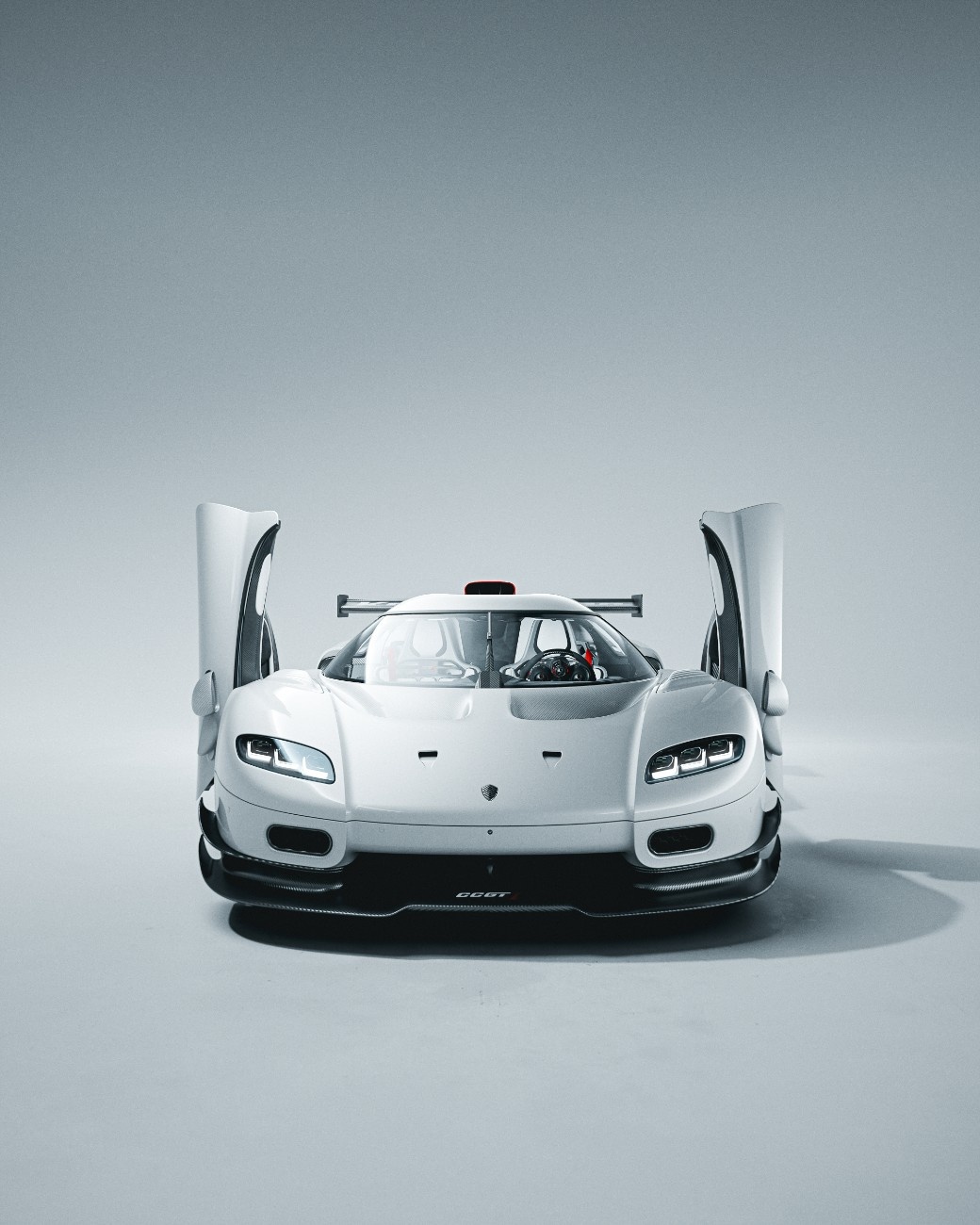
The new CCGT1 is Koenigsegg’s modern tribute to that unfinished racing project. Built on the award-winning CC850, itself a tribute to the original CC8S, the CCGT1 takes the spirit of the original race car and turns it into a fully homologated, road-legal Megacar. Which is probably the least sensible interpretation of the phrase “tribute” ever conceived. It is designed to be a ferocious road car, but with the optional factory track package it becomes Koenigsegg’s fastest circuit performer yet.
1,600 Horsepower. Because Obviously.
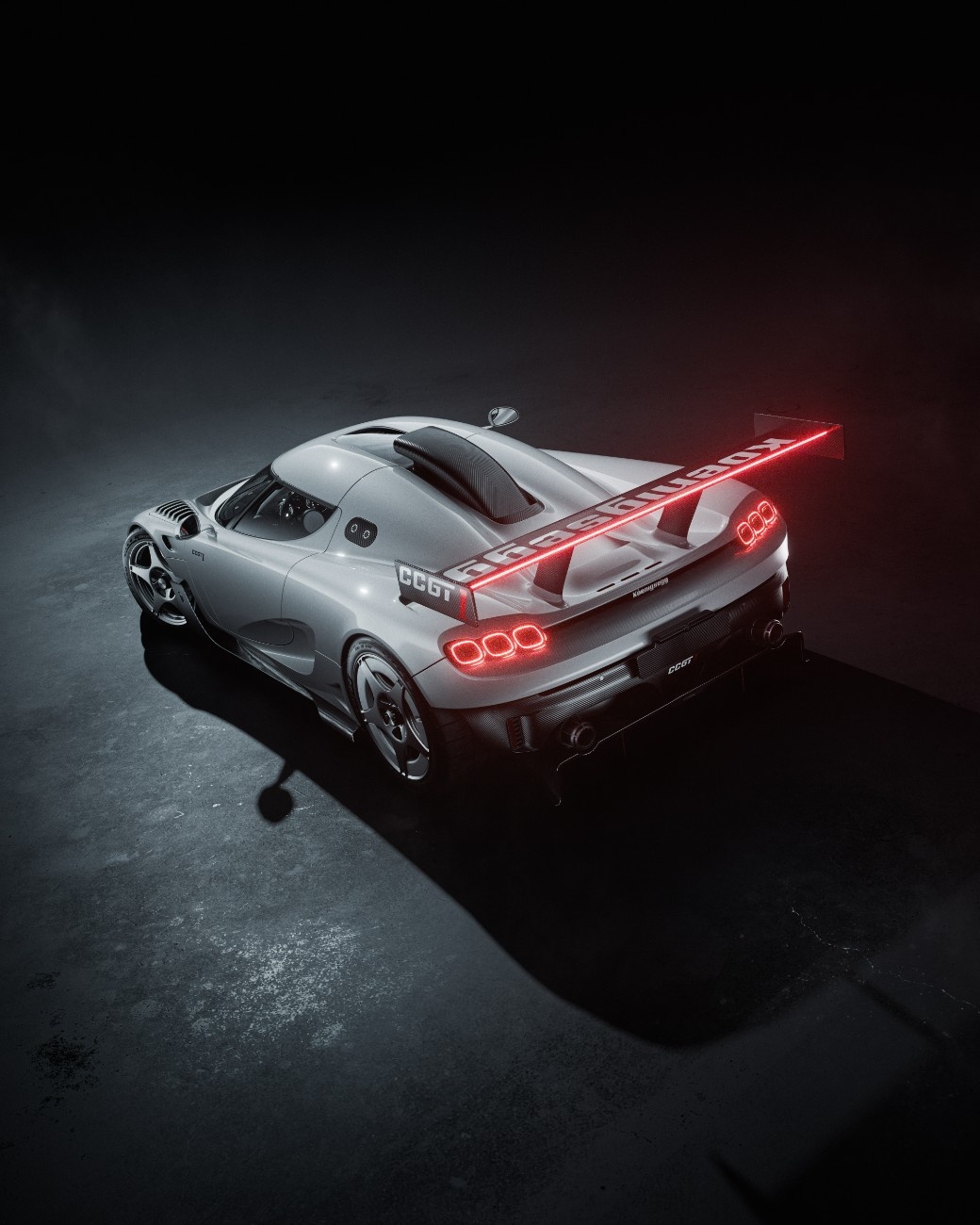
The CCGT1 gets a twin-turbocharged V8 producing 1,280hp on ordinary pump fuel and a frankly ridiculous 1,600hp on E85 biofuel. The engine management system can operate on any blend between the two. There are plenty of cars that can produce enormous horsepower figures, but Koenigsegg’s trick is making the machinery around the engine equally interesting. The CCGT1 introduces a new Koenigsegg Sequential Shift system controlling the company’s Light Speed Transmission. There is a clutch pedal for taking off, followed by ignition-cut, clutchless shifts for maximum performance. It is essentially the mechanical drama of a racing gearbox without requiring you to spend your entire afternoon fighting with a traditional H-pattern transmission.
If all of this sounds too easy, Koenigsegg has an answer. The CCGT1 can also be ordered with the company’s Engage Shift System, an optional gated six-speed manual. It uses six of the LST’s nine gears in manual mode, while the full nine-speed automatic remains available when traffic appears and ruins everything. This is wonderfully unnecessary and therefore entirely appropriate. The world has spent decades developing automated gearboxes that shift faster than humans, and Koenigsegg has responded by saying, “Yes, but what if you could have a metal gate and a clutch instead?”
Also Read: Bugatti Presents The Destrier As A One-Off W16 Hypercar Based On The Bolide
The Aerodynamics Are Doing Some Serious Work
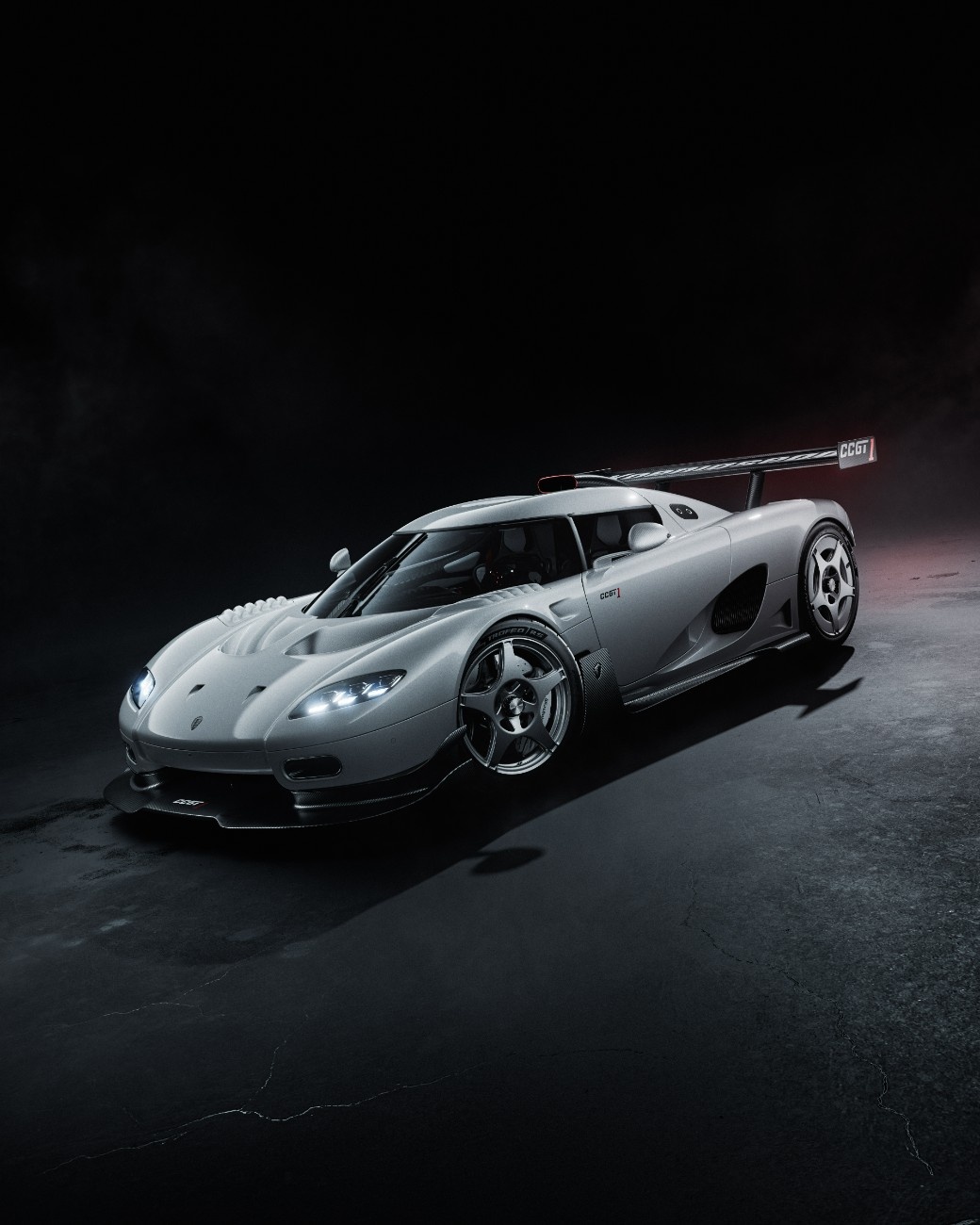
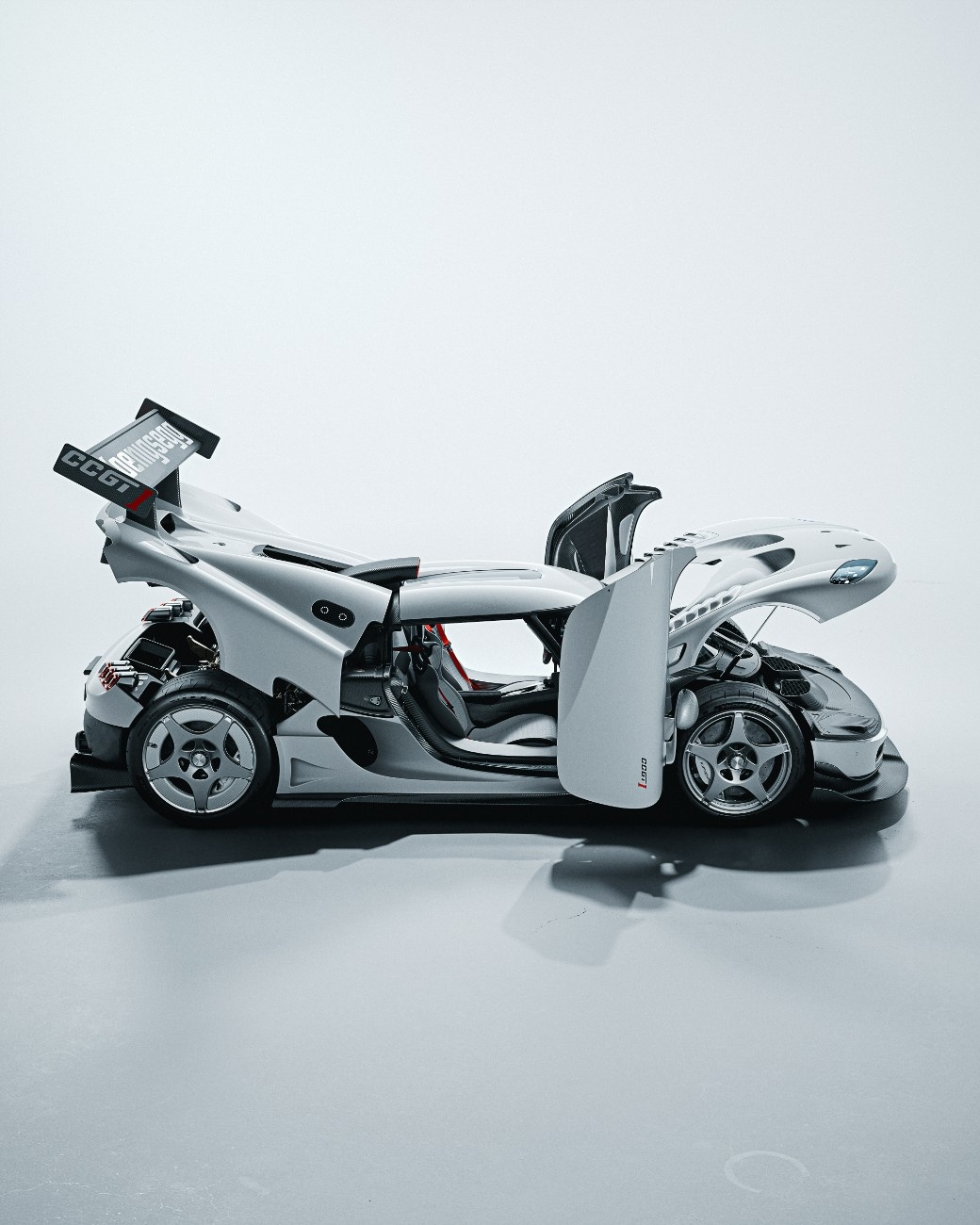
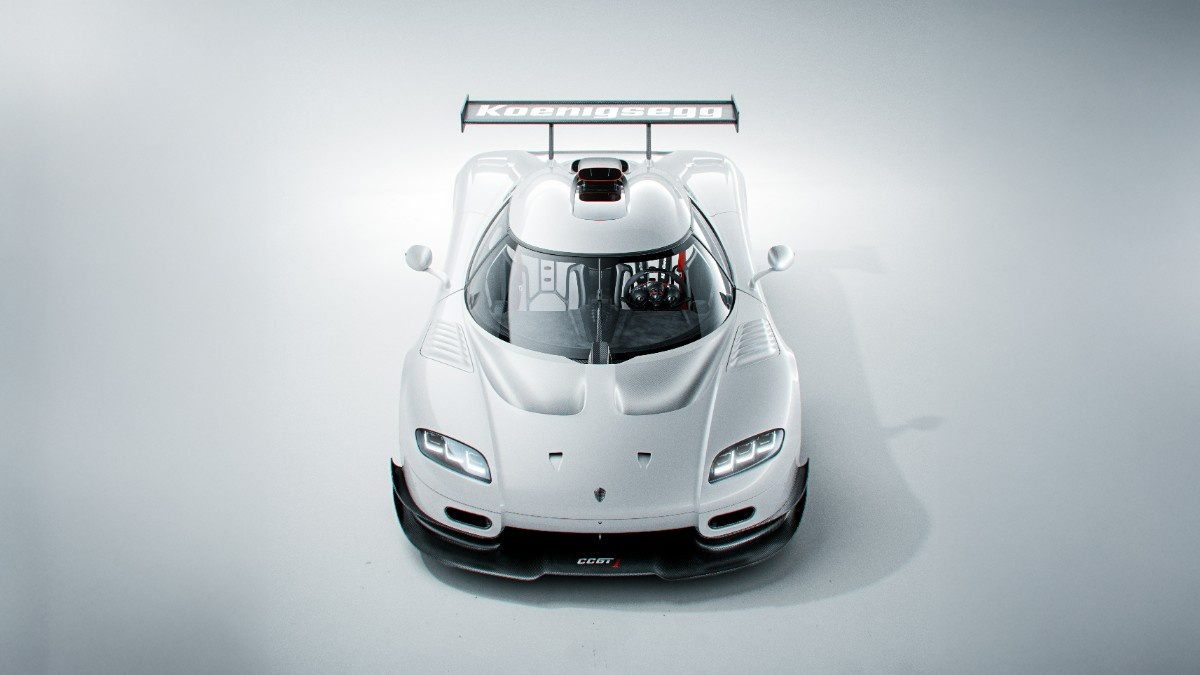
Nearly every body panel has been redesigned from the CC850, with only the doors and removable roof remaining. The objective was simple: create more usable downforce while ensuring the car could survive sustained track sessions without cooking itself. The star of the aerodynamic show is the enormous rear wing, inspired directly by the original CCGT. It is active, with 30 degrees of adjustment, automatically moving between low-drag, air-brake and high-downforce settings without the driver having to touch anything. At 250 km/h, the CCGT1 can generate up to 800kg of downforce. That places it between the Jesko Attack and Sadair’s Spear for peak downforce. In other words, the air above the car is doing almost as much work as the engine.
Built To Survive A Track Day From Hell
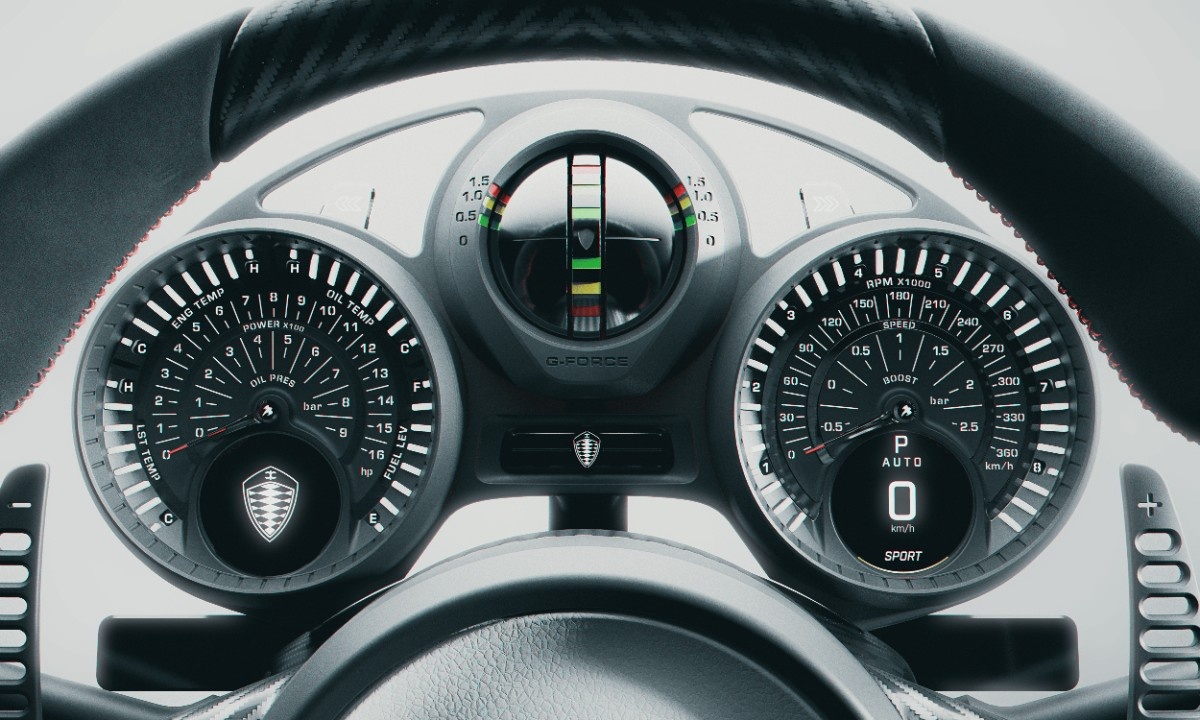
Koenigsegg has also added a new roof scoop that feeds an enlarged oil cooler and a dedicated cooling system for the dampers. This matters because making 1,600hp for approximately seven seconds is one thing. Making it repeatedly around a circuit is quite another. The optional track package therefore goes considerably further, adding slick tyres, a carbon roll cage, racing seats, six-point harnesses, air jacks, race exhaust, track-focused suspension and brakes, enhanced aerodynamics, data logging and a full communications and telemetry system. It can even be installed or removed through a Koenigsegg Certified Dealer. This is not simply a road car with some sticky tyres. It is an attempt to deliver the experience of an actual race weekend.
The Cockpit Is Delightfully Mechanical
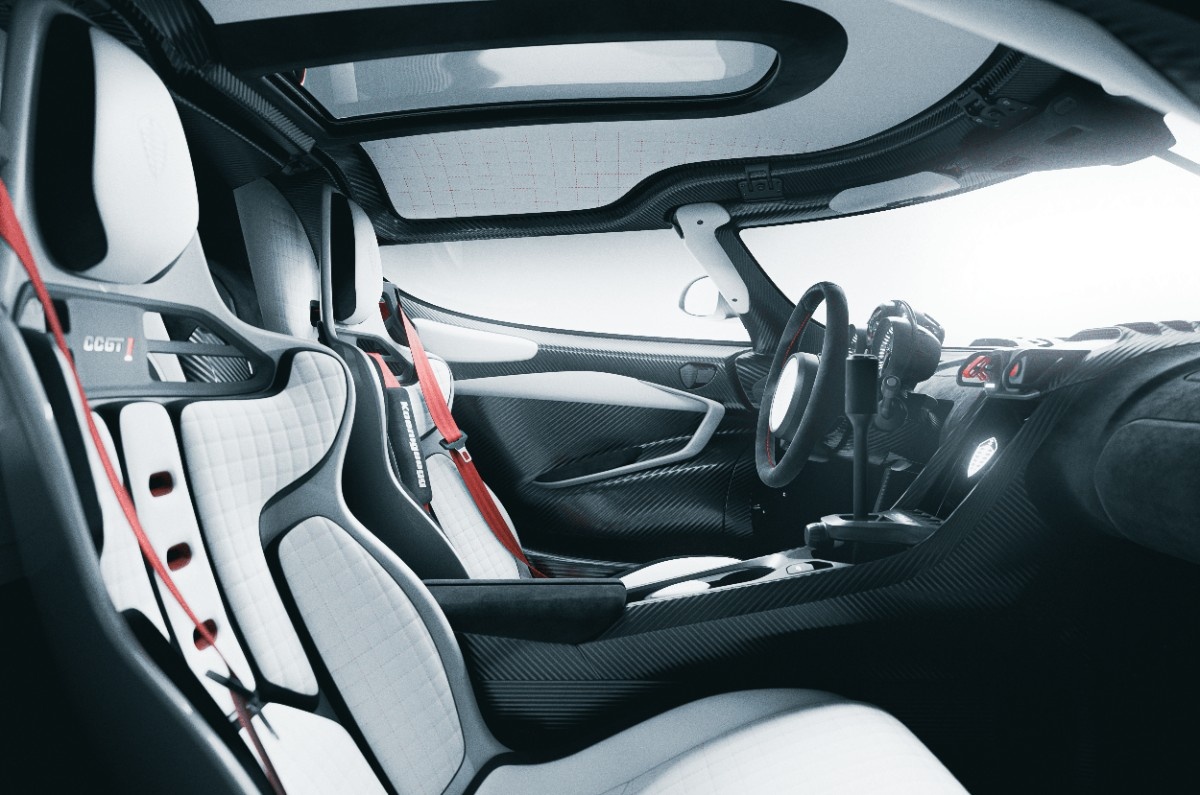
Inside, Koenigsegg has resisted the temptation to turn everything into a touchscreen. There is a covered ignition switch, a fuel-pump priming toggle and a large red starter button. The third-generation Chronocluster keeps the important information directly in front of the driver, while an analogue G-meter sits proudly in the centre. And because Koenigsegg apparently believes there should be no such thing as too much information, the sequential shifter sits only inches from the steering wheel. The standard seats are lightweight carbon fibre with a six-point harness, while the track package adds racing seats and a race-grade fire suppression system. It is refreshingly old school for a car with this much technology.
Ghost Fibre Returns
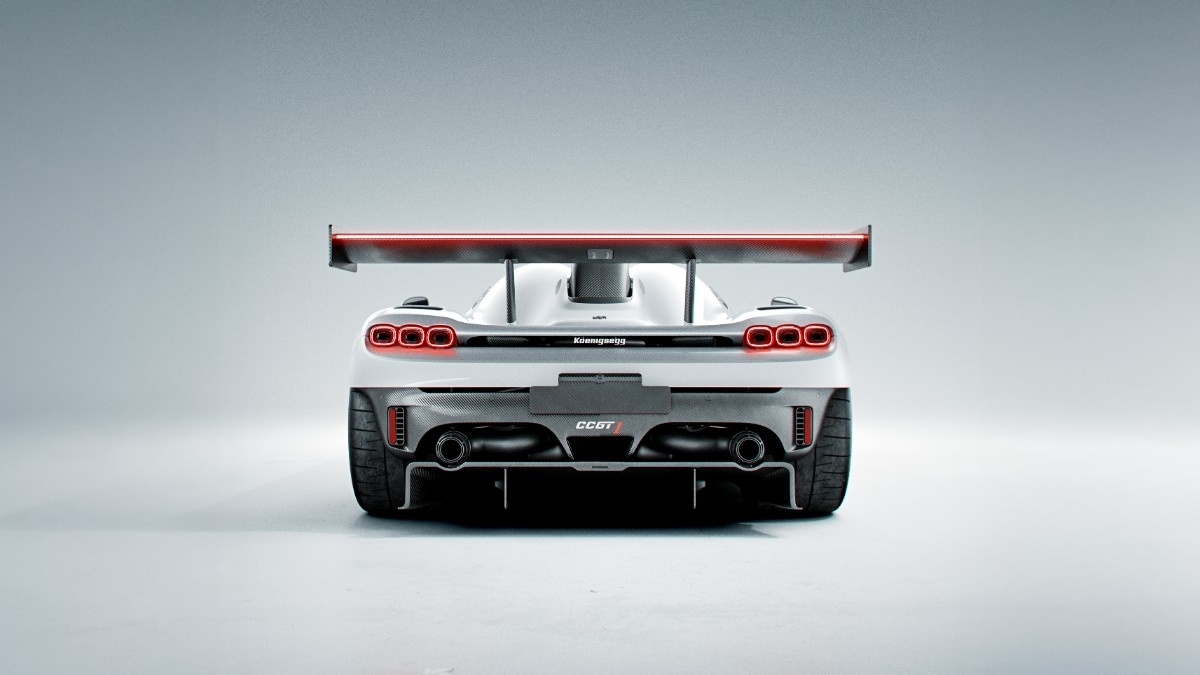
Then there is the rather beautiful bit. Koenigsegg is bringing back its distinctive white carbon fibre under a new name: Ghost Fibre. The original technology appeared on the Trevita project in 2009 but proved so difficult to produce that the company eventually stopped making it. Customers, naturally, kept asking for it. So Koenigsegg has developed an entirely new version combining its shimmering appearance with functional benefits. The aramid and carbon matrix provides additional toughness, sound-deadening properties and lower weight than a conventional carbon-fibre-only construction. It looks rather like someone has turned crystal into a structural material. Which is precisely the sort of thing Koenigsegg would do.
The cleverest part of the CCGT1 is that it does not merely copy the old car. It takes the idea behind it and pushes it into the modern era. The original CCGT was built to prove Koenigsegg could compete at the highest level of endurance racing. The new CCGT1 takes that ambition and applies it to a road-legal Megacar capable of becoming a full-blown track weapon. And now the original CCGT is finally going racing. So, after nearly two decades of waiting, Koenigsegg has managed to turn an FIA rule change into one of the most interesting comeback stories in modern performance motoring. The CCGT never got its chance. The CCGT1 is making sure nobody forgets why it deserved one. And with 1,600 horsepower, 800kg of downforce and a manual gearbox available if you are feeling particularly brave, it seems Koenigsegg has decided that revenge is best served very, very quickly.