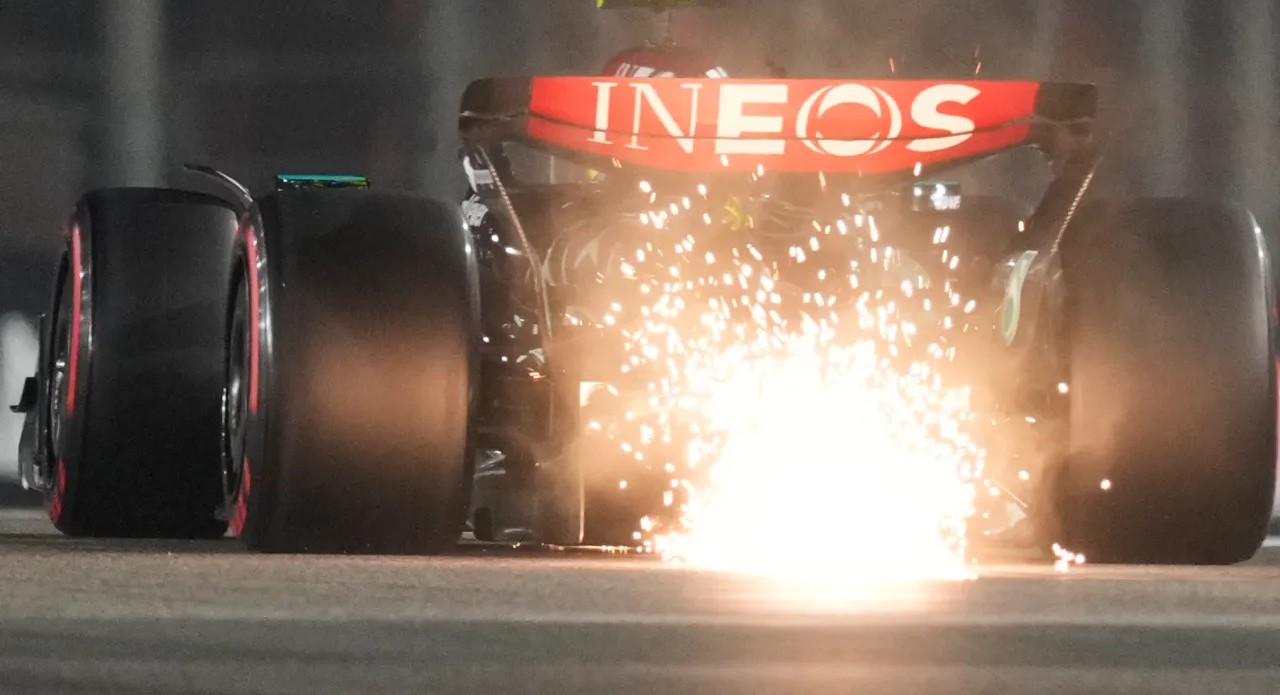


There are few sights in motorsport more mesmerising than a Formula 1 car hurtling through the darkness at over 300 km/h while throwing a cascade of golden sparks into the night. It looks theatrical, almost as if the engineers at Maranello or Milton Keynes secretly hired a pyrotechnics expert. Touring cars, meanwhile, thunder around the very same circuits with plenty of noise, plenty of drama and absolutely no glowing fireworks. You could be forgiven for thinking Formula 1 teams have installed some sort of expensive spark generator beneath the chassis. They haven’t. They’ve simply perfected the art of driving outrageously close to the laws of physics.
It All Starts With Ground Effect
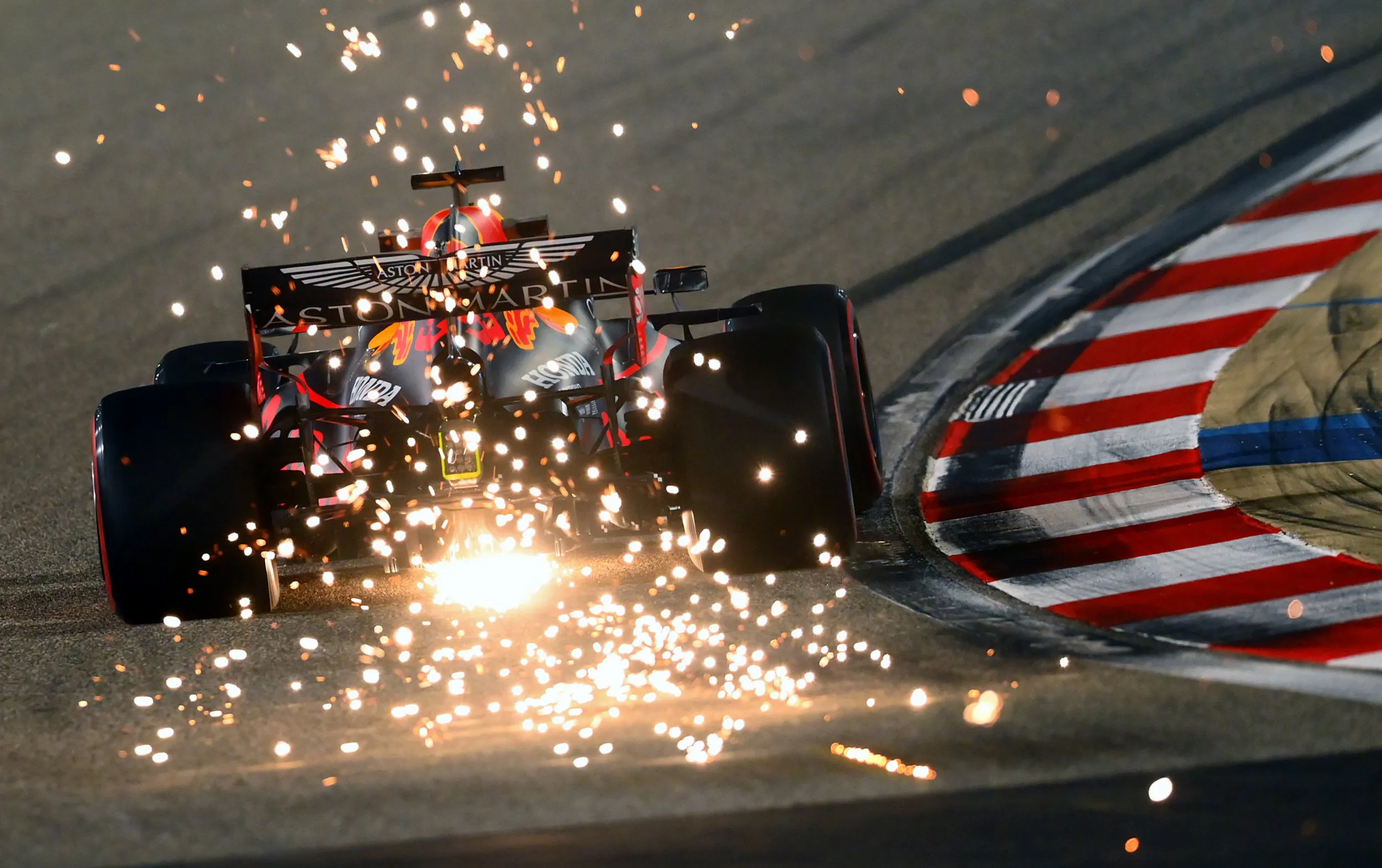
Modern Formula 1 cars are built around one obsession: downforce. Since the return of ground effect regulations in 2022, the underside of an F1 car has become just as important as the wings sitting above it. Large Venturi tunnels underneath the floor accelerate airflow, creating low pressure that literally sucks the car towards the tarmac. The faster the car goes, the harder it is pulled downward. At maximum speed, an F1 car generates so much aerodynamic load that it can compress its suspension until the floor is almost kissing the asphalt. And that’s precisely where the sparks begin
Mounted underneath every Formula 1 car are titanium skid blocks, sometimes called skid plates or plank protectors. Whenever the floor momentarily touches the racing surface during heavy compression, aggressive kerb strikes or rapid elevation changes, these titanium blocks scrape along the track. Titanium doesn’t merely wear away quietly. It produces a spectacular shower of bright orange sparks that have become one of Formula 1’s defining visual signatures.
Also Read: Audi Introduces Q9, Its First-Ever Q Series Flagship SUV To Strengthen Luxury Lineup
Why Touring Cars Stay Spark Free
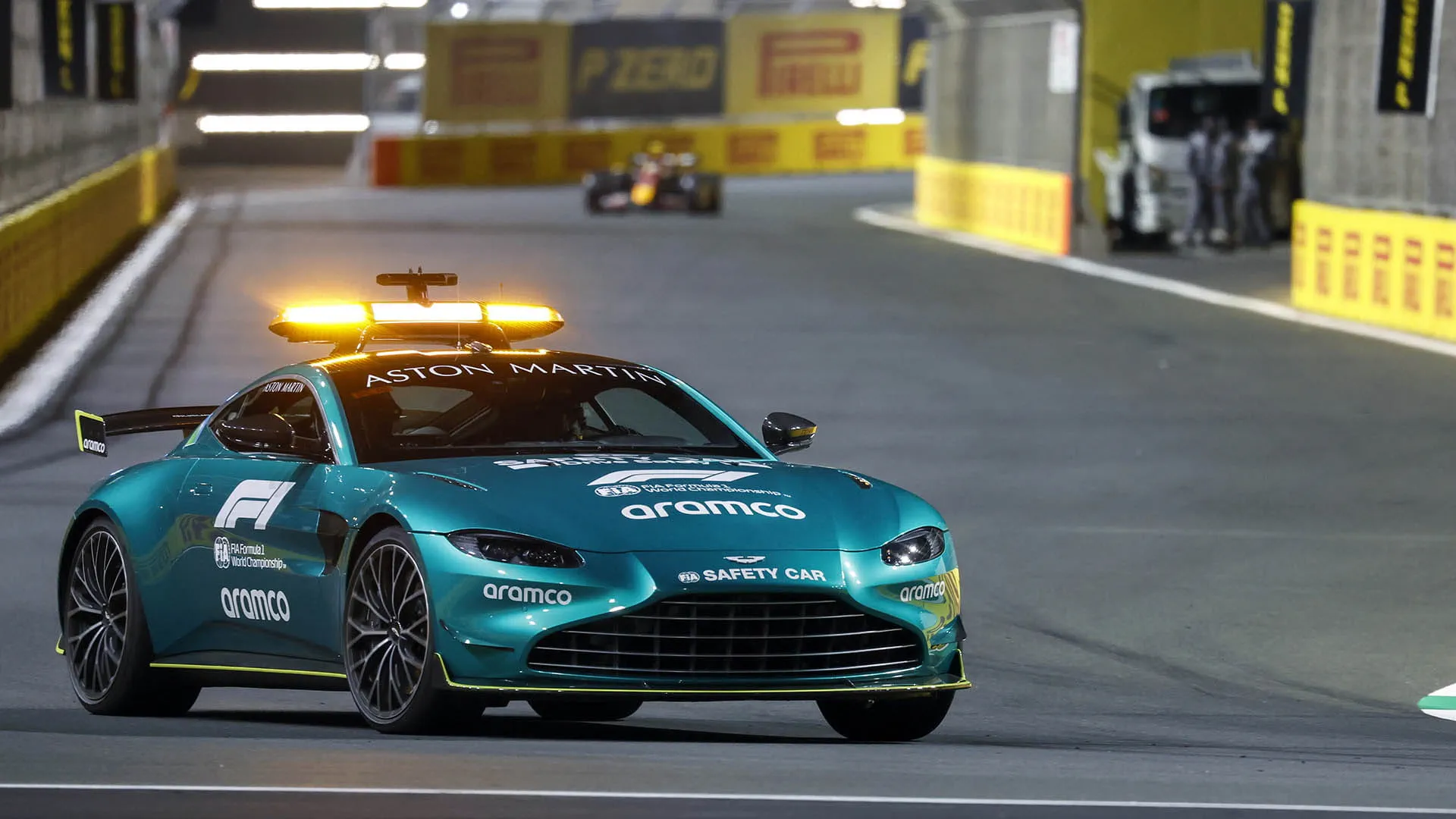
Touring cars operate in an entirely different engineering universe. Whether it is the World Touring Car Championship, British Touring Car Championship or endurance based GT machinery, these cars are derived from production vehicles. They ride significantly higher than Formula 1 cars, use softer suspension setups and rely far less on ground effect aerodynamics. More importantly, they simply do not generate enough downforce to force the chassis into the circuit with the same relentless intensity. The suspension has greater travel, allowing the car to absorb bumps rather than scraping across them.
Most touring cars also lack titanium skid blocks underneath the chassis. Even if the underbody occasionally touches the road, steel, aluminium or composite materials do not create the same dramatic spark effect. Instead, they produce little more than a brief scrape and perhaps an unpleasant sound that only the driver notices.
Those Sparks Are Actually Doing A Job
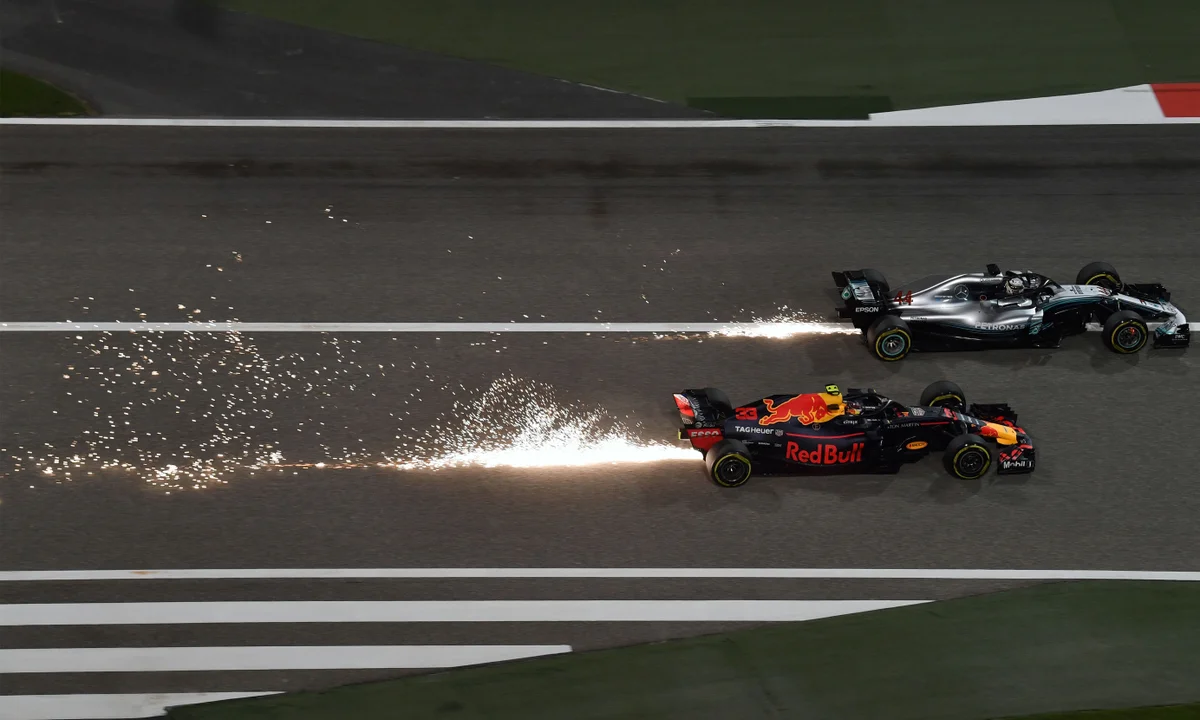
The titanium skid blocks are not decorative additions designed for television audiences. They exist to protect one of the most expensive parts of an F1 car, its carbon fibre floor. The FIA mandates the use of a wooden plank, now made from a highly durable composite material, beneath every Formula 1 chassis to ensure teams cannot run the cars impossibly low. The titanium wear blocks shield this plank from excessive damage while simultaneously allowing officials to measure wear after the race.
If a team sets the ride height too aggressively, the plank wears beyond the permitted limit and the driver risks disqualification, regardless of where they finish. The sparks, therefore, often signal that engineers are pushing the regulations to their absolute limit.
Night Races Turn Science Into Spectacle
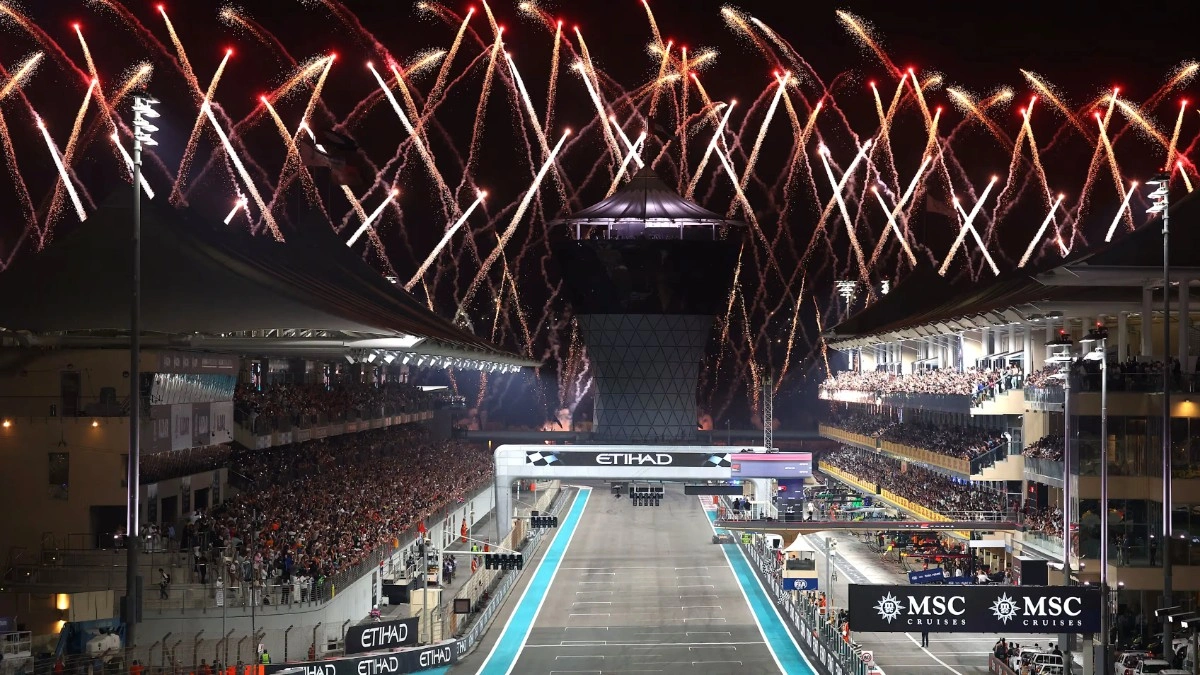
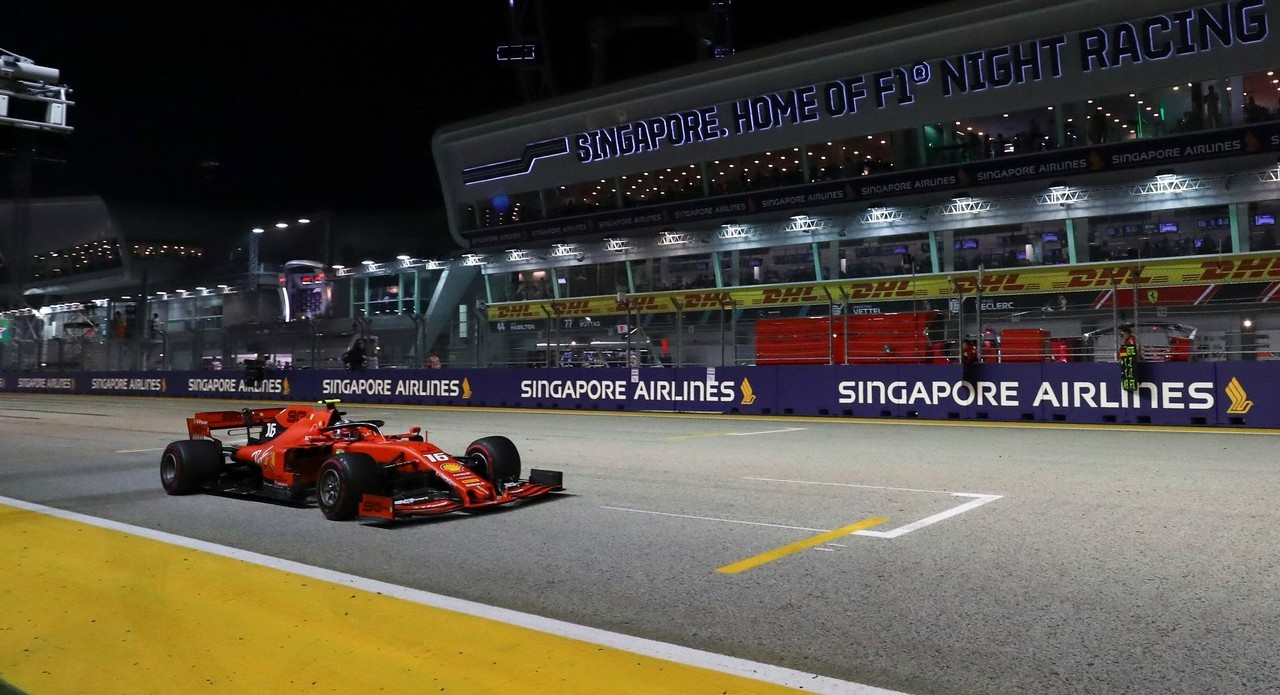
Although sparks occur throughout every Grand Prix weekend, they become dramatically more visible after sunset. Events like Singapore, Las Vegas, Bahrain and Abu Dhabi transform Formula 1 into a moving light show. Under floodlights, every shower of glowing titanium becomes magnified, turning ordinary braking zones into cinematic sequences that seem almost unreal. Television cameras adore these moments because they perfectly capture what Formula 1 represents: extraordinary speed balanced on an impossibly fine engineering knife edge.
Precision Makes The Difference
Ultimately, the reason Formula 1 cars produce spectacular sparks while touring cars do not comes down to one simple fact. Formula 1 engineers deliberately design their machines to operate within millimetres of the ground because every fraction of extra downforce translates into lap time. Touring cars, by contrast, prioritise durability, versatility and mechanical grip over absolute aerodynamic performance. They are built to survive contact, kerbs and long races rather than shaving millimetres off their ride height in pursuit of another hundredth of a second. Those dazzling sparks, therefore, are not merely visual theatre. They are evidence of Formula 1’s relentless pursuit of performance, where even scraping the road is transformed into an engineering advantage. In the world of motorsport, nobody turns friction into spectacle quite like Formula 1.