Libraries That Became Architectural Marvels Around The World
From historic reading halls to futuristic cultural landmarks, these extraordinary libraries redefine the relationship between knowledge, design and architecture
For centuries, libraries have represented humanity’s desire to preserve ideas, stories and discoveries. Yet the greatest libraries in the world have always been more than collections of books. They are monuments to imagination, spaces where architecture transforms learning into an experience. Across different eras and continents, architects have designed libraries not merely as places to store knowledge, but as cultural landmarks that reflect the identity, history and ambitions of their societies.
From grand historic halls filled with carved stone and painted ceilings to contemporary structures shaped by technology and bold experimentation, these libraries reveal how architecture can influence the way people connect with information. Some rise like temples of knowledge, while others blend seamlessly into landscapes, proving that the future of reading spaces is not limited by tradition. These are the libraries where design, history and human curiosity come together to create some of the most remarkable architectural achievements in the world.
Admont Abbey Library, Admont, Austria
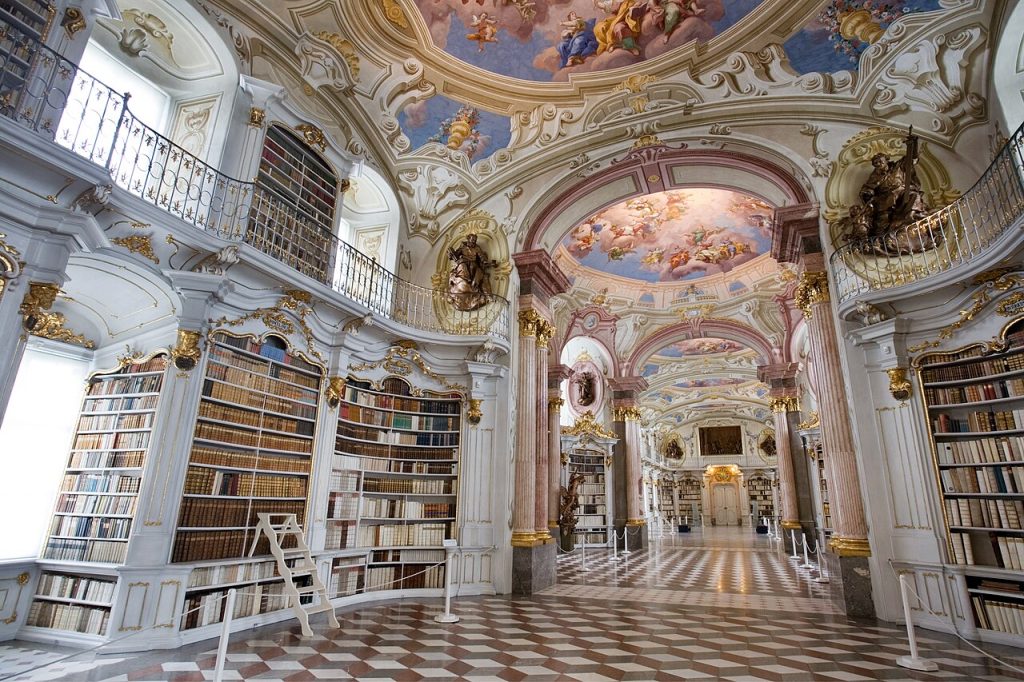
Often considered one of the most beautiful libraries ever created, the Admont Abbey Library is a masterpiece of Austrian Baroque architecture. Completed in the 18th century, its grand white and gold interiors, seven domed ceilings, ceiling frescoes and intricate sculptures transform the library into a work of art. Designed by architect Joseph Hueber, the space reflects the Enlightenment belief that knowledge should be surrounded by beauty. Housing around 200,000 volumes, it remains the world’s largest monastic library and continues to function as a centre of learning and culture.
Also Read: How Golf Course Residences Became India’s Ultimate Status Symbol
Strahov Library, Prague, Czech Republic
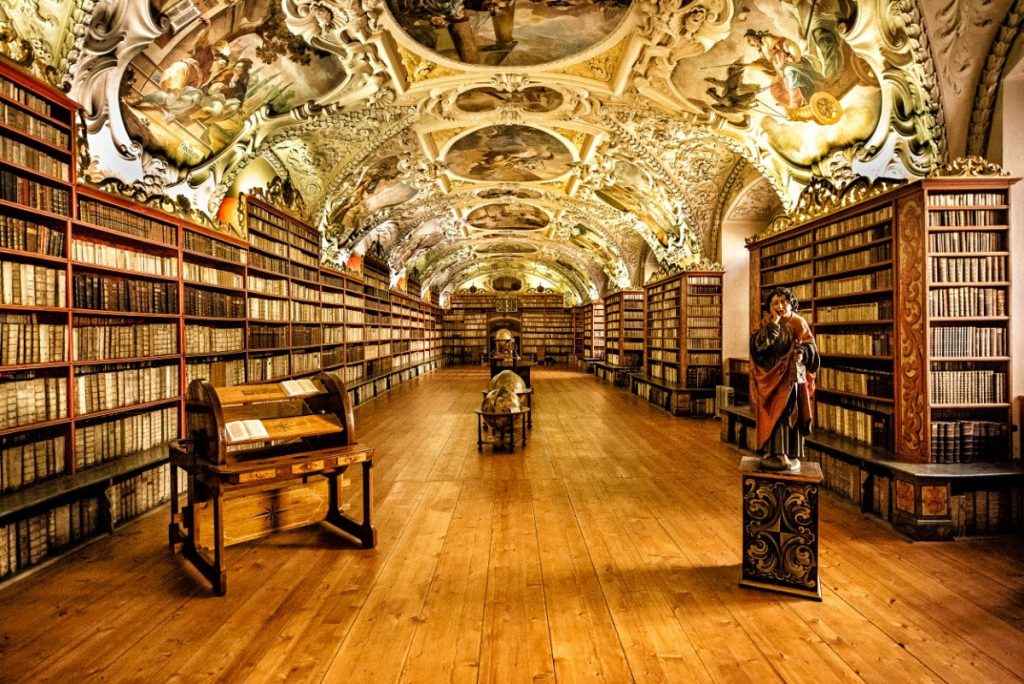
Located inside the historic Strahov Monastery, the Strahov Library is one of Europe’s greatest surviving examples of historic library design. Its two iconic halls, the Theological Hall and Philosophical Hall, feature breathtaking frescoed ceilings, carved woodwork and carefully arranged collections of rare books. The library represents a period when architecture, religion and scholarship were deeply intertwined, creating a space where every decorative element was designed to celebrate knowledge.
Trinity College Long Room, Dublin, Ireland
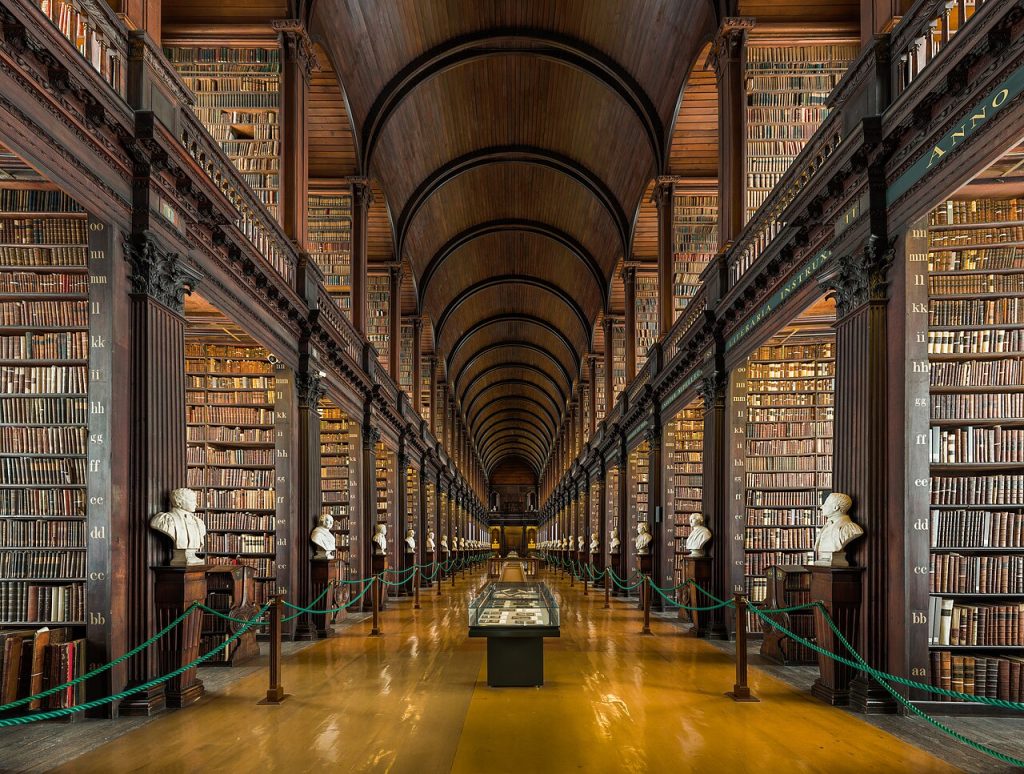
The Long Room at Trinity College Dublin is one of the most recognisable library interiors in the world. Stretching nearly 65 metres, the magnificent hall features towering wooden shelves, marble busts of philosophers and writers, and a historic atmosphere that feels frozen in time. Built in the 18th century, it houses some of Ireland’s most valuable manuscripts, including the famous Book of Kells. Its combination of classical proportions and historic collections has made it an architectural icon.
Also Read: How Rudolf Steiner Turned Spiritual Ideas Into Architectural Masterpieces
Stuttgart City Library, Stuttgart, Germany
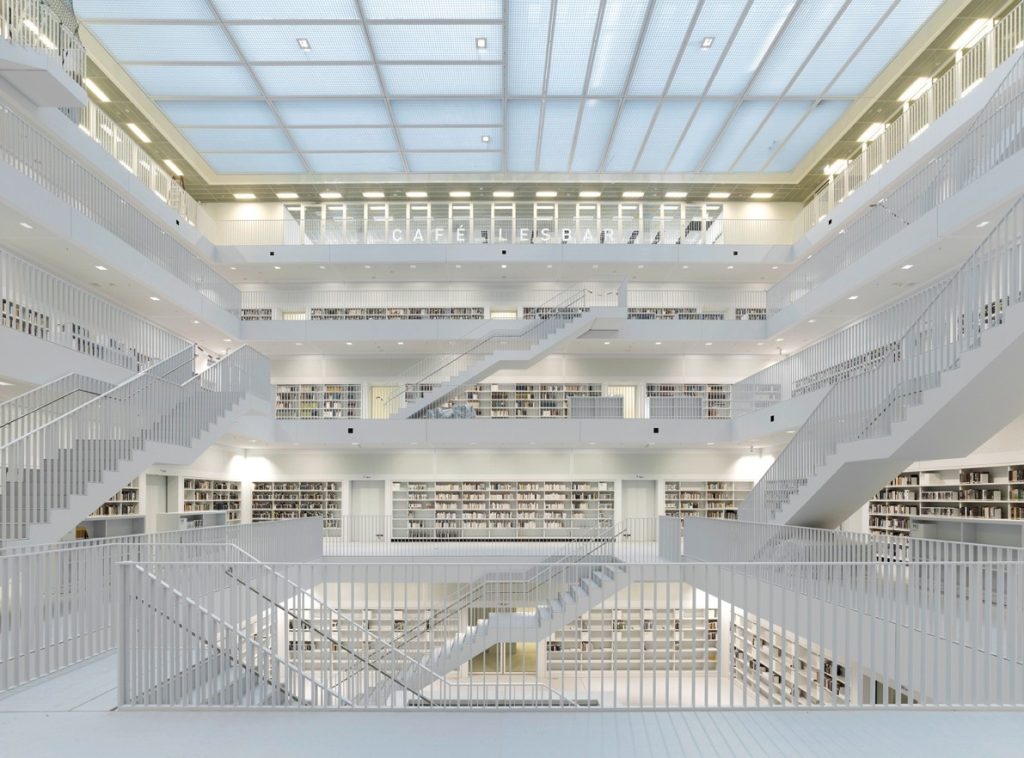
Designed by architect Eun Young Yi, the Stuttgart City Library represents the modern evolution of library architecture. Completed in 2011, the building’s minimalist cube exterior contrasts with its dramatic interior, where a central open hall rises through multiple floors surrounded by bookshelves. The carefully controlled use of light, symmetry and space creates a peaceful environment that feels almost like a contemporary temple of knowledge.
Bibliotheca Alexandrina , Alexandria, Egypt
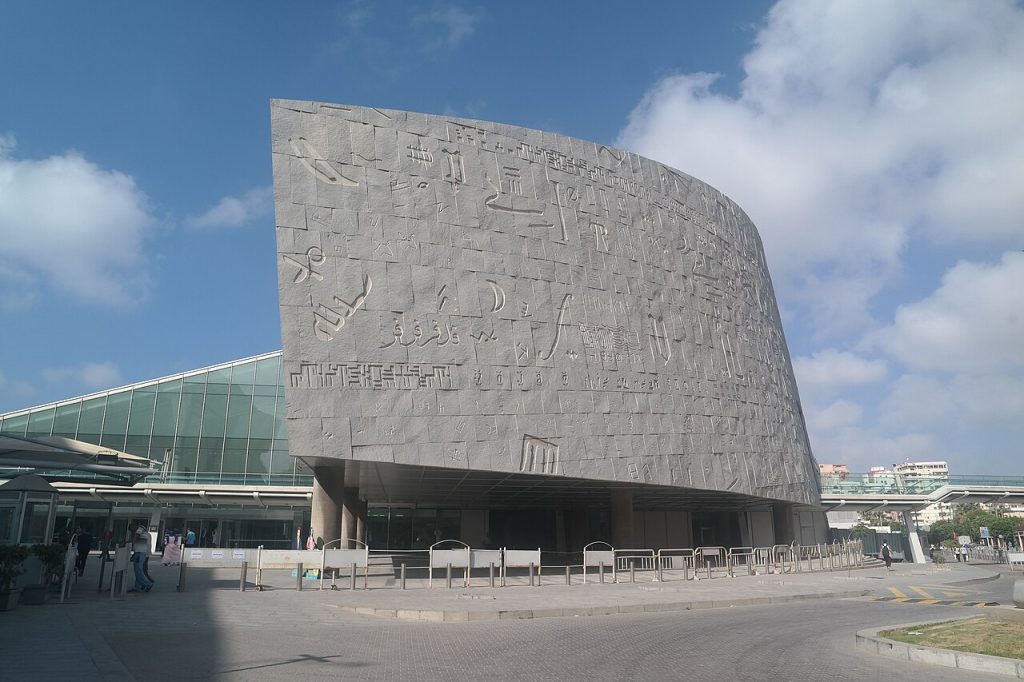
Created as a modern tribute to the ancient Library of Alexandria, the Bibliotheca Alexandrina is one of the most ambitious library projects of the modern era. Designed by Norwegian architecture firm Snøhetta, the building features a massive circular form tilted toward the Mediterranean Sea. Its granite walls are engraved with characters from different languages, symbolising the universality of knowledge. Beyond books, it functions as a cultural complex with museums, research centres and exhibition spaces.