Rolls-Royce And The New Language Of Luxury Where Being Different Matters More Than Being Seen
As India's affluent buyers move beyond conspicuous status towards craftsmanship, cultural heritage and personal storytelling, Rolls-Royce explains why the future of ultra luxury lies in creating motor cars that are unmistakably their owners' own
There was a time when buying a Rolls-Royce was a fairly straightforward way of informing the neighbourhood that you had done rather well for yourself. You arrived in something enormous, exquisitely finished and expensive enough to make the fellow in the neighbouring Mercedes reconsider his financial arrangements. Everyone understood the message. You had money, you had taste, and you certainly weren’t taking the bus.
But the luxury business has become rather more complicated. These days, the person sitting in the back of a Phantom might be less interested in announcing their wealth than in explaining their personality. Perhaps they want a particular shade of paint inspired by a childhood holiday, woodwork that recalls their ancestral home, or embroidery that tells a story known only to their family. Suddenly, buying a very expensive motor car begins to resemble commissioning a work of art, except that the artwork has a V12 engine and can take you to dinner.
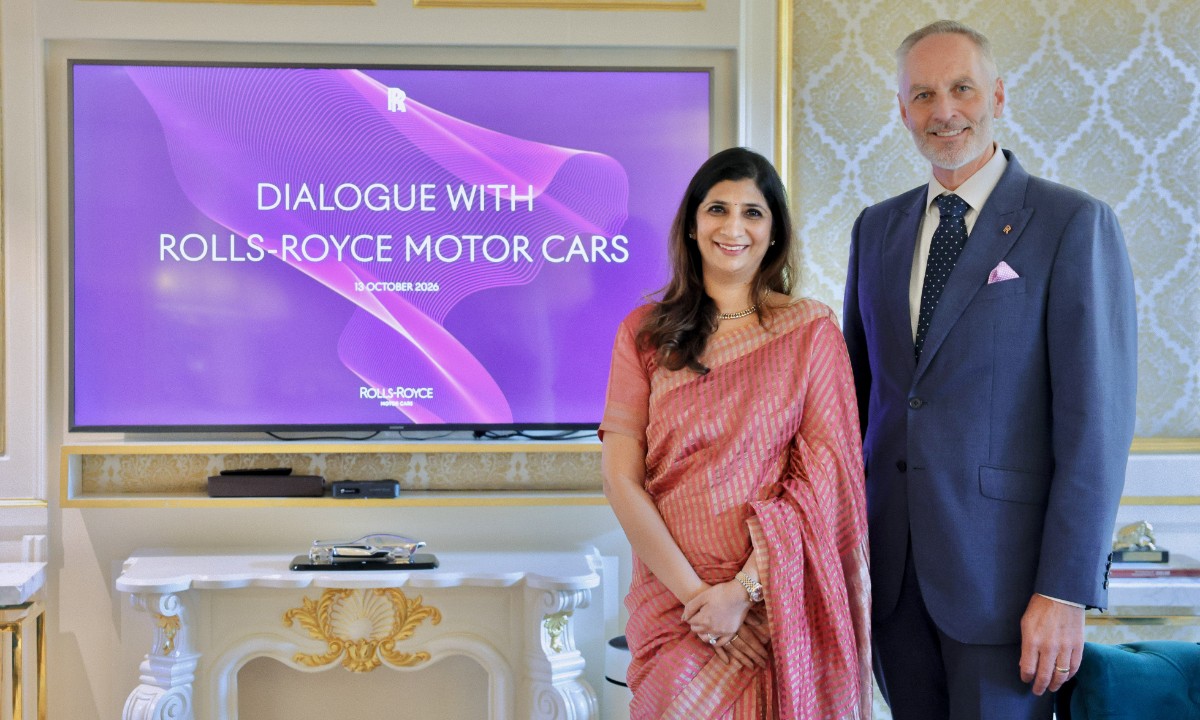
This changing relationship between wealth, identity and ownership was at the heart of a recent media dialogue with Rolls-Royce Motor Cars in New Delhi, featuring Julian Jenkins, Regional Director for Asia-Pacific, and Dr Sheetal Jain, a luxury consumer and market expert. Their conversation explored how India’s affluent buyers are redefining luxury, why bespoke craftsmanship matters more than ever, and how a century old marque is responding to a generation that wants its possessions to say something more interesting than simply, ‘I can afford this.’
For Rolls-Royce, this is hardly an entirely new idea. Its Indian patrons have been commissioning distinctive motor cars for generations. What has changed is the confidence, scale and imagination with which contemporary clients are expressing themselves. And in a world where almost everything can be purchased with a few taps on a smartphone, creating something that cannot simply be ordered off a standard menu may be the ultimate luxury.
When you look at today’s Indian luxury consumer versus a decade ago, what has changed most significantly, and how has their definition of luxury evolved?
Dr Sheetal Jain: The most significant change is the shift from luxury as something people are seen with to something that is made for them. A decade ago, visible status and the recognition associated with owning particular brands played a more prominent role in luxury consumption. Today, individuality, craftsmanship, provenance and personal meaning are becoming increasingly important.
Consumers want products that reflect who they are, what they believe in and the experiences that have shaped their lives. They are looking beyond the logo to understand the story, the skill and the thought behind an object. There is also growing pride in Indian craftsmanship, heritage and culturally rooted products. Luxury is becoming a more personal expression of identity rather than simply a way of signalling success.
From your research, when an Indian client says ‘make it mine’, what are they really asking for? And where do luxury brands still fall short?
SJ: When a client says ‘make it mine’, they are asking to be understood, not simply served. They want a product that reflects their personal journey, their family, their cultural identity and the experiences that matter to them. The value lies in the emotional significance of the object, not merely in its visibility or price. This is where some luxury brands can fall short. There is a difference between genuine collaboration and adding a few superficial local references to an otherwise standard product. A culturally meaningful commission requires listening to the client, understanding the significance of the details they wish to incorporate and working with the right artisans and craftspeople to bring that vision to life.
Indian heritage offers an extraordinary wealth of artistic traditions, materials, symbolism and craftsmanship. The opportunity for luxury brands is to engage with these influences thoughtfully and authentically, rather than treating them as decorative additions. Ultimately, clients want to see their stories reflected in what they own.
Also Read: Rolls-Royce Silver Ghost At 120: Celebrating An Enduring Legacy Of Luxury
Rolls-Royce has been part of India’s story for over a century. When you hear this shift from possession to personal expression, does it feel like something new to Rolls-Royce, or something familiar?
JJ: It is a shift that resonates very strongly with our business. Our responsibility is to nurture the Rolls-Royce story without ever mistaking heritage for standing still. We must continue to live up to our name by creating exceptional motor cars and delivering a client experience that is equally extraordinary. Long before personalisation became a wider luxury trend, Indian patrons were among the earliest clients to commission bespoke Rolls-Royce motor cars. Consider the 1934 Phantom II known as the Star of India, finished in saffron ochre, or the highly individual commissions created for Indian maharajas. These motor cars reflected their owners’ identities, interests and cultural backgrounds.
What is particularly exciting today is the confidence of a new generation of Indian clients. They combine a global outlook with a strong sense of personal and cultural identity. I find myself just as fascinated as they are by the motor cars we create together to tell their stories. That enduring relationship, built around individual expression and a passion for craftsmanship, remains central to our work in India.
‘Bespoke’ is one of the most used words in luxury today. What does it actually mean at Rolls-Royce, and how is it different from choosing from a long list of options?
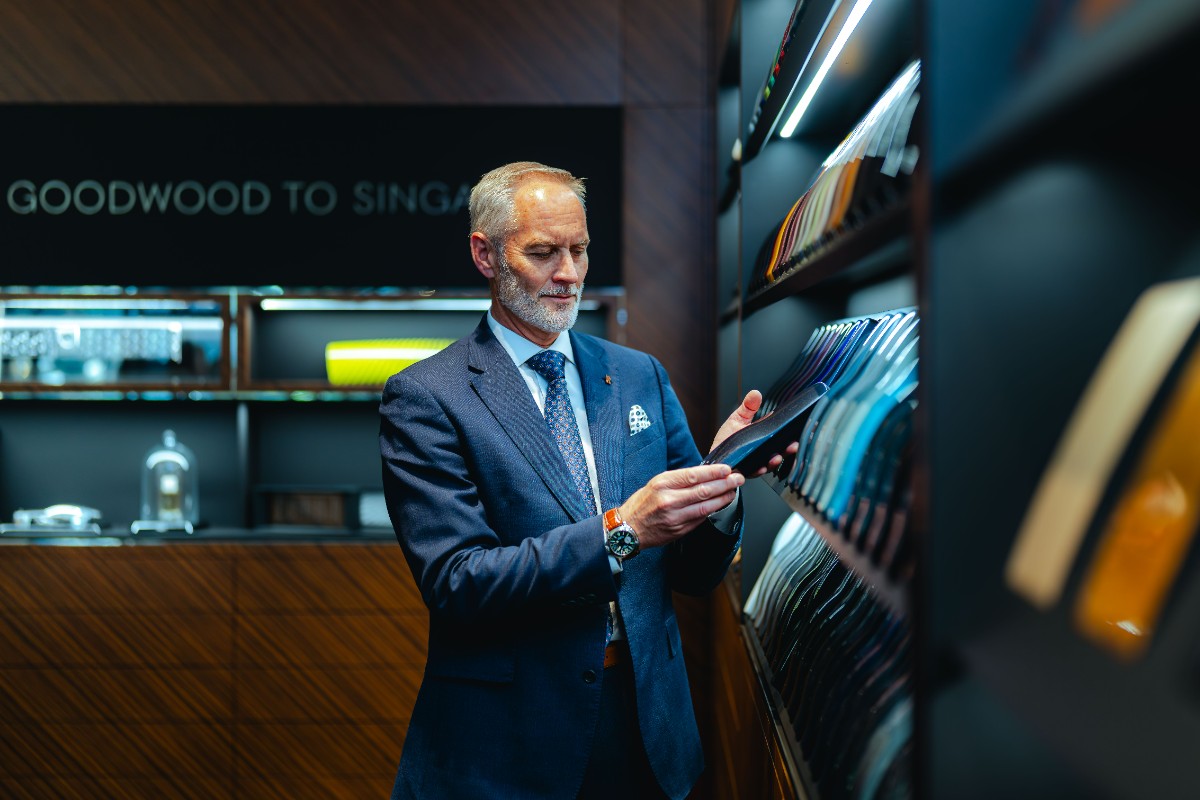
JJ: As a luxury house, our ambition is to meet and exceed our clients’ expectations by creating not simply what many call the best car in the world, but the car that best represents them and their personality. At Rolls-Royce, Bespoke is not an extension of the brand or an additional customer offering. It is inherent to our business. Every Rolls-Royce motor car represents an individual client commission, and the possibilities extend far beyond selecting specifications from a list.
A bespoke commission begins with a client’s vision. It might express a personal legacy, celebrate cultural symbolism or bring a long held passion to life. From there, our designers, engineers and craftspeople work together to translate that idea into materials, colours, finishes and technical solutions. The possibilities are genuinely extensive because the starting point is not a predetermined menu but the individual behind the commission. What continues to fascinate me is how this process encourages innovation. Clients challenge us to explore materials and ideas in new ways, and the resulting motor cars become singular expressions of their owners. The commissioning experience is as important as the finished product.
Rolls-Royce is a global house of luxury. How do you make sure a Rolls-Royce remains an object of desire for decades in different cultures?
JJ: The foundation is a consistent standard of engineering, craftsmanship and quality. Every Rolls-Royce motor car is created at Goodwood, and that commitment to excellence does not change according to the market in which the car will be enjoyed. What changes is the individual story we help our clients tell. Our dealer partners and Private Offices, including our Mumbai residency, provide an important understanding of local cultures, expectations and aspirations. Listening carefully to clients allows us to build relationships that extend well beyond a transaction. Showrooms are places where those relationships begin and develop. When we understand a client’s interests, heritage and ambitions, we can create something that feels genuinely personal while remaining unmistakably Rolls-Royce. India and Rolls-Royce share a longstanding appreciation for fine craftsmanship and handmade work. That connection gives us a strong foundation, but maintaining desirability over generations requires us to keep listening, evolving and finding new ways to express our values.
Many luxury clients here are younger, digitally fluent and self-made. How does Rolls-Royce preserve its craftsmanship while appealing to a younger, digitally savvy generation?
JJ: Heritage and tradition do not have to mean old or stale. Craftsmanship remains highly relevant in a digital world, and technology can help us explore new materials, techniques and forms of personalisation without losing the human skill at the heart of what we do. Our clientele has evolved considerably. The average age of a Rolls-Royce client is now in the early forties, compared with around 56 in 2010. With younger clients come new expectations, different interests and fresh interpretations of luxury.
Black Badge is a good example. It offers a bolder, more dynamic expression of Rolls-Royce for clients who want their motor cars to reflect a different side of their personalities. As Black Badge enters its second decade, its influence across the super luxury sector is clear. Bespoke commissions, including expressions such as the Black Badge Ghost Gamer, demonstrate how personal interests and contemporary culture can inspire individual creations. Spectre and Cullinan have also helped us engage younger clients, while Whispers allows us to remain connected to our clients in their digital lives. We see technology and craftsmanship as partners rather than opposites. Technology can make an experience feel effortless, but craftsmanship gives it a human dimension. The challenge, and the opportunity, is to bring both together.
The Future Of Luxury Is Personal
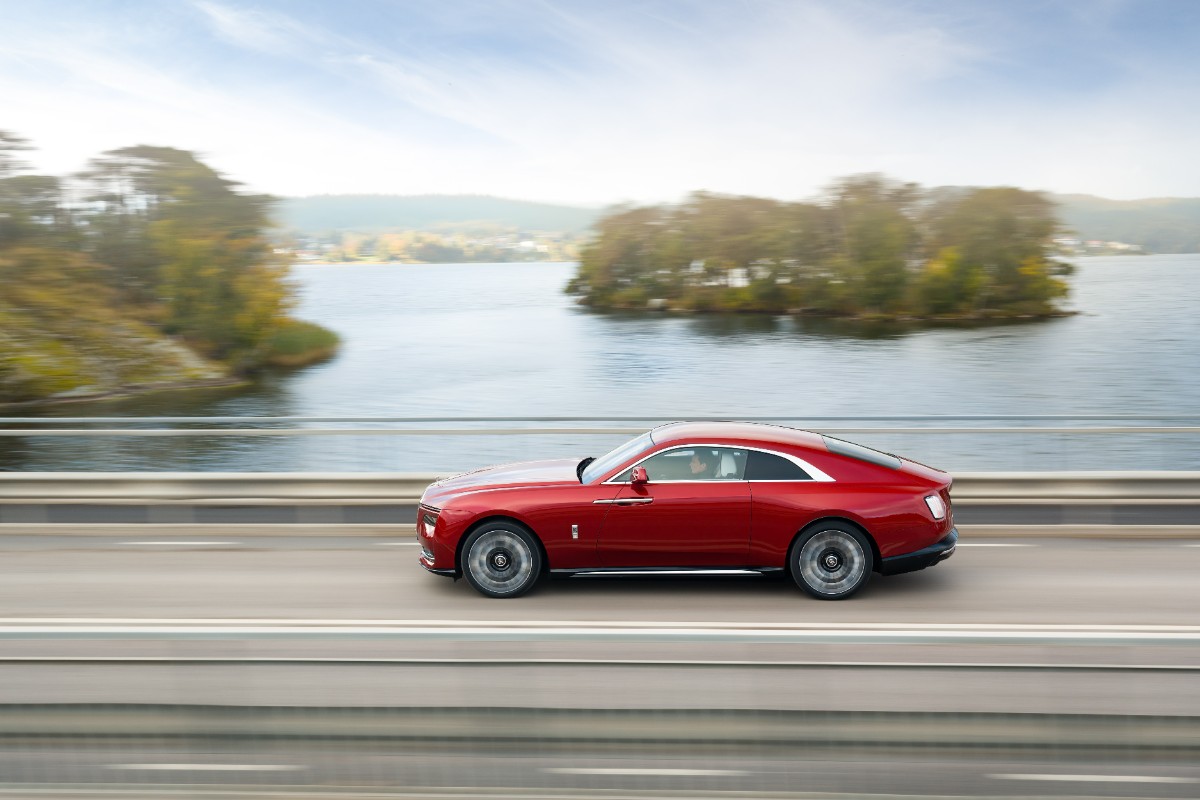
The interesting thing about this shift is that it does not make luxury less exclusive. If anything, it makes genuine exclusivity harder to achieve. Anyone with sufficient resources can purchase an expensive car, but creating something that reflects a particular person’s history, tastes and imagination requires a rather different level of engagement. For India, with its extraordinary diversity of cultural traditions and craftsmanship, the possibilities are particularly compelling. The next chapter of luxury will not necessarily be about making the loudest statement or owning the most recognisable object. It may be about possessing something whose significance is immediately apparent to its owner, even if nobody else understands the story behind it.
Rolls-Royce appears comfortable with that distinction. Its philosophy of value over volume places emphasis on the significance of each commission, the quality of its execution and the experience of bringing it to life. The objective is not simply to sell more motor cars, but to create the right motor car for each client. And perhaps that is the most interesting evolution in luxury. The ultimate status symbol may no longer be the object that makes everyone look at you. It may be the one that tells your story so completely that you no longer need to explain yourself at all.