Dyson’s INR 48,000 Smart Toothbrush Brings AI, Camera Tech And Water Flossing To Luxury Oral Care
Dyson's latest venture into personal care brings camera technology, artificial intelligence, machine learning and precision fluid dynamics to the humble toothbrush, creating a smart oral care device designed to make brushing and flossing more intelligent
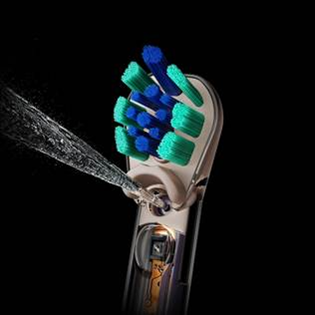
Brushing your teeth has traditionally been one of the least glamorous parts of the morning routine. Dyson, however, appears determined to change that. Called Dyson CameraJet™, the technology uses a 100,000 pixel micro camera to capture detailed images of the mouth while the brush is in use. The camera works with light and camera strobing at 257Hz, deliberately operating just out of sequence with the movement of the brush head. As the head moves nearly 1,000 times per second, the system can identify gaps between teeth and direct a precision jet of fluid towards areas that may otherwise be difficult to reach. The result is an unusual combination of electric brushing and water flossing. Rather than relying solely on mechanical bristles, Dyson’s system uses targeted fluid jets to address interdental spaces, while its dual brush head combines different types of bristles for surface cleaning and gentler cleaning along the gumline.
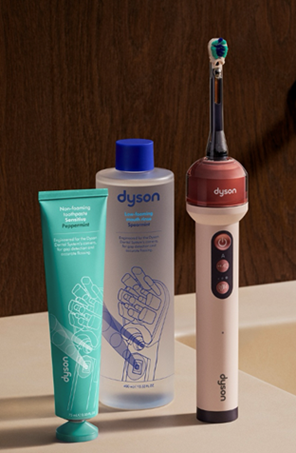
The device is also connected to the MyDyson™ app, allowing users to monitor their brushing through the camera system. Its Wi-Fi connectivity operates at 2.4GHz, while each brush head contains an RFID tag that enables the toothbrush to recognise the attachment and alert users when it needs replacing. App functionality varies by market and requires an internet connection and compatible mobile device.
Dyson’s argument for such elaborate technology is rooted in some fairly basic statistics. The company says nine in ten people do not floss as regularly as they should, while people spend an average of just 45 seconds brushing, considerably less than the recommended two minutes. With an estimated 3.7 billion people living with oral diseases globally, the company believes better everyday oral care could have significance beyond simply keeping teeth clean.
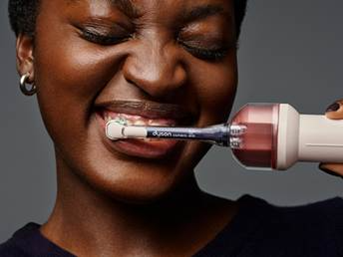
The technology has been subjected to several rounds of testing. Dyson conducted a four-week clinical test involving 71 participants, who used the device twice daily with Dyson formulations, comparing results with manual brushing. Laboratory testing also used Dyson’s proprietary proxy plaque, developed through a funded research collaboration with the National University of Singapore’s Faculty of Dentistry, to compare different fluid-jet designs.
Also Read: The Range Rover Finally Goes Fully Electric
The company has also tested the device against manual brushing in deep-clean mode and against premium electric toothbrushes in hard-to-reach areas. Dyson notes that its gum-health claim must be accompanied by the qualification that the product was used with Dyson mouthrinse rather than a manual toothbrush.
Getting to this point has taken six years of development, involving 661 Dyson engineers, collaboration with 30 dental professionals worldwide and the filing of 38 patents. Dyson says its machine-learning system was developed using more than 470,000 dental images, while CameraJet™ itself runs on approximately 16 million lines of code.
It is, in other words, considerably more than a toothbrush. Dyson has taken an everyday object most people use almost without thinking and filled it with cameras, sensors, software and precision engineering. At INR 48,000 (approx.), the CameraJet™ sits firmly in premium territory, but Dyson is betting that the future of oral care will involve rather more technology than simply remembering to brush for two minutes.