A Comprehensive Guide To Chronometer Certifications And In-House Quality Seals
Ship captains, royal observatories, Swiss cantons and modern laboratories have spent three centuries testing one idea: how accurately a watch can keep time
Every mechanical watch makes a quiet promise: that it will tell the right time. It is a promise so simple that most of us never question it, yet keeping it has demanded centuries of ingenuity, rivalry and relentless testing. Long before wristwatches, sea captains staked their lives on the accuracy of a clock, and governments offered fortunes to anyone who could help ships find their position. Observatories became arenas where makers competed for glory, nations created laboratories to protect their industries, and the great houses eventually built private tests of their own. Behind every certificate, seal and hallmark stamped on a dial or case back lies a long story of trial and error, ambition and national pride. Understanding those standards helps explain why a watch is judged by more than its looks, and why a few seconds a day can mean the difference between a good watch and an exceptional one. This is the story of how watchmaking learned to measure itself, from the first sea trials to today’s most exacting laboratories. Watchmakers chased precision from the 16th century, but for more than a hundred years a single hour hand was normal, since watches could be hours out each day. In 1675, Christiaan Huygens’s balance spring achieved isochronism and brought accuracy to within a few minutes per day, changing movement design forever.
What a Chronometer Really Is
A chronometer is a movement that meets a high accuracy standard, typically -4/+6 seconds per day, verified by an accredited third party or, sometimes, an in-house body. English clockmaker Jeremy Thacker coined the word in 1714, and John Arnold refined its meaning in 1779.
Also Read: COSC Unveils Stricter ‘Excellence Chronometer’ Standards For 2026
The Longitude Challenge
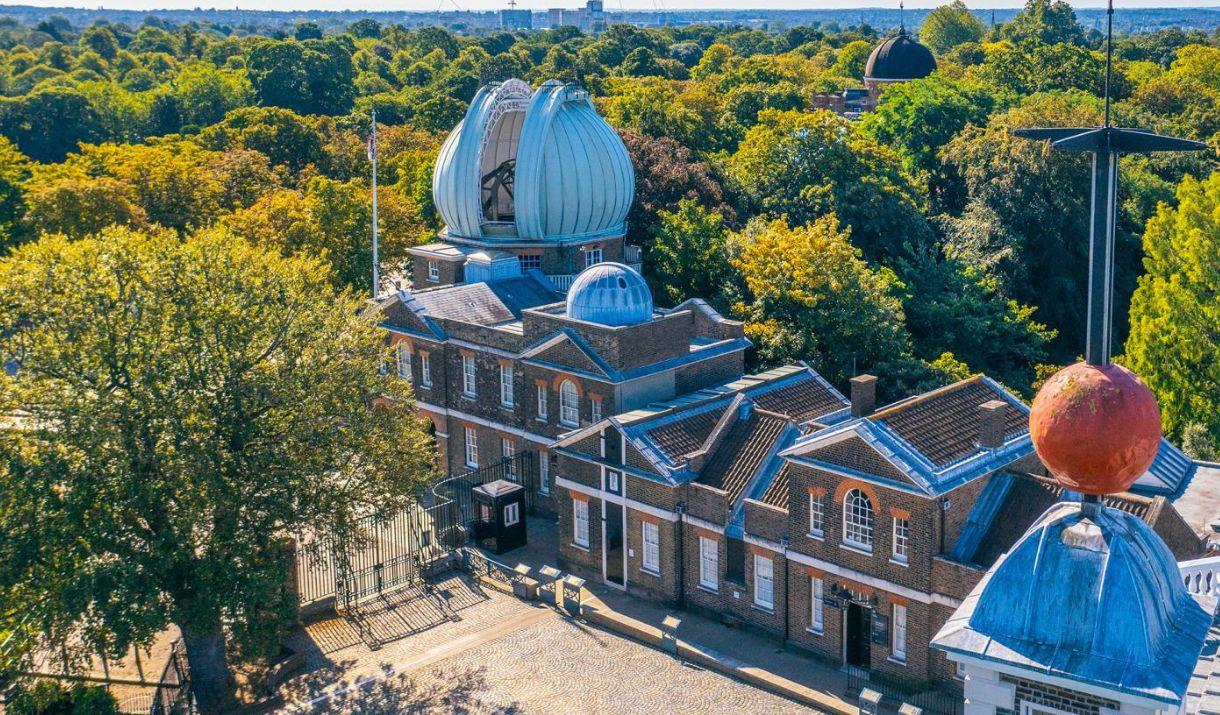
At sea, time meant position. Every hour of difference between Greenwich and local time equals 15 degrees of longitude, so a few seconds of error could put a ship about 30 nautical miles off course. John Harrison’s H1 to H4 chronometers answered the call, and in 1766 Greenwich held the first documented timing trials.
Prizes and Observatories
From 1822, the Admiralty’s Annual Premium Trials rewarded the best marine chronometers with cash, until fraud and diminishing gains ended them in 1836. Kew Observatory then set the first standardised certification in 1884, with 45 days of testing and A, B and C grades. In 1914, a Rolex became the first wristwatch to earn an “A” certificate. Across Europe, observatories issued the Bulletin de Marche. Neuchâtel (founded 1858) served Swiss makers until Seiko’s rise and a Swiss boycott ended its competitions by the early 1970s. Geneva ran trials for decades, while Besançon introduced its Viper’s Head stamp in 1897.
The Geneva Seal
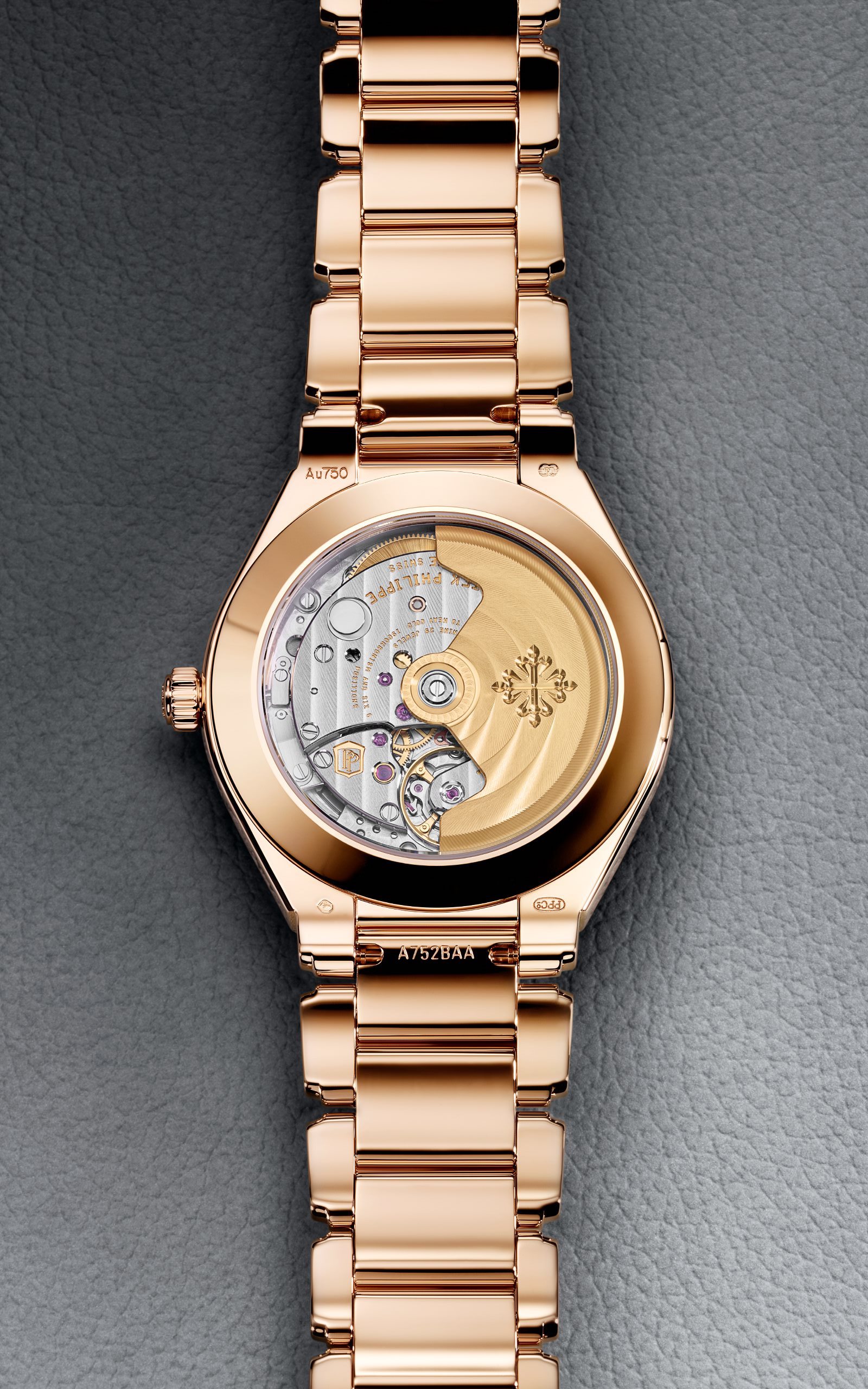
Established by law in 1886, the Poinçon de Genève is the oldest government-backed certification. Watches must be assembled, adjusted and cased in the Canton of Geneva, with exacting finishing rules, from polished screw heads to bevelled slots. Since 2012, it assesses the entire cased watch. Vacheron Constantin, Roger Dubuis, Cartier and Chopard are among its recipients, while Patek Philippe left in 2009.
COSC and Its Successors
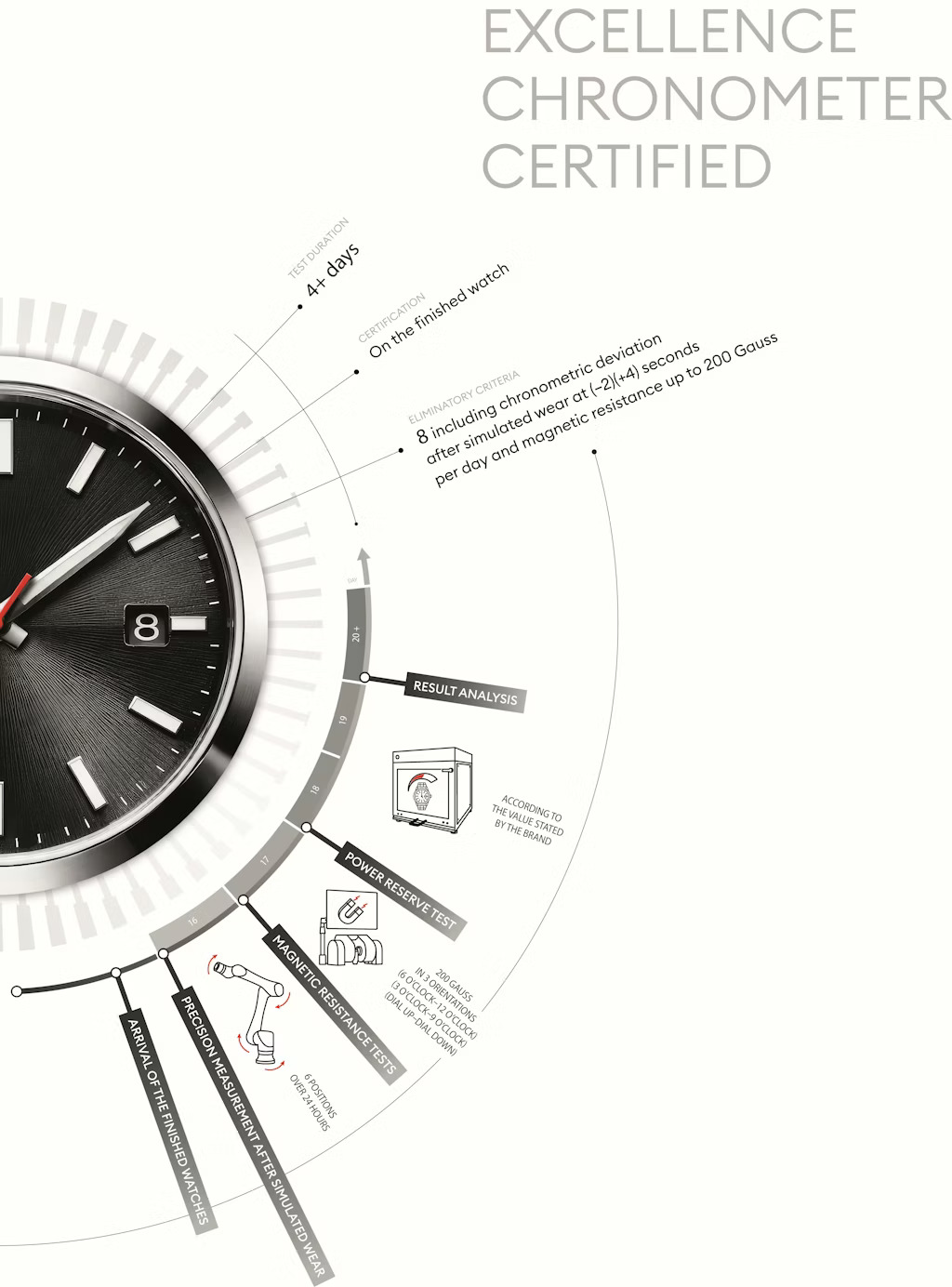
The quartz crisis led five Swiss cantons and the watch federation to create COSC in 1973. Under ISO 3159, uncased movements are tested for 15 days, in five positions and at three temperatures, to -4/+6 seconds per day. COSC has since introduced Excellence Chronometer Certified, requiring -2/+4 seconds per day, with tests on cased watches and magnetic resistance to 200 gauss. METAS, introduced with Omega in 2014, goes further: cased watches are tested for ten days, resist 15,000 gauss and must keep 0/+5 seconds per day. Omega’s Globemaster was the first, and Tudor followed in 2021.
The Houses Set Their Own Standards
Several brands run their own rules. Patek Philippe’s Seal (2009) demands -3/+2 seconds per day and acoustic testing for repeaters. Omega’s Laboratoire de Précision tracks beat rate for 15 days, allowing two-hand watches to be certified. Rolex’s Superlative Chronometer requires ±2 seconds per day and gained three new criteria in 2026. Jaeger-LeCoultre’s High Precision Guarantee, Montblanc’s 500-hour test and the Grand Seiko Standard, dating to 1966, complete the picture.
In-house certifications often set the strictest bars, but independent standards give the whole industry a common language. For buyers, that means confidence that a number printed on a certificate is more than marketing. Three centuries after the first sea trials, the pursuit of the exact second continues.