Konstantin Chaykin ThinKing Mystery: All You Need To Know About The World’s Thinnest Watch
At just 1.65mm thin, the Konstantin Chaykin ThinKing Mystery redefines mechanical possibility with illusion driven design and uncompromising engineering
There is the sort of obsessive, borderline unhinged engineering that makes even a featherweight track weapon like the Lotus Elise seem positively indulgent. Because while the Elise strips away comfort in pursuit of speed, the Konstantin Chaykin ThinKing Mystery strips away reality itself, arriving at a scarcely believable thickness of 1.65 millimetres. Not slim. Not slender. Positively absurd. In the rarefied, slightly mad world of ultra thin horology, where every hundredth of a millimetre can make or break the entire endeavour, this is not progress. This is a declaration of war against physics.
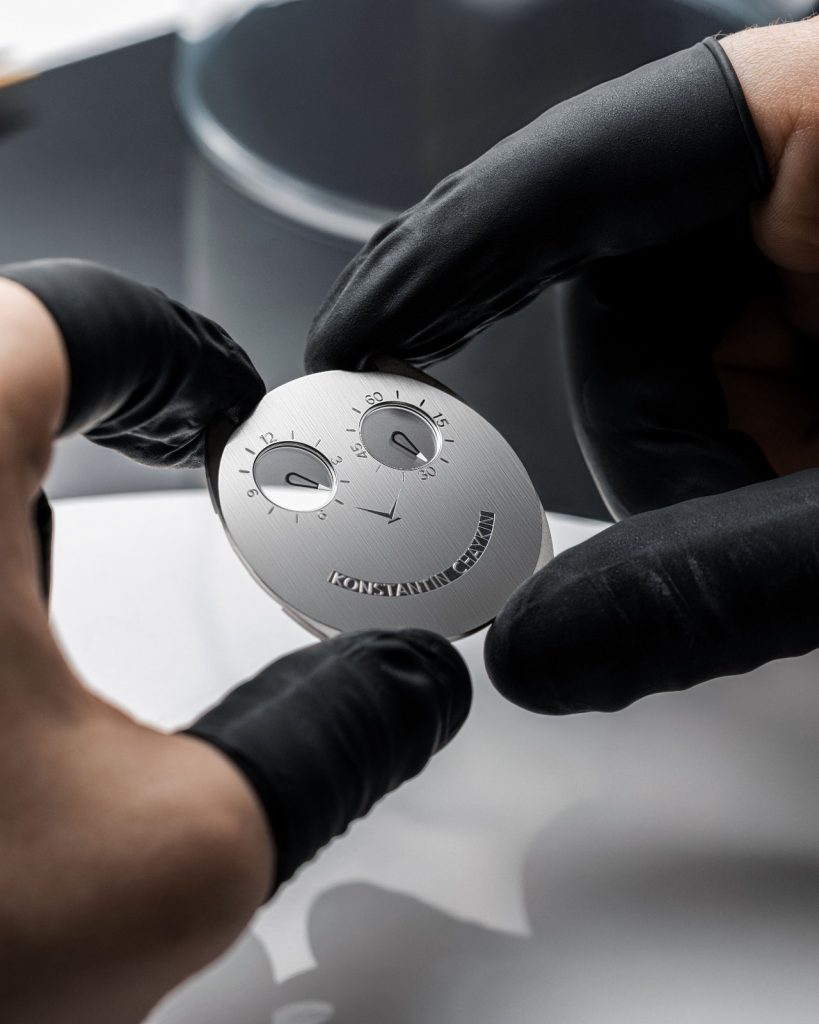
Introduced in 2024 as a demonstration of what might be possible when common sense is politely shown the door, the ThinKing now returns as a limited edition, and in doing so transforms from a singular act of madness into something approaching a reproducible process. And that, frankly, is where things become truly astonishing. Because building something this thin once is impressive. Building it again, with consistency, is the horological equivalent of assembling a Formula One car using tweezers while blindfolded.
At this scale, the rules change entirely. Clearances shrink to near invisibility. Tolerances tighten to the point where even a microscopic deviation can send the entire mechanism into chaos. Deformation is no longer theoretical, it is measurable in thousandths of a millimetre. Every component must be selectively assembled, individually hand fitted, and then rechecked with the sort of forensic scrutiny usually reserved for aerospace engineering. Indeed, the case alone passes through roughly forty separate routing checkpoints, each one documented, measured, and verified against strict internal standards. This is not watchmaking as it is traditionally understood. This is industrial choreography at its most precise.
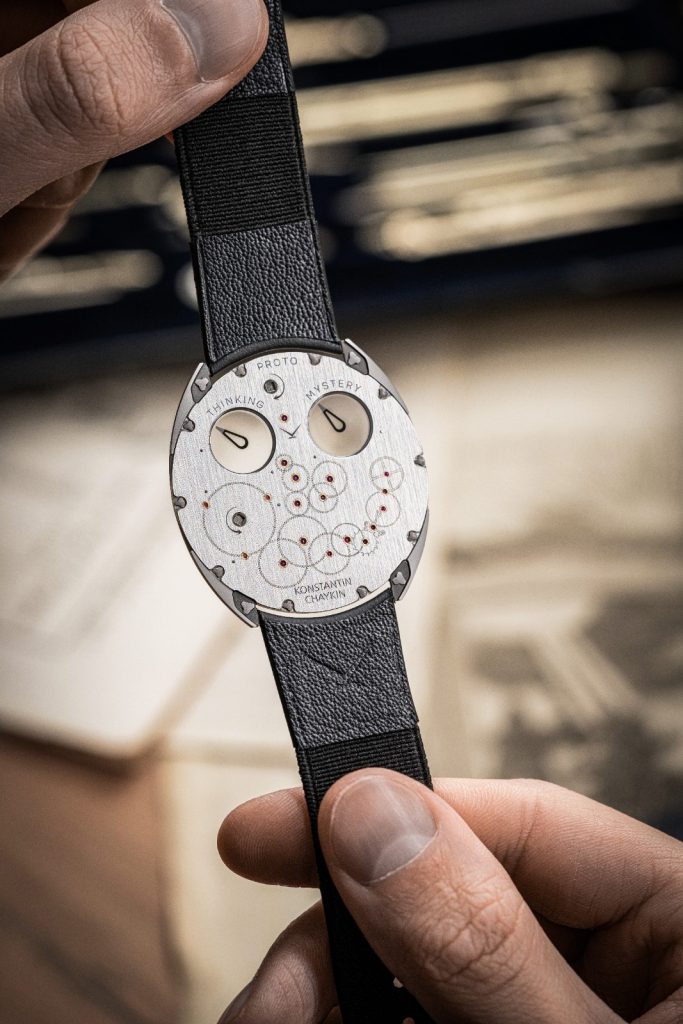
And then there is the design, which, because this is Chaykin, refuses to be merely technical. It retains the unmistakable character of the Joker, that delightfully eccentric face that has become the watchmaker’s calling card, but introduces a new trick. The eyes are now entirely transparent. Not partially, not suggestively, but completely, floating as if by some mechanical sleight of hand. The inspiration, rather fittingly, comes from Jean-Eugène Robert-Houdin, a man who blurred the line between engineering and illusion in the 19th century.
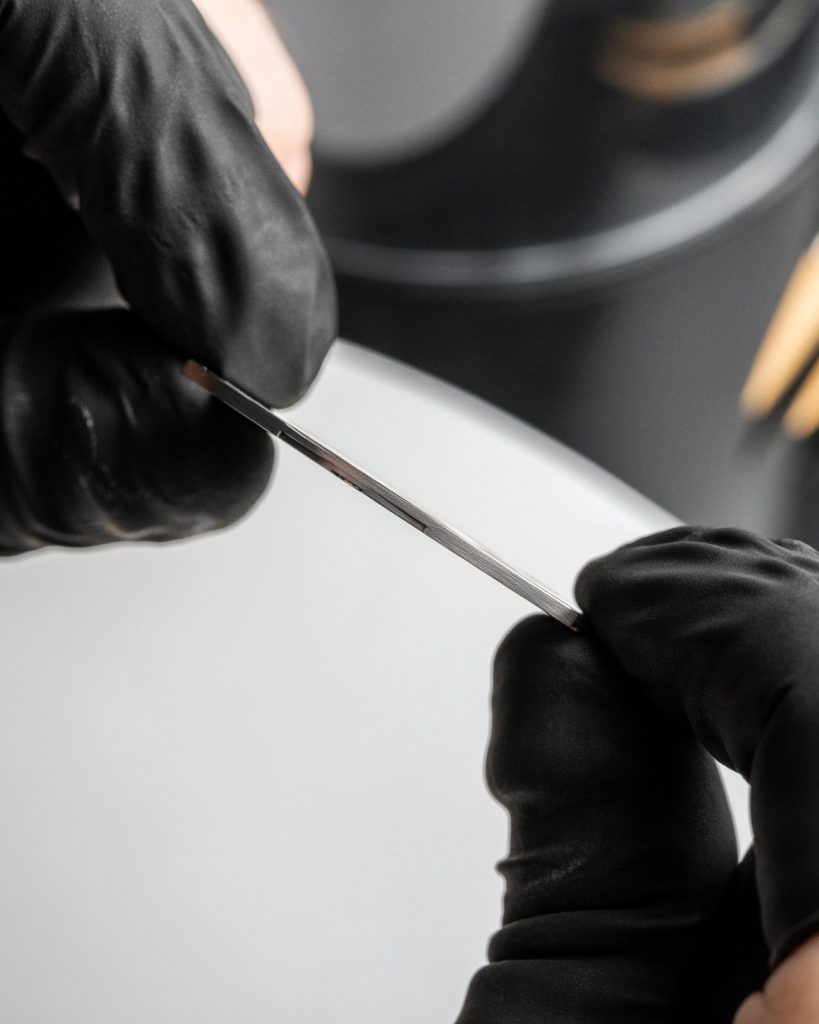
The execution, however, is anything but illusory. Earlier constructions relied on a lateral drive transmitting motion to wheels mounted on a central axis, which introduced the possibility of axial and radial runout. In simple terms, wobble. That will not do here. So, the solution is both elegant and faintly ridiculous. Solid sapphire discs replace the conventional arrangement, eliminating axial runout entirely by design. Around each indicator sit three rollers, guiding motion with such precision that radial deviation is brought almost to zero. At the same time, energy loss from the mainspring barrel is reduced, because even inefficiency, at this level, is unacceptable.
The case itself is not merely a shell. It is structural, load bearing, and absolutely critical to maintaining the geometry of the timepiece at this wafer like thickness. Constructed from a high precision, non magnetic alloy, it offers rigidity and corrosion resistance while resisting the temptation to simply fold in half under the slightest provocation. Inside, or rather integrated into the caseback, sits the in house calibre K.23-3.1, which does not so much occupy space as redefine it.

The movement architecture is an exercise in controlled madness. The balance assembly exists in a single plane, formed by two interlocking wheels with toothed rims. One governs frequency and isochronism, ensuring that timekeeping remains stable. The other, equipped with a roller, acts as the impulse jewel plate, engaging with the pallet fork in a manner that feels almost improbably delicate. The escapement itself is of the Swiss lever variety, beating at 18,000 vibrations per hour, while the ultra thin barrel, stripped of its traditional upper cover, has been reengineered entirely.
That barrel is supported by a bridge reinforced with stiffening ribs, because at this thickness, even structural integrity must be engineered into existence. The arbor employs an overrunning clutch design using tungsten carbide balls, which sounds like something borrowed from a racing gearbox, and in many ways behaves like one. The result is an increase in power reserve from 32 to 38 hours, which, given the constraints, feels like squeezing an extra hundred horsepower from an already overstressed engine.
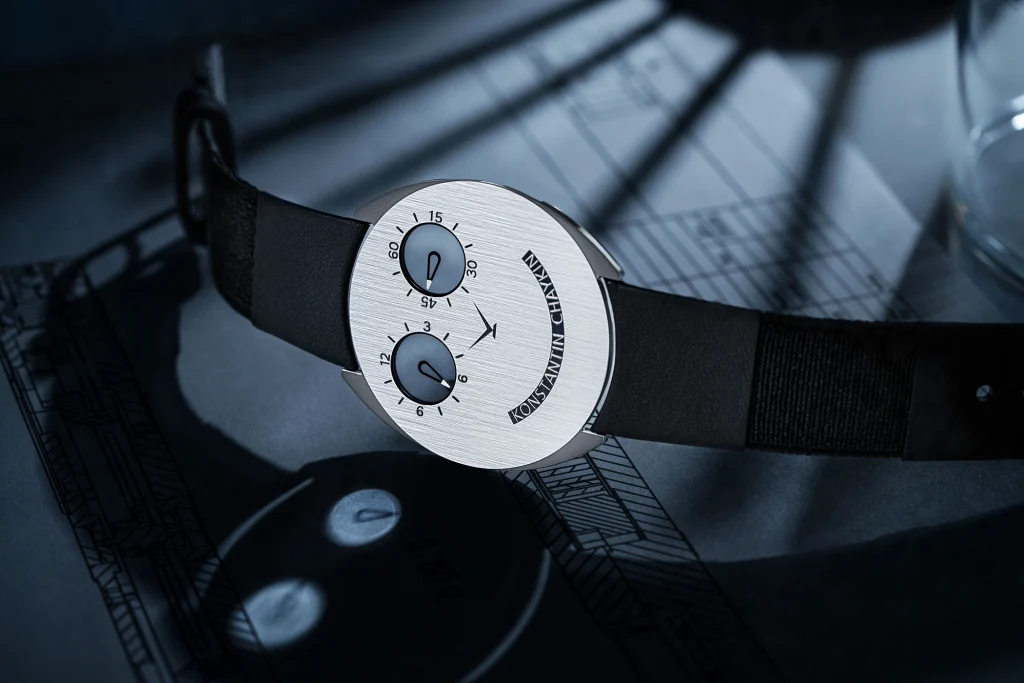
And yet, the madness does not stop there. The strap itself becomes part of the engineering solution. Crafted from high quality leather but reinforced with titanium stiffeners and elastic inserts, it reduces stress on the case, because simply strapping the timepiece to a wrist could otherwise compromise its integrity. The entire object weighs a scarcely believable 12.1 grams without the strap, which is less than some car keys and certainly less than anything that ought to contain 284 individual components.
Also Read: Why The Louis Moinet 1816 Chronograph Is A Holy Grail For Watch Collectors
Finishing, as expected, is both exquisite and terrifying. Every surface must be worked with extreme caution, because removing even a fraction too much material risks introducing a bend that could ruin the geometry of the entire assembly. Each operation is followed by mandatory measurements, ensuring that dimensions remain within specification while preserving strength across the component. The alloy itself undergoes demanding heat treatment, increasing hardness and resistance to deformation, but also making it far less forgiving to work with. One suspects that the watchmaker must develop a kind of sixth sense, feeling both metal and tool with absolute precision, because even a deviation measured in microns could destabilise the entire movement.
Despite all this, the finishing adheres to the strict canons of haute horlogerie. Bridges and mainplate display perlage and straight graining. Wheels are adorned with circular graining. Every bevel is hand cut and mirror polished. It is, quite frankly, absurd that something this thin can also be this beautifully finished, but there it is. Naturally, the traditional crown has been banished. It would add thickness, disrupt the silhouette, and generally ruin the entire point of the exercise. In its place come two auxiliary tools, each engineered with the same obsessive attention to detail as the timepiece itself.
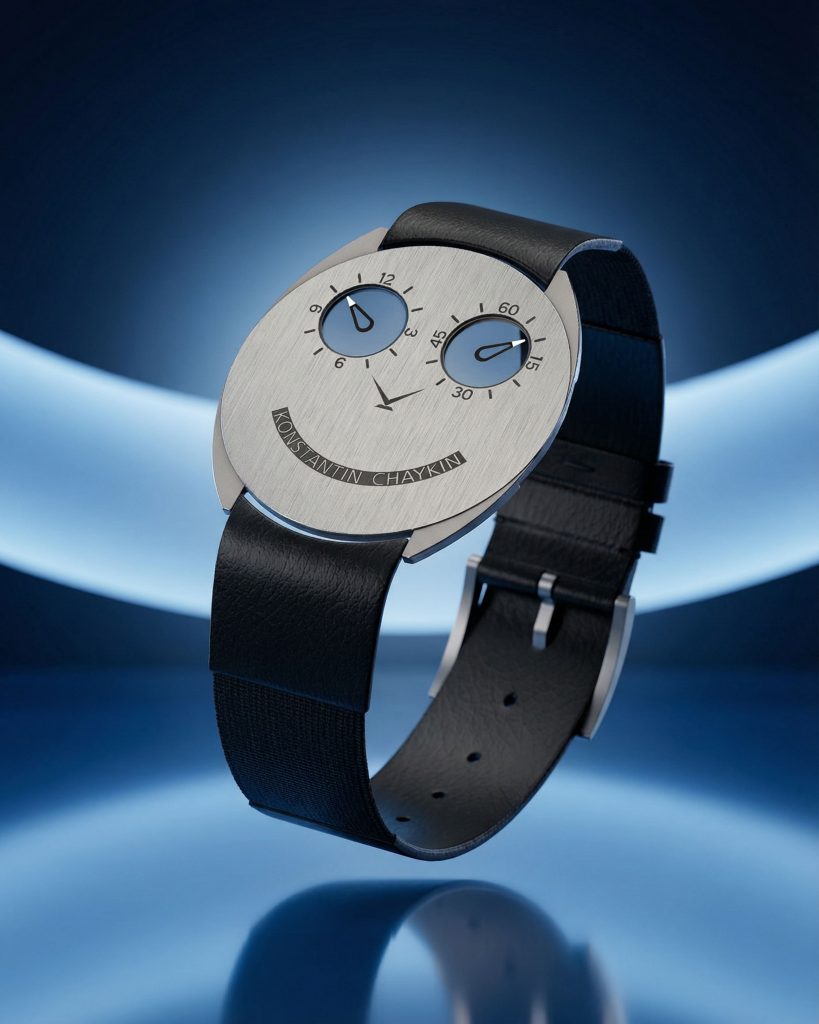
The first is a compact carbon case, housing spring loaded supports and shafts for winding and setting. Place the watch inside, close the lid, and adjustments are made via external wheels. The second is an elongated stainless steel key, slotting into the caseback and allowing winding or time setting with controlled precision. Both incorporate safety mechanisms to prevent overwinding, because at this level, even enthusiasm must be regulated.The display itself is a marvel of minimalism. Four sapphire crystals, each 10.6 millimetres in diameter and just 0.3 millimetres thick, protect the indications. Beneath them, two sapphire discs, a mere 0.2 millimetres thick, provide the “Mystery” display of hours and minutes. It is not so much a dial as an illusion, a floating indication of time that appears to defy the very mechanics that make it possible.
Dimensionally, the timepiece measures 41mm across, yet maintains that astonishing thickness of 1.65 millimetres. Accuracy is rated at minus 15 to plus 20 seconds per day, which, given the circumstances, feels less like a compromise and more like a triumph. The entire construction, from winding box to key, forms a complete ecosystem, with the winding case itself comprising 112 components and weighing 30 grams, while the key adds another 26 components to the equation.
And then comes the final flourish. Limited to just 12 pieces, which means this is not merely a watch. It is a statement, a provocation, a slightly mad experiment that has somehow escaped the laboratory and found its way onto the wrists of a very select few. In automotive terms, this is not a grand tourer, nor a sensible saloon. It is the horological equivalent of a track only special, stripped to its bare essentials, engineered to within an inch of its life, and utterly unconcerned with practicality. It exists because it can, because someone decided that the limits were not quite limiting enough, and because occasionally, brilliance requires a touch of insanity.