Patrik Hoffmann Interview: Inside Favre Leuba’s 2026 Watch Launches
At Watches and Wonders 2026, Favre Leuba proved that revival is not about repeating history but rewriting it with purpose, balancing the neo-vintage charm with a modern vision of wearability, restraint, and enduring relevance
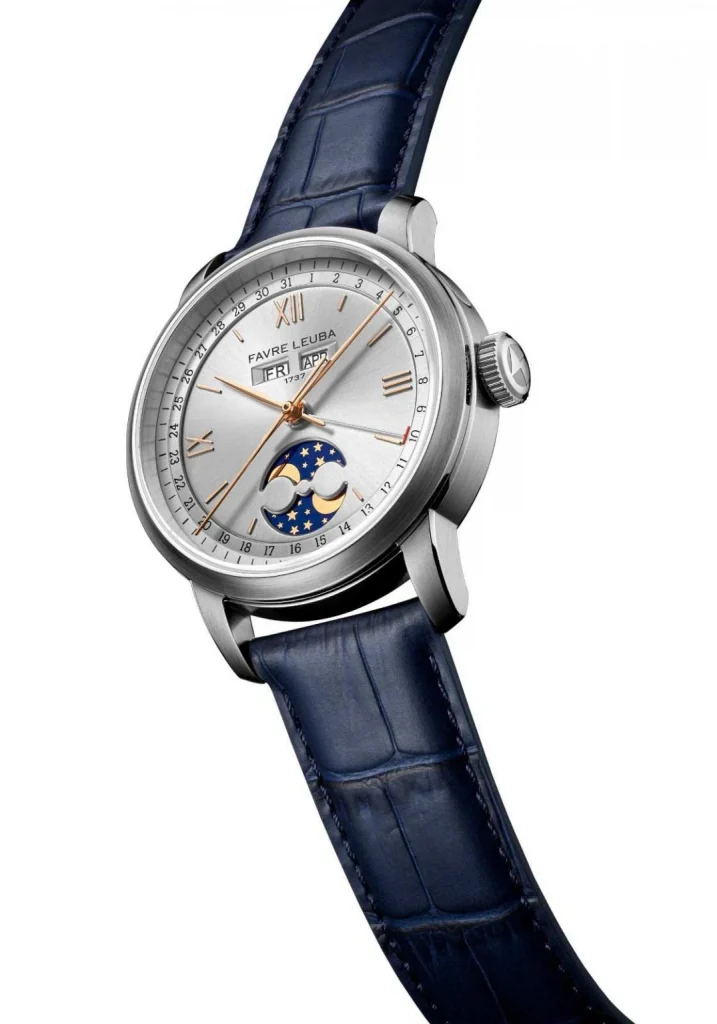
There are CEOs who speak about watches like balance sheets, and then there is Patrik Hoffmann, a man who speaks about them with the conviction of someone who genuinely believes in the soul of mechanical watchmaking. At this year’s Watches and Wonders Geneva, it became clear that Favre Leuba’s revival is not built on nostalgia alone, and Hoffmann is not interested in recreating the past piece-by-piece, but in carrying its spirit into a modern era. With the new launches at Watches and Wonders, Favre Leuba showcased the restrained confidence with the new Harpoon and to the classical elegance of the 1737 Triple Calendar, every launch reflects a brand trying to rediscover its identity without losing its heritage. In a market crowded with oversized sports watches and louder statements, Favre Leuba’s latest chapter feels refreshingly measured, focused on wearability, refinement and a quiet sense of confidence that does not need to shout for attention. Outlook Luxe had a one-on-one conversation with Patrik Hoffmann, CEO and Chairman, Favre Leuba on reviving one of Swiss watchmaking’s oldest names, balancing heritage with modern relevance, and why the future of Favre Leuba cannot simply live in the past.

Watches and Wonders 2026 marked Favre Leuba’s debut at the salon, which is a significant statement for a brand in revival mode. What did that moment represent for you personally as CEO?
Patrik Hoffman: Watches and Wonders is very important for all watch brands. Now for me as a CEO I was super proud to be there, to be there as a brand which was just relaunched 18 months ago, to be there amongst the top 65 watch manufacturers was a huge pride for me
The Harpoon Revival feels like a very emotional launch because it brings back such an important chapter from 1966.
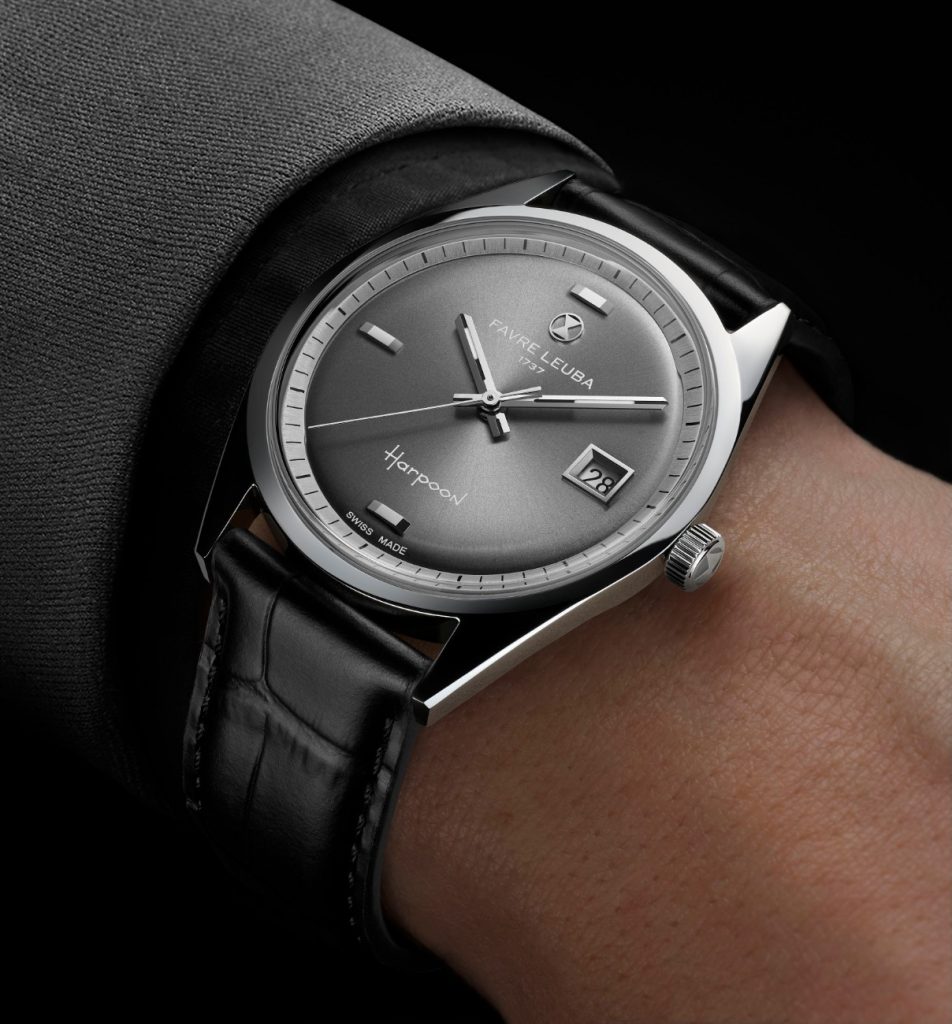
Why was the Harpoon the right watch to reintroduce at this stage?
PH: So first it was a very pragmatic approach because it was 60 years ago, in 1966 that the Harpoon was first launched, so that was the first decision why we chosen the Harpoon. But what really happens with the Harpoon Revival which I happen to wear here. You know that retro look or I would say the neo-vintage look which you see now all over the place, the thickness or the thinness of the watch, the size of the watch case is only 36.8mm with a thickness of 10mm, it just really hit the nail on its spot this year. So it was maybe that luck is on our side, and that it coincided with the 60 years of the Harpoon.
With the Harpoon Revival, you stayed remarkably faithful to the original proportions and design language. How do you decide where heritage should remain untouched and where modern expectations need to take over?
PH: I think this is a fine line and for me it’s very important that we do not build the brand long term on the vintage. So, what we do, we are not going to take just vintage pieces and copy paste them, it’s not that we are going to rewrite history, it’s more that we are going to continue to write on the history. And that’s why you see many of our collections which we showed in the past and which we launched, you have a revival element in it, like for example the Deep Raider collection which was based on the iconic Deep Blue collection and then you had a more modernisation out of it. So, it’s very important to have an evolution. We are not going to build the brand only on timepieces like the Harpoon. There are always editions which you see a clear evolution but the design DNA and certain elements from the design and from the design code will always exist from the past.
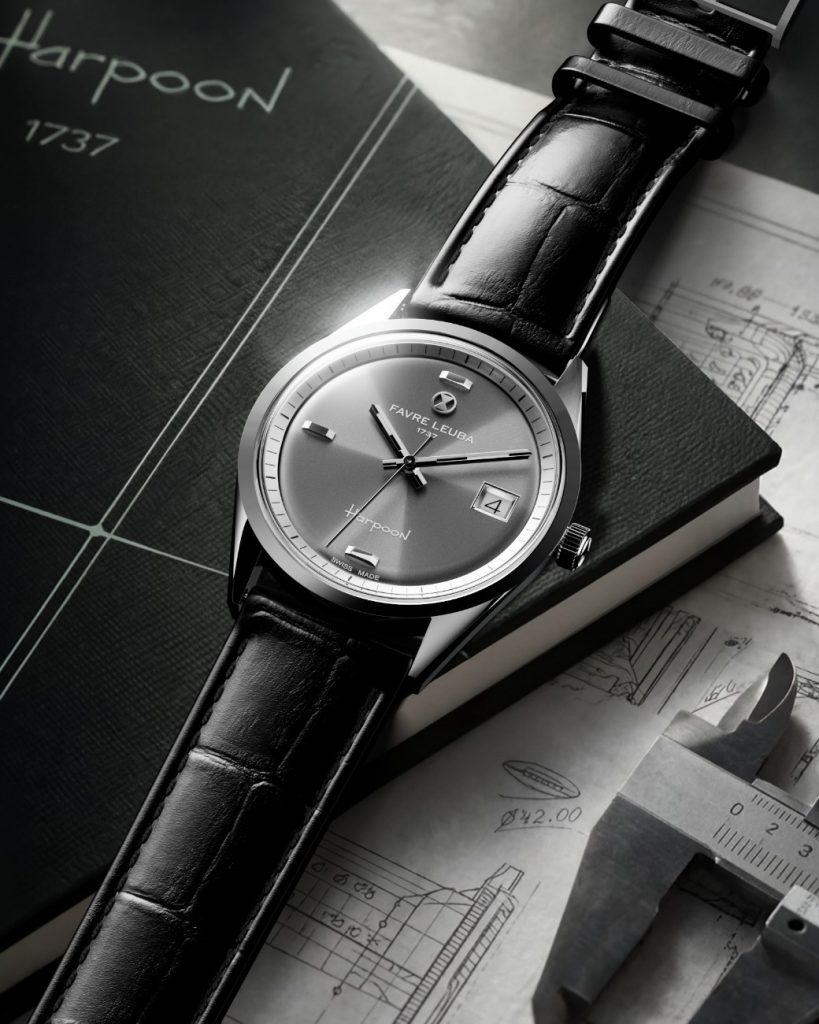
The new Harpoon is compact, understated, and almost quietly confident in a market full of oversized statement watches. Was that restraint a deliberate message about what Favre Leuba stands for today?
PH: I think it’s very much deliberate. We are not anymore, a tool watch which is in your face, I would say. For me the word wearability is very important. So, our pieces really are wearable.
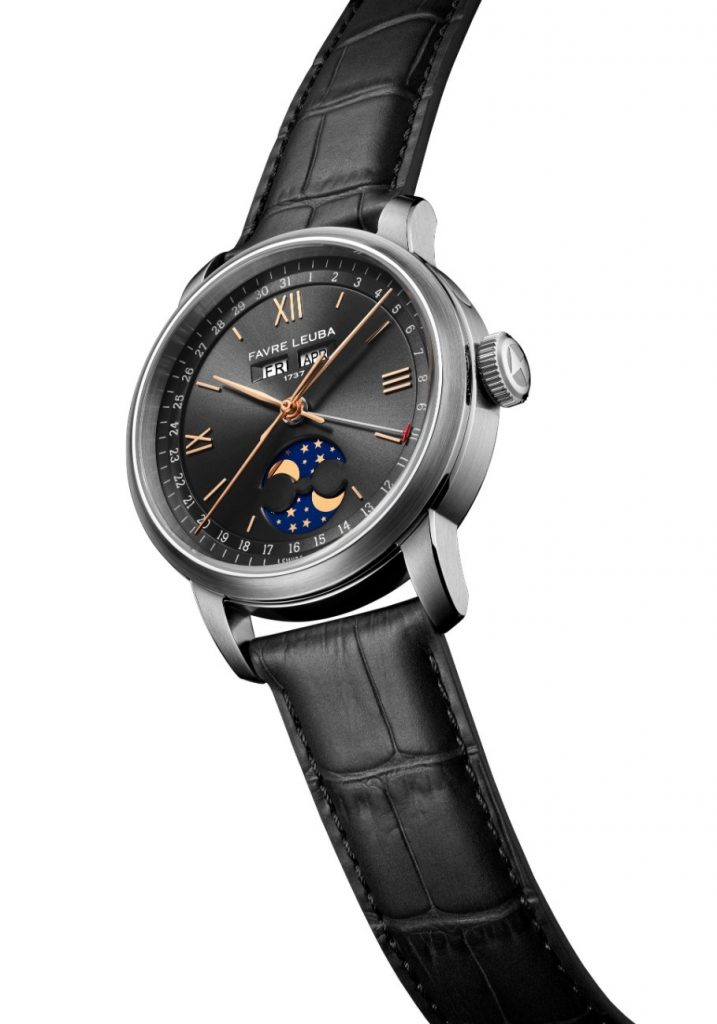
The launch of the new 1737 collection feels symbolic, especially with the name directly referencing the brand’s founding year. Was this collection designed to be the true emotional anchor of modern Favre Leuba?
PH: No, what happened is when we launched the brand we had three lines, three families. The Sea Sky, the Deep Raider and the Chief. And all three of them had an element of sports. It was sportier watches. Even the Chief has a sporty element to it. So what we added now this year, we added two lines. The Harpoon, which is of course very back to the past in design. And it’s also the element of neo-vintage which is in there. And the 1737, a dress watch. And we chose 1737 because it really reflects the DNA, the heritage of our brand.
The 1737 Triple Calendar brings back a complication deeply rooted in Favre Leuba’s history through the legacy of the Datora. How important was it for you to reconnect the brand with that more classical, elegant side of watchmaking?
PH: Actually, one of the inspirations which we took is not just the Datora but it was the collaboration which we had at some stage with the watch brand, Bovet. They were once owned by Favre Leuba in the 30s and we did a collaboration with them. So, what we did, was took the inspiration from this piece. That’s a piece from 1952. And you see it has the name Bovet and Favre Leuba on the dial. We knew moon phase is something which is appreciated. And a full day, as some people call it, we call it now the triple calendar, which is a very functional complication, it’s very helpful. And we said we are going to take now the inspiration from our collaboration and ownership which we have had with Bovet. This is a beautiful piece. They knew what to do. So that was key at that moment.
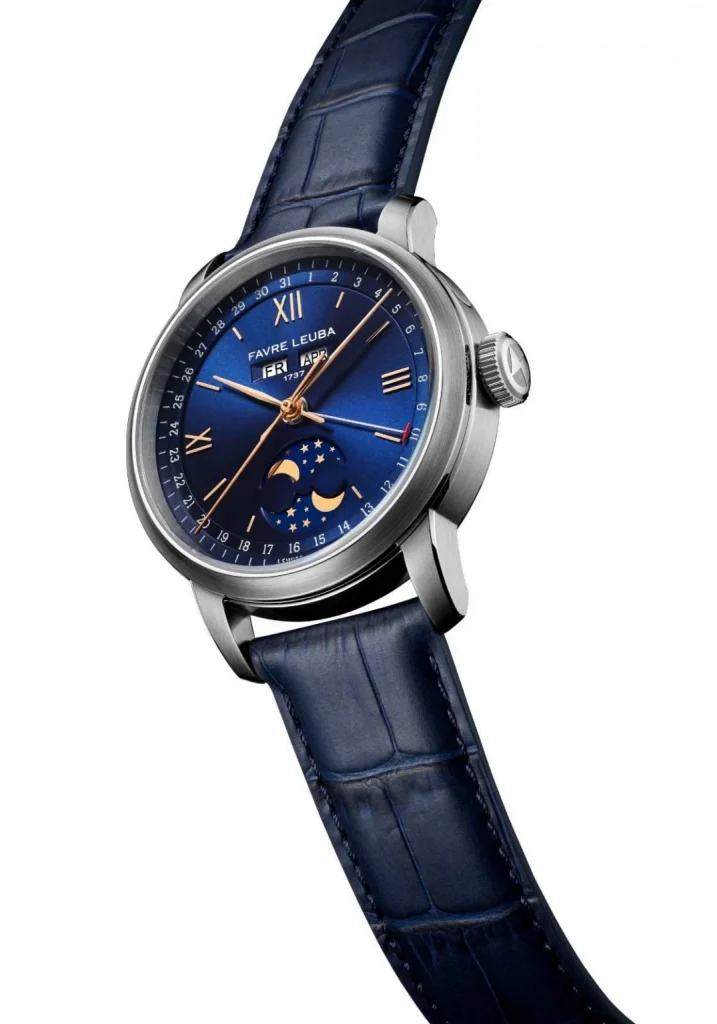
Triple calendar watches have a certain old-world romance to them. In a market obsessed with sports watches, were you consciously trying to bring collectors back toward classic complications?
PH: Yes, I think that was the intention. And I think the emotional part, I don’t know why you bring in the emotional part, because I think every timepiece is somewhat emotional. Probably the emotional part you are referring to is probably the moon phase.
Since the relaunch, we’ve seen Chief, Deep Blue, Sea Sky, and now 1737 expanding the universe. How do you ensure each line has a clear identity rather than becoming just another addition to the catalogue?
PH: I think it’s important that we distinguish for each line certain design elements and design codes. And this is something which we have to preserve. I think everybody who has these collections has to make sure that the design codes are very clearly defined. But I don’t think that’s an issue today. I think it’s something which is very important going in the next decade or even longer that we keep those design codes alive.
Favre Leuba has one of the richest histories in Swiss watchmaking, but heritage alone is never enough. How do you balance storytelling with proving real relevance to today’s collector?
PH: I think we prove that with our first three collections. When we take the Deep Raider, the Chief, and even the Sea Sky to a certain extent, you see that neo-vintage in certain parts of the watch, but then you see the modernisation and the evolution. So if you take the Deep Raider as an example, we have one version which we call the Deep Raider Revival. It’s almost identical to the timepiece from 1964, but then we also show at the same time the Deep Raider Renaissance, which has all the design codes of the future, different material, like for example ceramic, etc. So it’s very important for me that we do not, as I mentioned before, copy-paste the past, but that we continue and evolute what we used to produce in the past. Otherwise, it’s not sustainable.
Also Read: Watches and Wonders 2026: Favre Leuba Unveils New Triple Calendar And Harpoon Revival Collections
As someone who has led major luxury watch brands before, what is the biggest challenge in rebuilding trust and desirability for a historic maison like Favre Leuba?
PH: It’s part of the credibility, which we have to keep. And I think it’s an obligation to make sure that we can continue to write, keep the DNA, keep the design elements, continue to write the history of the brand. So we really have to stay true to certain elements from the past. I think it’s the responsibility of the CEO to do that. India has always had an emotional connection with Favre Leuba across generations.
Do you see this market as nostalgia-driven, or is there a genuine new collector audience discovering the brand for the first time?
PH: India in the last half a decade has become a very sophisticated watch market. So, unlike maybe it was 10 or 15 years ago. I do not think we can just play the card of nostalgia. That’s why it’s important that we show where the brand is going to go into the future. At the moment we launched the brand, we didn’t just show nostalgia, but we showed already where the brand is continuing to go.
Looking beyond Watches and Wonders 2026, what would success for Favre Leuba look like for you—commercial growth, collector credibility, or creating one truly defining modern icon for the brand?
PH: I think all three of them. The last one which you mentioned, with the iconic piece, I believe that the iconic piece you cannot plan. An iconic piece will develop, and it’s the market and the end consumer who is going to decide at the end of the day what’s going to become an iconic piece of a brand. It would be nice that during my tenure somebody would say, oh now we have the absolute new iconic timepiece for Favre Leuba. But it’s impossible that I can already say which one that will be.