Rolex Cosmograph Daytona History: How It Became The World’s Most Iconic Chronograph
Explore the full history of the Rolex Cosmograph Daytona — from its 1963 racing-inspired origins to its rise as the world’s most coveted chronograph — including its legendary Paul Newman era and modern-day innovations
If watches had horsepower, the Rolex Cosmograph Daytona would be a V12 screaming down the straight at Le Mans. This isn’t just a chronograph but the horological equivalent of a racing legend that refused to retire. When Rolex launched the Daytona in 1963, hardly anyone wanted it; now, collectors would trade a kidney, a car, and possibly a distant relative just to get on a waiting list. Fueled by Hollywood glamour, Paul Newman mystique, and the kind of engineering that makes other chronographs feel like cheap dashboard accessories, the Daytona has evolved from a humble pit-lane tool into a global cultural artifact. It’s fast, fearless, maddeningly desirable, and, in true Rolex fashion, just understated enough to make you feel like you’re wearing history, not shouting about it. When Rolex introduced the Cosmograph in 1963 which was soon to be nicknamed the “Daytona”, it wasn’t the overnight icon we know today. In fact, it sat on dealer shelves collecting dust while collectors gravitated toward dressier pieces and simpler, time-only watches. But the Cosmograph had something the others didn’t: a design born for motorsport, built for the adrenaline-soaked world of American racing, and eventually destined for myth.
1963–1987: The Manual-Wind Era (The “Pre-Daytona” & Early Daytona Years)
The earliest Daytonas, known today as Pre-Daytonas (ref. 6238), set the blueprint with their clean, utilitarian dials and manually wound Valjoux 72 movements. The true Daytona debut came shortly after with references like the 6239, where Rolex added the contrasting tachymeter bezel and the now-famous “Daytona” text arcing over the subdial. These watches weren’t just tools; they were designed to be strapped over racing gloves, read at high speeds, and operated with gloved hands.
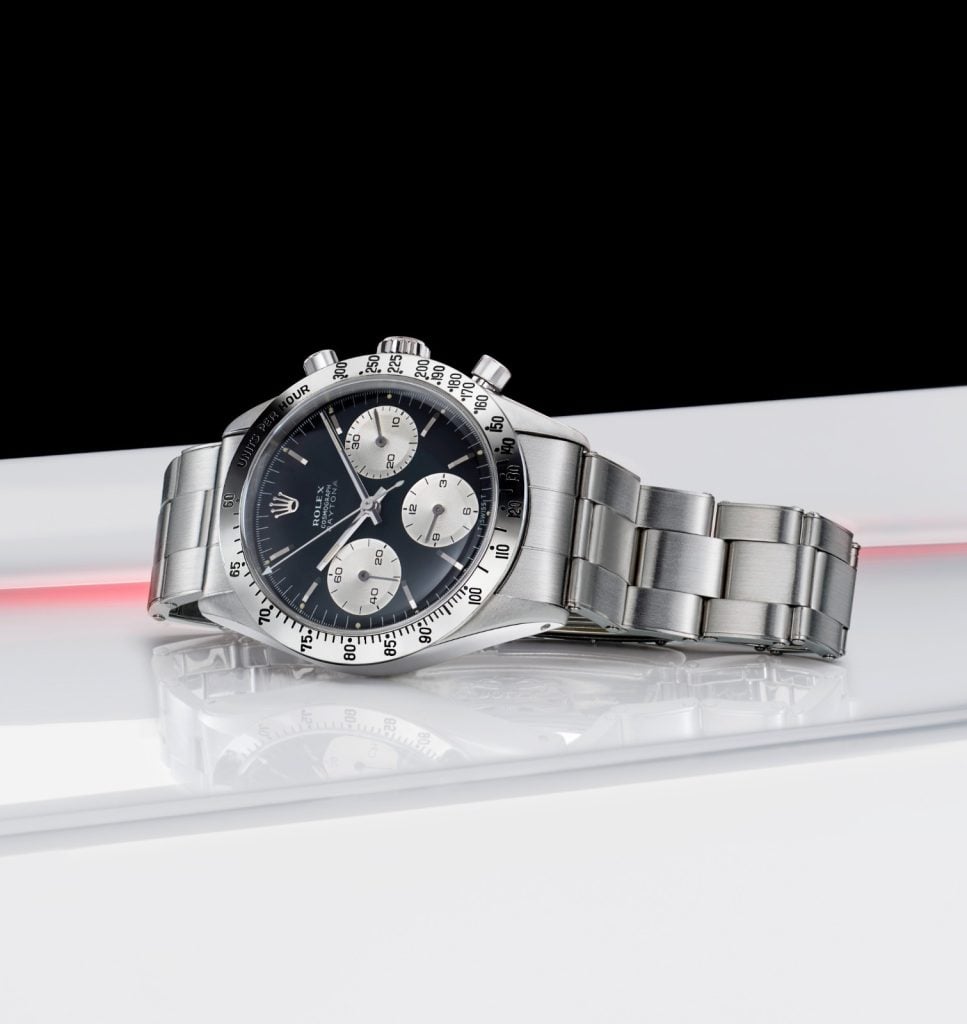
Throughout the 1960s and ’70s, Rolex improved water resistance, refined the case, and perfected the panda and reverse-panda dial formats. But the moment that transformed the Daytona forever arrived when actor and racing enthusiast Paul Newman began wearing his exotic-dial ref. 6239. Those “exotic” dials, produced by Singer, with their art-deco subdials and contrasting minute tracks, were slow sellers at the time. Decades later, they would become the holy grail of vintage collecting, renamed “Paul Newman Daytonas” and commanding astronomical prices — topping even the auction charts with Newman’s own watch selling for nearly $18 million in 2017. Despite the eventual fame, sales through the ‘70s and early ‘80s remained modest. The Daytona was loved by racers and a few die-hard collectors, but it had not yet become the luxury juggernaut it is today.
1988–2000: The Zenith El Primero Era (The Turning Point)
The biggest shift in Daytona history happened in 1988, when Rolex unveiled the first self-winding Daytona, the reference 16520, powered by the legendary Zenith El Primero movement. However, Rolex did not simply take the movement as-is. They heavily modified it — over 200 adjustments — lowering its high-beat 36,000 vph rate to 28,800 vph, redesigning key components to meet Rolex durability standards, and effectively turning it into what collectors call the Calibre 4030.
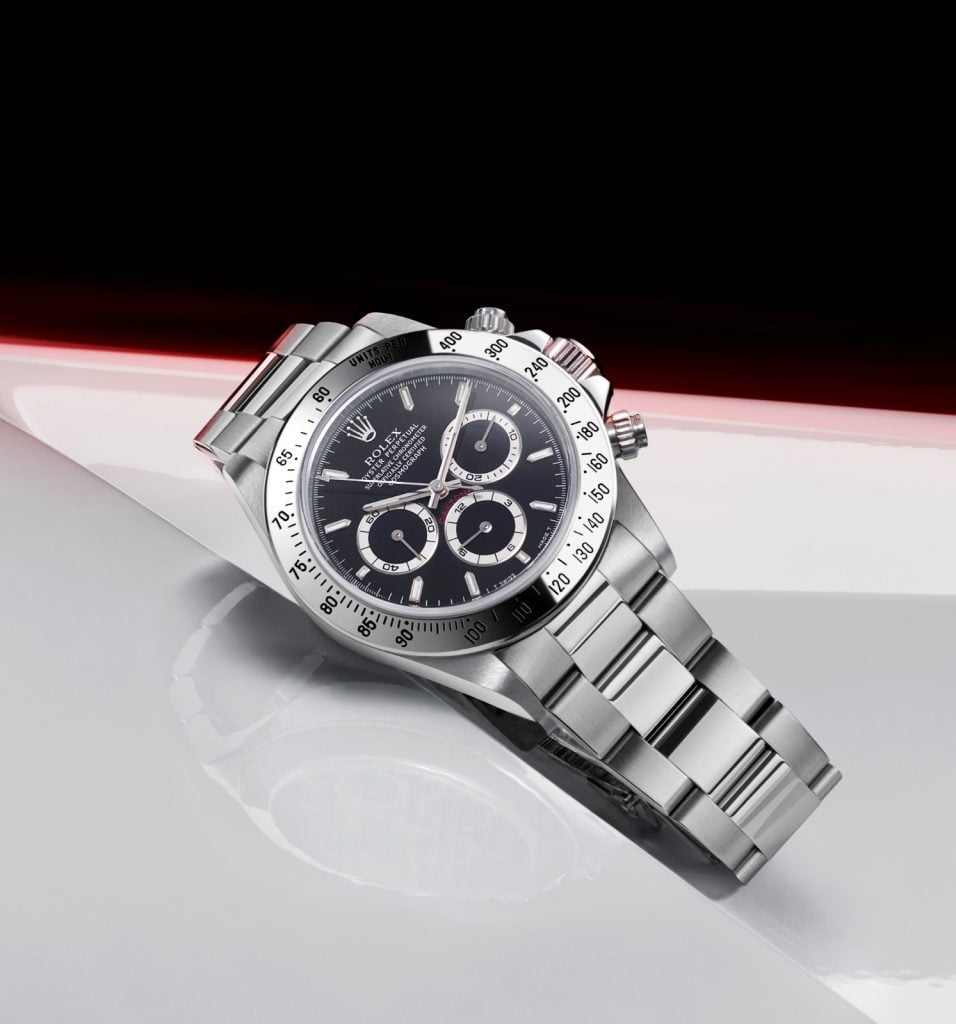
This era marked the Daytona’s entrance into true modern luxury. The watch grew to 40mm, gained sapphire crystal, wore new glossy dials with applied markers, and carried a slimmer tachymeter engraving. And most importantly: people finally wanted it. Waiting lists began. Demand steadily grew. The Daytona was no longer a niche chronograph — it became a status symbol. The Zenith-powered Daytonas created the foundation for the modern Rolex craze. They bridged vintage charm with modern reliability, and their collectability today remains exceptional, especially early “floating” dial versions and the rare Patrizzi-dial variants.
2000–2023: The In-House Movement Era (Calibre 4130)
In 2000, Rolex made a bold move: it replaced the Zenith-based movement with its own fully in-house chronograph calibre — the 4130 — introduced in the reference 116520. This movement was a technical masterclass: fewer components, increased reliability, vertical clutch, column wheel, longer power reserve, better serviceability, and superior shock resistance. It was Rolex engineering at its finest.
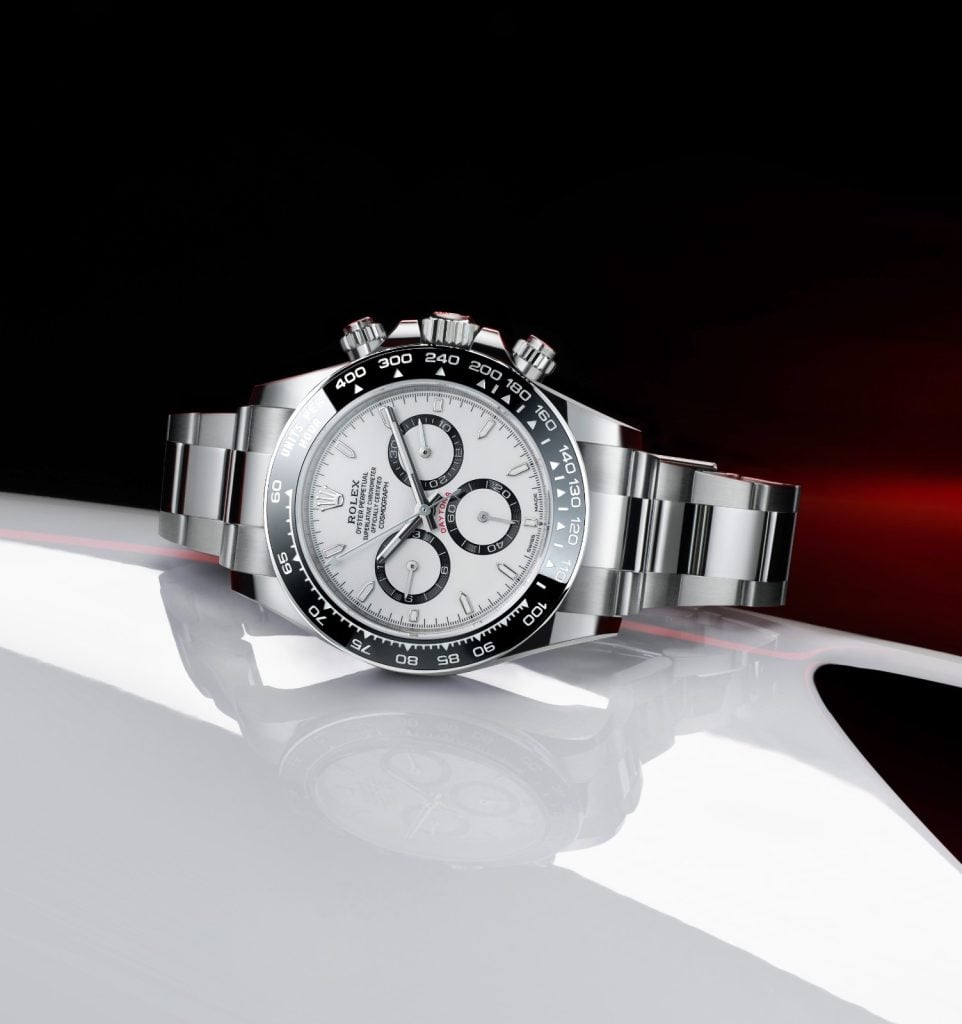
Aesthetic refinement continued. Steel models received black or white lacquer dials, while precious metal versions explored new colors, materials, and bracelet options. The ceramic bezel revolution began in 2011 with precious metal variants, culminating in the stainless steel 116500LN in 2016 — a release that triggered global waitlists and made the Daytona one of the hardest-to-buy watches on earth. The modern era also saw the Daytona become a canvas for creativity: meteorite dials, Everose cases, rainbow gem-set bezels, openworked sapphire models, and ultra-lightweight Oysterflex straps. The Daytona was no longer just a tool — it was an expression of Rolex’s highest capabilities.
The Next Evolution Calibre 4131
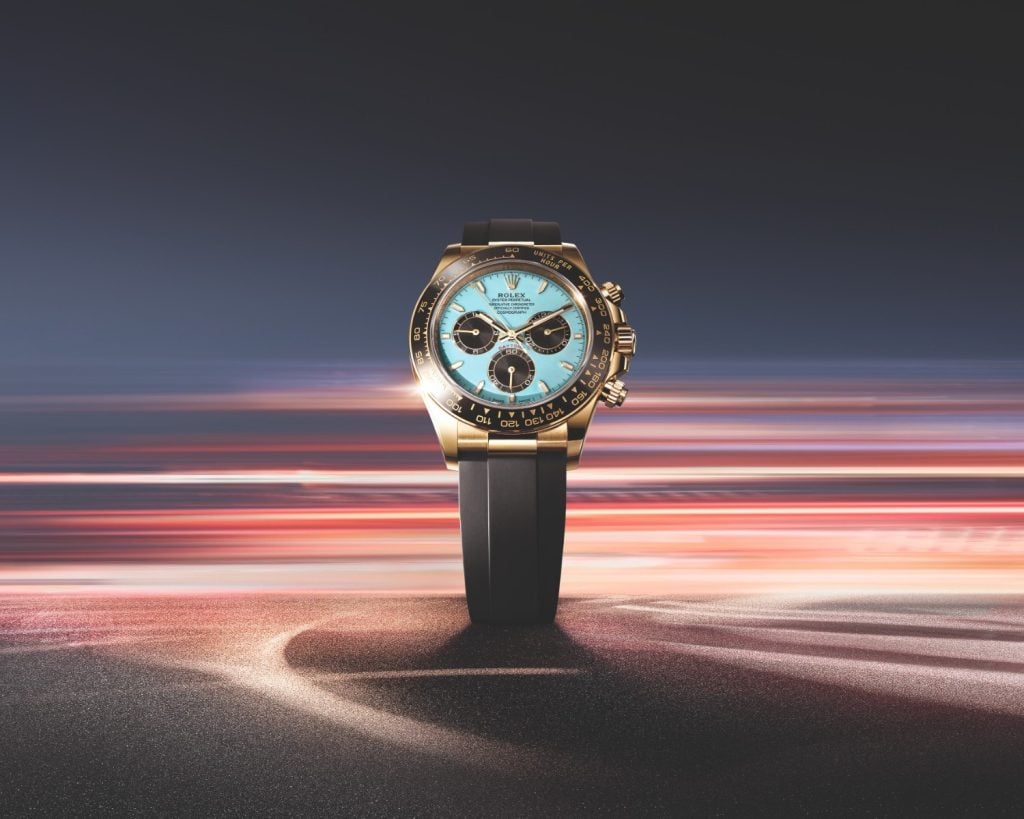
In 2023, Rolex introduced the newest generation of the Daytona, complete with its updated movement — the Calibre 4131 — featuring enhanced efficiency, improved winding, and refined finishing visible through an exhibition caseback on certain precious metal models. A more elegant case profile, updated dial proportions, and a sleeker ceramic-metal bezel insert refreshed the design while preserving the unmistakable Daytona DNA.