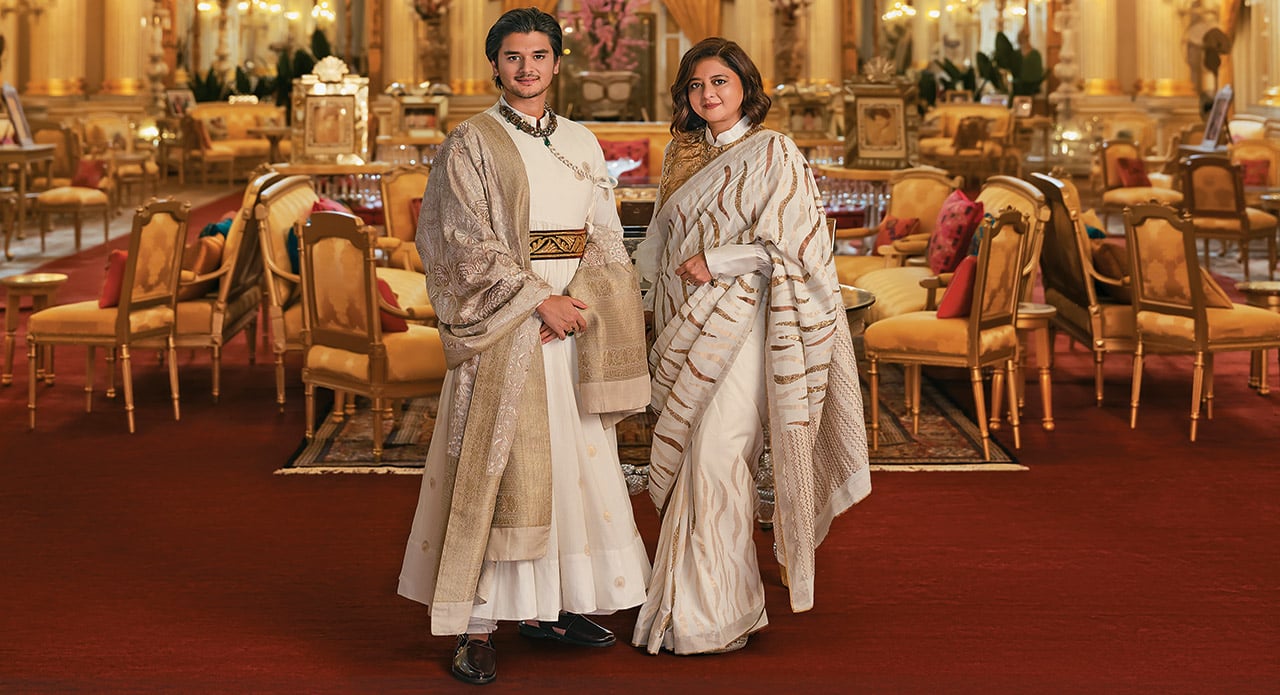


Sketch you vision to a royal setting? Perhaps a mélange of palace corridors, mystic heirlooms shrouded in mystery, rare jewels, opulence and wedding rites and rituals frozen in time? Or, perhaps, you can ask Maharani Priyadarshini Raje Scindia and her son, Yuvraj Mahan Aaryaman Scindia, for a reality check. For them, just like other royal clichés, the grandeur of a wedding is meaningless. In fact, above all, emphasis is placed on the warmth and hospitality for guests (you know, things that truly matter).
“A wedding is a celebration of families and friends,” says Maharani Priyadarshini. “Everyone should feel included.” It is perhaps an effortless balance of old world grace and contemporary thinking that makes the Scindias such compelling voices in today’s conversation around weddings. Maharani Priyadarshini knows better than most the intricate balance between royal customs and evolving wedding trends; Aaryaman, on the other hand, has grown up in the era of wedding hashtags and ceremonies turned intimate and personalised, but definitely not ritualistic. And yet both afford respect to the traditions that unify them, and in a way, define them.
From Heritage to Horizon
Modern weddings often frame tradition and individuality as opposing forces. For the Maharani, however, there is no place for such conflict in her world, in which conversations about modern femininity start from the acknowledgment that powerful women can hardly be built in isolation. “I’ve been fortunate that the men in my life, my father, my brother, my husband, and now Aaryaman, have never placed boundaries on what I wanted to do. They’ve always been partners in whatever I’ve chosen. We often celebrate powerful women, but they are possible because of powerful partners. For me, femininity has always been about partnership and creating something meaningful, together.” It is an amazingly pragmatic approach from a woman who effortlessly transitions between two worlds. Raised in a liberal Maratha family and then married to one defined by its heritage, she has never been forced to pit freedom against tradition. “I’ve been lucky,” she reflects, explaining that neither family ever expected her to break glass ceilings; for, the world she embodies never bound her within such structures. That philosophy appears to have quietly shaped both her children. Legacy, she explains, was never presented to them as an obligation. It was simply part of who they were. “They had to discover themselves first,” she opines.
Witnessing Aaryaman’s ascent across a diverse professional ladder, encompassing cricket administration as well as the leadership of an AI company, has only reinforced that belief. She seems especially proud about how he has implemented technology to improve the functioning of the Madhya Pradesh Cricket Association, not as disruption for disruption’s sake, but more so to maximise fairness, transparency, and opportunity in the sport. Yet, Maharani Priyadarshini reveals, amid all this adaptability, Aaryaman chose to understand the traditions that define his lineage before attempting to improve them. “The thing I’m most proud of, is that he learnt before he instituted change. He listened to his elders, understood tradition and then brought technology into the process. Whether it is thanking the groundsmen after every match or introducing technological interventions to modernize sports administration, he has always believed that people deserve credit. That’s something this family has always stood for.”
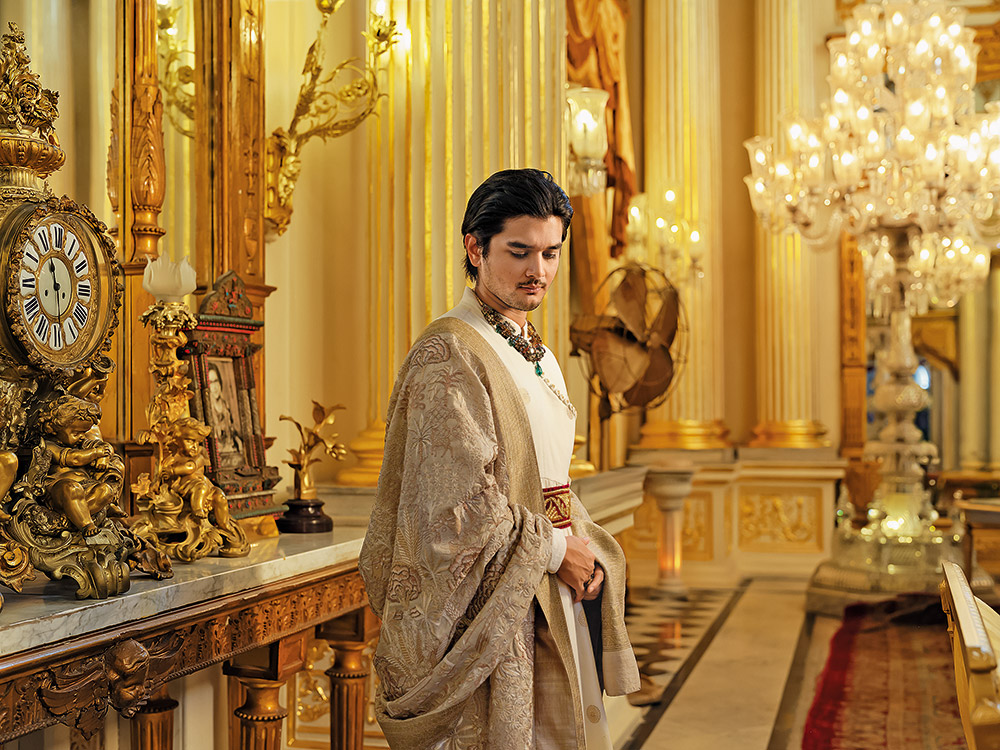
Wisdom Woven In Heritage
While defining this role for himself, Aaryaman understands the weight titles, heritage and expectations carry, but none of those, he believes, should overshadow the work itself. “Tradition, for me, has always been about creating impact. Whether that’s in cricket administration or AI, the goal remains the same, leave the system better than you found it.” Indeed, with such disregard for the superficial and such genuine intent, it is only expected that the mother son duo, when speaking of weddings, neither pick “celebrity performances” or “extravagant décor” when answering what makes a wedding unforgettable. For Aaryaman, the answer lies in experiences. Good food. Good music. The opportunity to discover something new about a place or its culture. His mother, meanwhile, while matching him in spirit, provides a different perspective, especially when asked to describe the perfect outfit for her son’s wedding. Her true non-negotiables are deeply symbolic Maratha pieces passed down through generations: the traditional nath (nose ring), the mangalsutra, and the cartura (waist belt). Here too, there is wisdom over vanity.
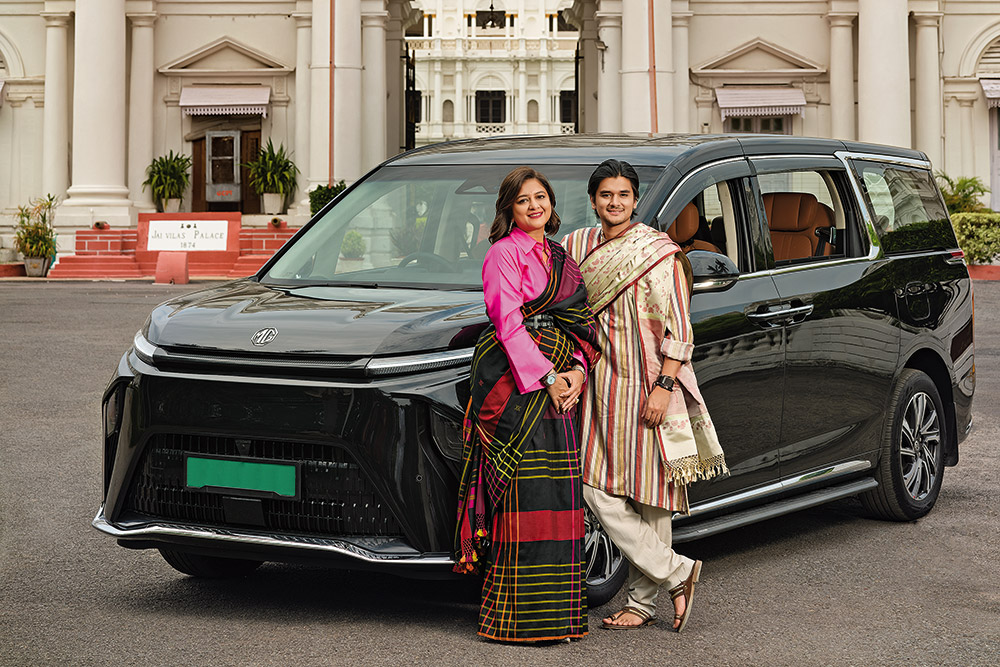
Hospitality, Heart and Innovation
Beyond the sartorial, for her a wedding remains, no matter the spectacle, a personal affair where every guest deserves to feel seen. “A wedding celebrates families and friends. I want every person there to feel included. It could be recalling someone’s favourite colour while choosing a dupatta, or making sure a favourite dish appears on the menu. Small gestures are what people carry home. Hospitality is less about scale and more about making people feel they belong.” Aaryaman even imagines a future where artificial intelligence quietly works behind the scenes, handling guest communication, coordinating transport, managing hospitality and simplifying logistics, freeing families to focus on what truly matters. “Everything from invitations and guest management to hospitality, music and logistics can benefit from technology. Imagine AI helping you learn who’s arrived, who needs transport or answering guests’ questions instantly. Technology should make celebrations smoother, so people spend more time celebrating than coordinating.” So, do we see an AI app for the wedding in the future? “Absolutely. I think it’s a great idea!” says, Aaryaman. And for a family that has so beautifully mingled tradition with modernity, innovations such as these seem every bit as natural as their regal bearing.
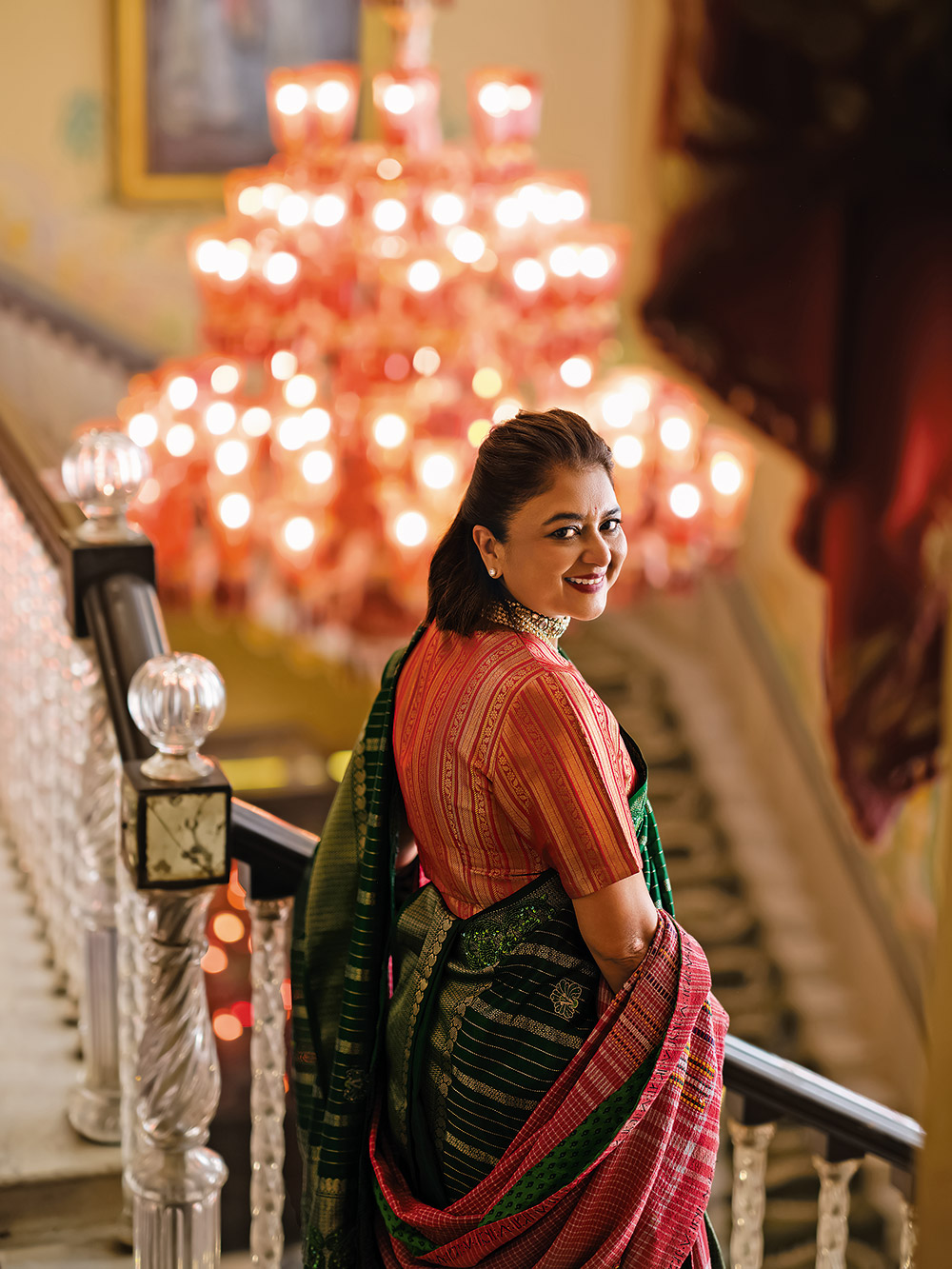
Legacy With Intent
Yet, despite his enthusiasm for innovation, he is equally clear about what must remain untouched. “I love tradition,” he admits with a smile. “There is a beauty to it. His mother agrees. Some traditions, she feels, are valuable because they teach us to stop and listen to ourselves. Recalling that when she got married herself, she wished that certain celebrations could have been combined into one. However, thirty years later, her opinion has changed. She has realised that distance, anticipation and even some inconvenience can become an integral part of memory. This philosophy extends beyond weddings and into marriage. One of the Maharani’s most thoughtful observations is directed towards young brides stepping into unfamiliar homes. Rather than rushing to modernise inherited customs, she encourages them to first understand the emotional significance behind them. “Listen before you change. Every family has traditions that have evolved for a reason. Experience them first. Understand where they come from. Afterwards, the legacy becomes yours to shape. There is beauty in listening before deciding what deserves to change.”
Perhaps there is no truer expression than this of what it means to be a Scindia. Despite representing one of India’s best known royal lines, they carry the weight of legacy remarkably lightly. No rituals take precedence simply because they are old. They just make for a simple endurance of tradition coming straight from the heart. In an era where weddings are more often than not performances for social media, theirs is a surprisingly simple reminder. Grand celebrations will always have their place. But what people remember, long after the music has stopped, is the warmth with which they were welcomed. The conversations they shared. And even the traditions they jointly experienced.
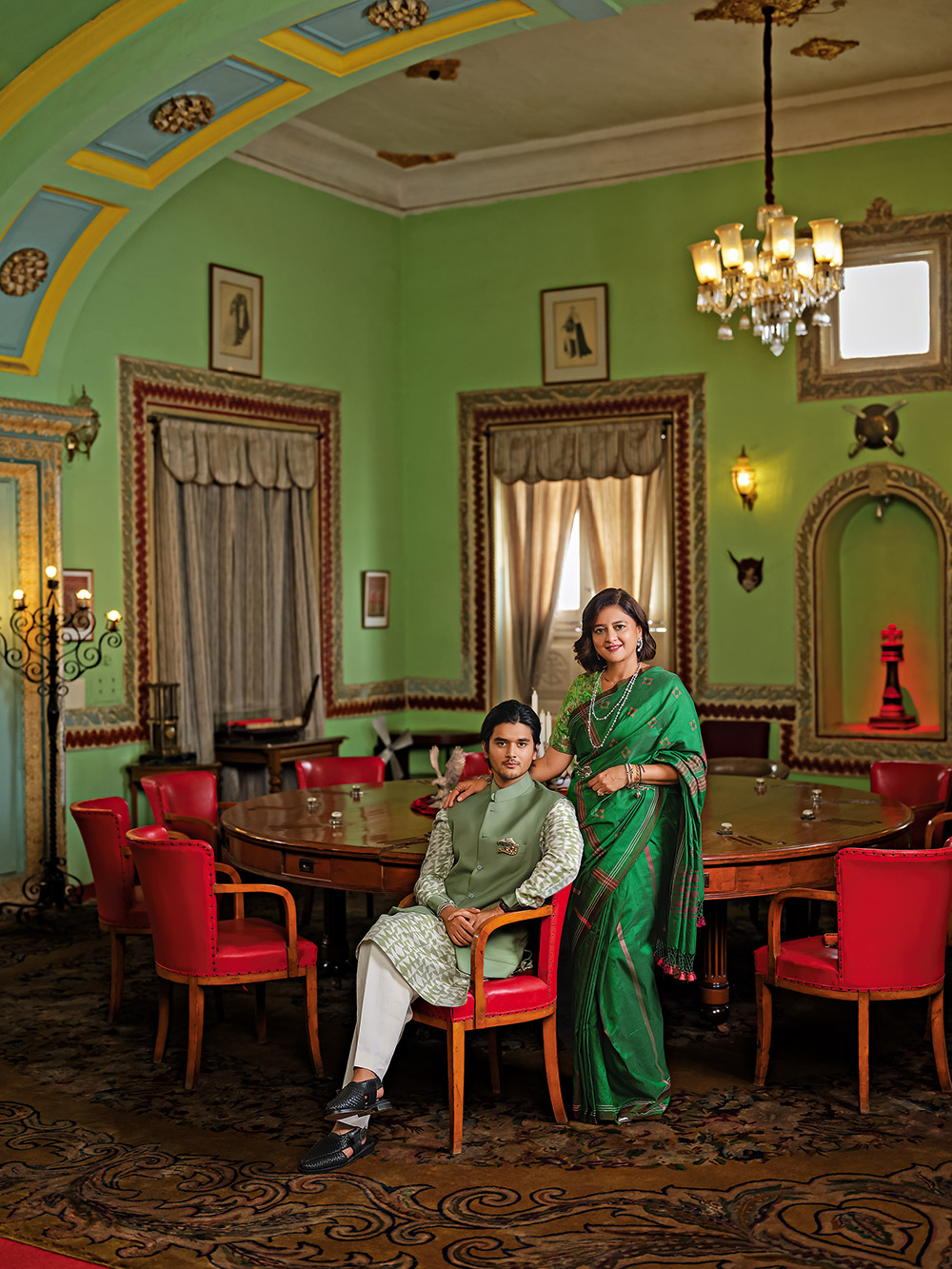
Family Legacy and Regalia
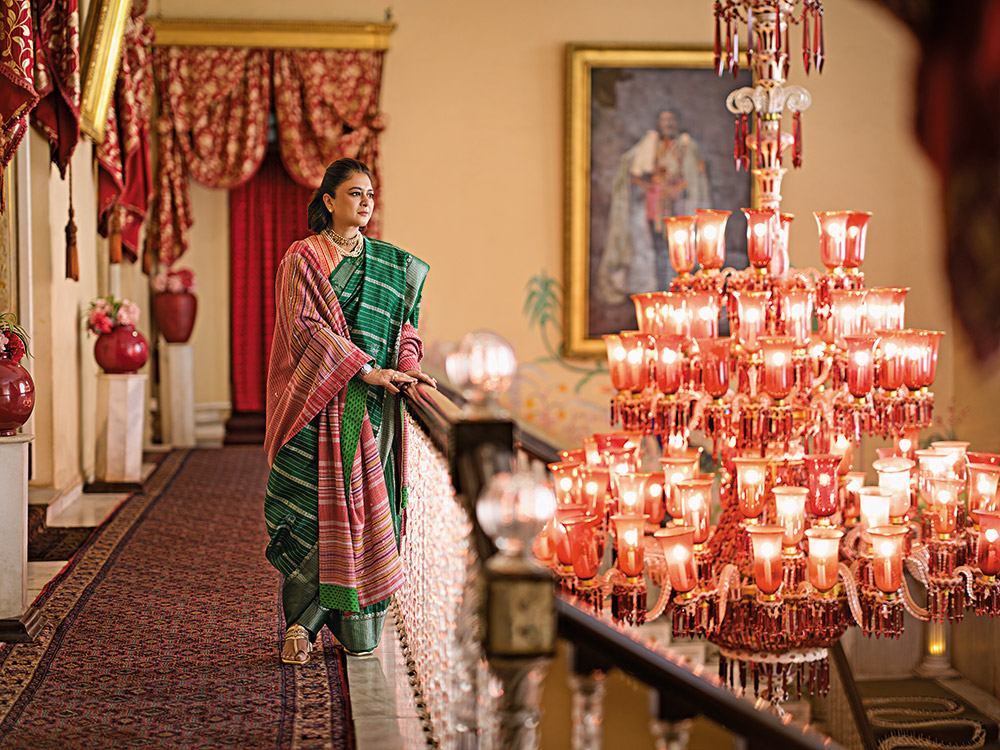
You cannot talk to the Maharani without noticing her grace and the timeless pieces that she so meticulously incorporates into her own individual style. But it’s not just her jewels that define her; she has been able to curate an identity brimming with history, art, and philanthropy. On this rare blend, she says, “In fashion, everything that goes around and comes around. My mother-in-law is wonderful in how she preserved those little heritage pieces. She would even keep her costume jewellery beautifully in little tissue wrapped boxes!” She adds, “Today it is beautiful to see my 24-year-old daughter scurrying through those drawers and saying, Ma, do you have a pin that looks like this?” Maharani Priyadarshini Raje acknowledges the ability to be allowed to play dress up with these absolutely exquisite pieces.