

Rolex is a brand that has built its formidable reputation on consistency. The Submariner looks like a Submariner, the Datejust remains unmistakably a Datejust and the Daytona has spent decades perfecting the art of being immediately recognisable. Yet, buried within this remarkably disciplined history are watches that tell a rather different story. These are the Rolex models that wandered off the well trodden path, experimented with technology, flirted with eccentricity and, in several cases, disappeared altogether. For collectors, that makes them rather more interesting than the familiar crown stamped across every wrist in the room.
Rolex Tru Beat
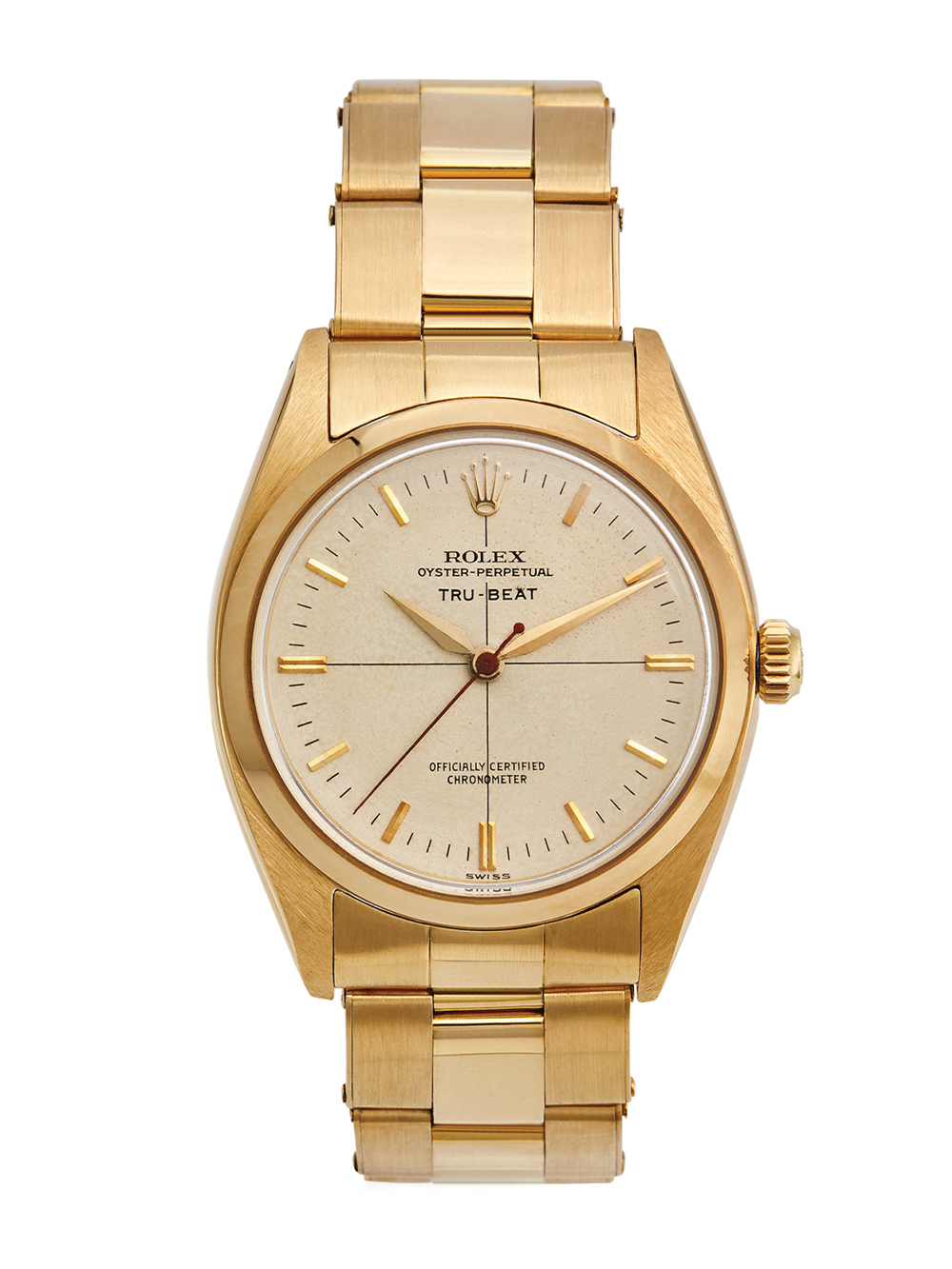
The Rolex Tru Beat is perhaps the most intellectually intriguing of the lot. Introduced in the 1960s as the reference 6556, it attempted to make a mechanical watch behave more like a quartz timepiece by creating a seconds hand that advanced once every second rather than sweeping continuously. Rolex called the system Tru Beat, and the visual effect was remarkably unusual for a mechanical watch.
At its heart was the Calibre 1040, a movement engineered around a dead seconds mechanism. The idea was clever, but the watch arrived at an awkward moment for mechanical horology, when quartz technology was beginning to transform expectations of accuracy and precision. Production was brief, and the Tru Beat never became a commercial success. Today, its relative rarity and unusual mechanical architecture make it one of the more fascinating forgotten Rolex references, a reminder that even the Crown was once willing to experiment rather boldly.
Also Read: Roger Federer Has Built A Luxury World Beyond The Tennis Court
Rolex King Midas
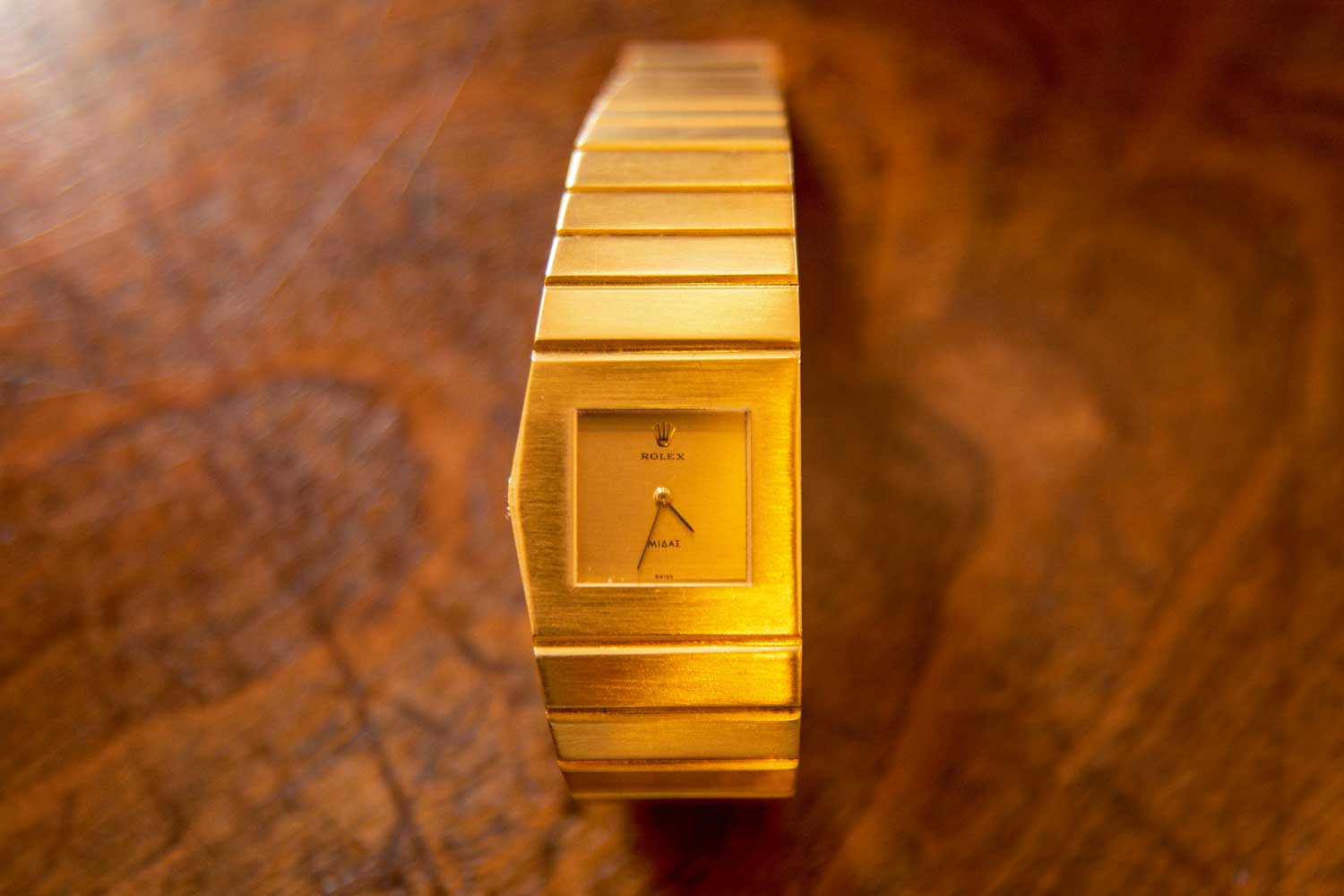
If the Tru Beat was an experiment in mechanics, the King Midas was an exercise in design excess. Commissioned by Rolex in the early 1960s and designed by Gérald Genta, the man who would later become one of the most influential watch designers of the twentieth century, the King Midas looked almost nothing like the conventional Rolex of its era.
Its asymmetrical case was inspired by the Greek Parthenon, while the original watch was constructed from solid gold and was reputed to be the heaviest gold wristwatch of its era. It was also extraordinarily expensive for its time, costing almost twice as much as a gold Day Date.
The King Midas eventually found its place within the Cellini family, but the original reference 9630 remains the true collector’s prize. Its unusual architecture, Genta provenance and unabashedly luxurious character make it a fascinating counterpoint to Rolex’s more utilitarian icons.
Rolex Oysterquartz
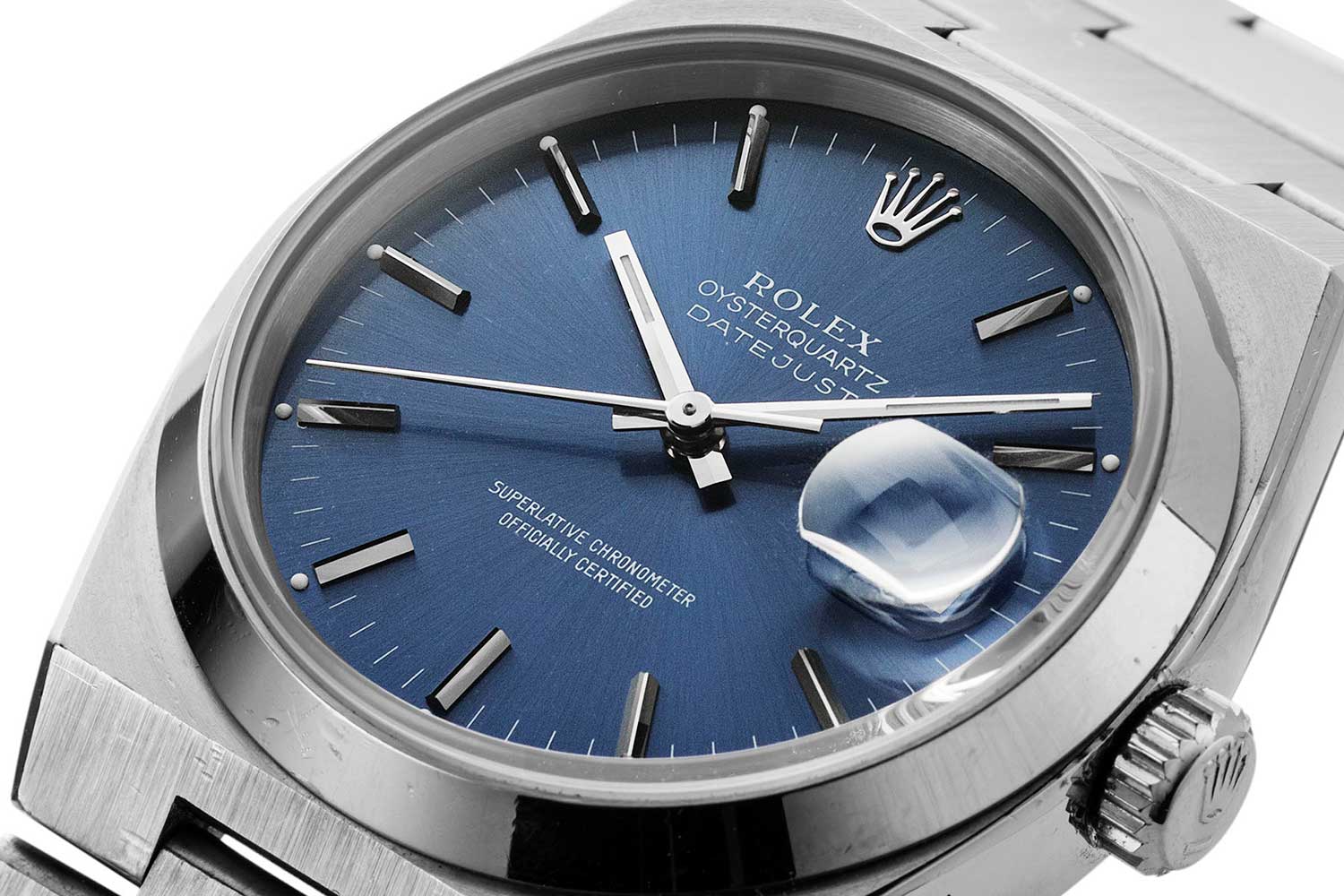
Few watches illustrate Rolex’s response to changing times quite as vividly as the Oysterquartz. When quartz technology began threatening Switzerland’s mechanical watchmaking establishment in the 1970s, Rolex did not simply retreat behind the mechanical tradition. It developed its own sophisticated quartz movements.
The Oysterquartz Datejust arrived in 1977 with the Rolex calibre 5035, while the Day Date used the calibre 5055. These were not inexpensive, disposable quartz movements but distinctly Rolex interpretations of the technology, engineered and finished with the seriousness normally associated with the brand’s mechanical calibres.
Production continued for decades before the Oysterquartz disappeared from the catalogue around 2001. The rarity of the model today is heightened by the relatively small number produced, with estimates placing total production at fewer than 25,000 examples.
For contemporary collectors, the Oysterquartz has acquired an appealing sense of historical irony. It is a Rolex that embraced the technology that threatened traditional Swiss watchmaking, only to become a vintage curiosity itself.
Rolex Milgauss
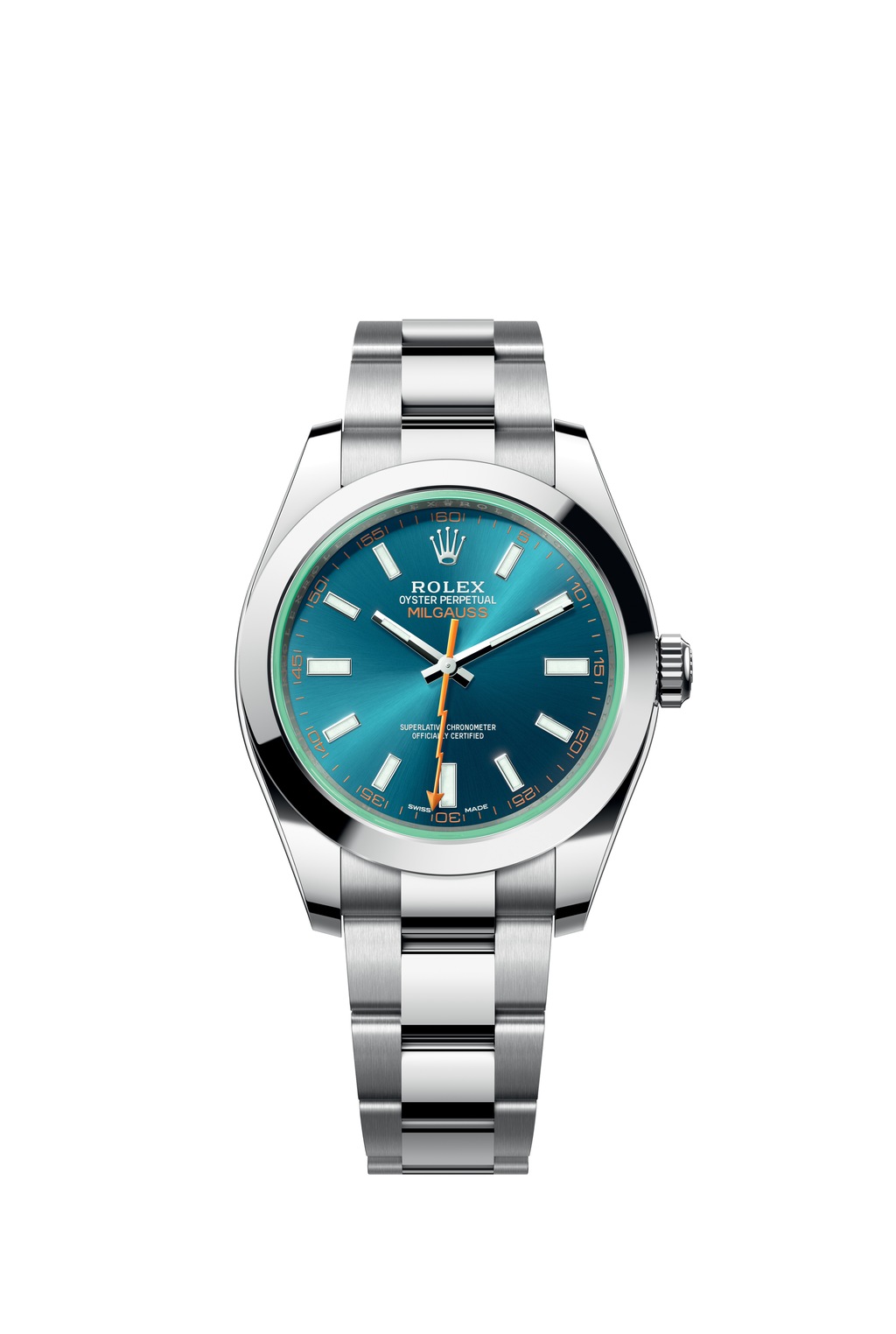
Then there is the Milgauss, a watch that has already disappeared once, returned triumphantly and subsequently vanished again. Created in 1956 for scientists, engineers and technicians working around powerful magnetic fields, the Milgauss was designed to withstand interference of up to 1,000 gauss, hence its name. Rolex developed the watch with an internal magnetic shield protecting the movement, and its association with CERN became an integral part of its scientific identity.
The original Milgauss references are particularly scarce, while the later reference 1019 remained in production until 1988. Rolex revived the model in 2007, giving it a distinctly contemporary personality with the now famous lightning bolt seconds hand and, later, the striking green sapphire crystal.
But in 2023, the Milgauss disappeared from the modern Rolex catalogue once more. Its second retirement has only intensified interest in the model, particularly among collectors who appreciate Rolex watches that occupy the fascinating territory between technical instrument and design statement.
These four watches demonstrate that Rolex’s history is considerably more adventurous than its famously conservative image might suggest. The Tru Beat experimented with the very notion of mechanical seconds, the King Midas embraced avant garde design, the Oysterquartz ventured into quartz technology and the Milgauss translated scientific necessity into horological character. None became the enduring commercial giants that Rolex is famous for, but perhaps that is precisely their charm. In a catalogue populated by icons, the almost forgotten watches can sometimes tell the more revealing stories.