

Think of Ferrari’s naturally aspirated V12. Porsche’s flat six. McLaren’s carbon fibre monocoque. None of them exists because it is the easiest way to build a car. They exist because their creators refused to compromise. They could have outsourced. They could have simplified. Instead, they chose the harder road, because perfection rarely arrives via convenience. That same philosophy defines F.P. Journe. Founded by François-Paul Journe in 1999, the Geneva based independent has become one of the most respected names in haute horology without chasing mass production or marketing spectacle. Every decision is guided by one principle: if something can be done better, it should be done in house. The result is a brand whose annual production remains astonishingly small, yet whose influence on modern watchmaking is immeasurable. Here are five reasons why F.P. Journe occupies a league almost entirely of its own.
Every Calibre Is Conceived And Manufactured In-House
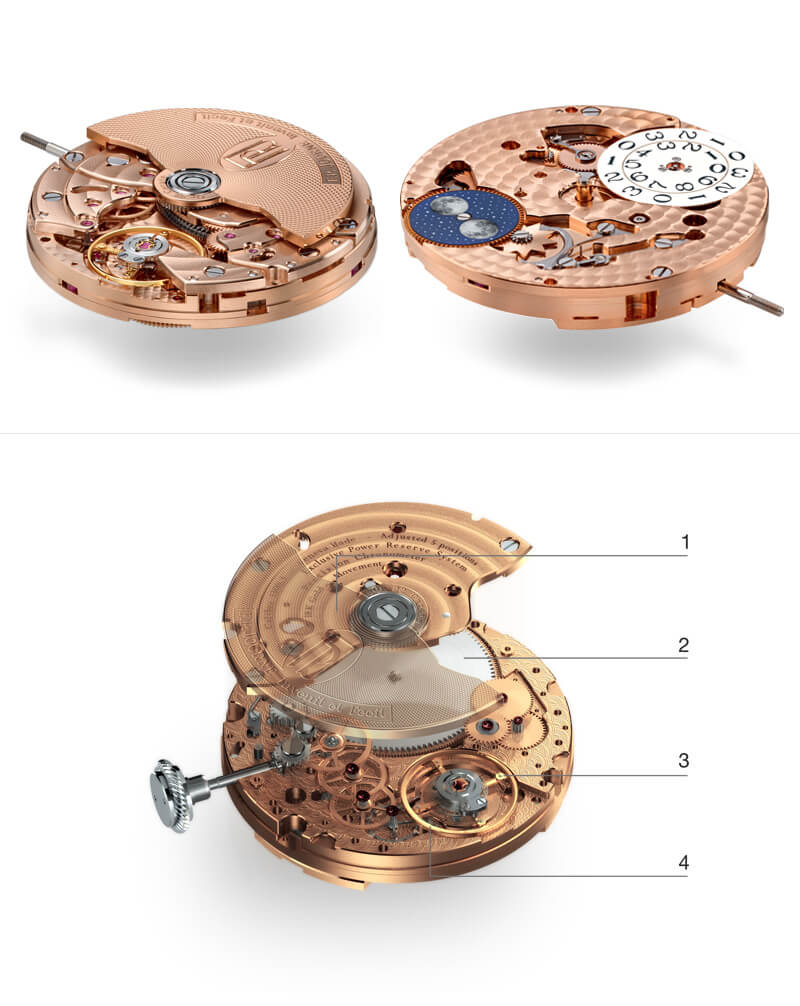
Many luxury brands advertise “manufacture movements”, yet often rely on outsourced components or external movement specialists. F.P. Journe follows an entirely different philosophy. Every movement is conceived, engineered, prototyped, assembled, finished and regulated within the manufacture. This complete vertical integration allows François-Paul Journe and his team to control every microscopic detail, from the architecture of the gear train to the finishing of each bridge. The approach has allowed the brand to create an extraordinary catalogue of original complications rather than modifying existing movements. Whether it is the Chronomètre Bleu, Tourbillon Souverain, Chronomètre Optimum or Sonnerie Souveraine, every calibre begins with a blank sheet of paper, reflecting Journe’s relentless pursuit of mechanical excellence.
Its Movements Are Crafted From Solid 18k Rose Gold
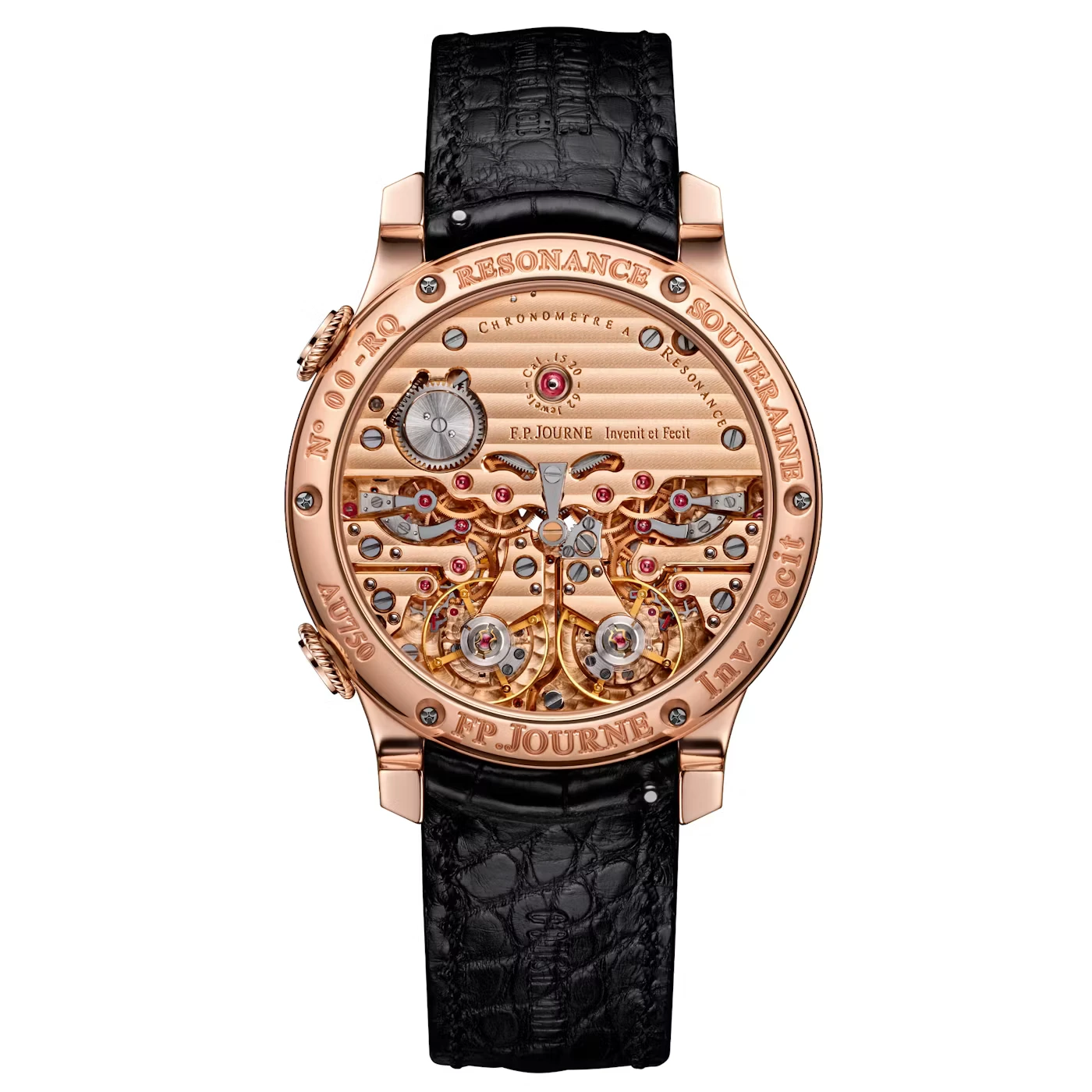
In 2004, F.P. Journe made one of the boldest decisions in contemporary watchmaking. Instead of manufacturing movement plates and bridges from brass, the industry standard for centuries, the maison switched to solid 18k rose gold for virtually every production movement. The decision had little to do with appearance and everything to do with permanence. Gold offers exceptional corrosion resistance and long term stability while providing an unmistakable warmth visible through the sapphire caseback. The material is also significantly more challenging and expensive to machine than brass, making it a choice driven entirely by craftsmanship rather than economics. Today, those distinctive rose gold movements have become one of the brand’s defining signatures and remain instantly recognisable to collectors around the world.
The Remontoire d’Égalité Reinvented Precision
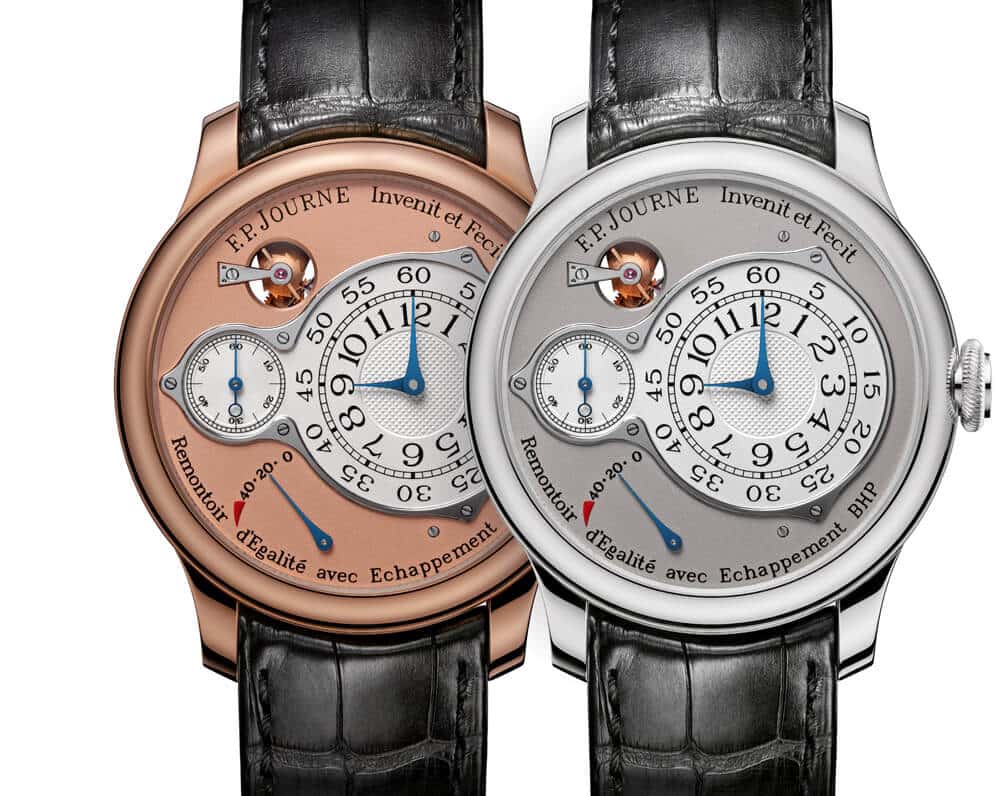
Constant force mechanisms have fascinated horologists for centuries because they solve one of mechanical watchmaking’s oldest challenges: delivering consistent energy to the escapement as the mainspring gradually unwinds. F.P. Journe’s interpretation of the remontoire d’égalité stands among the finest ever created. Instead of allowing fluctuating torque from the mainspring to reach the escapement directly, a secondary spring is periodically recharged, supplying identical energy impulses throughout the power reserve. The result is remarkably stable amplitude and improved chronometric performance. Beyond its technical brilliance, the remontoire also offers visual theatre, with its intricate mechanism visibly operating on the dial side, reminding owners that true innovation often lies beneath the surface.
Chronomètre à Résonance Masters One Of Horology’s Greatest Mysteries
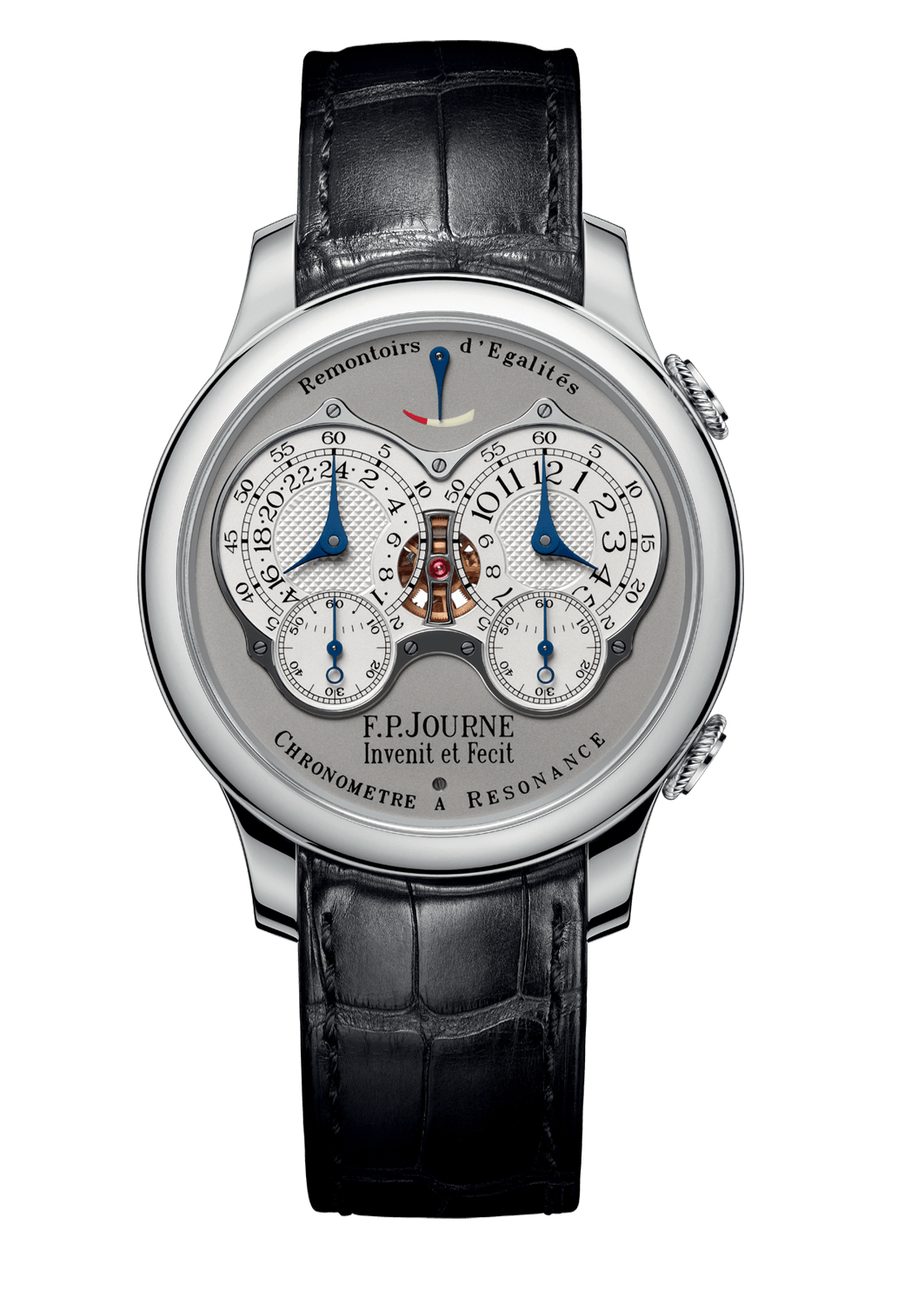
Few watchmakers have successfully harnessed the phenomenon of resonance. Discovered centuries ago by Christiaan Huygens, resonance occurs when two oscillating systems influence one another until they synchronise naturally. Translating this scientific principle into a wristwatch remained one of horology’s greatest challenges. F.P. Journe achieved precisely that with the Chronomètre à Résonance. Housing two independent balances positioned extraordinarily close together, the watch allows both oscillators to stabilise through resonance under suitable conditions, improving consistency while creating one of modern watchmaking’s most intellectually fascinating mechanisms. Even today, very few manufacturers have managed to produce a true resonance wristwatch with the same level of refinement.
Its Boutique First Philosophy Makes Ownership Exceptionally Exclusive
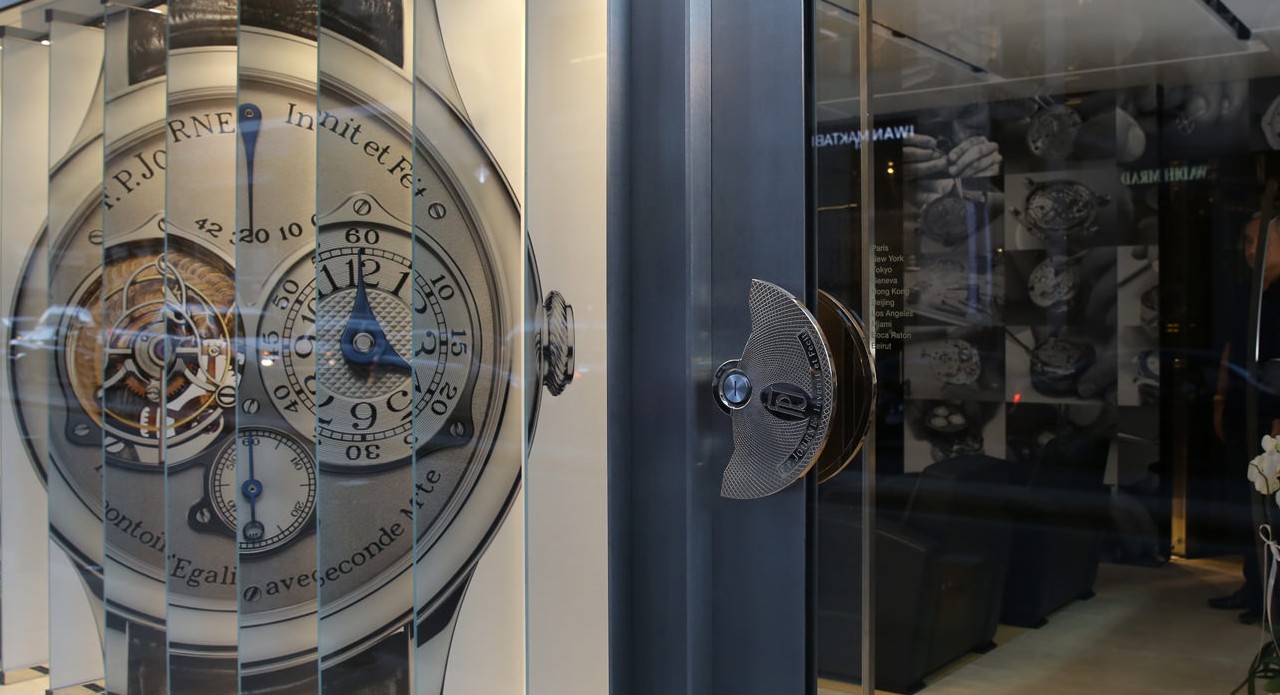
Scarcity at F.P. Journe is not accidental. Rather than distributing watches widely through conventional retail networks, the brand has embraced a boutique first strategy that prioritises direct relationships with collectors. Visiting a boutique is not simply about purchasing a watch. It is about understanding the philosophy behind each creation, discussing complications with knowledgeable specialists and becoming part of a community built around genuine appreciation for independent watchmaking. Combined with annual production numbering only a few thousand watches worldwide, this carefully controlled distribution has made F.P. Journe one of the most difficult brands to acquire. For collectors, ownership represents far more than buying an expensive watch. It signifies entry into one of haute horology’s most exclusive circles.
F.P. Journe has never attempted to become the biggest watchmaker in Switzerland. Instead, it has focused on becoming one of the most respected. Through entirely in-house movements, solid gold calibres, pioneering remontoire mechanisms, groundbreaking resonance technology and an uncompromising boutique first philosophy, the maison has built a reputation founded on innovation rather than volume. In an industry increasingly driven by scale, F.P. Journe remains proof that true exclusivity is created not by producing fewer watches alone, but by making every single one extraordinary.