Interview | Ghazali Moinuddin on ‘Bilanda’ and Painting Landscapes From Imagination
The artist behind "Bilanda" on painting with his bare fingers, turning memories of his ancestral village into texture and colour, and bringing his fourth solo show home to Delhi
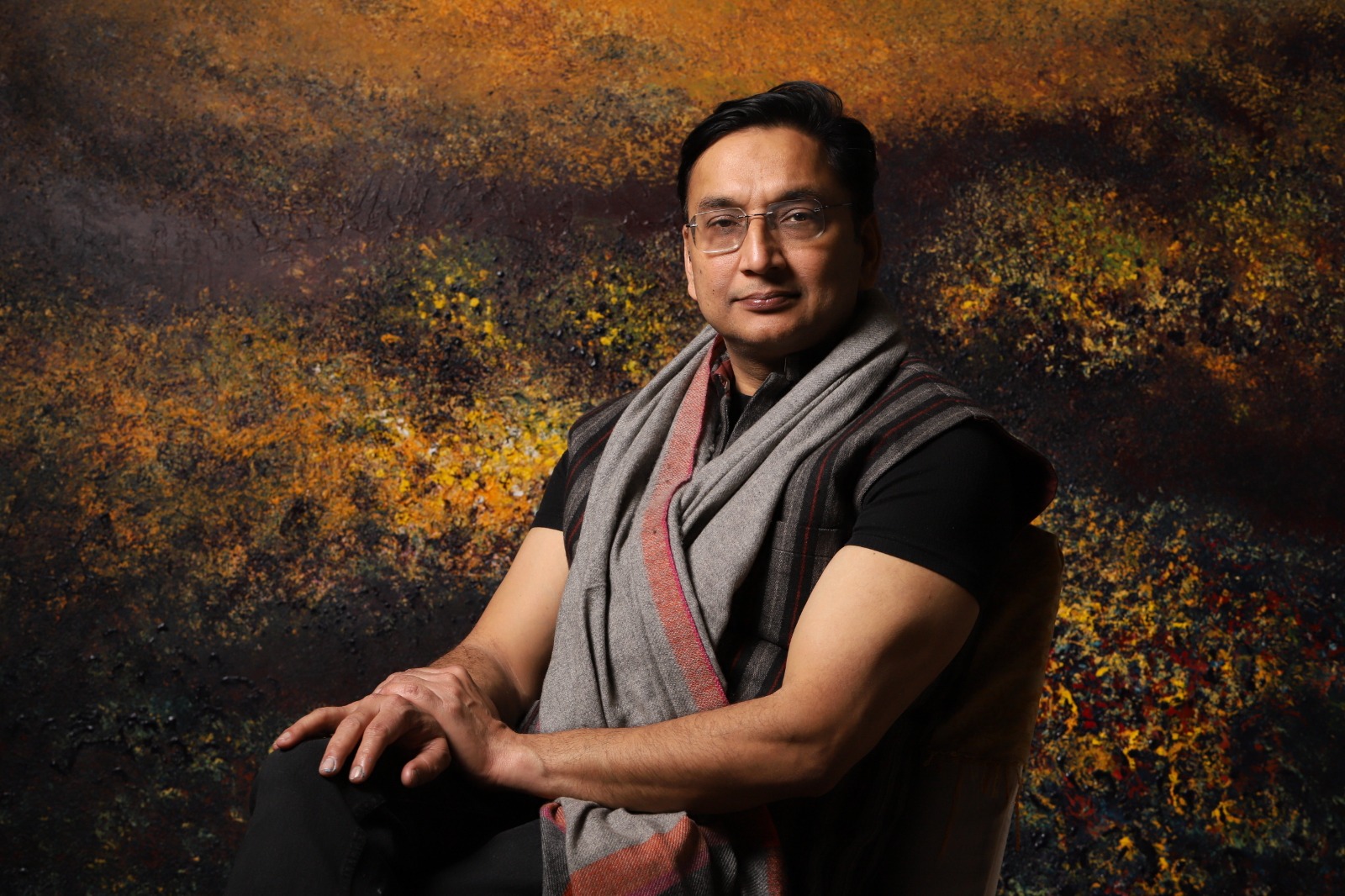
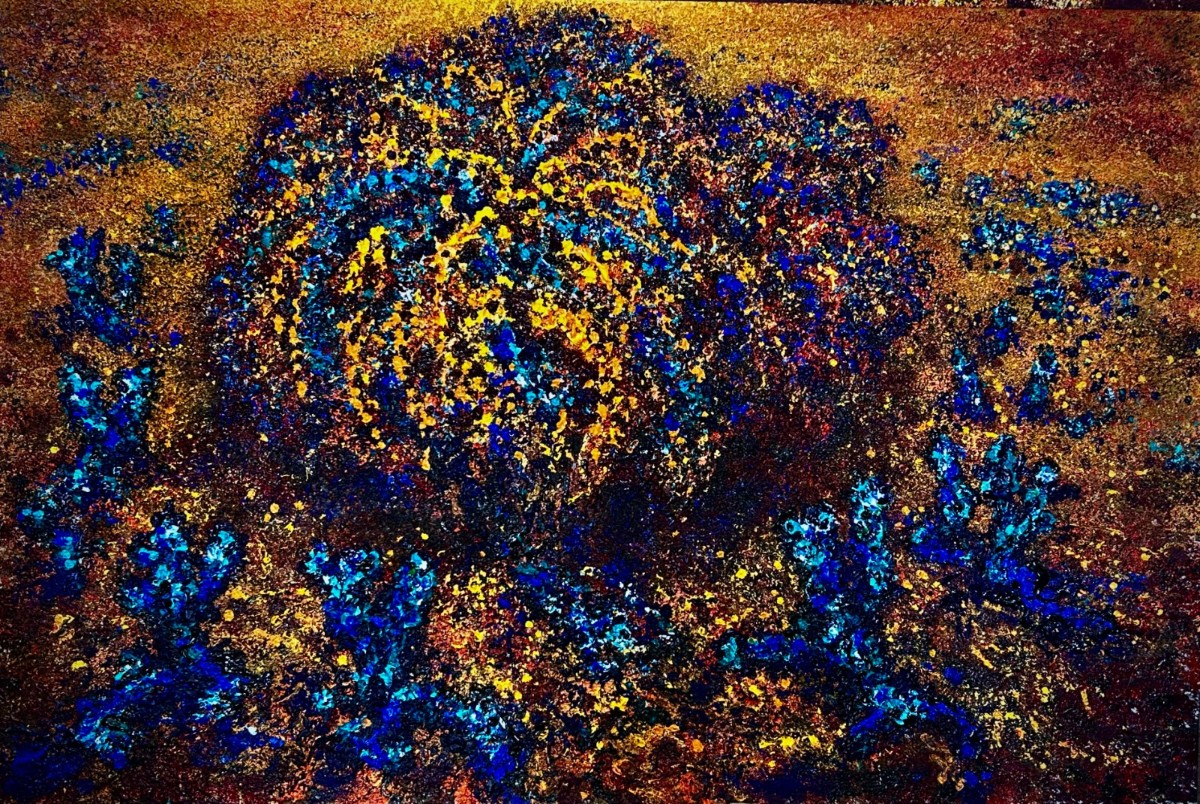
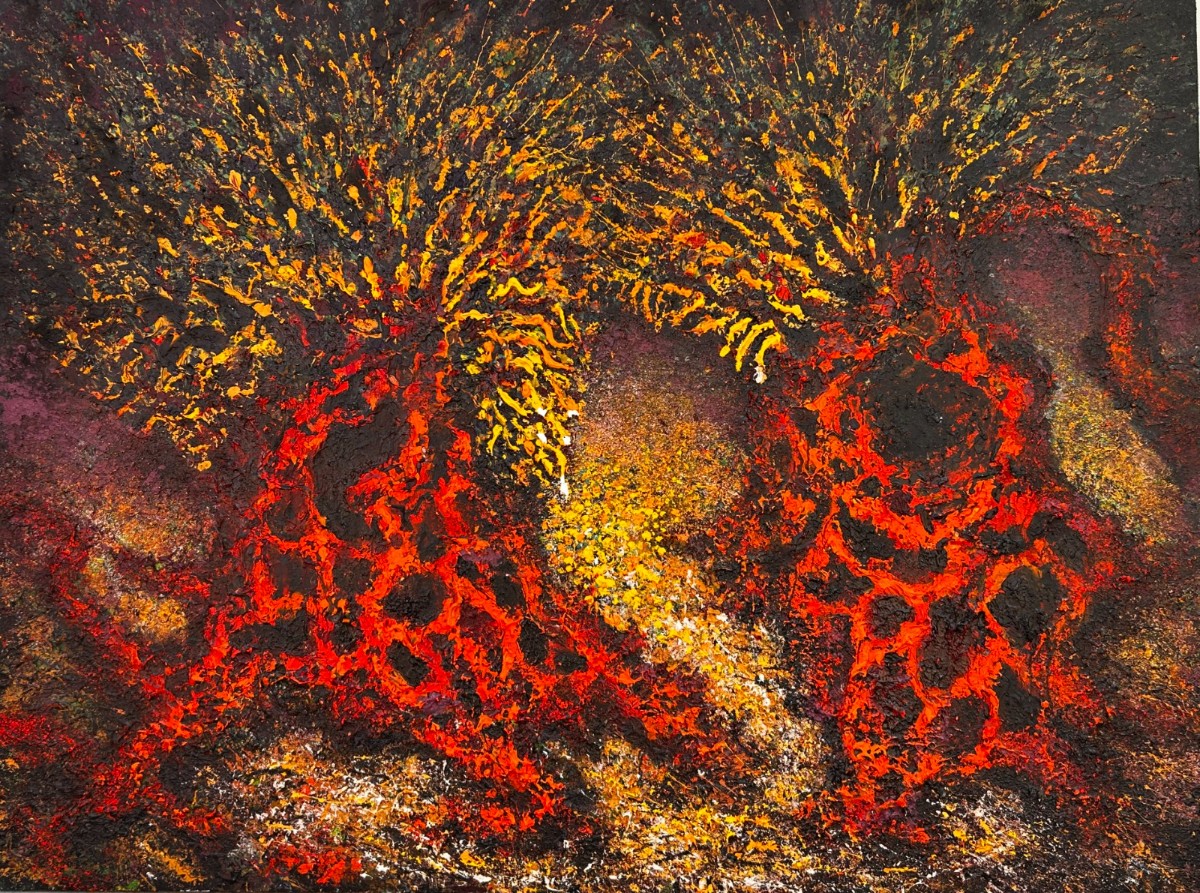
There is something quietly radical about an artist who refuses the distance a paintbrush provides. Ghazali Moinuddin, an alumnus of Jamia Millia Islamia whose work has travelled to Bulgaria, Japan, Qatar and Egypt, has built his practice entirely around that refusal, applying acrylic straight from the tube onto canvas with his own fingers, sculpting texture and light without a tool ever coming between his hand and the surface. His latest body of work, “Bilanda,” turns that unmediated process toward memory itself, channelling the artist’s recollections of his ancestral village into richly layered landscapes that are less about mapping a place than about capturing the warmth and colour that have lingered with him long after leaving it. Outlook Luxe had a conversation with Ghazali Moinuddin on painting from imagination, the intimacy of working with his hands rather than a brush, and what it means to bring this exhibition home to Delhi’s India Habitat Centre.
“Bilanda” is described as a walk through reminiscence. What memories or moments were you drawing on when you conceived this body of work?
Ghazali Moinuddin: My series, “Bilanda” is a walk down memory lane. When I was working on this, I found myself revisiting landscapes of old, wandering back to places, especially my roots: my ancestral village, Bilanda. I have captured the lingering warmth and colours of Bilanda that have stayed with me.
You paint with your fingers instead of brushes. How did that technique come about, and what does it let you achieve that a brush never could?
GM: Honestly, it wasn’t a calculated choice; it emerged from a personal need to feel closer to my work. When the paint goes straight from the tube to my fingers and onto the canvas, it creates an unmediated channel. Using my hands gives me more connection to the canvas and my work, a kind of freedom to express and also a kind of textural nuance that a brush can’t offer. I do, however, use random objects as tools if I ever feel the need for it.
Working with your fingers means a very direct, physical relationship with the canvas. How does that change the way you think while you’re actually creating a piece?
GM: It makes the whole process feel much more intimate. Because I’m working directly with my fingers, it feels like a dialogue with the surface. My fingers feel the canvas and respond to its texture. As I’m not separated by a tool, my fingers and my very skin direct the rhythm, flow, and form of each painting.
Nature, landscapes and memory all come together in this exhibition. How do you decide where one ends and the other begins in a single work?
GM: For me, they don’t really have a clear starting or ending point, they are completely intertwined. External landscapes get filtered through my own memories and emotions; memory provides the mood, nature provides the visuality and it all blurs together into an emotional geography.
Also Read: The Weeknd’s USD55 Million Florida Estate: Inside Abel Tesfaye’s Coral Gables Home
Your textures are a signature part of your style. Can you walk us through how a piece actually builds up, layer by layer, from blank canvas to finished work?
GM: Texture is central to my work. Every painting starts as a blank canvas, which I build up layer by layer. I apply the acrylic pigment and sculpt it using my fingers, working the surface until the colours are balanced and the painting flows in a three dimensional way with the play of light.
Having exhibited across countries like Bulgaria, Japan, Qatar and Egypt, how has showing your work to such different audiences shaped the way you approach a new series?
GM: Taking my work to different parts of the world has broadened the horizons of my vision and also, more literally, of my landscapes. Exhibiting in a new country reminds me every time that human emotions are universal, and our connection to nature is shared across borders. Painting has given me a language that speaks to all people.
Do you find that audiences in different countries respond differently to your finger-painting technique, or does the physicality of the work translate universally?
GM: Surprisingly, the physicality of it translates almost everywhere. Even if people come from completely different cultures or speak different languages, they seem to connect instantly with the tactile energy and the raw honesty of the work.
Also Read: Paris Hilton’s Luxury Estate: A USD63.1 Million Home With Its Own Golf Course
Your training at Jamia Millia Islamia laid the foundation for your practice. Looking back, what from those years still shows up in your work today?
GM: My time at Jamia Millia Islamia, doing both my BFA and MFA there was so important. It gave me a really solid technical and conceptual grounding. The discipline I learned back then, along with the encouragement to find my own voice and explore form, has shaped the way I approach art and is a huge part of how I work.
“Reminiscence” suggests looking backward. Was there a specific landscape or place that anchored this exhibition, or is it more of an emotional geography than a literal one?
GM: It’s definitely more of an emotional geography. While it’s deeply rooted in memories of places like Bilanda and the natural world, these landscapes come from imagination and deep reflection rather than mapping out a physical place.
India Habitat Centre is a significant venue for Delhi’s art scene. What does presenting “Bilanda” here mean to you, compared to your international shows?
GM: The India Habitat Centre holds a very special place in the Delhi art community, and also for me personally, having held three solo exhibitions here previously. Bringing “Bilanda” To IHC therefore feels like a special sort of homecoming. This is also a platform to have a conversation with local art lover’s right here at home, which is a really nice contrast to showing abroad.
If a visitor walks through “Bilanda” without any background on your technique, what do you hope they notice or feel first, purely from the texture and colour?
GM: If someone walks in without context, I just hope they feel it before they think about it. I want the vibrancy, the warmth, and the rhythm of the colours to hit them first. The textures and hues should speak to their senses and make them feel something that is at once deeply personal and also universal.
As you look toward what comes after “Bilanda,” is there a new direction, technique or theme you’re already finding yourself drawn to?
GM: Art is an ongoing journey. While my heart is always going to be tied to nature and these tactile textures, I always keep an open mind about where new emotional landscapes or rhythmic ideas might take me next.