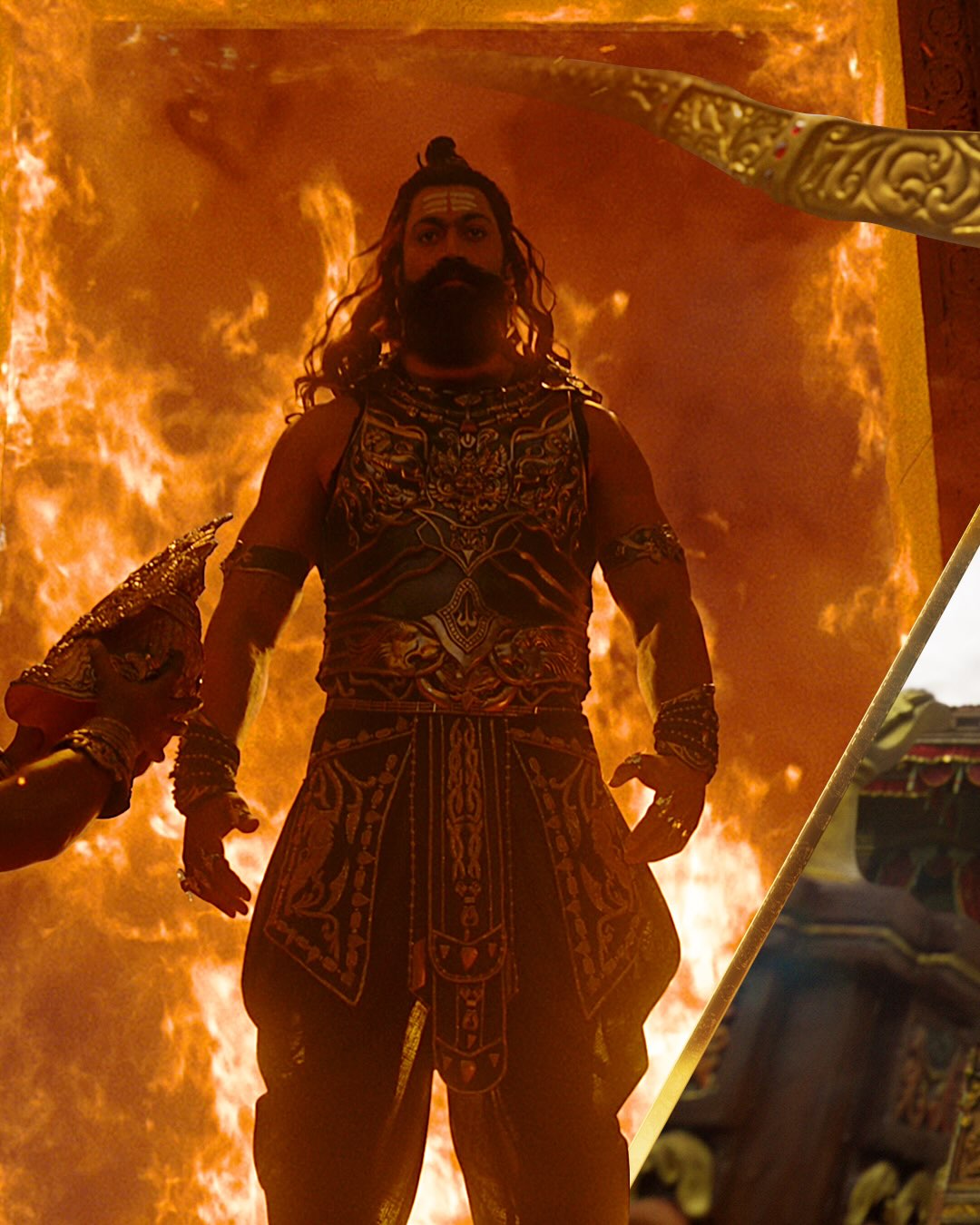
A warrior’s armour is often remembered for the battles it represents. In Nitesh Tiwari’s ‘Ramayana’, however, one of its most striking details carries a story of patience, indigenous craftsmanship and an unlikely creative collaboration. The armour worn by Ranbir Kapoor as Lord Rama was not simply a product of a costume studio. Its creation involved 15 artisans from Jania Banglipara, a small village in Assam’s Barpeta district, who brought their traditional skills to one of Indian cinema’s ambitious mythological productions.
Led by master artisan Jaynal Abdin, the team spent approximately three-and-a-half years working on 30–35 pieces of specialised armour. The project began when Abdul Malek, associated with the local organisation Gram Unnayan, approached Abdin with drawings and designs for a film assignment. What followed became an unusual chapter in the story of Indian artisans in cinema, taking a regional craft tradition beyond its familiar surroundings and onto the big screen.
Craft Behind Armour
The initial challenge was to translate Assamese traditional craftsmanship into something that could withstand the practical demands of filmmaking. Cane, a material familiar to the artisans, offered the structure and visual character required for the design. However, the first prototypes revealed a problem. Pure cane was too rigid, particularly around the shoulders and neckline, restricting the actor’s movement.
Also Read: Namit Malhotra’s Net Worth: How The VFX Mogul Built His Empire Before Ramayana
Abdin reportedly suggested combining cane with rubber to make the structure more flexible. After experimenting with the materials, the team arrived at a hybrid design using approximately equal proportions of both. The solution demonstrated how traditional techniques could be adapted to meet the requirements of contemporary costume design without losing their handcrafted character.
The wider costume design process also involved costume designer Ajay Kumar, who worked with artisans in Assam to develop the armour’s structure. His account describes the use of locally sourced Sarpat cane, jute and wooden elements, with further finishing and detailing undertaken in Mumbai.

Three Years of Patience
The Ramayana armour making process was not a continuous assignment. According to Abdin, there were sometimes gaps of three to six months between requests. Production requirements could then change suddenly, with the artisans being asked to prepare eight to ten pieces at short notice. Finished jackets travelled from Barpeta to Guwahati Airport before being dispatched to Mumbai.
Interestingly, the artisans were not initially told that their work was intended for ‘Ramayana’. They understood that it was for a film production but discovered its identity only after the movie’s release on November 5, 2026. For Abdin, seeing his work associated with Ramayana was a moment of pride for his team, village and district.

The Material of Myth
The story offers an interesting perspective on Ramayana movie craftsmanship, where the visual language of a mythological epic draws upon skills nurtured in smaller communities. The handcrafted armour in Ramayana movie also demonstrates how regional materials can find new applications when traditional knowledge meets contemporary design requirements.
Also Read: Sai Pallavi Net Worth 2026: A Look At Ramayana Star’s Earnings And Assets
This is a reminder that the people shaping Indian cinema are not always visible on screen. The artisans of Barpeta have brought their expertise into a national conversation, giving Assamese cane craftsmanship a new cultural context. Their contribution to the ‘Ramayana’ movie behind the scenes is as much about preserving a living craft tradition as it is about creating a memorable cinematic costume.