

Mumbai’s skyline has witnessed countless transformations, but few buildings have retained their architectural identity and cultural significance quite like The Taj Mahal Palace. Standing along the waterfront at Apollo Bunder, the iconic hotel is more than a symbol of hospitality. It is an architectural statement shaped by history, craftsmanship and an extraordinary meeting of cultural influences. Its distinctive dome, elaborate interiors, sweeping staircases and ornate façades offer a glimpse into an era when architecture was as much about artistic expression as it was about function. Opened in 1903, The Taj Mahal Palace was envisioned by Jamsetji Tata, whose ambition was to create a landmark that would bring together exceptional hospitality and architectural distinction. Over the decades, the hotel has become an integral part of Mumbai’s identity, standing witness to the city’s changing landscape while preserving much of the grandeur that defined its early years.
A Vision That Changed Mumbai’s Waterfront
The story of The Taj Mahal Palace begins with an ambition to build something that would stand apart. Situated near the historic Gateway of India waterfront, the hotel was conceived as an architectural landmark that could reflect the richness of India’s artistic traditions while embracing contemporary influences of its time. Its construction brought together architects, engineers, craftsmen and builders, each contributing to a structure that would eventually become one of Mumbai’s most recognisable landmarks. The building’s distinctive character is evident in its intricate detailing, grand proportions and carefully considered architectural composition.
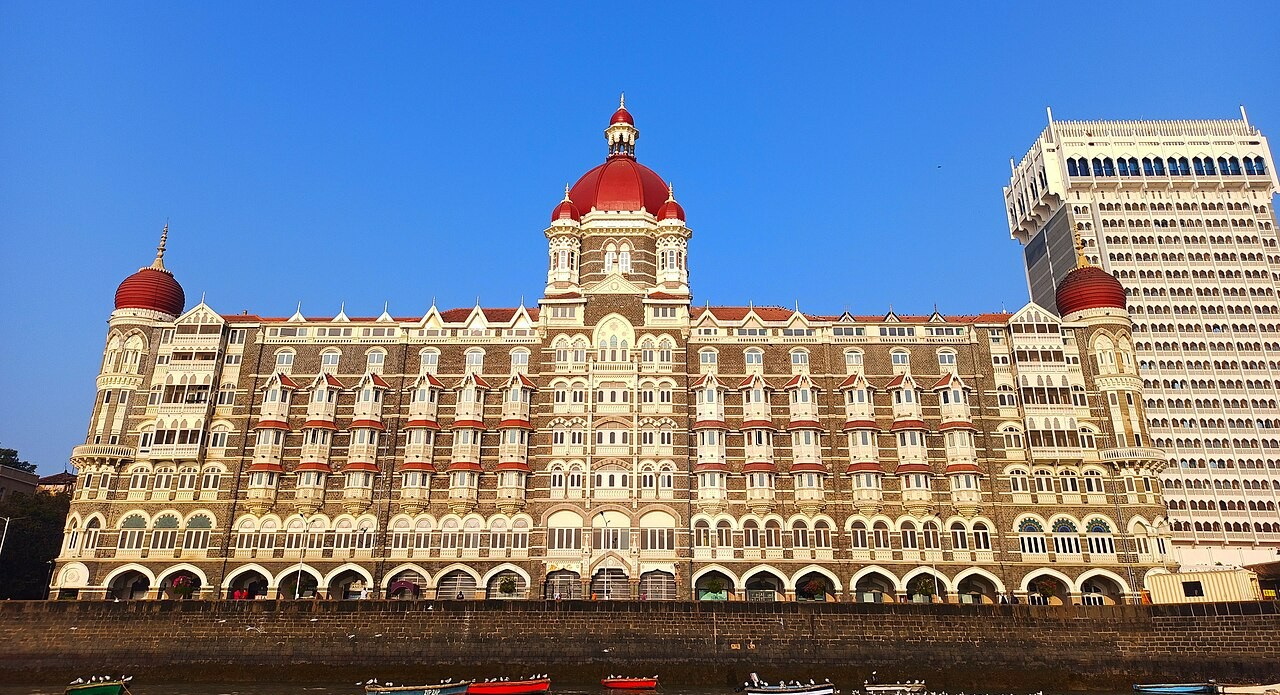
The hotel’s façade is particularly striking, with its arches, balconies, decorative elements and contrasting textures creating a visual language that feels both regal and deeply rooted in the city’s architectural heritage. Rather than following a singular architectural tradition, the structure draws upon a variety of influences, giving it an identity that remains distinctive even more than a century after its opening.
Also Read: Tatiana Bilbao: How A Family Of Architects Influenced Her Design Philosophy
The Language Of Indo Saracenic Architecture
The Taj Mahal Palace is widely recognised for its Indo Saracenic architectural character, a style that brought together elements of Indian, Islamic and European architectural traditions. Popular during the late nineteenth and early twentieth centuries, the style reflected an architectural dialogue that incorporated domes, arches, ornamental motifs, elaborate façades and decorative detailing. At The Taj Mahal Palace, these influences are expressed through a combination of traditional forms and European architectural sensibilities. Its curved arches, intricate ornamentation, domed structures and expansive windows create an interplay of visual elements that lends the building its distinctive personality.
The architectural detailing is not merely decorative. It contributes to the overall rhythm and composition of the structure, with different elements working together to create a building that feels grand without losing its character. The craftsmanship seen across the exterior reflects an era when architectural ornamentation was treated as an essential part of the building’s identity rather than an afterthought.
The Iconic Dome And Its Waterfront Presence
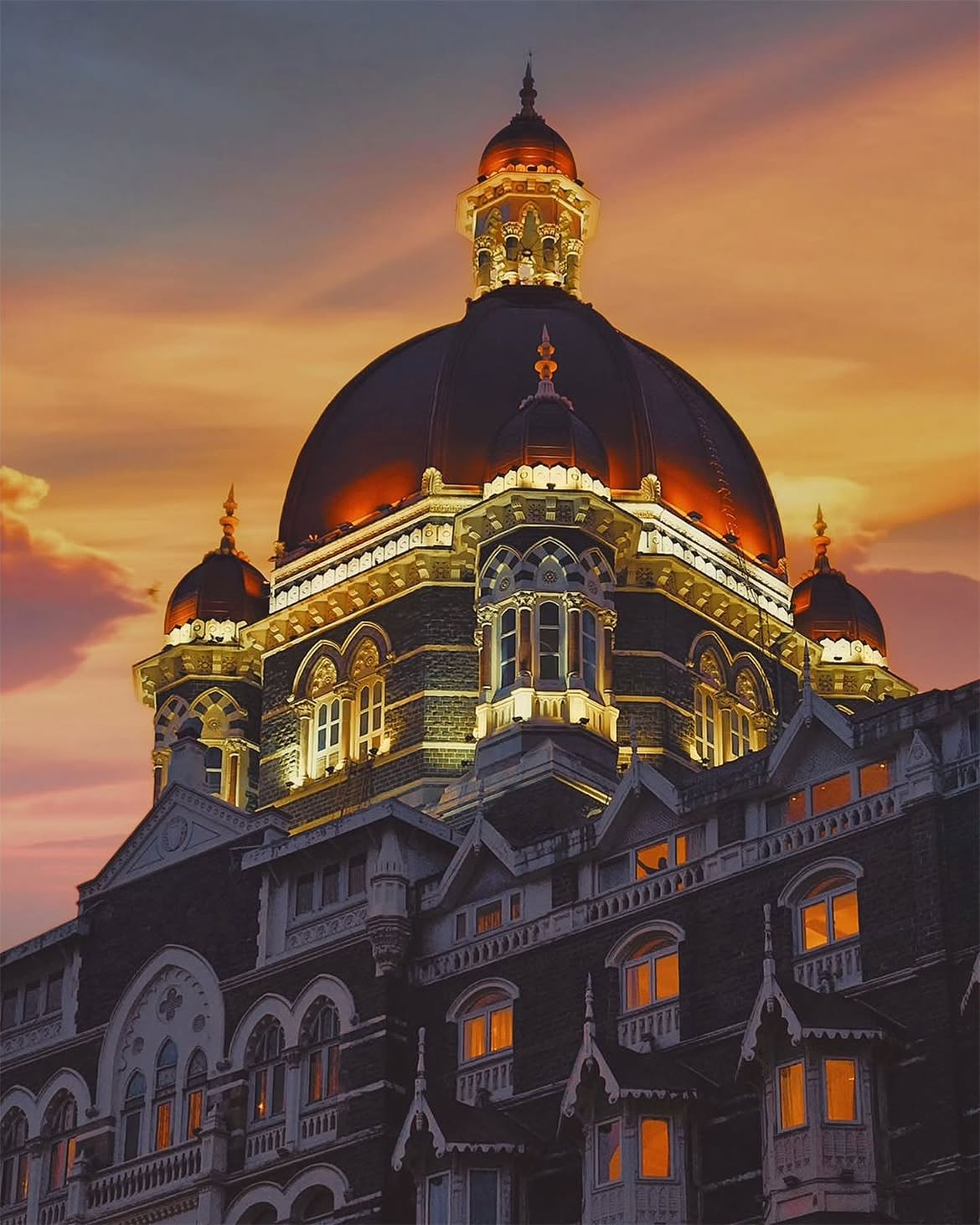
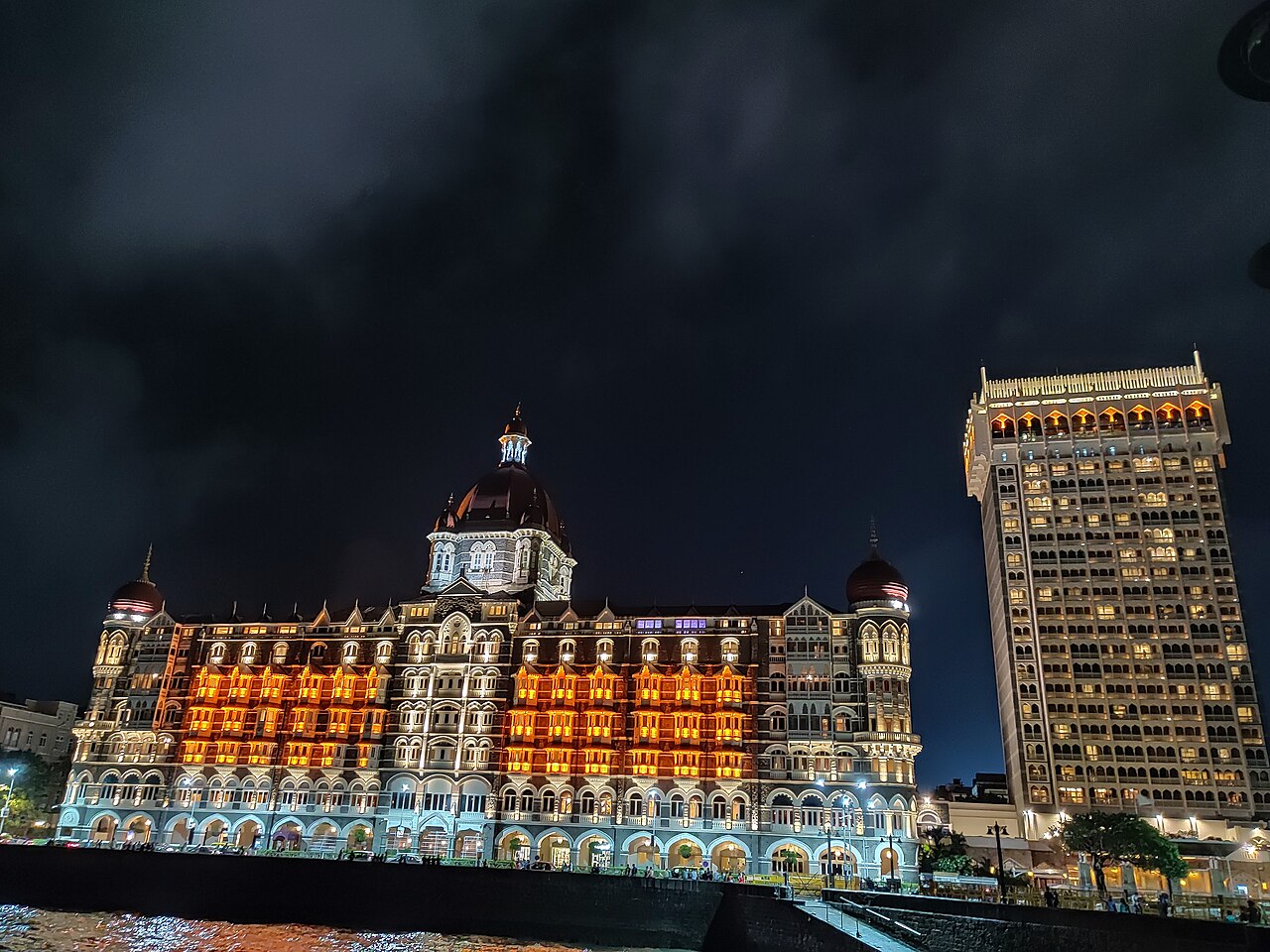
Perhaps the most recognisable feature of The Taj Mahal Palace is its imposing dome, which has become synonymous with the hotel’s identity. Rising above the surrounding structures, it lends the building a distinctive silhouette that can be admired from across Mumbai’s waterfront. The dome serves as a visual anchor for the entire architectural composition, balancing the hotel’s expansive façade while adding an unmistakable sense of grandeur. Its presence is particularly striking when viewed against the Arabian Sea, where the building’s architectural details and proportions become part of Mumbai’s historic coastal landscape.
The hotel also presents an interesting architectural contrast between its original Palace Wing and the Taj Mahal Tower, which was introduced in the early 1970s. While the Palace Wing carries the ornate character and historical detailing associated with the hotel’s original architecture, the Tower adopts a comparatively modern expression. Together, the two structures create a distinctive architectural composition that reflects the evolution of the property across different eras.
Interiors That Tell Their Own Story
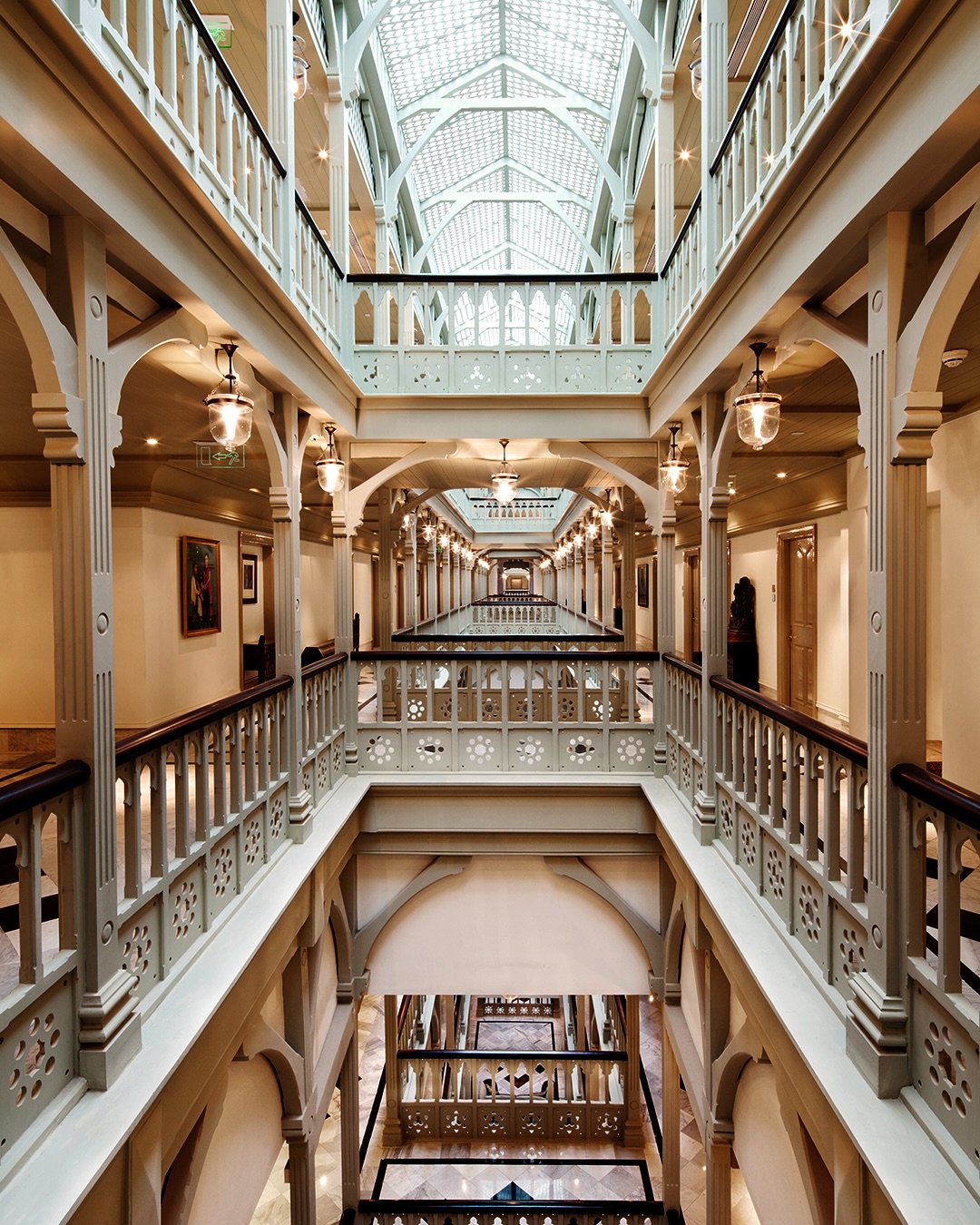
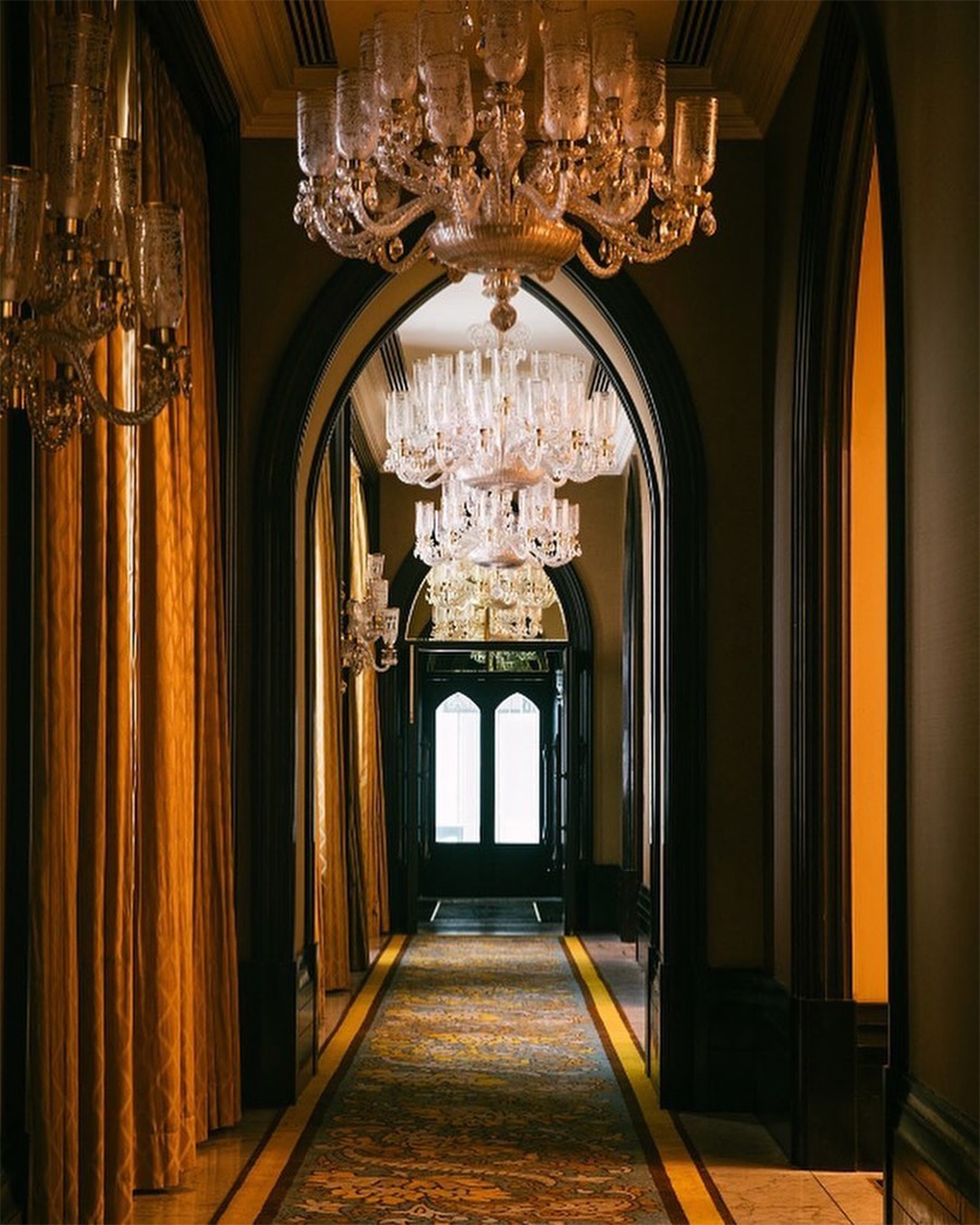
The grandeur of The Taj Mahal Palace extends well beyond its exterior. Stepping inside reveals a world of elaborate interiors, where architectural detailing, decorative materials and artistic craftsmanship come together to create spaces that feel distinctly palatial. The hotel’s interiors are marked by expansive corridors, ornate ceilings, decorative columns, intricate flooring patterns and carefully curated artwork. Each space carries its own character, with architectural details that reflect different influences and periods. The use of marble, wood, decorative finishes and traditional motifs adds depth to the interiors, creating a visual richness that is difficult to replicate through contemporary design alone.
The staircases are among the most striking architectural elements within the hotel. Their sweeping forms, detailed balustrades and surrounding ornamentation lend a sense of theatricality to the interiors, while also serving as functional elements within the building’s layout. The corridors and public spaces similarly reveal a thoughtful approach to design, with decorative details and architectural proportions creating an atmosphere that feels timeless rather than overly elaborate.
The Ballrooms And Historic Public Spaces
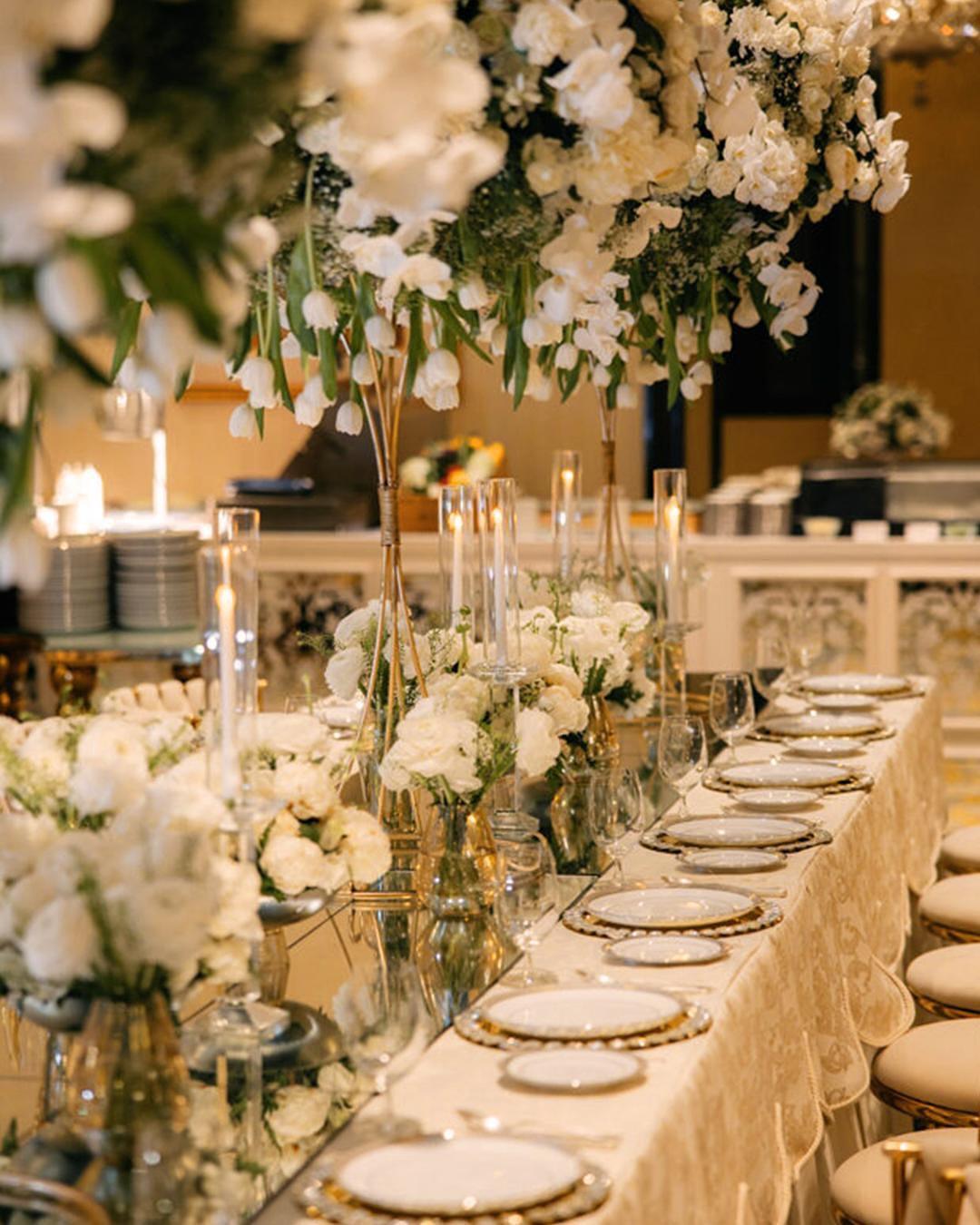
The hotel’s grand public spaces remain among its most celebrated architectural features. The ballrooms, banquet halls and reception areas reflect the scale and sophistication of the original vision, with expansive interiors designed to accommodate gatherings while retaining a sense of elegance. High ceilings, ornamental detailing, elaborate chandeliers and architectural symmetry define many of these spaces. The interplay of lighting, decorative surfaces and architectural elements creates an atmosphere that is both impressive and inviting, making the interiors particularly memorable.
These spaces have also played an important role in the hotel’s history, hosting celebrations, gatherings, cultural events and distinguished guests over the years. Their architectural character continues to contribute to the hotel’s enduring appeal, allowing its history to remain present within the everyday experience of the property.
A Palace That Continues To Evolve
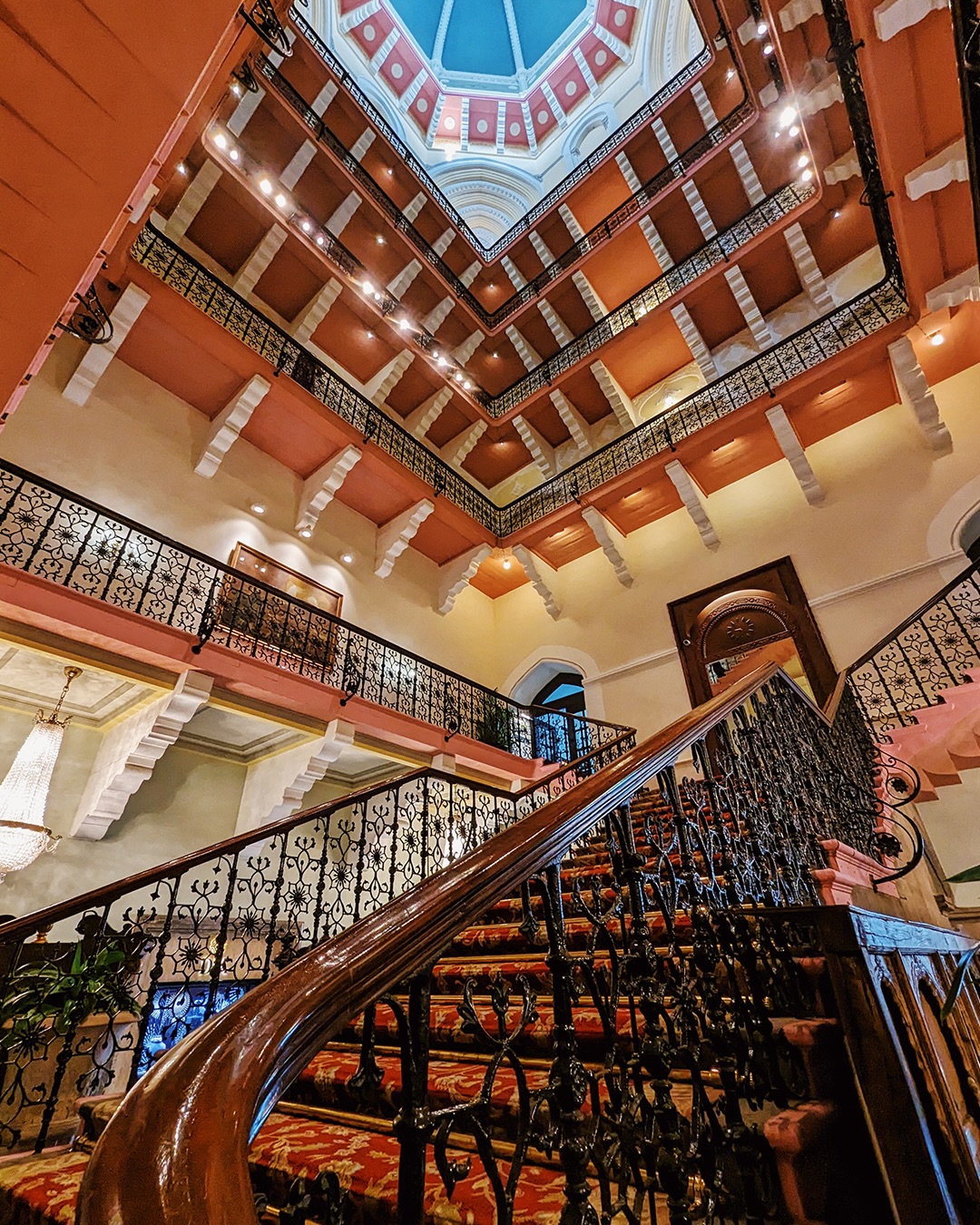
More than 120 years after its opening, The Taj Mahal Palace remains a landmark that invites admiration not only for the luxury it offers, but for the architectural legacy it continues to preserve. Its Indo Saracenic influences, distinctive dome, ornate interiors and waterfront setting have ensured that it remains an integral part of Mumbai’s architectural landscape.
In a city constantly shaped by new buildings, changing skylines and evolving design philosophies, the hotel stands as a reminder of an architectural era that celebrated craftsmanship, cultural influences and ambitious design. The Taj Mahal Palace is not simply a historic building preserved in time. It is a living landmark whose architecture continues to tell a story of Mumbai, its heritage and its enduring relationship with grandeur.