Why “Bespoke” Has Become The Most Overused And Least Understood Word In Indian Luxury
A veteran interior designer explains what truly qualifies as “bespoke” — and no, you cannot casually drop the term into every conversation
If you’ve been shopping for a home in India recently, you’ve probably heard the word “bespoke” a hundred times. It gets stamped on a sofa in a different fabric, a finish picked from a swatch book, a modular kitchen with a custom handle, a whole home whose only custom touch is the wallpaper. Anything that involves a choice now seems to qualify as “bespoke”. Clients have started to notice. By the fourth or fifth meeting elsewhere, they sometimes turn up at the studio looking a little tired, and ask what the word is supposed to mean anymore. It is a fair question, and most designers don’t really answer it. What most of the industry calls bespoke is, more honestly, customisation. The gap between the two looks like a technicality. It isn’t.
What Qualifies As “Bespoke” In Indian Luxury Homes
Customisation begins with a thing that already exists. A sofa, a wardrobe, a layout. You’re given choices around its edges: the upholstery, the wood, the scale. The choice is genuine. The shape was decided before you walked in.
Bespoke is different. There is nothing yet when the client first sits down. No starting point until you’ve built one, in conversation, around how this particular family lives — what they own, what they wish they owned, what kind of evening they want their living room to hold at half past seven. From there a piece is conceived, and from conception it gets pulled apart and put back together over months. Drawings are redrawn. Samples come back wrong twice before they come back right. The artisan isn’t being asked to reproduce something. He’s being asked to make a thing that didn’t exist before he started.
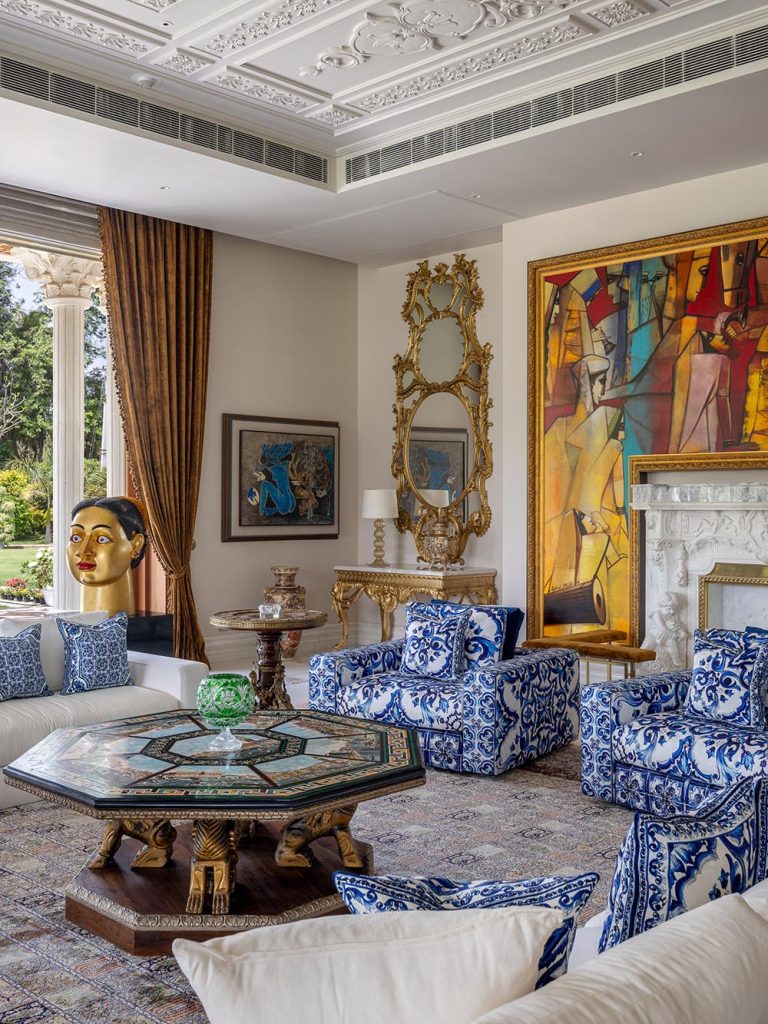
All of that needs proximity. You cannot do bespoke at a distance — or rather, you can do something at a distance, and a great deal of the industry does, but what comes back is a competent custom order, not the thing itself. The reason is mundane. Bespoke gets shaped through adjustments. A line in a drawing reads one way; the same curve, cut in wood, comes out heavier than you imagined. You walk over to the carver, he tries again, and a week later the piece has travelled somewhere your drawing could never have taken it. That loop, repeated dozens of times across hundreds of small choices, is what bespoke is. Cut the loop and the work hardens too early.
Also Read: From Loom To Living Room: The Journey Of Indian Textiles In Urban Homes
Beauty And Bespoke Are Two Different Things
This is why a studio where designing and making happen under the same roof is more than a romantic preference. It is a logistical one. When the design table and the workshop are a corridor apart, you get to keep changing the piece while it is being made. When they are in different cities, you don’t. The artisan becomes a vendor on the other end of an email. The dialogue collapses into a transaction. Most of the industry has settled into that arrangement because the economics are easier, and what comes out of it is, in fairness, often beautiful. But beautiful and bespoke are not the same thing, and the brands selling one as the other are quietly betting clients can’t tell the difference.
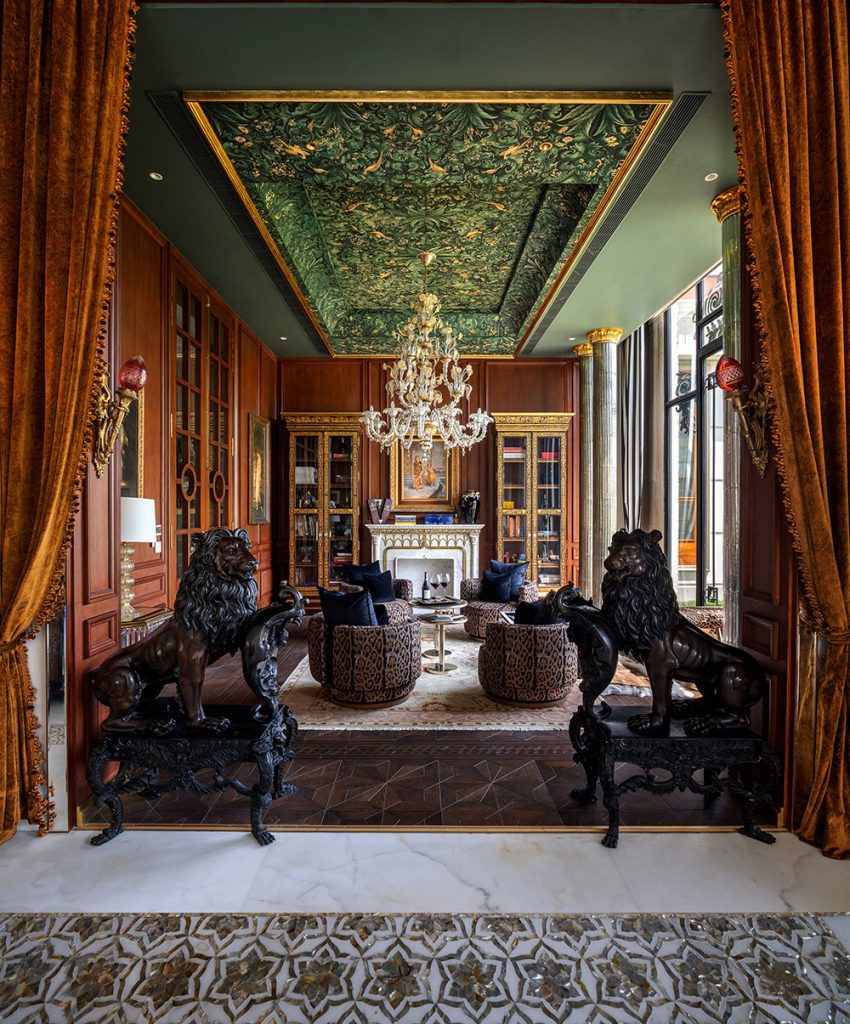
There are pieces in the work I’ve done that I think about when I’m trying to explain what this looks like in practice. A ceiling we painted by hand on cloth, in vegetable dyes finished with gold leaf, for a client who had spent decades collecting William Morris and wanted that quietly held in the room. There was no version of that ceiling we could have ordered, no catalogue we could have flipped through. It came from someone in our atelier sitting with the cloth for weeks, and from us walking in every few days to see how the colour was settling under the morning light from the east windows.
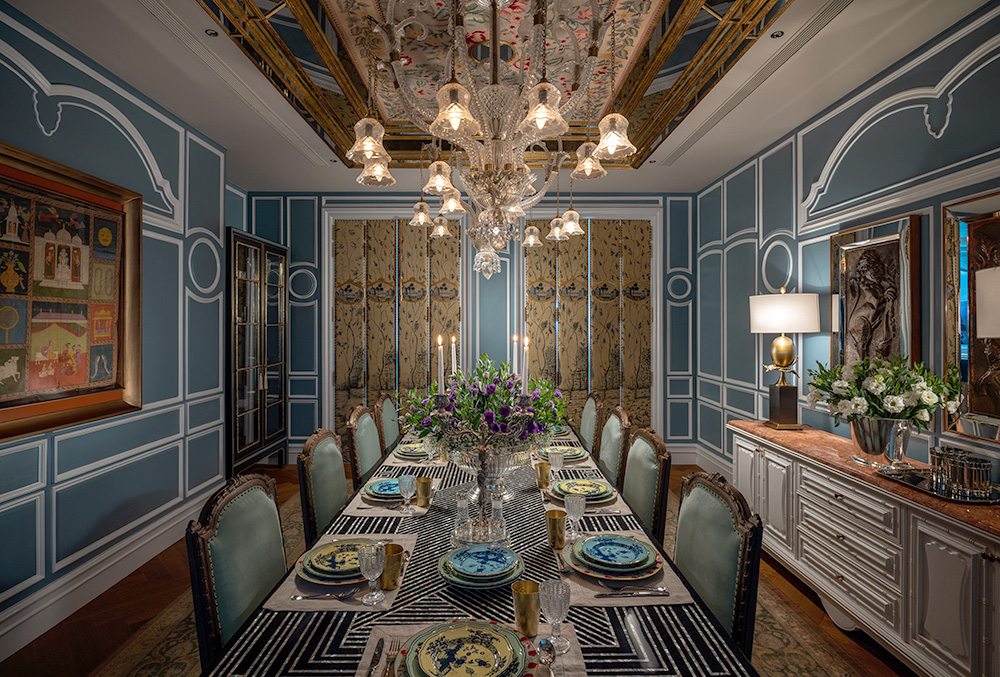
Or a dining table for a family that had moved to a Mumbai apartment from a much larger heritage home in Rajasthan. They wanted some thread of where they came from in the room, but they did not want a Bombay flat playing dress-up as a haveli. That is a brief that takes a long time to answer, and most of the answering happens in conversation, not on a drawing board. What we eventually built was a stone-inlay top in mother-of-pearl and semi-precious stone, set in a geometric pattern that is contemporary in graphic and Rajasthani in lineage. It was an answer to that family’s particular question. Nobody else’s brief would have produced it.
Can A Bespoke Piece Truly Be Recreated?
The cleanest test I’ve found for whether a piece is actually bespoke is whether you could make it again. Could you lift it into another house? Could you reuse the design without rewriting the brief? If the answer is yes, it probably wasn’t. In one residence, every bathroom in the house ended up with its own moulding, its own vanity, its own mirror, its own sconce — not because anyone was trying to be theatrical, but because the people who used those bathrooms used them in slightly different ways, and the design followed the use. You can’t point at any one of them and call it the bespoke one. The bespoke part is the whole way of working.
None of this is gatekeeping. The word is going to keep being used the way it is being used; that horse has bolted. What I’d want, if I were the one being told my home was going to be bespoke, is to know what was actually being promised. Done properly, it’s rare. It asks for things most setups can’t give it: time, a workshop within walking distance of the design table, a tolerance for redoing work that was already finished, a client willing to be in the conversation for as long as it takes. It is the slowest luxury we make, and still the only kind that earns the name when someone says it.
Also Read: The Luxury Of Handmade: Why Human Touch Still Matters In Design
Sachin Gupta is the Founder and Principal Designer at Beyond Designs