Nita Ambani’s Pastel Pink Swadesh Kanjivaram Saree Is an Ode to India’s Artisans
Nita Ambani honours India’s artisans in a pastel pink Swadesh Kanjivaram saree, handwoven over four months by master artisan Rajesh Sha. Paired with a multi-strand haar inspired by Rajasthan’s royal jewellery heritage, the ensemble celebrates India’s rich textile and jewellery traditions
As the festive season brings traditional Indian textiles and heirloom jewellery back into focus, Nita Ambani has turned the spotlight on the artisans who preserve the country’s rich craft traditions. At the Masters’ Pavilion at Swadesh, the Reliance Foundation founder met Indian artisans, listening to the stories, emotions and hard work behind their creations.
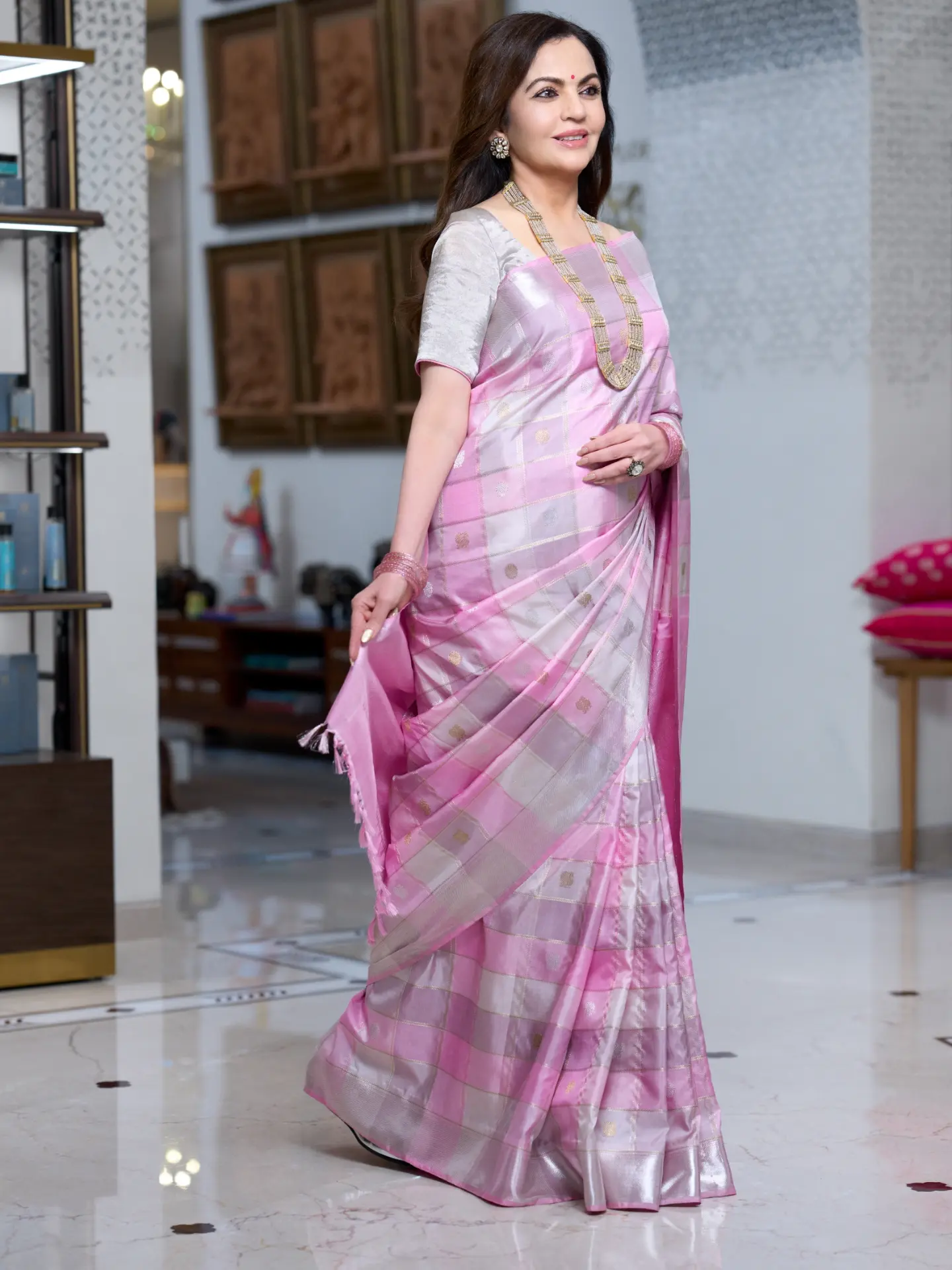
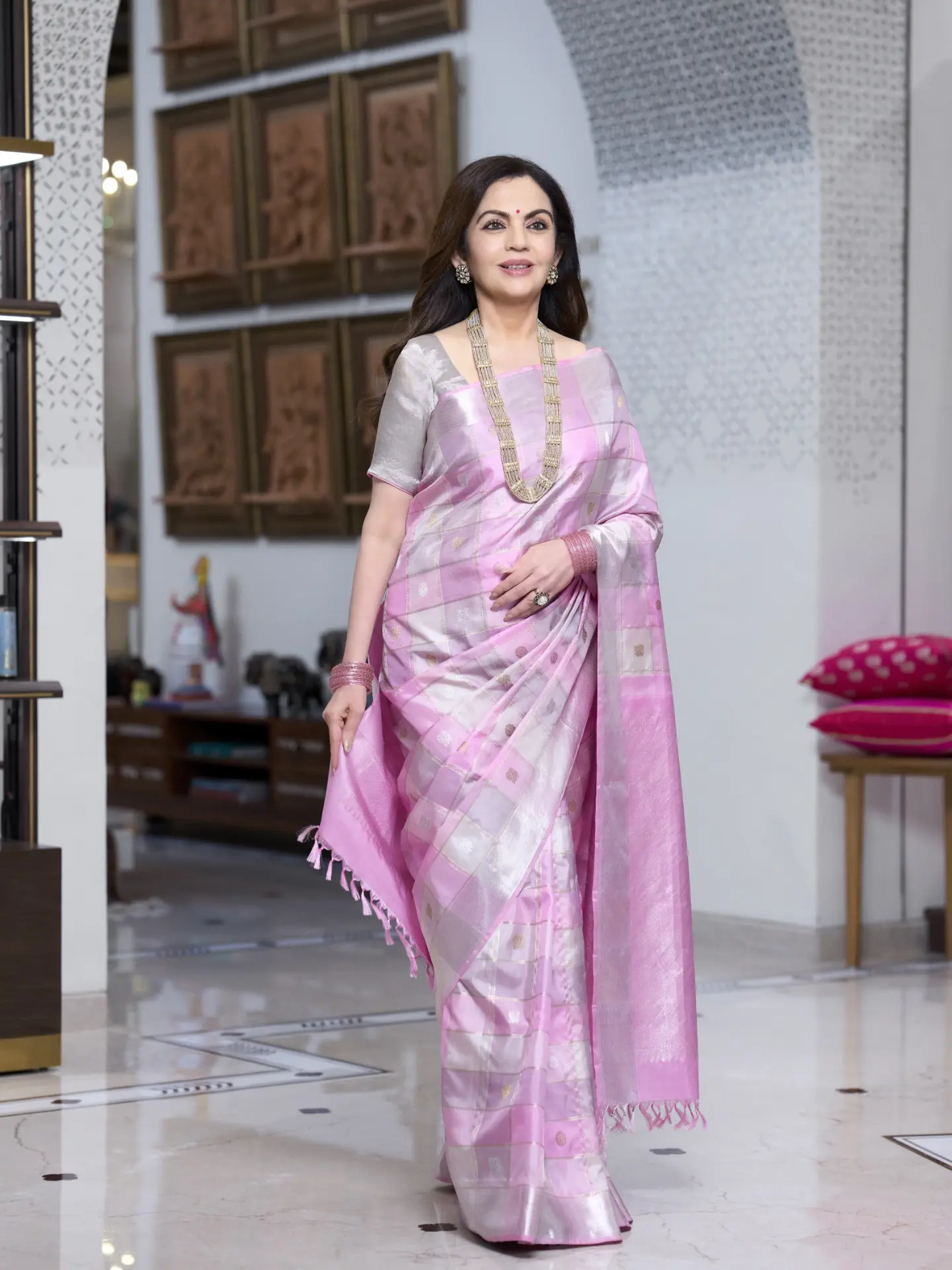
For the occasion, Ambani chose a pastel pink Kanjivaram saree from Swadesh, paired with a multi-strand haar inspired by Rajasthan’s royal jewellery heritage. Both creations celebrate India’s diverse artistic traditions, placing handloom and jewellery craftsmanship at the heart of her traditional Indian look.
Four Months in the Making
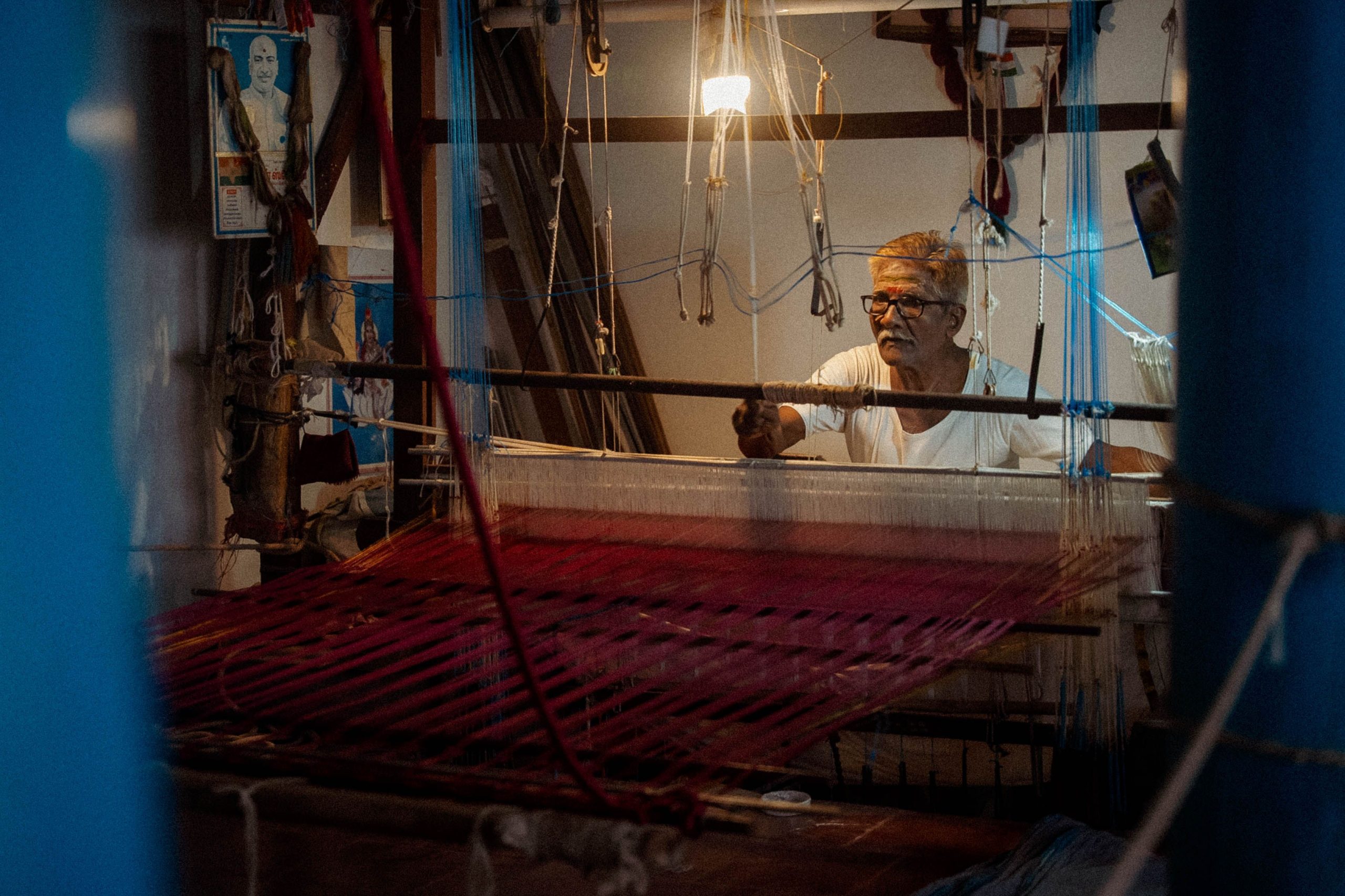
The pink Kanjivaram saree worn by Ambani was handwoven over four months by master artisan Rajesh Sha in Kanchipuram, Tamil Nadu. Crafted from fine mulberry silk, it features gold and pure silver zari, pastel Kattam checks, and Mayil and Rudraksha motifs that carry spiritual symbolism.
The saree brings together the precision of traditional weaving and the intricacy of a textile tradition that has been passed down through generations. Its delicate checks and symbolic motifs give the pastel pink drape a distinctive character, while the zari work adds a subtle richness to the silk.
Kanjivaram sarees are closely associated with South Indian ceremonial dressing, with their silk weaves, elaborate borders and metallic threads making them a longstanding choice for weddings and festive occasions. Ambani’s choice also draws attention to the Indian artisans behind traditional silk sarees, whose specialised skills sustain these regional weaving traditions.
Rooted in Rajasthan’s Royal Heritage
Complementing the saree, was a multi-strand haar from Swadesh, featuring cascading strands of seed pearls, gold spacer bars made using Rajasthan’s traditional Thappa technique, and natural Polki diamonds.
Also Read: Nita Ambani Hosts Ranveer Singh and Isha Ambani at Swadesh Eros’ First Anniversary Celebration
The jewellery draws on the region’s historic association with elaborate royal adornment. Its combination of pearls, uncut diamonds and intricately worked gold brings a different regional craft tradition into the ensemble, creating a dialogue between Kanchipuram’s silk weaving heritage and Rajasthan’s jewellery-making legacy.
Rather than relying solely on colour or embellishment, the look draws its character from the techniques and materials behind each piece. The saree’s four-month weaving process and the haar’s traditional gold work offer a glimpse into the time, skill and attention to detail involved in Indian textile craftsmanship and jewellery making.
Honouring the Hands Behind Craft
Sharing the occasion on social media, Swadesh Online page highlighted Ambani’s interaction with artisans at the Masters’ Pavilion, describing them as the hands that keep India’s living craft traditions alive.
In a message shared through a reel on Swadesh Online’s Instagram account, Ambani said, “To honour our artisans is to honour India.”
The sentiment reflects the central idea behind the ensemble, i.e., celebrating the people whose expertise keeps traditional crafts relevant across generations. With a history spanning centuries, Kanchipuram sarees are a prized part of India’s handloom heritage, known for their mulberry silk, gold and silver zari, intricate motifs and distinctive weaving techniques. The craft received a Geographical Indication (GI) tag in 2005.
Also Read: The Most Luxurious Things That Nita Ambani Owns
Handwoven over four months by master artisan Rajesh Sha, Ambani’s pastel pink Swadesh saree celebrates this enduring tradition. Paired with a multi-strand haar inspired by Rajasthan’s royal jewellery heritage, the ensemble brings together two distinct regional crafts while honouring the artisans whose skills keep India’s artistic legacy alive.