Interview | Sameer Awasthi: An Indian Watch Connoisseur’s Journey Through Collecting
From explaining references to a market that once bought only logos, Sameer Awasthi on building India's most trusted watch-collecting community from the ground up
India’s relationship with fine watchmaking has undergone a quiet but decisive transformation over the past half-decade. What was once a market defined by brand names and boutique waiting lists has evolved into a genuine collecting culture, one where reference numbers, production years and service history now matter as much as the logo on the dial. A new generation of buyers is asking sharper questions, exploring independent watchmakers and vintage pieces alongside the established maisons, and treating the secondary market not as a compromise but as a legitimate path to owning something with real character. At the centre of this shift stands Sameer Awasthi, a collector in his own right, who built Indian Watch Connoisseur into one of the country’s most trusted platforms for buying, selling and understanding watches. Bridging the gap between global horology and Indian buyers, he holds the platform to the same exacting standard he sets for his own collection. It is this dual vantage point, as both founder and collector, that Outlook Luxe explored in a conversation with him.
You launched Indian Watch Connoisseur in 2020 with the belief that luxury watches in India needed more than transactions and required context, culture and credibility. What did you see missing in the market at the time, and how has that original vision evolved?
Sameer Awasthi: In 2020, if you wanted a serious watch in India, you had two options. You could walk into a boutique and accept whatever was on the tray, or you could go into the grey market and hope for the best. People were buying a Rolex or an Audemars Piguet without knowing the reference, the history, or what they should really be paying for it.
The vision hasn’t changed, but the scale has. We don’t just explain watches anymore. We help people buy, sell and trade them, and global maisons use the platform to introduce their launches to India.

When did you realise Indian Watch Connoisseur had become a business rather than simply a passion?
SA: There wasn’t one single day, but I remember the shift clearly. People stopped asking “what watch is that?” and started asking “can you get me one?” The first time someone trusted us with a significant purchase without ever having met me in person, I realised the page had become something more than content. It had become a relationship. We registered formally, built proper processes for verification and documentation, and started treating every enquiry with the seriousness of a transaction, because that is what it was. When maisons like Jacob & Co began working with us directly, it confirmed that the industry saw us the same way.
Your background spans engineering, business administration, banking and the automotive industry. How have those experiences shaped the way you approach the highly emotional and personality driven world of luxury watches?
SA: Every one of those chapters taught me something I use daily. Engineering taught me to look at a watch as a machine first: the movement, the tolerances, the finishing, how the case is built. When you have that training, you don’t get carried away by marketing. You ask how it works and whether it is built properly. Banking taught me about trust and risk. You learn very quickly that you are handling someone else’s money and someone else’s confidence, and both are easy to lose. The automotive industry taught me how great brands sell emotion on top of engineering. A car and a watch are very similar that way. Heritage, design and performance come together to create desire.
Also Read: Annual or Perpetual? Understanding Calendar Watch Complications
Celebrity watch spotting has become an important part of the Indian luxury conversation. What have you learnt about the Indian consumer from the watches chosen by celebrities, athletes and entrepreneurs, and has that changed the way you curate content?
SA: The biggest lesson is that the Indian consumer is aspirational but no longer naive. A few years ago, when a film star or a cricketer wore a watch, people wanted the brand. Today they want the exact reference. They want to know the dial, the material, the movement, and whether it has been discontinued.
Celebrity watches work as a kind of public education. When someone wears a discontinued platinum Daytona, for example, it opens a conversation about scarcity, the secondary market and why some watches trade well above retail. We have a deep cultural relationship with gold, so gold and two-tone pieces resonate here in a way they may not in other markets.
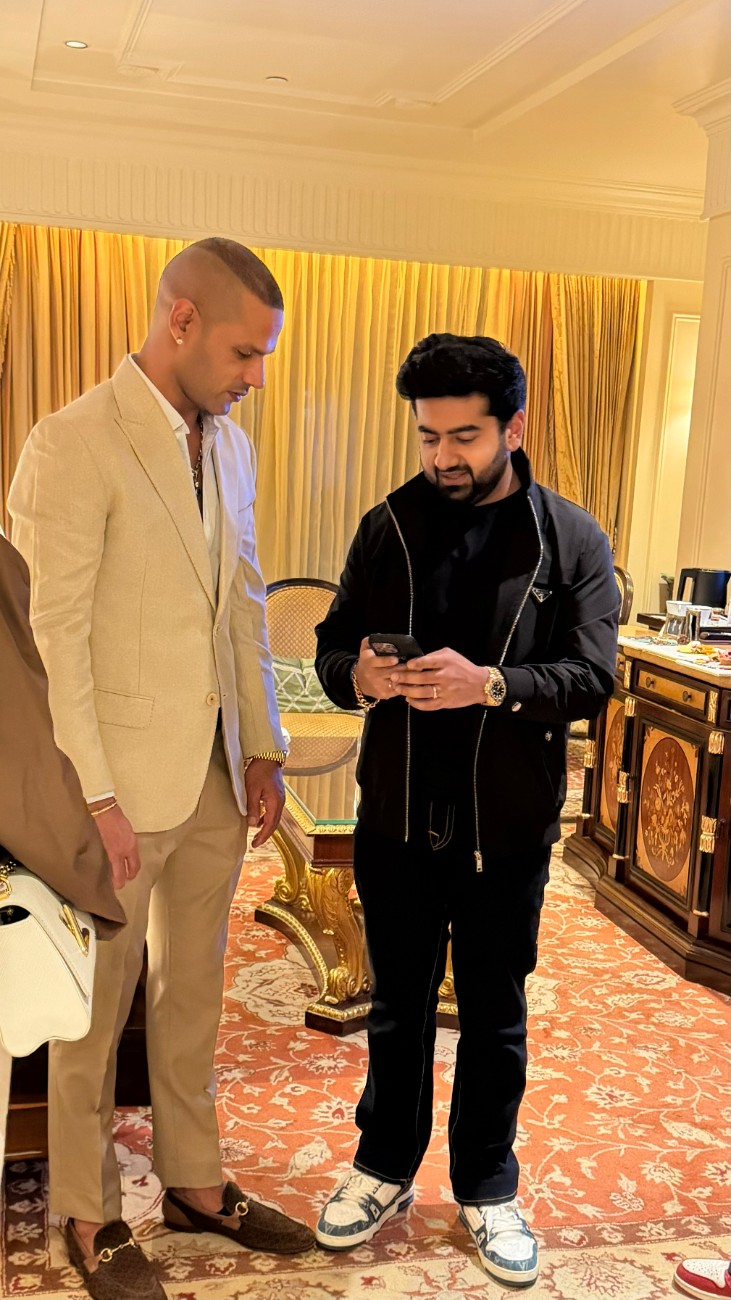
India now has a much more informed collector community, with growing interest in rare, independent, pre owned and historically significant watches. How would you describe the evolution of the Indian watch collector over the last five years?
SA: Five years ago, most Indian buyers were buying logos. The question was “Rolex or not Rolex?” Today the questions are about references, production years, full sets, service history and condition. That is a massive change in a very short time. Three things stand out for me. First, pre-owned has become fully accepted.
There was a stigma earlier; now serious collectors understand that some of the most interesting watches are only available pre-owned, and that buying well in the secondary market is a skill. Second, taste has widened. Alongside the big maisons, people are asking about independent watchmakers, vintage references and historically significant pieces. They want something with a story, not just something expensive. Third, the collector has become younger. Entrepreneurs in their twenties and thirties who grew up online are building serious collections. They research before they buy, and they expect transparency.

Indian Watch Connoisseur has now expanded beyond content into buying, selling, trading and facilitating access to rare timepieces. How do you maintain trust and authenticity when operating across both the editorial and commercial sides of the watch industry?
SA: Every watch that goes through our network is authenticated, the condition is disclosed honestly and documentation is checked. If a watch doesn’t meet the standard, we walk away from it, even if the margin is attractive. When we partner with a brand, we’re open about it. Our audience is sharp. They can tell the difference between a recommendation and an advertisement, and the moment you blur that line, they stop listening.
Your Rolex collection moves between sports watches, travel watches and more refined precious metal pieces. What does Rolex represent to you personally, and how do you decide whether a particular Rolex deserves a place in your collection?
SA: For me, Rolex does exactly what it promises, and it looks right in every room, whether that’s a boardroom, a wedding or an airport lounge. It is also a language everyone understands. In India, you don’t have to explain a Rolex to anyone. Professionally, Rolex is also the benchmark I measure everything else against: build quality, consistency and how a watch holds its value over time.
As for deciding what earns a place, my test is simple. Will I wear it on an ordinary Tuesday, not just on a special occasion? And does it do something the others don’t? I don’t like duplicates. The Submariner is for water and everyday life, the GMT-Master II for travel across time zones, the Datejust for everything in between, and the Day-Date for moments that matter. If a new Rolex can’t claim a role of its own, it doesn’t come home, however desirable it is.
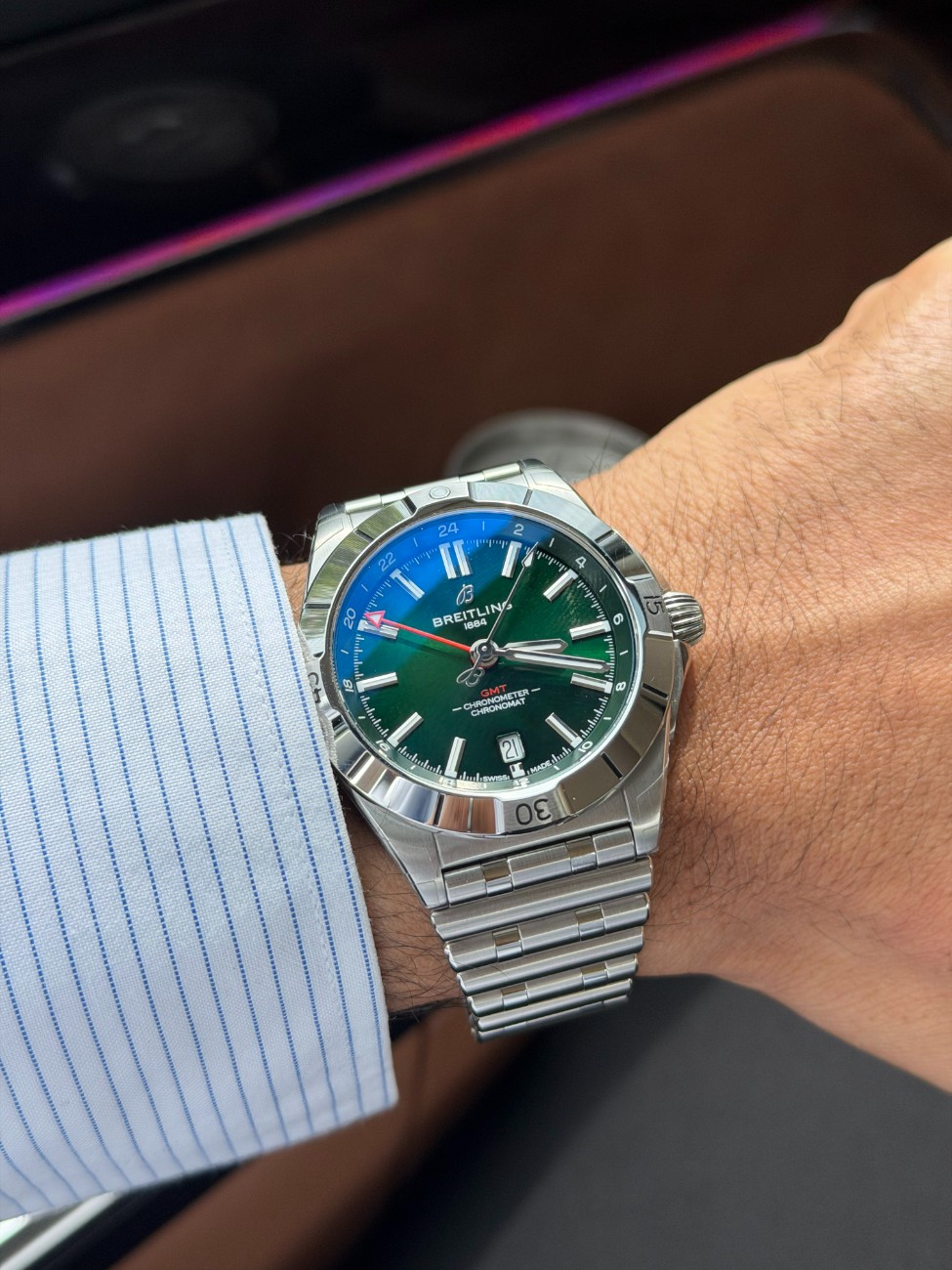
The Breitling Chronomat GMT brings an aviation and travel focused character, while the Cartier Santos introduces a completely different design language rooted in architecture and jewellery. What attracts you to watches that occupy such different worlds?
SA: They look like opposites, but they actually share something. Both were born in the sky. Breitling built its name on instruments for pilots, and the original Santos was designed by Louis Cartier in 1904 for his friend Alberto Santos-DumonT. It’s considered one of the first purpose-built men’s wristwatches. What attracts me is how differently they answer the same question. The Chronomat GMT is the tool: the Rouleaux bracelet, the green dial, a second time zone, a watch built to be used.
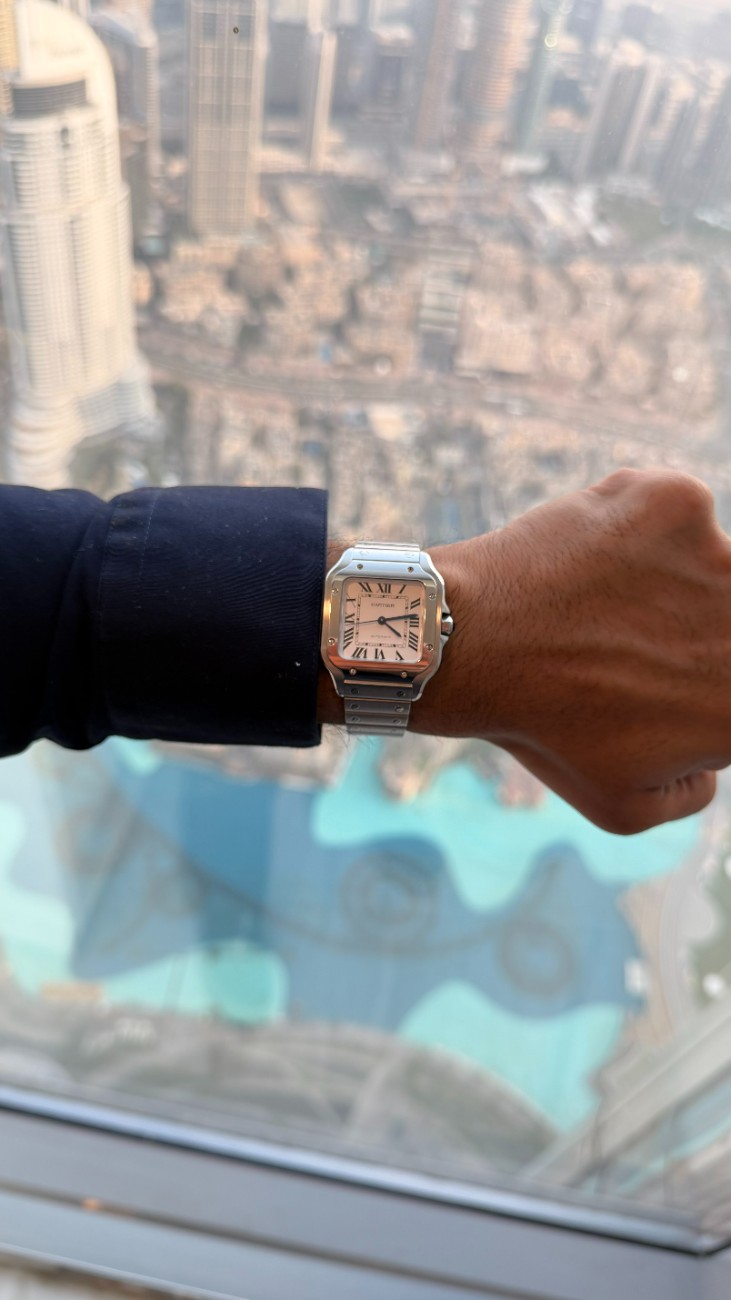
The Santos is pure design: the square case, the exposed screws, the Roman numerals. It feels like architecture on the wrist.
A collection that only speaks one design language gets repetitive. I want each watch to change the way I feel when I put it on. the Breitling makes me want to travel, and the Santos makes me slow down.
Also Read: What Are Sector Dials? A Guide To Their History And Design
Having spent years examining watches professionally and seeing thousands of timepieces through Indian Watch Connoisseur, has your personal approach to collecting changed? Does having access to so many watches make choosing one for yourself more difficult?
SA: Completely. Seeing thousands of watches cures you of hype. Early on, like most people, I was drawn to whatever was most talked about. Today I notice different things: proportions, finishing, how a bracelet sits on the wrist, how a dial reads in different light. Those are the things that make you keep a watch for years. In some ways, having access makes choosing easier, because I know very quickly what I will actually wear and what will just sit in a box. In other ways, it’s harder, because there is always another beautiful watch coming through our network.
Is there a watch in your collection that carries a personal story or emotional significance that goes beyond its brand, rarity or market value? And is there one you could never imagine selling?
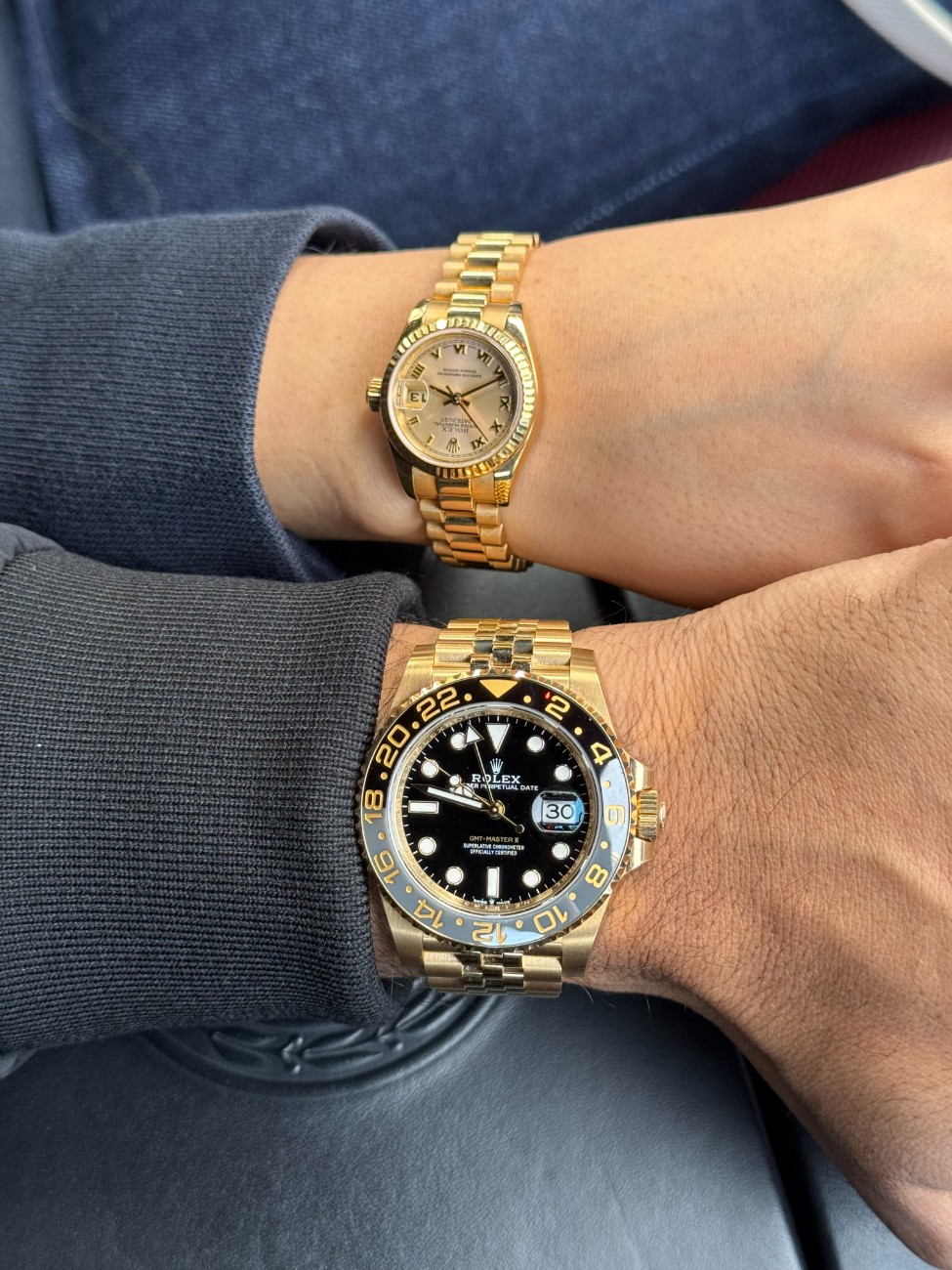
SA: Two watches, for very different reasons. The first is the GMT-Master II in full yellow gold, the gris noir (French for “grey and black”) also known as GRNR. I acquired it as a gift for my father. It was my way of telling him that he raised his son right. Every good thing I have built comes from the values he gave me, and I wanted him to wear something that would remind him of that every single day. And honestly, we both love how that watch sits on the wrist.
The second is the Santos de Cartier, in medium with a white dial. That was the watch I bought for myself when I first tasted some real success in life. I wanted an old-money piece, something quiet and timeless that doesn’t need to announce itself. For me, it marks a point where I stopped wanting to prove something and started simply enjoying what I had earned. If I had to pick one I could never imagine selling, it would be the GMT. Watches become valuable to us not because of what they cost, but because of who they connect us to.
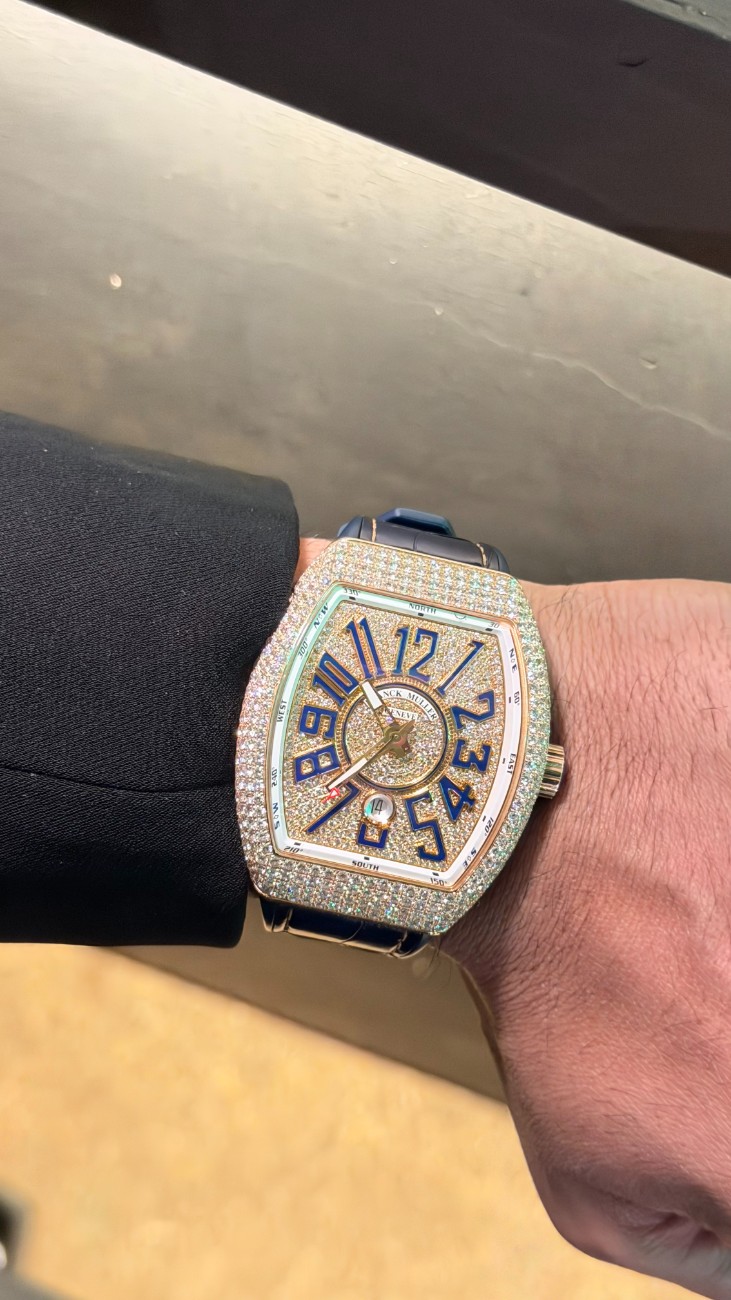
Looking ahead, as India becomes an increasingly important market for global watch maisons and develops a deeper collector culture, what do you believe the next chapter of Indian Watch Connoisseur will look like, and what is the one watch you would still love to add to your own collection?
SA: India is no longer an emerging watch market. It is becoming an important one, and the collector culture here is only going to deepen. I want Indian Watch Connoisseur to be the house that grows with it. We have fully built our own website, where anyone can list their watch directly. It works on a no-win, no-fee basis, so sellers pay nothing unless the watch actually sells. The whole set-up is transparent. Sellers deal with buyers directly, cut out the chain of middlemen and entertain offers on their own terms.
Around the platform, we want to build the complete ecosystem: deeper education for first-time buyers, experiences that bring the community together offline, and an even stronger bridge between global maisons and Indian collectors. As for the one watch I’d still love to add, it’s the Audemars Piguet Royal Oak Chronograph, the 26331ST, with the blue dial in stainless steel, or in full gold if that opportunity ever presents itself.