Myota 9015 Movement Explained: Features, Accuracy, Power Reserve And Specifications
The Miyota 9015 is one of the most respected automatic movements in modern watchmaking, prized for its reliable, slim and high beating architecture that powers hundreds of independent watch brands
In the intricate universe of mechanical watchmaking, the movement is the unseen protagonist. Beneath the dial and hands lies a miniature mechanical city of gears, springs and levers that quietly orchestrate the passage of time. While the great maisons of Switzerland often dominate the conversation, the modern watch landscape has been profoundly shaped by Japanese engineering as well. Among the most widely respected of these contributions is the Miyota 9015, a movement that has become something of a workhorse for independent brands and micro manufacturers across the world.
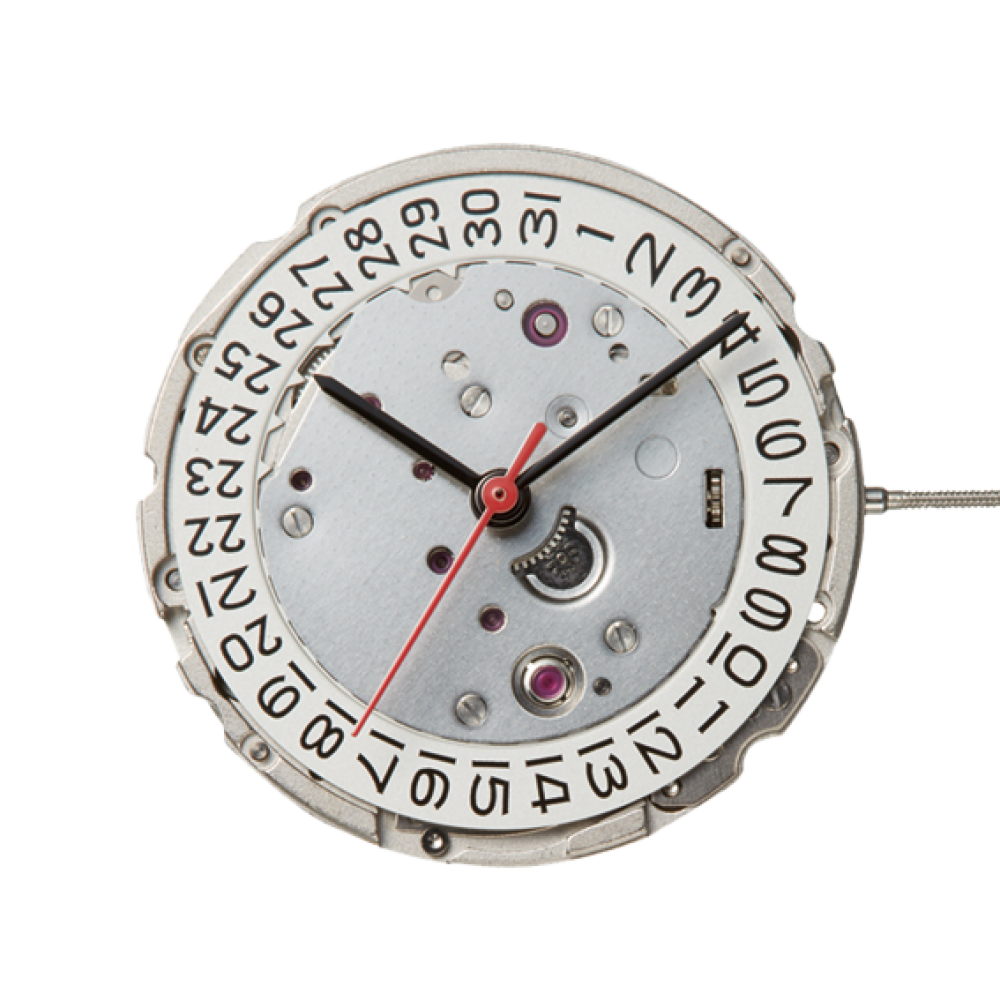
Produced by Miyota, a division of the renowned Japanese watchmaker Citizen Watch Co., the 9015 represents the brand’s answer to the demand for a slim, reliable and high performance automatic calibre that could compete with Swiss alternatives. Since its introduction, it has quietly powered countless timepieces, proving that engineering excellence does not always need to carry the burden of prestige branding.
The Origins of the Miyota 9000 Series
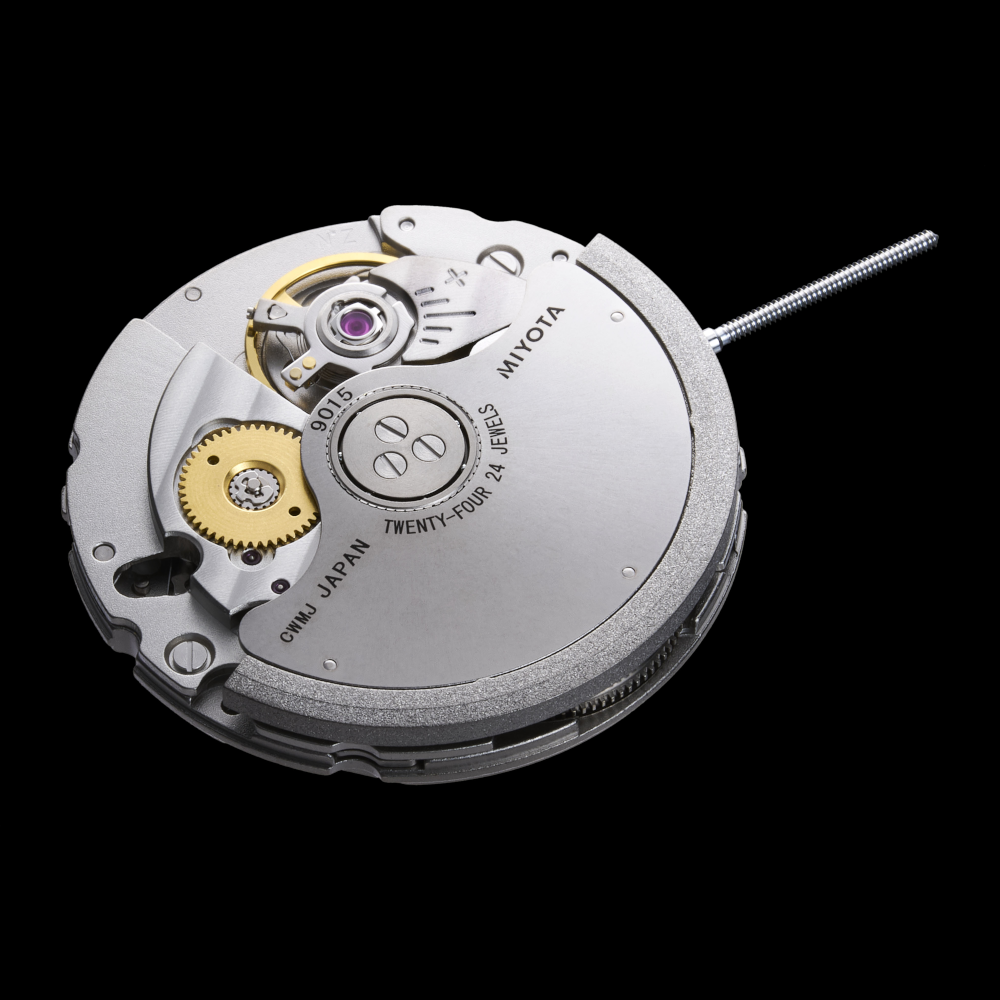
The Miyota 9015 belongs to the 9000 series, a family of movements introduced to offer higher performance than the brand’s earlier 8000 series calibres. While the 8000 line was known for durability and affordability, the 9000 series was designed with refinement and thinness in mind. The goal was simple yet ambitious: to produce a movement that was slim enough for contemporary watch design while maintaining the rugged reliability for which Japanese engineering is known. The 9015 soon emerged as the flagship of this effort. Today, it is frequently chosen by independent watch brands seeking a dependable automatic movement that balances performance with accessibility.
Core Specifications
At the heart of the Miyota 9015 lies a set of specifications that place it firmly within the category of modern high beat automatic movements. The calibre operates at 28,800 vibrations per hour, or 4 Hz, allowing the seconds hand to sweep smoothly and improving timekeeping stability. It offers a power reserve of approximately 42 hours, meaning the watch can run nearly two days without being worn. The movement measures 26 mm in diameter and is only 3.9 mm thick, an important factor that enables watchmakers to create relatively slim automatic watches. It also features 24 jewels, which reduce friction at critical pivot points within the gear train.
Automatic Winding and Mechanical Architecture
The Miyota 9015 is an automatic movement, meaning it winds itself through the natural motion of the wearer’s wrist. A central rotor rotates freely, transferring kinetic energy through the winding system to tension the mainspring. The stored energy in the mainspring is gradually released through the gear train, which ultimately drives the escapement.
This mechanism regulates the flow of energy, ensuring the balance wheel oscillates at a consistent frequency. One of the notable advantages of the 9015 is its bi directional winding system, allowing the rotor to wind the mainspring efficiently regardless of which direction it spins. The movement also supports hand winding, enabling the wearer to manually wind the watch through the crown if it has stopped.
Hacking Seconds and Practical Features
Another important feature is hacking seconds. When the crown is pulled out to set the time, the seconds hand stops instantly. This allows for precise time setting, a detail appreciated by enthusiasts who value accuracy down to the second. The movement also includes a quick set date function, allowing the date to be adjusted independently of the time. These seemingly small features significantly enhance everyday usability.
Also Read: Steel vs Titanium Watches: Key Advantages, Durability & Which Material Is Better?
Reliability and Industry Adoption

The Miyota 9015 has earned a reputation for durability and serviceability. Its construction prioritises mechanical robustness, allowing it to perform reliably even in watches designed for active use. Because of its consistency and relatively accessible cost, the movement has become a favourite among independent watchmakers and microbrands. It provides a dependable mechanical foundation without the constraints or supply limitations that sometimes accompany Swiss alternatives. For emerging watch brands seeking credibility and reliability, the Miyota 9015 offers a proven mechanical backbone.
In an industry often captivated by elaborate complications and storied heritage, the Miyota 9015 represents something equally valuable: dependable engineering. It may not carry the romantic mystique of haute horology, yet it embodies the practical virtues that make mechanical watches viable for everyday wear. Slim, efficient and remarkably reliable, the movement has earned its place as one of the modern era’s most trusted automatic calibres. For many collectors and watchmakers alike, the Miyota 9015 is proof that great watchmaking is not always about spectacle. Sometimes, it is about quiet mechanical integrity ticking faithfully beneath the dial.