Timepieces With The Most Amazing Casebacks In Watchmaking
Because sometimes the true poetry of a watch lies not on its dial but beneath its sapphire crystal caseback, from hand engraved bridges to mesmerising tourbillons on display, in a celebration of mechanical beauty hidden on the reverse side of time
In the grand theatre of watchmaking, we are often seduced first by the dial, that composed and charismatic face presented to the world with deliberate elegance; yet the true connoisseur knows that the real revelation begins when the watch is gently turned over, as though entrusted with a private confidence. The caseback, once a purely functional shield of metal, has transformed into a luminous window into mechanical virtuosity, where gears converse in silent synchrony and bridges shimmer with the quiet pride of human craftsmanship. Through sapphire crystal, apertures, and painstakingly finished plates, one encounters perlage that ripples like light on water, côtes that flow with architectural grace, and tourbillons that revolve in hypnotic defiance of gravity. It is here, in this intimate sanctum of polished screws, and hand beveled edges, that timekeeping transcends mere utility and ascends into art, reminding us that the most astonishing wonders in horology are often hidden in plain sight, waiting patiently for the curious to look beyond the dial and discover the poetry that lies beneath.
Bovet Recital 12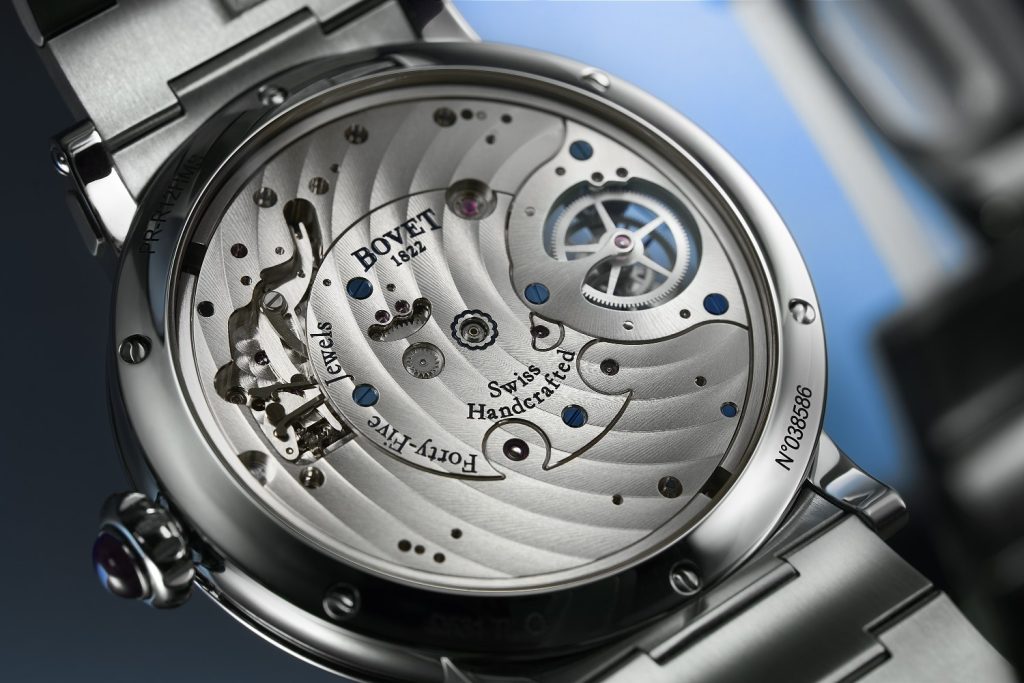
At the heart of the Recital 12 beats an in house manual winding calibre that exemplifies architectural transparency and classical finishing in equal measure. The movement is arranged with an almost sculptural clarity, allowing the gear train to be appreciated in its full linear progression from barrel to escapement. Its twin barrel construction delivers a robust and steady power reserve, ensuring amplitude stability across the majority of its running time. The balance wheel oscillates with poised assurance beneath an elegantly shaped bridge, its edges meticulously hand bevelled and polished to a mirror sheen.
The finishing is distinctly traditional yet assertive, with côtes de Genève striping across the bridges, circular graining on the mainplate, and screws that gleam with thermally blued brilliance. Every interior angle is executed by hand, reflecting hours of patient anglage. The movement is not merely functional but declarative, presenting itself through the caseback as an open manifesto of artisanal integrity and chronometric ambition.
De Bethune DB25 Starry Varius
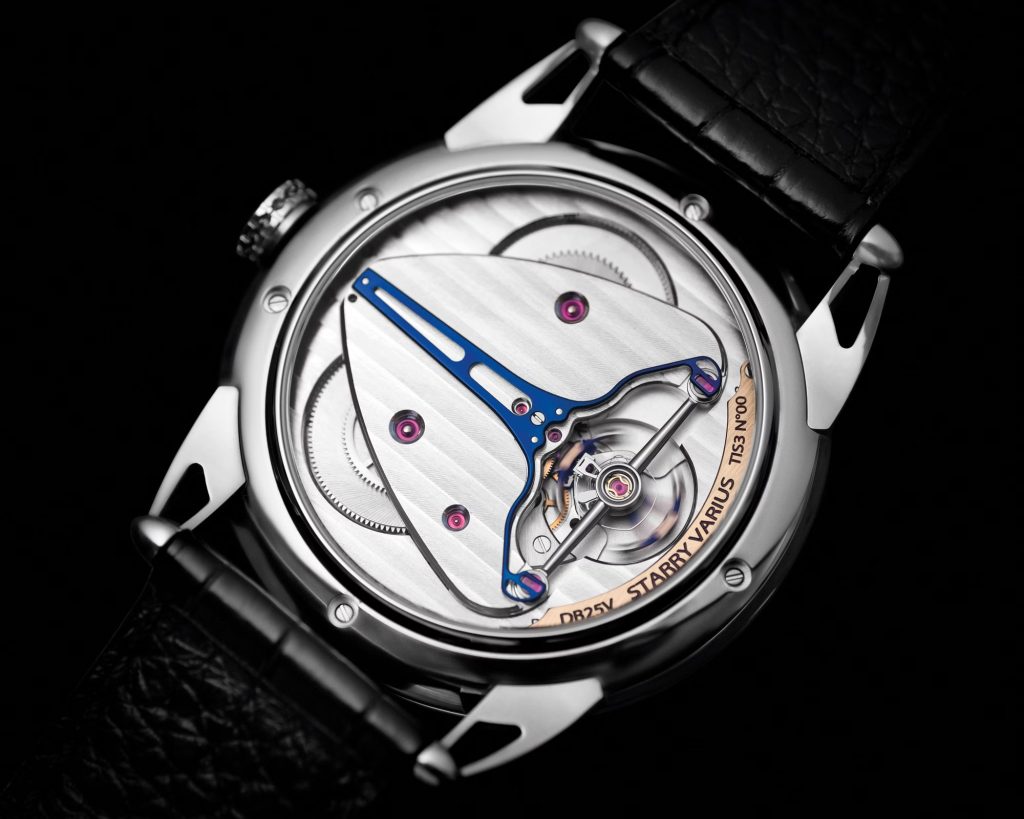
The movement within this celestial timepiece is a fascinating blend of contemporary engineering and classical watchmaking codes. Self winding yet exquisitely refined, the calibre incorporates a silicon escape wheel and a titanium balance wheel with white gold inserts, a patented construction designed to optimise inertia while preserving shock resistance. The flat terminal curve of the balance spring enhances isochronism, contributing to the brand’s reputation for chronometric precision.
A single barrel ensures an impressive multi day power reserve, while the finishing reveals a distinctive aesthetic language. Bridges are adorned with radiant striping and mirror polished steel components that catch the light like distant stars. The movement’s architecture balances technical innovation with visual harmony, embodying a philosophy that merges avant garde material science with the romance of traditional horology.
Ferdinand Berthoud FB1 Oeuvre d’Or
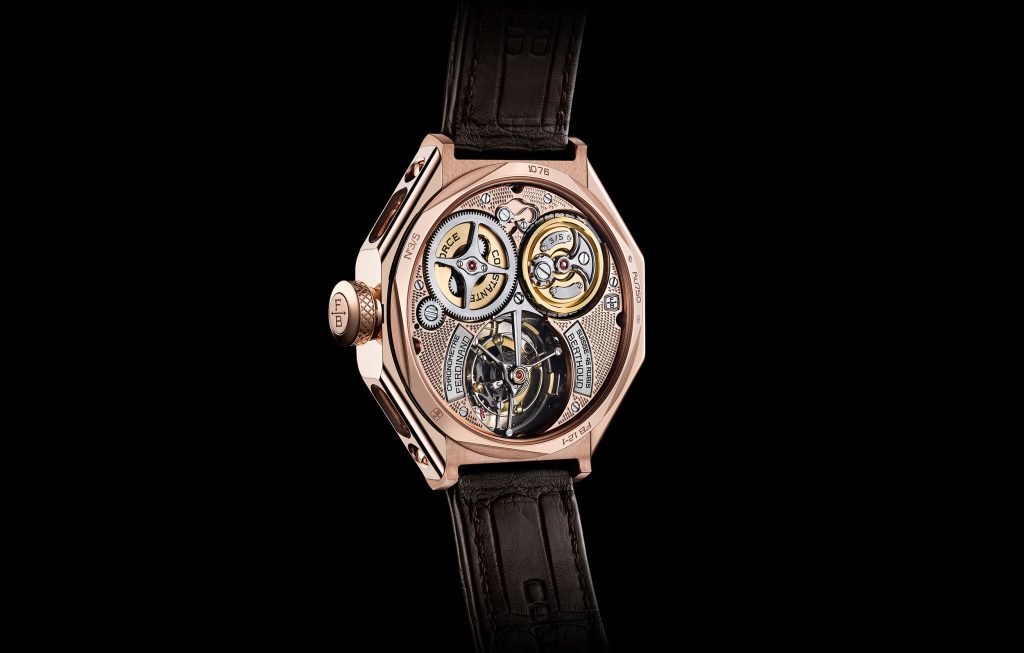
This movement is a masterclass in marine chronometer inspiration translated for the wrist. Constructed with a pillar architecture reminiscent of eighteenth century deck clocks, the calibre features a fusée and chain transmission paired with a one minute tourbillon. The fusée equalises torque from the mainspring, ensuring consistent force delivery throughout the power reserve, while the chain itself comprises hundreds of individually assembled components, each executed to microscopic tolerances.
The tourbillon is mounted within a large aperture and supported by finely finished bridges that emphasise structural integrity. The entire movement is certified as a chronometer, underscoring its technical seriousness. Finishing is executed to the highest standard, with hand polished bevels, black polished steel elements, and a level of interior anglage that demands both dexterity and devotion. It is a movement conceived not only as a mechanical instrument but as a scholarly tribute to precision timekeeping history.
MB&F Legacy Machine Thunderdome
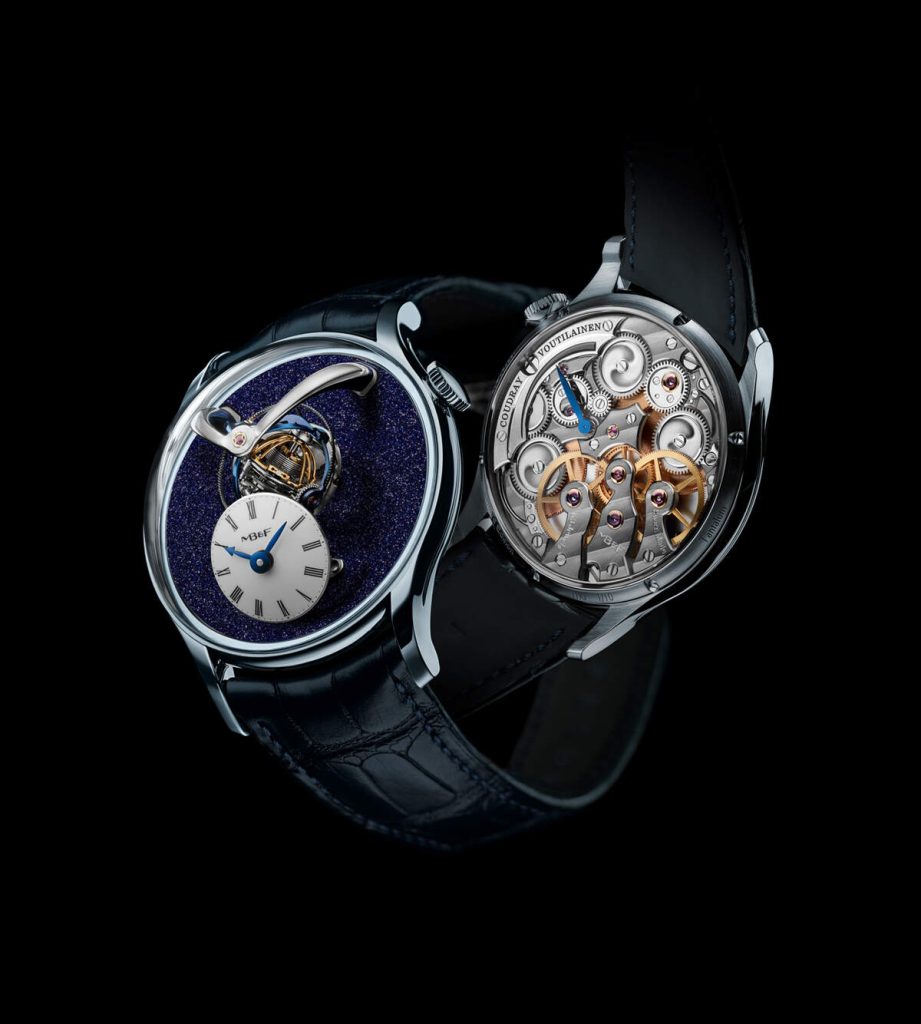
The movement inside this horological spectacle is built around a dramatic multi axis tourbillon that rotates at remarkable speed. Developed in collaboration with a master constructor, the regulating organ completes one rotation in mere seconds on one axis and sixty seconds on another, creating a dynamic three dimensional ballet that dominates the visual field. This rapid motion is not theatrical excess alone but a pursuit of improved averaging of positional errors.
The calibre is manual winding, with a generous power reserve supported by carefully engineered gear ratios to sustain the energy demands of the high speed tourbillon. Finishing combines traditional hand techniques with bold contemporary aesthetics, featuring wide bridges, mirror polished steel surfaces, and a meticulous attention to symmetry. The movement’s layout is conceived as a stage, elevating mechanical complexity into kinetic art visible in full splendour through the caseback.
Moritz Grossmann Hamatic
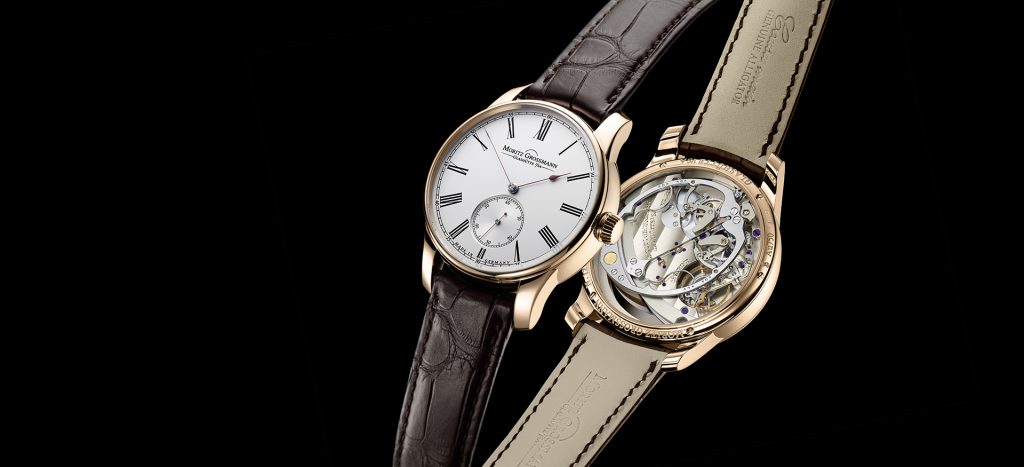
The Hamatic introduces a rare hammer winding system that revives a nineteenth century concept with modern refinement. Instead of a conventional central rotor, the movement employs a pivoted hammer that swings with wrist motion, transmitting energy to twin mainspring barrels through a sophisticated winding mechanism. This architecture preserves visual openness while offering the convenience of automatic winding.
The movement is lavishly finished in the German tradition, with untreated silver bridges adorned with broad Glashütte ribbing, gold chatons secured by thermally blued screws, and hand engraved balance cocks that display artisanal individuality. The large balance wheel oscillates beneath a finely curved bridge, regulated with precision screws for accurate timing. Through the caseback, the Hamatic reveals a harmonious interplay of mechanical ingenuity and Saxon restraint, where innovation is presented with quiet but undeniable confidence.