Why Is A Pallet Fork Crucial in Watches? The Tiny Part That Controls Timekeeping
It is tiny, hidden, and almost never mentioned in showroom conversations, yet without it, even the most expensive mechanical watch would simply unwind itself into chaos
Luxury watch buyers love talking about tourbillons, perpetual calendars, moonphases, and skeleton dials. Nobody walks into a boutique and says, ‘Tell me about the pallet fork.’ Which is a shame, because the pallet fork is essentially the bouncer at the most exclusive nightclub in horology. It decides who gets in, when they get in, and how fast the party moves.
Inside every traditional mechanical watch, energy is constantly trying to escape. The mainspring wants to unwind all at once, dumping its power in a glorious but useless burst of enthusiasm. If allowed, your watch would run for about thirty seconds and then stop, rather like a Labrador seeing an open field. The pallet fork prevents that disaster. It meters power, controls release, and works directly with the escapement to turn chaos into precision. Without it, there is no accuracy, no rhythm, and frankly, no point in owning a mechanical watch. Outlook Luxe takes a closer look at the tiny component that quietly runs the entire show.
A Brief History of Controlled Time
Before the pallet fork, early clocks were about as precise as weather predictions from your uncle. The breakthrough came with the development of the verge escapement in medieval Europe, but it was still wildly inaccurate. Then, in the 18th century, watchmaking evolved toward the lever escapement, the system most mechanical watches still use today. The modern detached lever escapement is largely credited to Thomas Mudge, the English watchmaker who refined the concept in the 1750s. His invention dramatically improved precision by separating—or detaching—the balance wheel from constant interference.
At the heart of this system sat the pallet fork. This was revolutionary. Instead of the gear train directly disturbing the balance wheel, the pallet fork acted as an intermediary, delivering controlled impulses. It allowed better accuracy, less wear, and the kind of reliability that made portable timekeeping genuinely practical. In short, it turned watches from decorative jewelry into proper instruments.
Also Read: Top 5 Steel And Gold Timepieces Every Watch Collector Should Own In 2026
What Exactly Is a Pallet Fork?
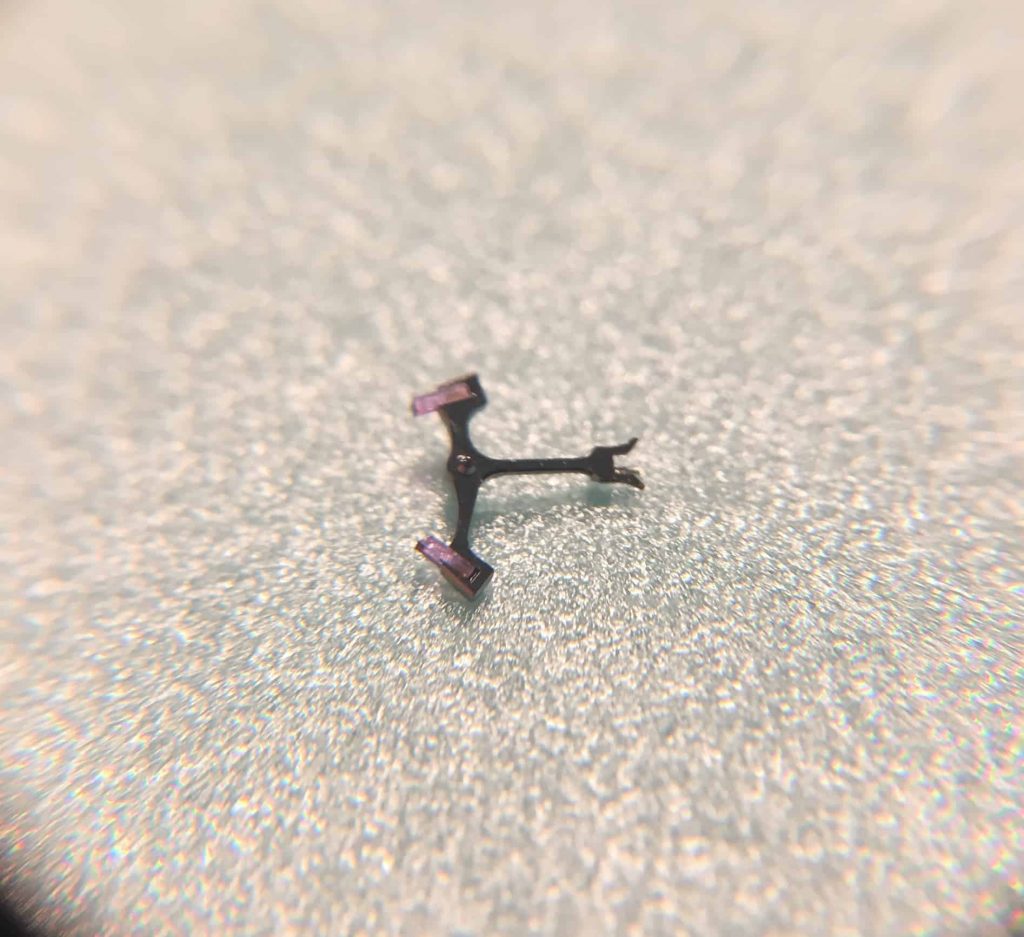
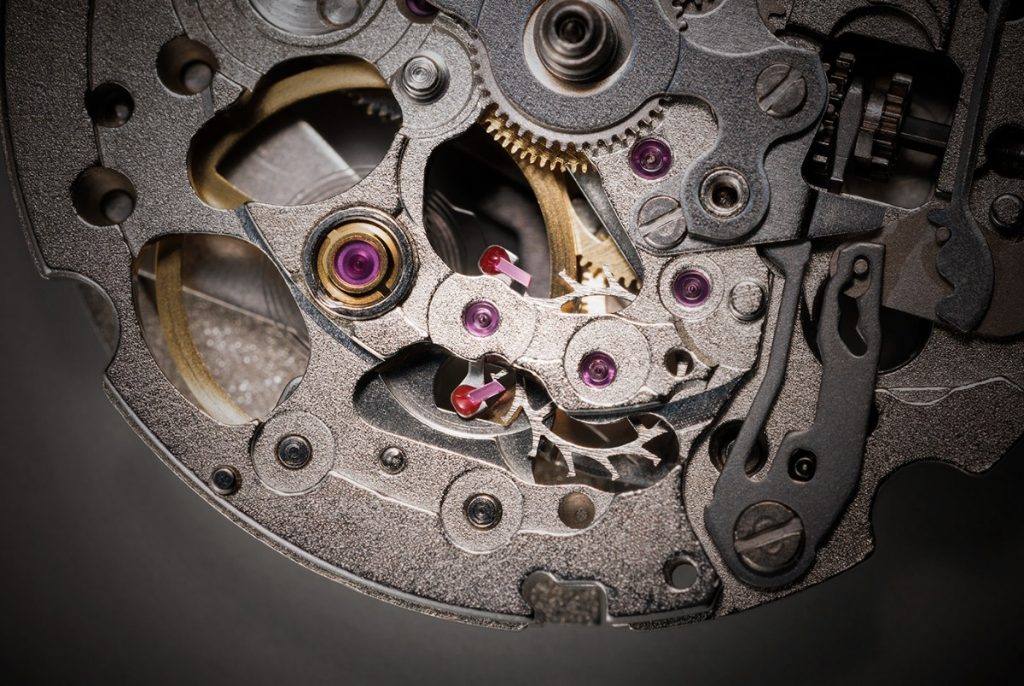
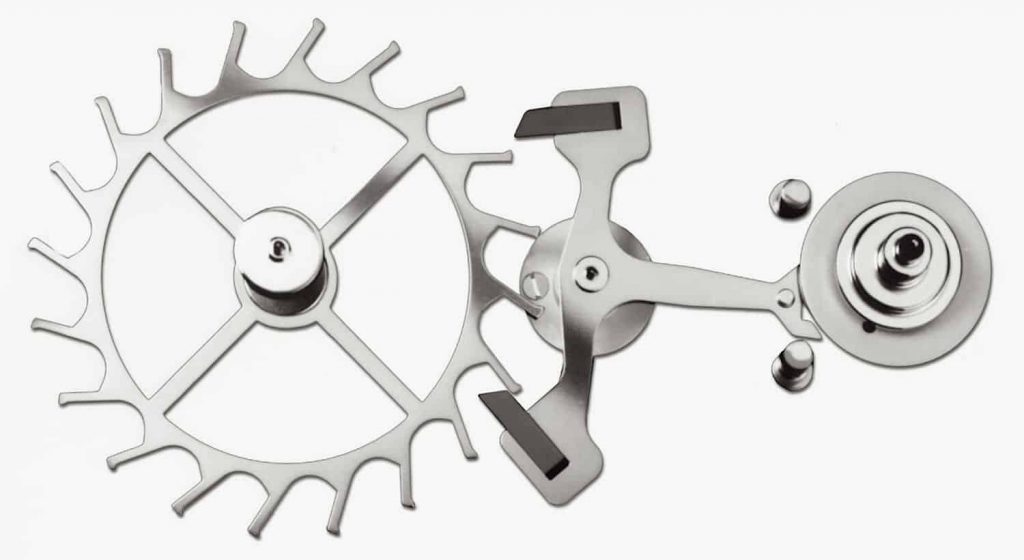
Imagine a tiny metal anchor with two jewel-tipped arms and a forked end. That, in simplified form, is your pallet fork. It sits between the escape wheel and the balance wheel, acting as the traffic controller of the movement. The two small jewel surfaces—called pallet stones—lock and unlock the teeth of the escape wheel. These jewels are usually made from synthetic ruby because steel rubbing on steel is a terrible long-term relationship.
At the opposite end, the fork engages with the impulse pin attached to the balance wheel. This tiny component performs two jobs simultaneously: it locks the escape wheel to stop uncontrolled energy release, and then unlocks it in precisely timed intervals to keep the balance wheel oscillating. That is rather like being both a prison guard and a motivational speaker.
How It Works Inside a Mechanical Watch
Here is the magic. The mainspring stores energy. That energy travels through the gear train until it reaches the escape wheel, which wants to spin continuously. The pallet fork stops it. As the balance wheel swings back and forth, its impulse pin nudges the forked end of the pallet fork. This movement causes one pallet stone to unlock the escape wheel tooth, allowing it to advance by exactly one step. At that same moment, another tooth pushes against the opposite pallet stone, giving the pallet fork a tiny impulse.
That impulse is transferred back to the balance wheel, keeping it oscillating. Then it locks again. Tick. Unlock. Transfer. Lock. Tick. This repeats five, six, eight, or even ten times per second depending on the movement’s beat rate. That sound you hear from a mechanical watch is not romance. It is the pallet fork doing unpaid overtime.
Also Read: Audemars Piguet And Swatch Unveil The Royal Pop In Pocket Watch Format
Why It Matters So Much
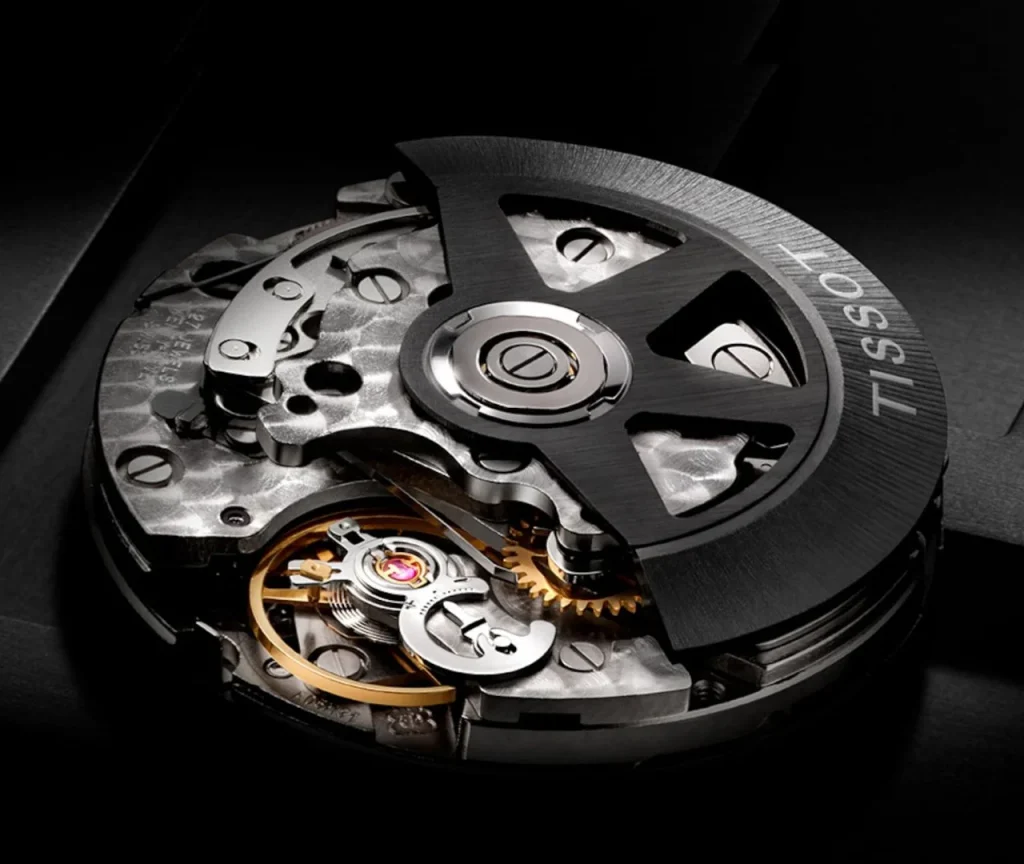
The pallet fork is responsible for consistency, and consistency is everything in watchmaking. If it is poorly made, badly adjusted, or excessively worn, timing suffers immediately. Amplitude drops, accuracy goes sideways, and your expensive Swiss masterpiece starts behaving like a microwave clock after a power cut. Its geometry must be perfect. Angles, jewel placement, lock depth, impulse timing—everything matters at microscopic levels.
That is why high-end manufactures obsess over escapement finishing and adjustment. Some even experiment with silicon pallet forks for reduced friction, greater resistance to magnetism, and improved long-term stability. It may be invisible to the owner, but to a watchmaker, it is sacred territory. Because if the pallet fork is wrong, everything else is just expensive decoration.