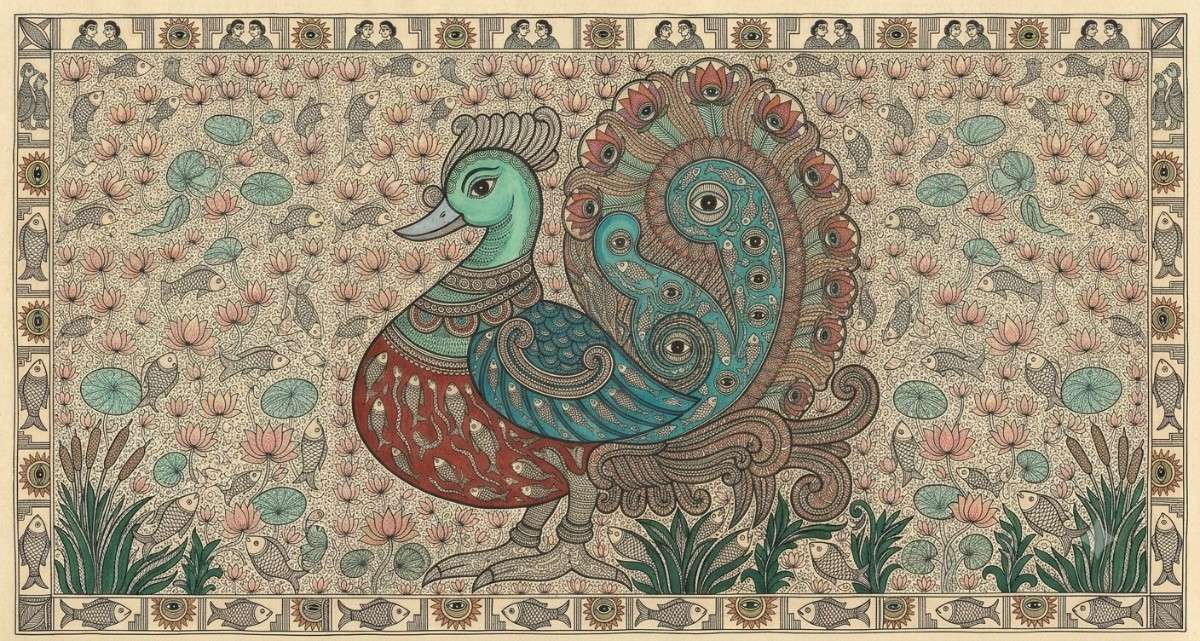


The peacock’s moment in the global spotlight just wrapped up recently. ‘Peacock Power: Beauty and Symbolism Across Cultures’, a major exhibition at Singapore’s Peranakan Museum, closed on August 30 after tracing the bird’s visual journey across India, China and Southeast Asia through more than 100 works.
It is a fitting moment to revisit what is arguably the peacock’s original artistic home which is known for being one of the most enduring symbols in Indian art. Present across time periods, genres and mediums, from prehistoric rock shelters to Mughal miniatures to today, it is no surprise the bird shows up again and again across India’s regional art traditions, each one reading it a little differently. Here is how five very different schools of Indian art have imagined it.
Mughal Miniature Painting
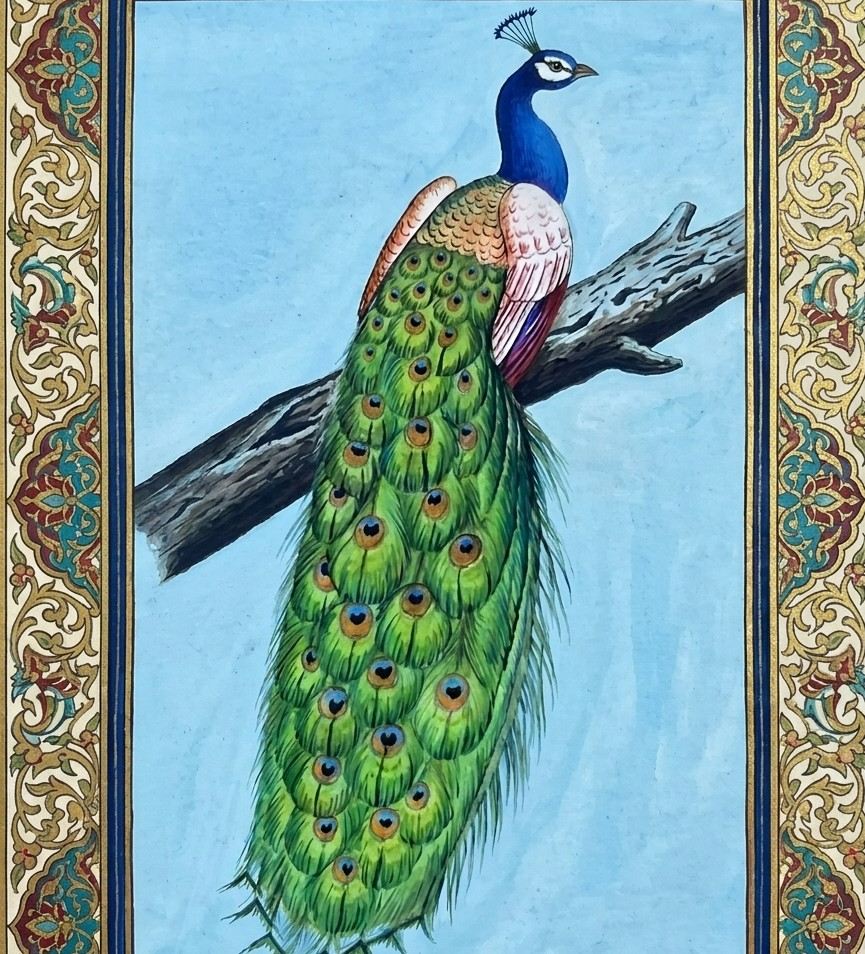
Mughal miniature painting brought a rare scientific curiosity to Indian art, and the peacock was among its favourite subjects. Emperors like Akbar and Jahangir kept court painters whose job was to look closely at birds, animals and flowers and record what they saw with near-forensic precision.
Also Read: Why Harpreet Narula Believes Art Should Make You Look Within
Ustad Mansur, arguably the greatest natural-history painter of the Jahangir era, painted a peacock and peahen mid-chase, a small snake caught in the peacock’s beak. The bird found its grandest form in Shah Jahan’s Peacock Throne, once encrusted with diamonds, sapphires and pearls before it was carried off to Persia in 1739 and later broken apart for its gems.
Pichwai Painting
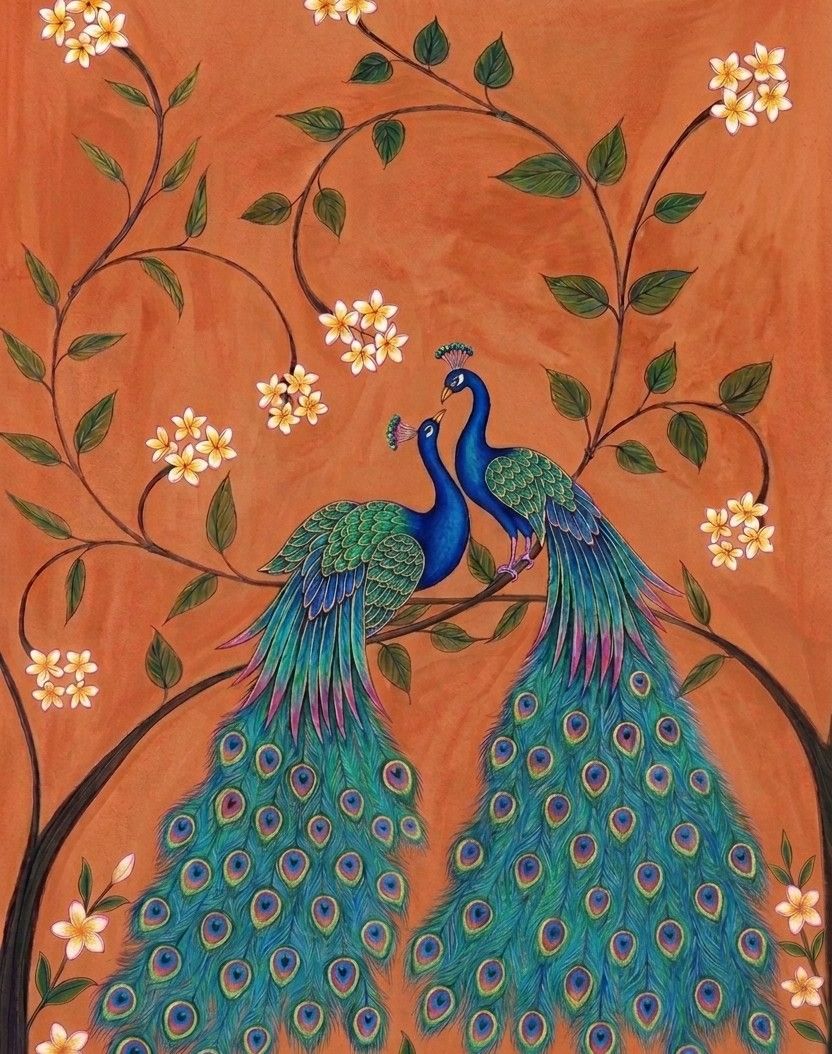
In Pichwai paintings, the large cloth backdrops traditionally hung behind the idol of Shrinathji in Nathdwara, the peacock is not observed from a distance; it belongs to the story. Legend holds that when Krishna played his flute in the forests of Vrindavan, peacocks danced in ecstatic response and even laid their feathers before him, prompting his promise to wear one always. Pichwai artists set out to capture exactly that devotion, arranging birds mid-dance amid lotus ponds and monsoon skies. Shrinathji’s own crown, the mor mukut, is fashioned from peacock feathers.
Madhubani Painting
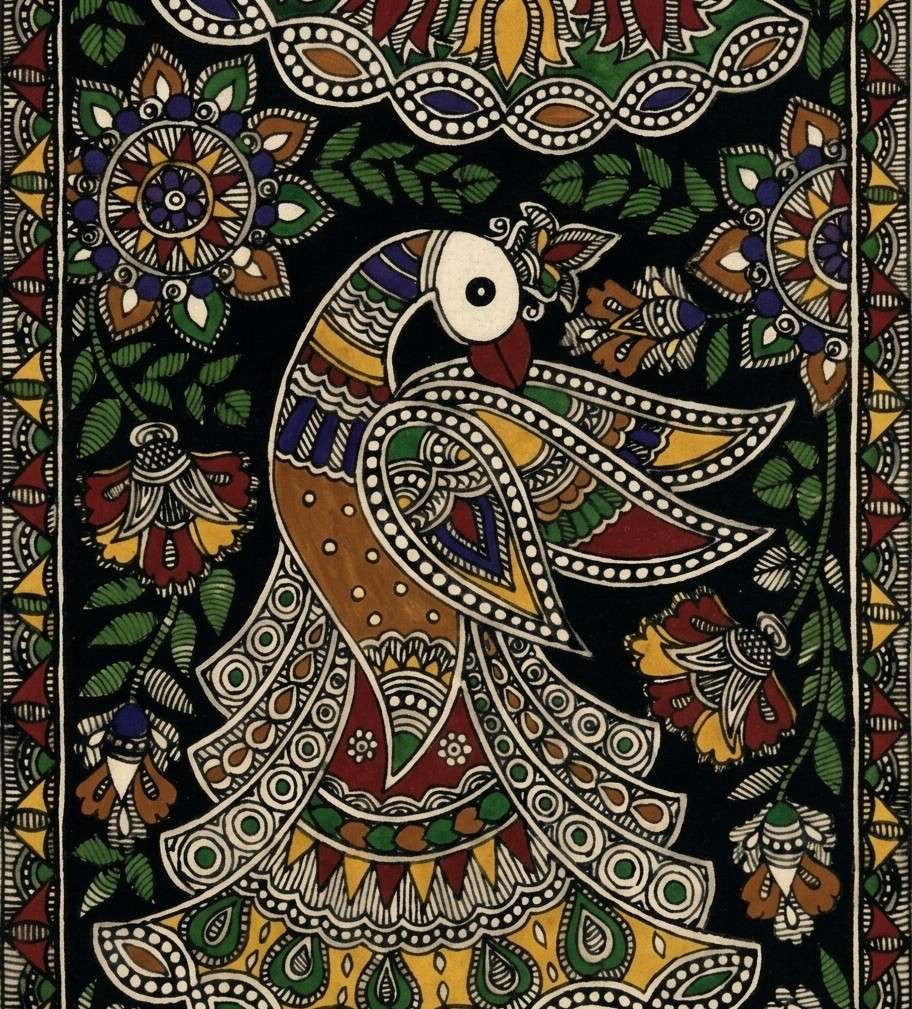
In the Mithila region of Bihar, Madhubani artists treat the peacock as a symbol of love, fertility and monsoon abundance. A pair of peacocks facing each other, a common sight in Kohbar wedding-chamber paintings, represents eternal love between bride and groom, which is why the motif turns up so often at weddings and housewarmings. Art historian Jyotindra Jain has linked the bird to romance and fertility, while others trace it to Krishna, who wore its feather in his crown. The eye-like patterns on its feathers are also read as watchful protection against evil.
Kalamkari Painting
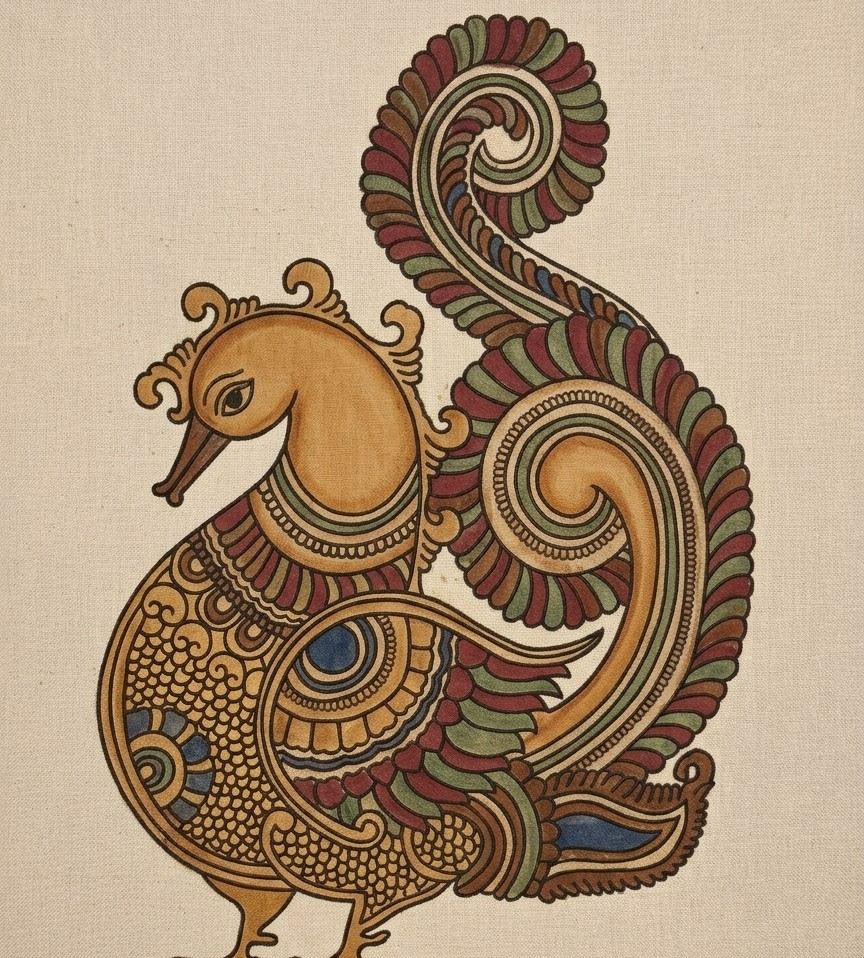
Kalamkari, practised for centuries around Srikalahasti and Machilipatnam in Andhra Pradesh, uses a bamboo pen dipped in natural dye to tell mythological stories on cloth. Within that world of gods and epics, the peacock appears as a symbol of grace, beauty and, in the Srikalahasti tradition specifically, of peace. Its plumage gives Kalamkari artists room to show off the form’s signature fine linework and earthy, plant-derived colour palette, making it one of the most recognisable standalone motifs in the craft.
Tanjore Painting
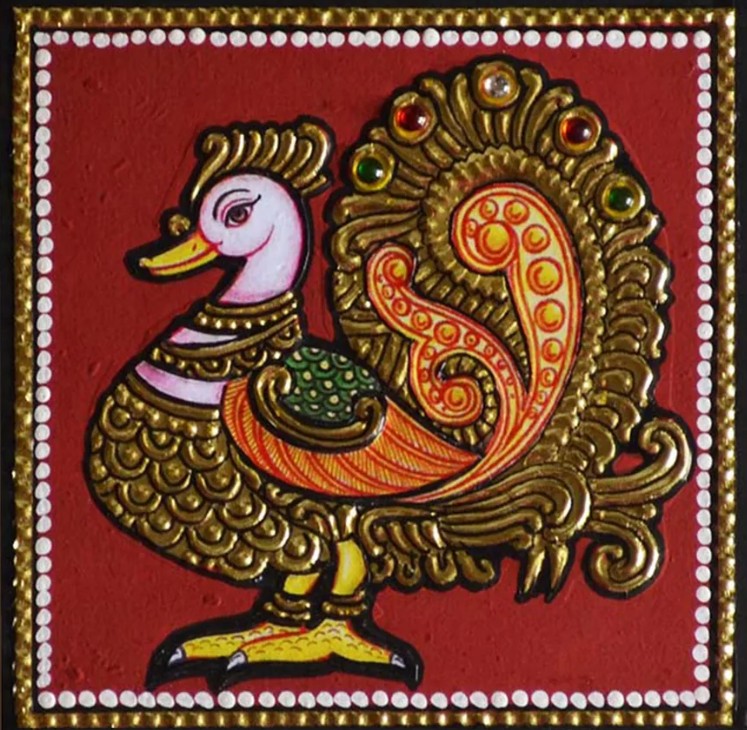
Tanjore painting, from Thanjavur in Tamil Nadu, is known for its rich colours, dense composition and gold leaf relief work, and the peacock fits easily into its language of divine opulence. The bird is associated with Goddess Saraswati as a symbol of wisdom and with Lord Murugan, whose mount it is, lending it an undertone of courage as well as beauty. Set against gilded surfaces and jewel tones, a Tanjore peacock reads less like wildlife and more like an emblem, bridging the sacred and the ornamental.
Also Read: Exploring Mayurbhanj Through Belgadia Palace’s New Cultural Residency
Five traditions, five very different intentions, from a court painter’s naturalism to a bride’s blessing to a temple deity’s throne. Yet every one of them reaches for the same bird to say something about beauty that refuses to be simple. That, perhaps, is the peacock’s real gift to Indian art. It has never just been a bird.