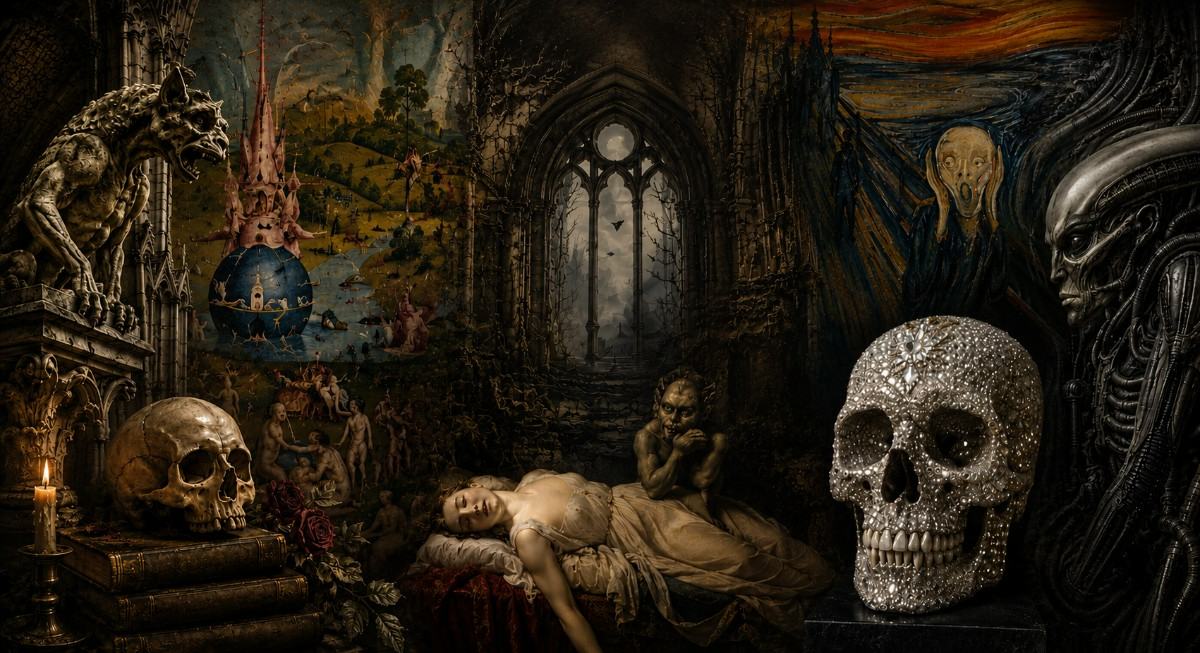


Every October, the world briefly agrees to look at what it usually avoids. Skulls, shadows, ruined abbeys and pale, haunted faces move from the margins into the mainstream. Yet dark art is more than a seasonal novelty. From medieval Gothic imagery to contemporary macabre installations, artists have spent centuries exploring the uneasy relationship between beauty, mortality and fear.
The appeal lies in how these images have evolved across centuries, reflecting changing beliefs about death, religion, the human psyche and the unknown. To understand why dark imagery continues to fascinate, it helps to trace its journey from the sacred spaces of medieval Europe to the unsettling visions of modern art.
The Roots of Gothic Imagery
Gothic visual culture emerged in medieval Europe, particularly in the architecture, sculpture and stained glass of its cathedrals, where gargoyles and demonic figures often served as reminders of sin and spiritual consequence.
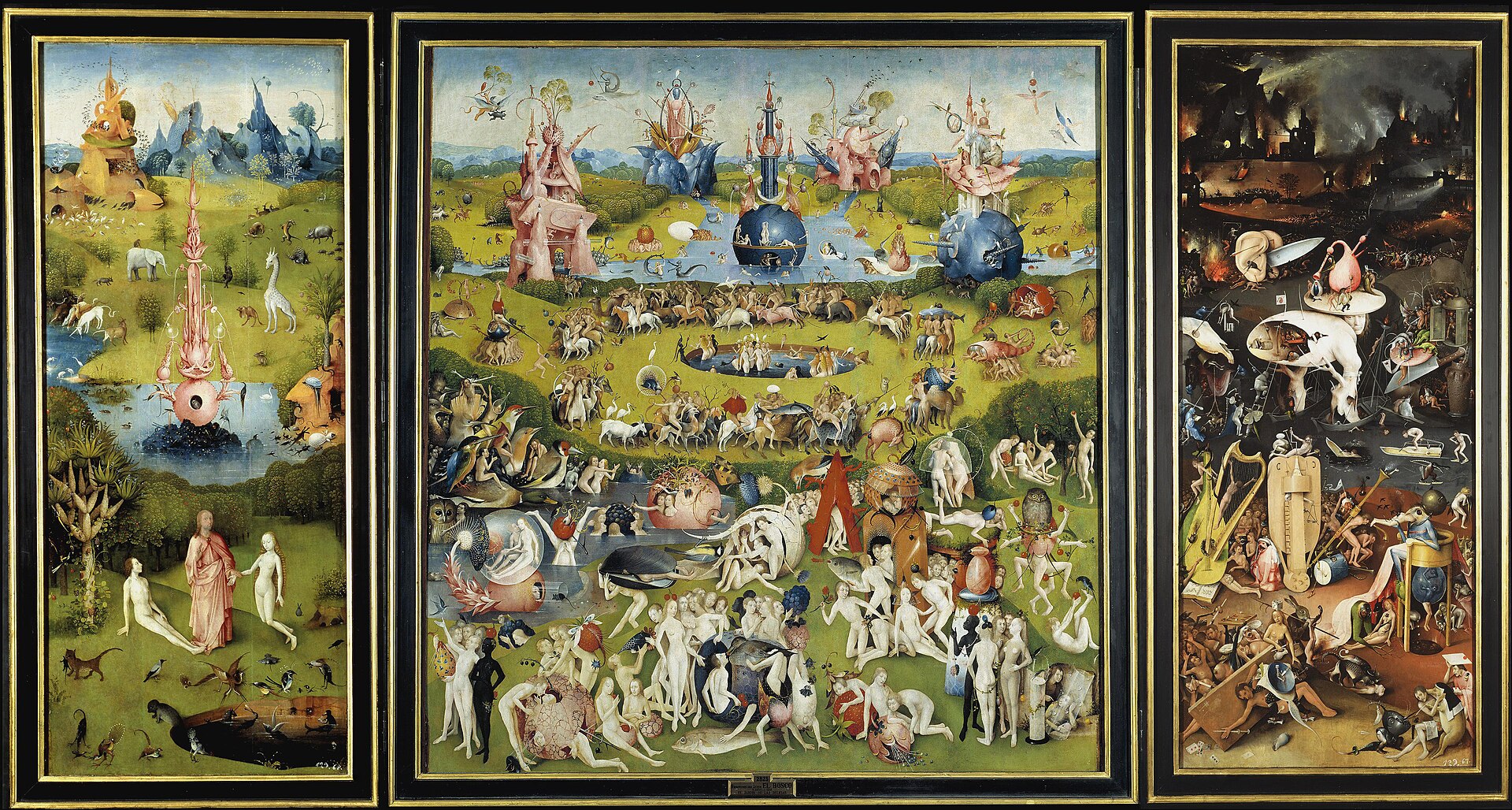
Hieronymus Bosch carried that anxiety onto panel, filling ‘The Garden of Earthly Delights’ with hybrid creatures and infernal punishments. In 1533, Hans Holbein the Younger concealed a distorted skull across the foreground of ‘The Ambassadors’, a memento mori that becomes recognisable only when viewed from an angle.
The Romantic Turn
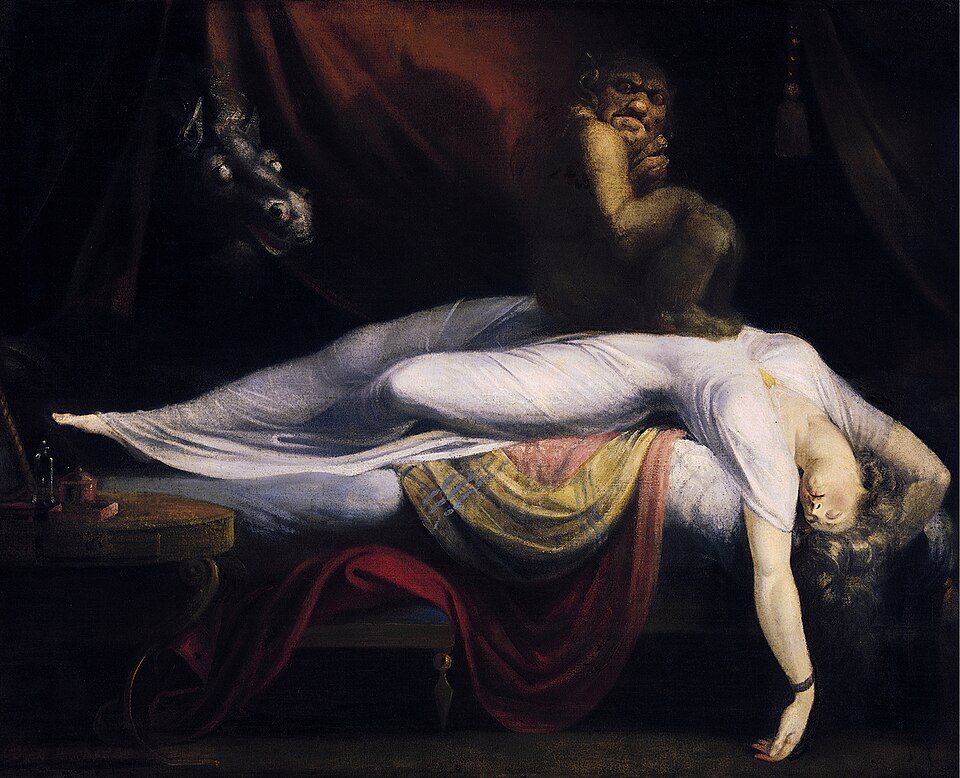
The darker sensibility associated with Halloween took shape in the late eighteenth and nineteenth centuries. Henry Fuseli’s ‘The Nightmare’ (1781) placed a crouching demon on the chest of a sleeping woman. Francisco Goya painted his Black Paintings directly onto the walls of his own house and ‘Saturn Devouring His Son’ remains one of the most unsettling images in Western art.
Also Read: Gothic Architecture: The Medieval Art Form Behind Europe’s Most Majestic Cathedrals
Caspar David Friedrich, meanwhile, set solitary figures against fog, ice and ruined churches. These painters developed a visual language of fear, solitude and the sublime that continues to influence how artists depict the uncanny.
Symbolists and Surrealists
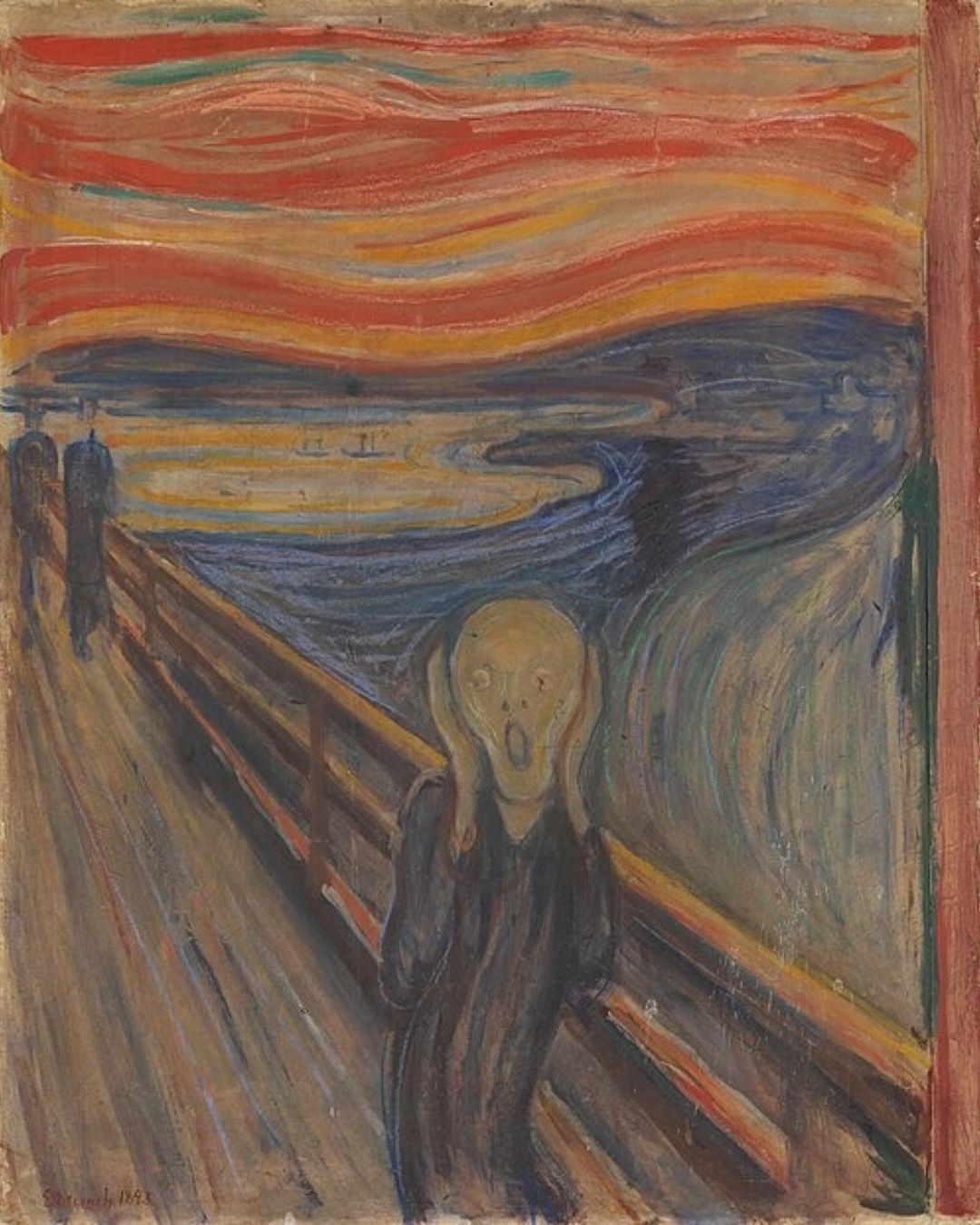
By the late nineteenth century, Odilon Redon was drawing floating eyeballs and spectral heads in charcoal, while Edvard Munch turned private terror into ‘The Scream’. In the twentieth century, the Polish artist Zdzisław Beksiński built vast, decaying dreamscapes, and the Swiss artist H R Giger fused flesh and machinery into his distinctive biomechanical style.
Their works demonstrate how macabre imagery can move beyond the supernatural to explore psychological unease, distorted bodies and unsettling visions of the future.
The Macabre In Contemporary Art
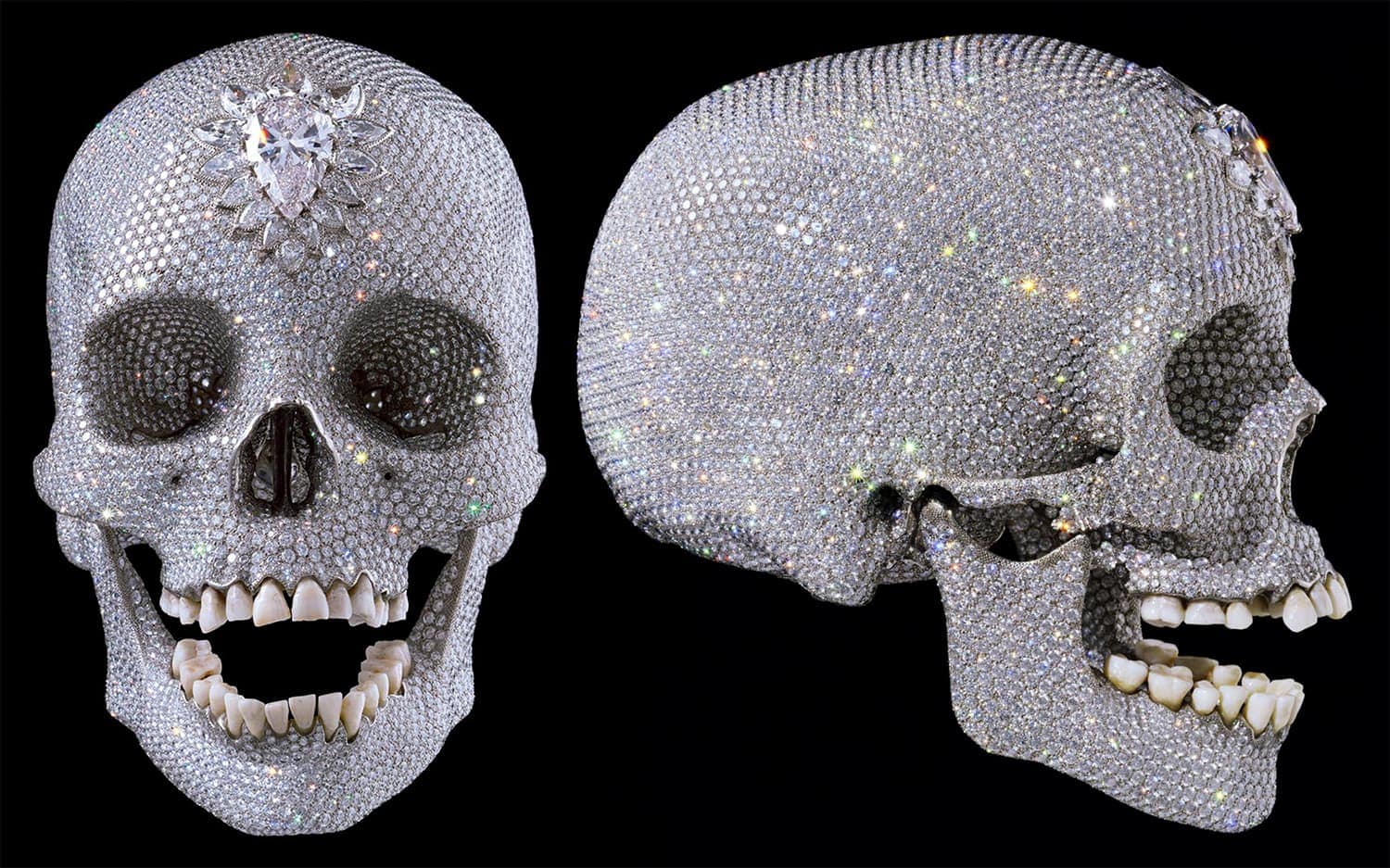
In contemporary art, the macabre is often less about fright than about mortality, excess and power. Damien Hirst’s ‘For the Love of God’ (2007), a platinum cast of an eighteenth-century human skull set with 8,601 diamonds, transformed the traditional memento mori into a meditation on wealth, death and the value assigned to precious objects.
Jake and Dinos Chapman have spent decades creating miniature hellscapes populated by thousands of tiny figures. In each case, contemporary dark art uses disturbing imagery to question what society would prefer not to see.
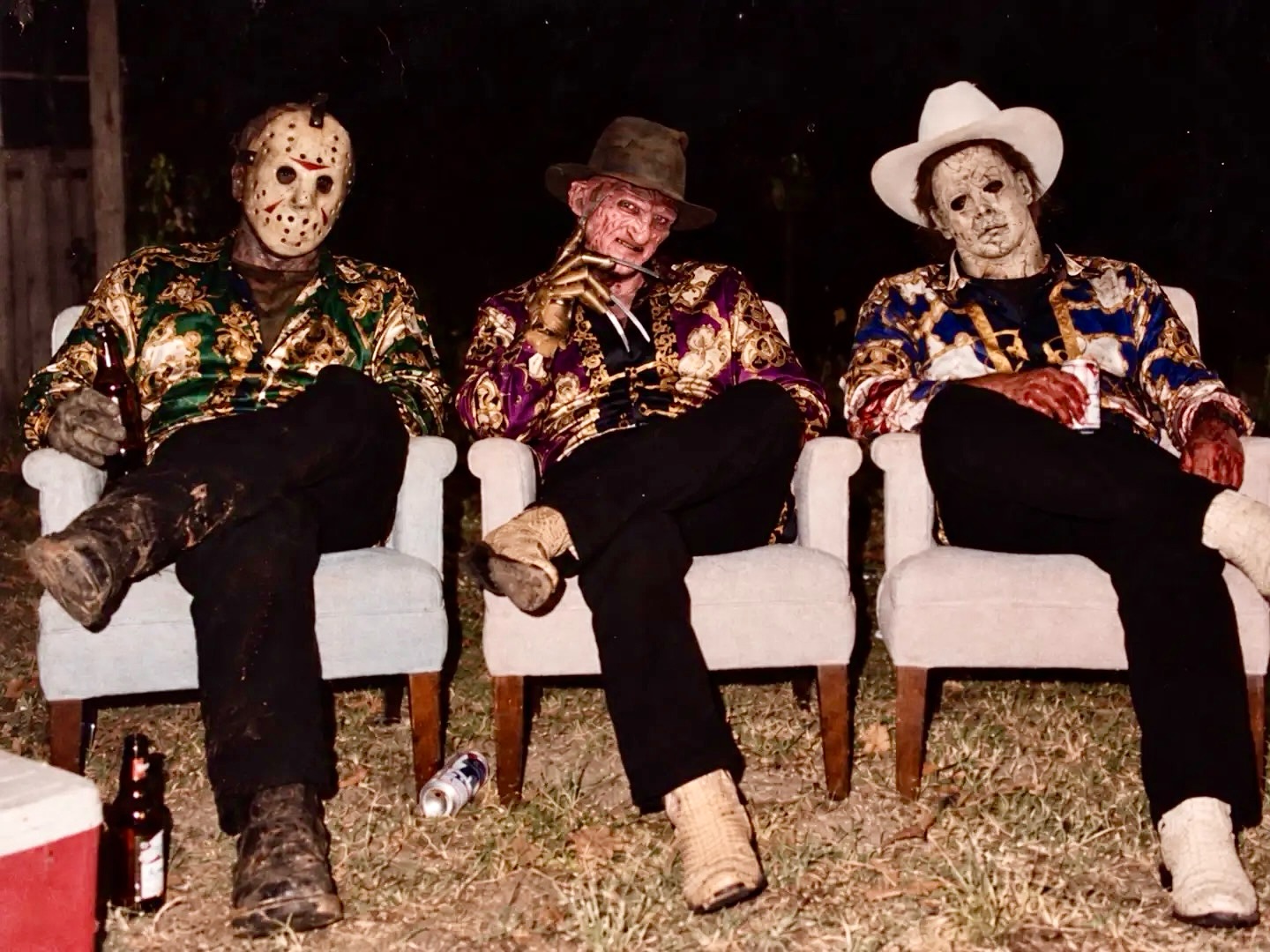
Halloween And Dark Visual Culture In 2026
This season, macabre art is also on view in galleries. In Los Angeles, Eastern Projects Gallery is hosting ‘MACABRE’ from October 3 to November 7, 2026. Curated by artist Albert Reyes, the group exhibition brings together artists working across different mediums, with a haunted-house installation at its centre.
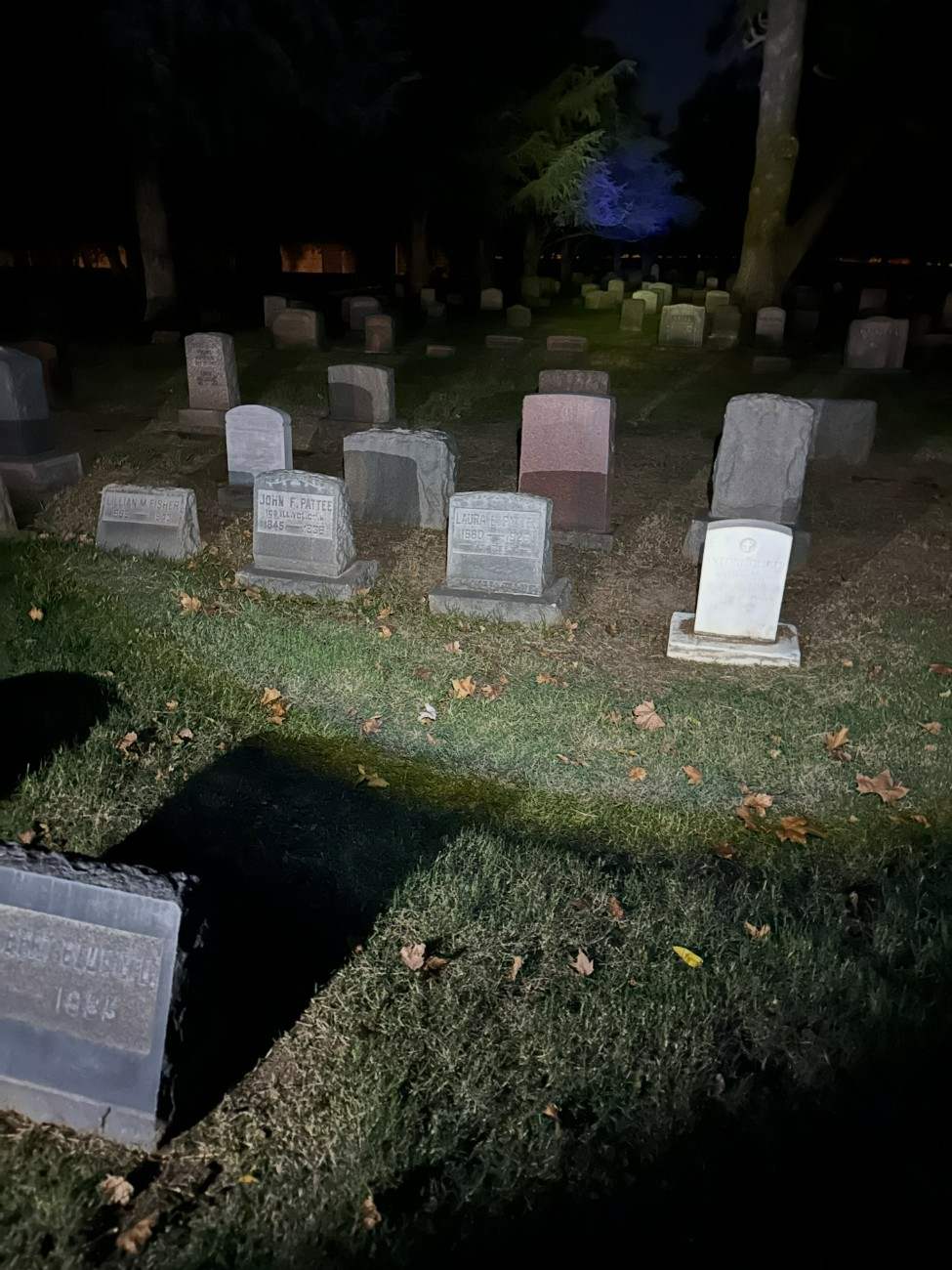
The installation draws on Reyes’ long-running tradition of transforming his backyard into an elaborate Halloween environment.
Also Read: From Gothic Revival To Queen Anne: How Victorian Architecture Continues To Shape Modern Design
Dark visual culture endures because it gives form to anxieties that are otherwise difficult to name. Whether it appears in a medieval gargoyle, a Goya mural or a diamond-encrusted skull, the macabre reminds us that beauty and terror have long shared the same canvas.