

In Kerala, Onam does not begin with the feast. It begins ten days earlier, with a single flower.
Onam unfolds over ten days, each building toward the feast. On Atham, the first day, households lay the first layer of the Pookalam, adding colour and complexity through Chithira and Chodhi, when families also shop for Onakkodi, new clothes, and gifts. By the fourth day, considered especially auspicious, markets are busy as households begin gathering ingredients for the Onasadya to come.
The final days shift focus outward and then inward: Anizham brings the Vallamkali snake boat races on the Pamba River, Thriketa and Moolam bring family visits, dance performances and last-minute shopping, and Pooradam sees a small clay pyramid, Onathappan or Thrikkakara Appan, placed at the centre of the Pookalam to represent Mahabali and Vamana. Uthradam, the eve of the festival, is the busiest day for fresh produce, before Thiruvonam, the tenth and principal day, when the ten days culminate in the Onam Sadhya, Kerala’s grand vegetarian feast, served on a banana leaf as a celebration of abundance, hospitality and togetherness.
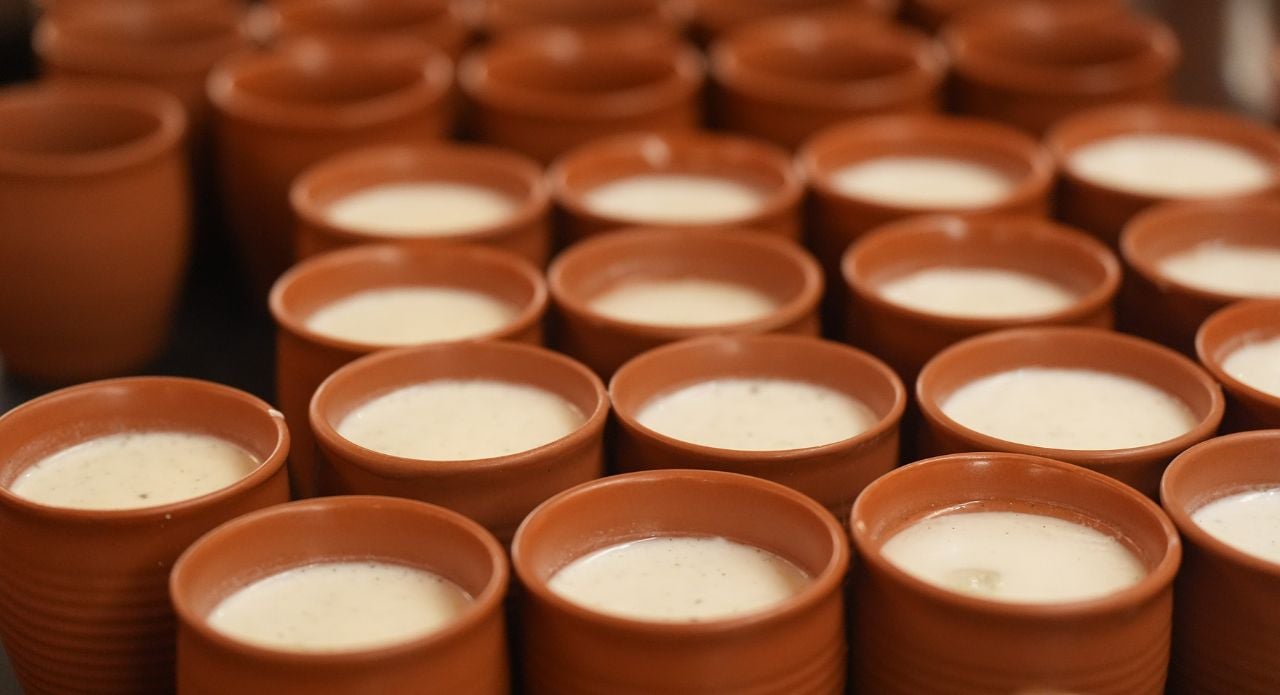
A Feast Rooted In Tradition
The word “Sadhya” means feast or banquet in Malayalam language. While its exact origins cannot be traced to a single historical moment, the tradition has evolved as part of Kerala’s wider food culture, with recipes, serving customs and techniques passed through generations.
Onam gives the feast its most celebrated setting, connecting the meal to the festival’s enduring association with prosperity, goodwill and the legendary reign of King Mahabali. In the traditional story, Mahabali, the beloved asura king, was sent to the netherworld by Vamana, an avatar of Vishnu, but was granted permission to return annually to visit the people he once ruled, a homecoming that Onam is believed to mark.
What distinguishes the traditional Onam Sadhya is its carefully orchestrated variety. Depending on the household, community or occasion, the spread can contain anywhere from a dozen preparations to more than 25. Parippu with ghee, sambar, avial, olan, thoran, erissery, kalan, pachadi, kichadi and rasam form part of the savoury repertoire, while banana chips, sharkara varatti, pickles and pappadam provide contrasting textures. Payasam, sometimes served in more than one variety, brings the feast to its sweet conclusion.
The Leaf Tells Its Story
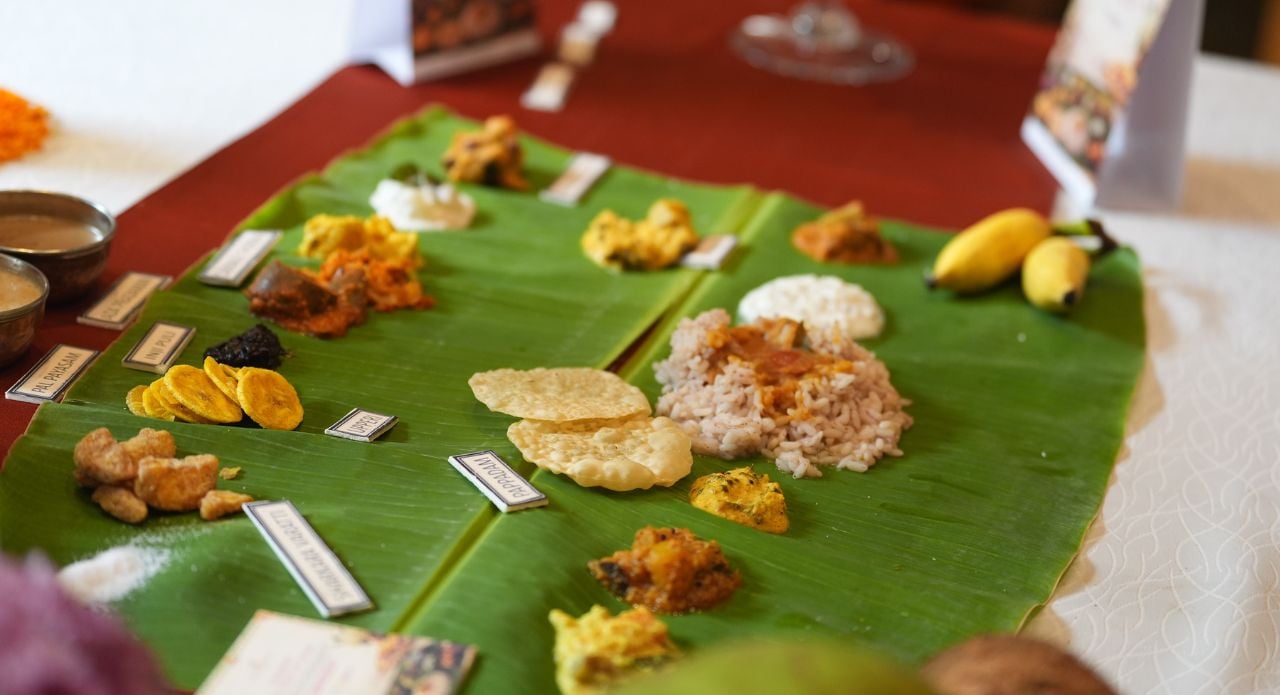
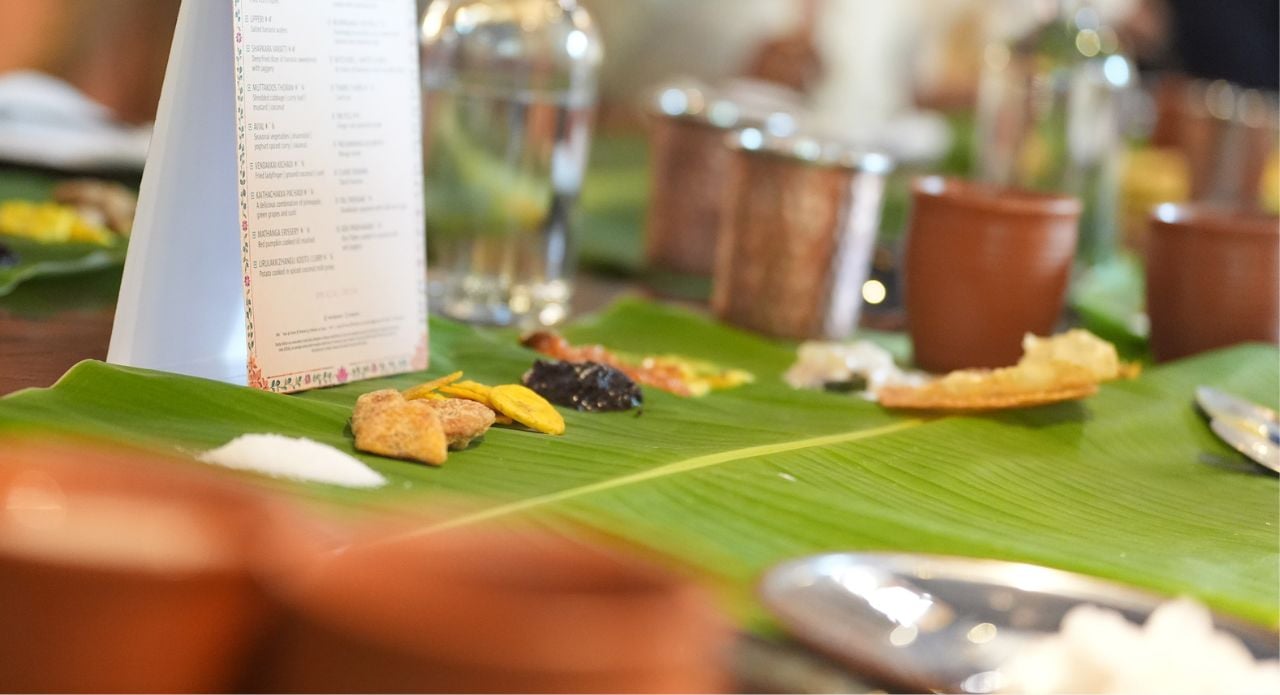
The banana leaf is not simply an attractive way to serve the food. Its placement and the order of the dishes form part of the ritual. Traditionally, the tapered end faces the diner’s left, while rice occupies the lower section of the leaf and accompaniments are arranged around it. The sequence allows the meal to unfold gradually, with different flavours and textures complementing one another.
The Onam Sadhya significance, however, extends well beyond its elaborate menu. It is designed to be eaten together, often with family, friends, neighbours or an entire community seated side by side.
Also Read: Nayanthara Makes a Case for Understated Glamour With Her Onam Look
Everyone receives the same spread, reinforcing the sense of shared celebration at the heart of Onam. For Malayalis living away from Kerala, that familiar combination of coconut, curry leaves, jaggery, vegetables and rice can also evoke the memory of home.
That is what gives the Kerala Onam Sadhya its lasting appeal. It is not merely a grand vegetarian feast measured by the number of dishes on a leaf, but a living South Indian culinary tradition in which food carries memory, ritual and community from one generation to the next.
Inside The Sadhya: A Visit To Taj Surajkund Resort & Spa
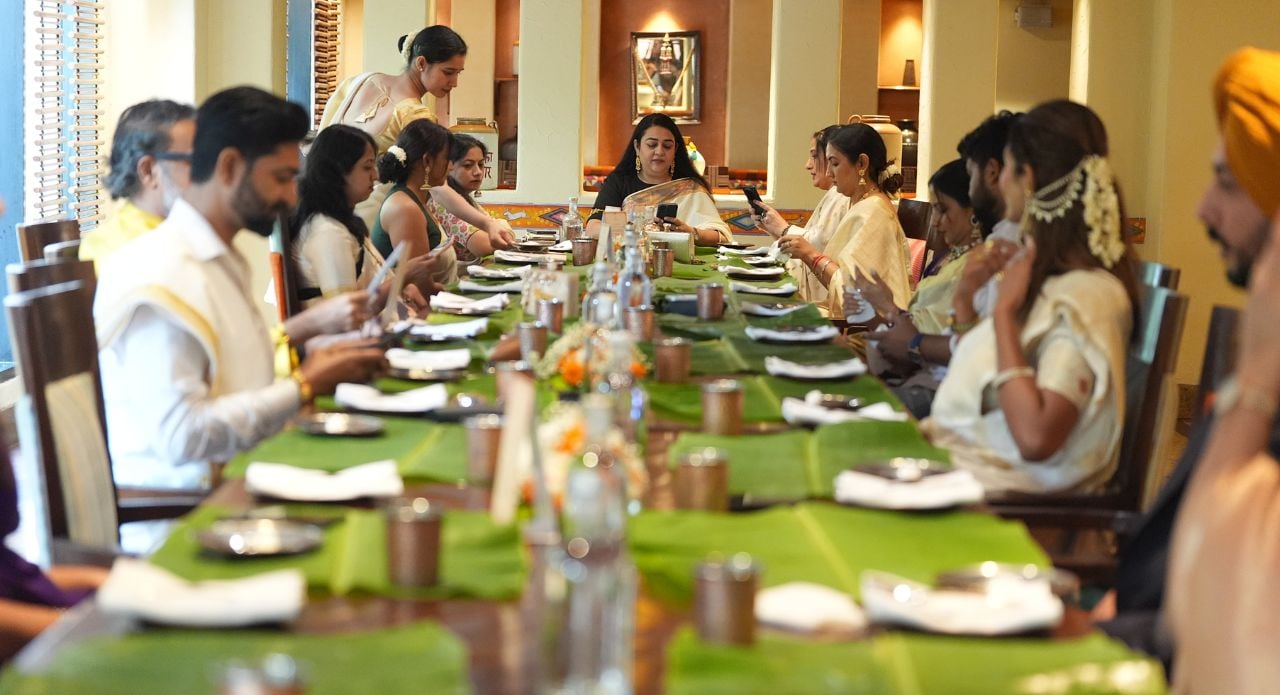
To understand why the Sadhya continues to hold its place in Kerala’s calendar, there is perhaps no better exercise than sitting down to one. Taj Surajkund Resort & Spa, located on Shooting Range Road in Surajkund, Faridabad, on the fringes of Delhi-NCR, brought Onam to the capital region a day ahead of Thiruvonam.
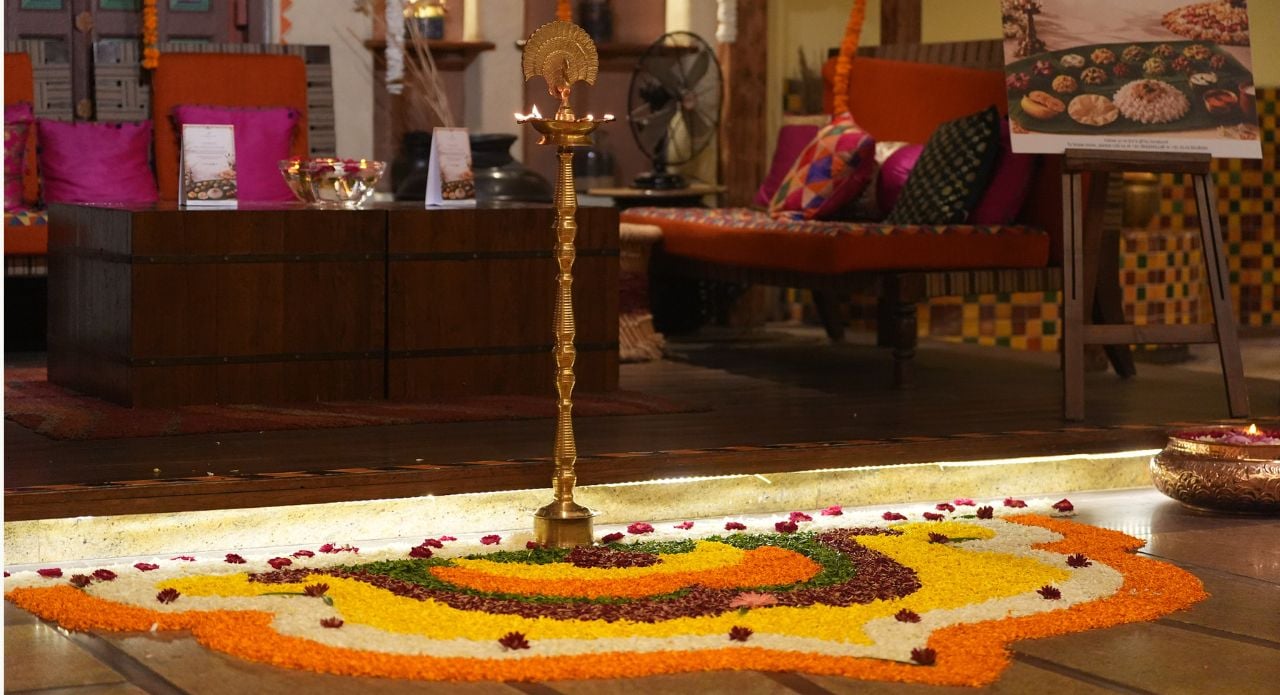
The welcome set the tone for what followed. At the entrance, hospitality staff greeted guests by placing a tulsi mala around the neck, followed by a chandan tilak applied to the forehead. Inside, the path to Paranda, the resort’s restaurant, was lined with a Pookalam, the intricate floral design that marks the festival in Kerala households. Staff and guests gathered around it before the meal began, turning the walk to the table into part of the celebration itself.
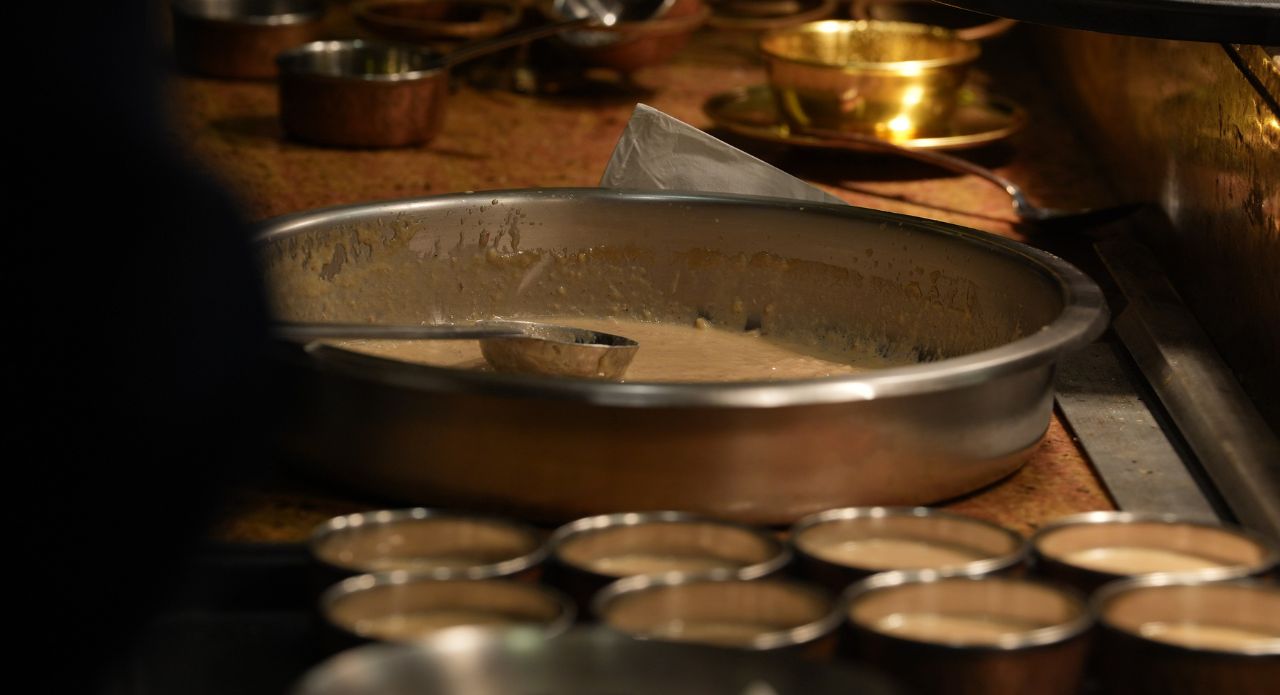
Executive Chef Anuj Mathur welcomed the guests personally. Through a glass partition separating an open kitchen at one corner of the room, the various elements of the Sadhya could be seen simmering away in a row of vessels, offering a preview of the meal to come. At the table, a fresh banana leaf had already been laid out, ready to be filled.
The meal opened not with rice but with two glasses: a rasam, the tomato and pepper broth, and a sambharam, a cooling, spiced buttermilk. Salt and sharkara varatti, the jaggery-coated banana chips, arrived next, followed by pappadam and upperi, the crisp salted banana wafers that add crunch to the meal.
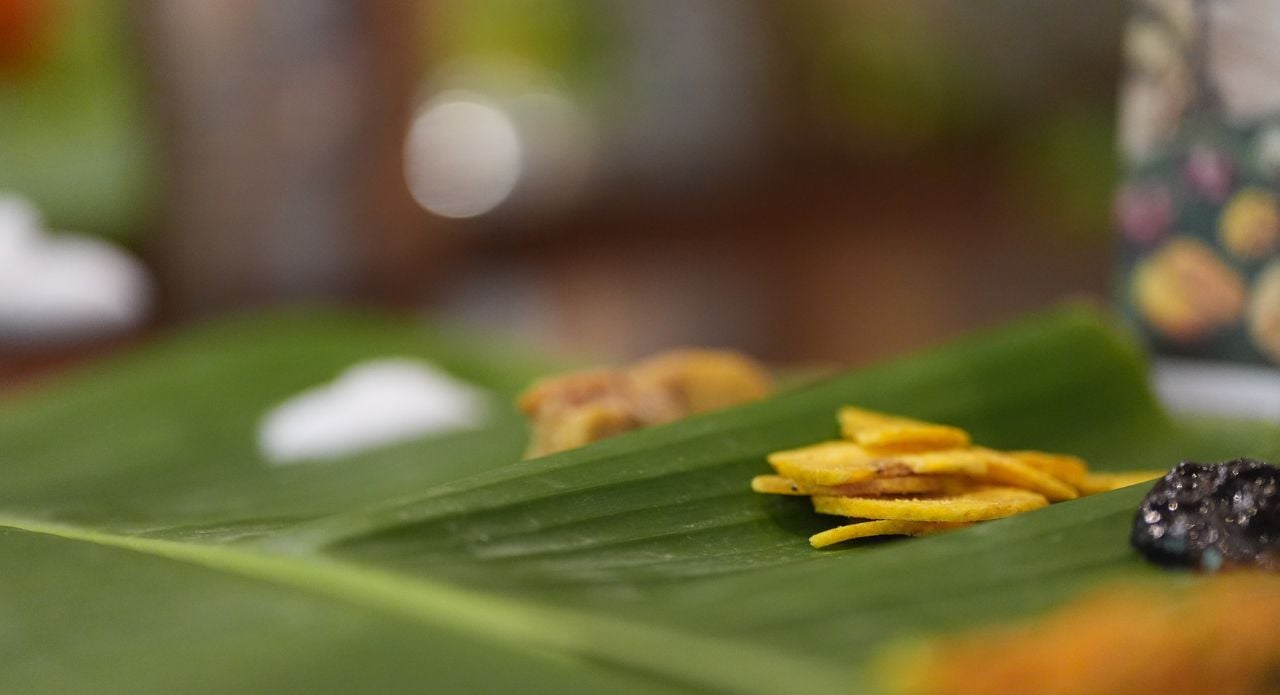
The pickles came in quick succession: inji puli, a tangy ginger and tamarind preparation, and panchamanga achar, a mango pickle that brought a sharper note to the leaf. Then came the curries that form the heart of the Sadhya. There was olan, a light stew of white pumpkin and lobiya; muttakoos thoran, shredded cabbage tempered with curry leaves, mustard seeds and coconut; and vendakkai kichadi, made with fried ladyfinger, ground coconut and curd. Kaithachakka pachadi followed, a delicious combination of pineapple, green grapes and curd. Mathanga erissery, red pumpkin cooked down until mashed and earthy, sat alongside urulakizhangu kootu curry, potato simmered in a spiced coconut milk gravy and kalan, raw banana in a curd-based gravy with its distinctive tang.
Also Read: How Food, Coffee and Zero-Proof Drinks Are Shaping the Modern Café
Sambar arrived in its familiar form, the lentil and vegetable curry given depth by tamarind, while muringakka theeyal, a drumstick curry cooked with roasted coconut and tamarind pulp, brought a deeper, toasted flavour to the leaf. The meal moved toward its close with a choice of rice: thairu choru, curd rice, for a cooling finish, or matta choru, Kerala’s red rice, served with a spoon of ghee. To end, there was payasam in two forms, a milk-based pal payasam and an ada pradhaman made with jaggery and rice flakes, both arriving as the sweet note the Sadhya is traditionally built toward.
Eaten in sequence, on a leaf that itself carries meaning, the meal at Paranda was a reminder of why the Onam Sadhya endures well beyond Kerala’s borders: it is less a menu than an experience, one designed to be shared.