

Every novelist, if pressed long enough over a good claret, will concede that a house is simply another kind of manuscript, composed not in ink but in brick, stone and considerable expenditure, revised over decades rather than drafts. Jeffrey Archer, a man who sold more than 275 million books across 47 languages, served in both the House of Commons and the House of Lords, and cultivated along the way a reputation for theatrical hospitality that borders on the legendary, applied precisely this novelist’s instinct to the business of real estate. He did not merely acquire three houses, in the manner of the merely wealthy; he cast them, each assigned a distinct role in the unfolding narrative of his own extraordinary life, with the same care he might lavish upon a protagonist, a setting, or a plot twist held in reserve for the final chapter. One stood as a gallery and a stage, suspended above the Thames with Westminster for a backdrop. Another carried the quiet weight of inherited literary lineage, its gardens shared, however briefly, with a poet long since passed into legend. A third existed purely as sanctuary, built for the solitary, unglamorous labour that no amount of champagne or applause could substitute. The world lost Archer on 5 October 2026, at his London home, aged 86, just a day before the release of what he had called his final novel, a loss made all the more poignant by how fully he lived, and built, right up to the very end. To tour these three residences, even from a distance, is to encounter a man who always understood, with the precision of a born storyteller, that every great tale requires the right setting, and who, unlike the many characters he conjured across his career, had the singular privilege of choosing his own.

The London Penthouse
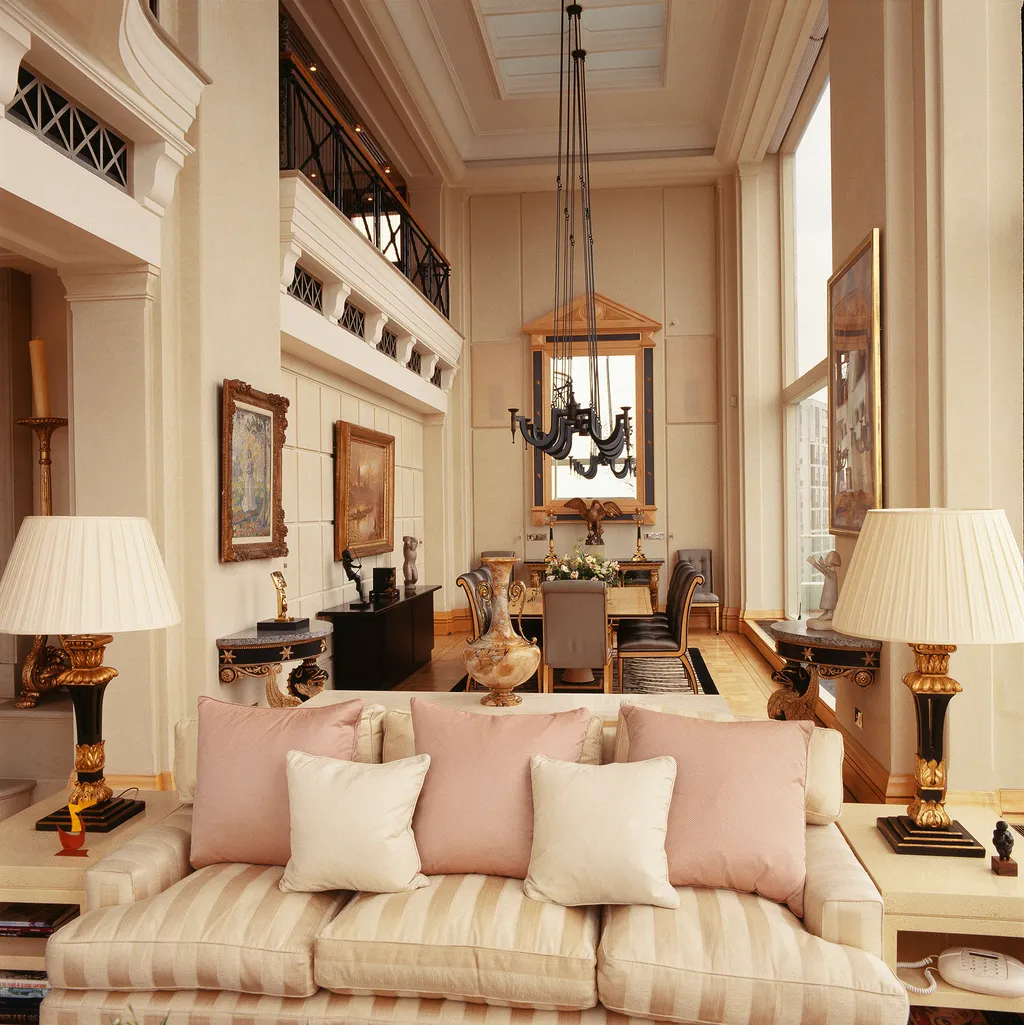
Perched above the River Thames on Albert Embankment, with the Palace of Westminster visible across the water as though placed there expressly for dramatic effect, Archer’s London penthouse is less an apartment than an architectural soliloquy. Formed by the ambitious combination of the penthouse proper with the floor beneath it, the residence rises to a positively cathedral-like twenty-foot ceiling, wrapped in glass that admits the city’s light with unapologetic generosity. Within its galleried interiors one finds a private gymnasium, a bathroom lined in silver leaf and shaped as a barrel vault, staff quarters befitting a household of genuine scale, and a sweeping staircase that invites comparison, quite deliberately one suspects, to the choreographed grandeur of a Busby Berkeley musical number. It is here that Archer has long hosted his famously eclectic gatherings, where Krug champagne is poured with the same unpretentious enthusiasm as shepherd’s pie is served, a combination that tells you rather a lot about the host’s particular genius for blending high culture with unabashed comfort. The walls, meanwhile, do not merely decorate; they educate, housing a museum-quality collection that includes works by Picasso, Matisse, Monet and Lowry, transforming dinner conversation into something resembling a private gallery tour.
Also Read: Inside Lenny Kravitz’s Paris Home: A Portrait Of His Life Through Design
The Old Vicarage
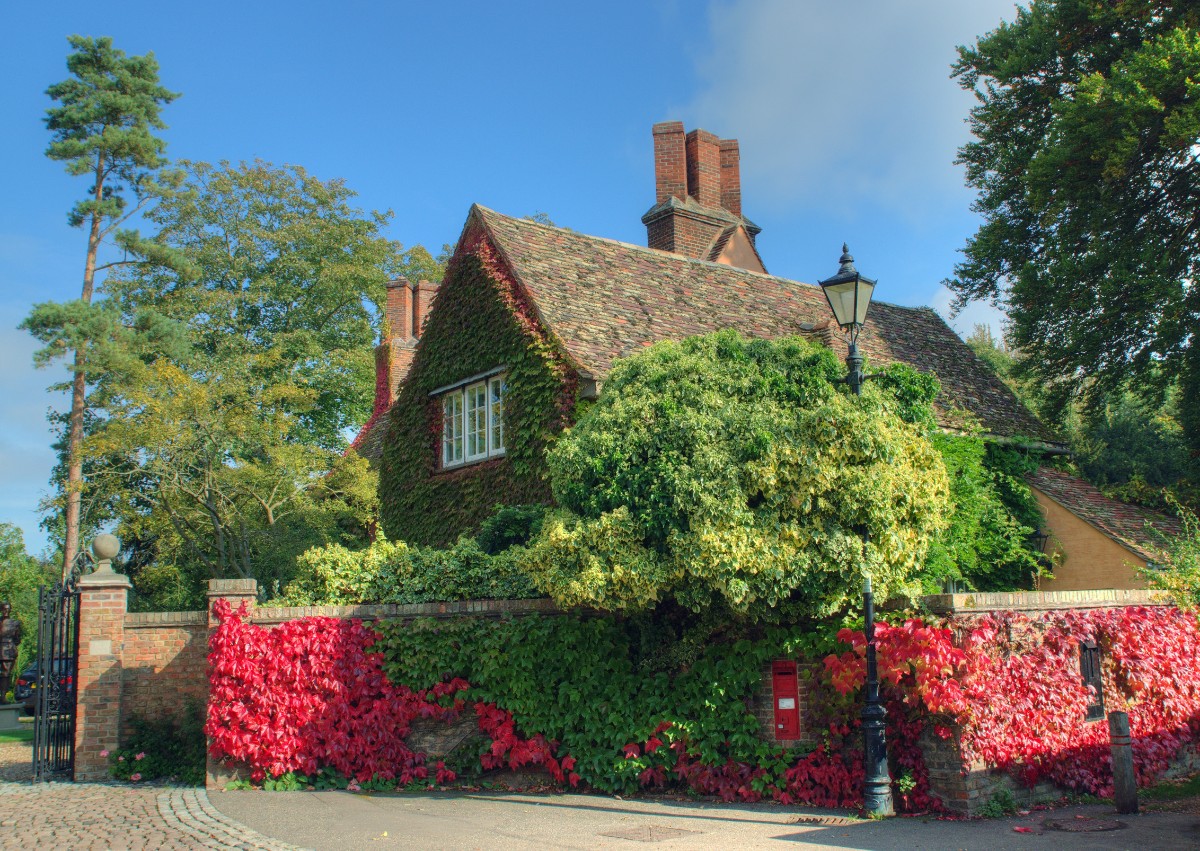
Some sixty miles north, in the quietly literary village of Grantchester, just outside Cambridge, sits The Old Vicarage, a seventeenth-century stone manor that Archer acquired in 1979 and has occupied ever since with evident reverence for its provenance. The house carries considerable literary weight of its own, having once been home to the poet Rupert Brooke, whose spectral presence Archer has chosen to honour rather than erase. A bronze statue of Brooke stands on the grounds, unveiled by none other than Margaret Thatcher, a detail that neatly bridges Archer’s twin devotions to literature and politics. The former Prime Minister’s connection to the house runs deeper still, immortalised in a top-floor bedroom that bears her name. The property’s 1870s follies, tucked into its grounds, lend the whole estate a faintly whimsical, almost Victorian storybook quality, entirely fitting for a house that has sheltered poets, politicians and a prolific storyteller all under one historic roof.
Also Read: Taylor Swift’s Luxury Homes: Inside The Property Of A 33-Time VMA Winner
The Majorca Residence
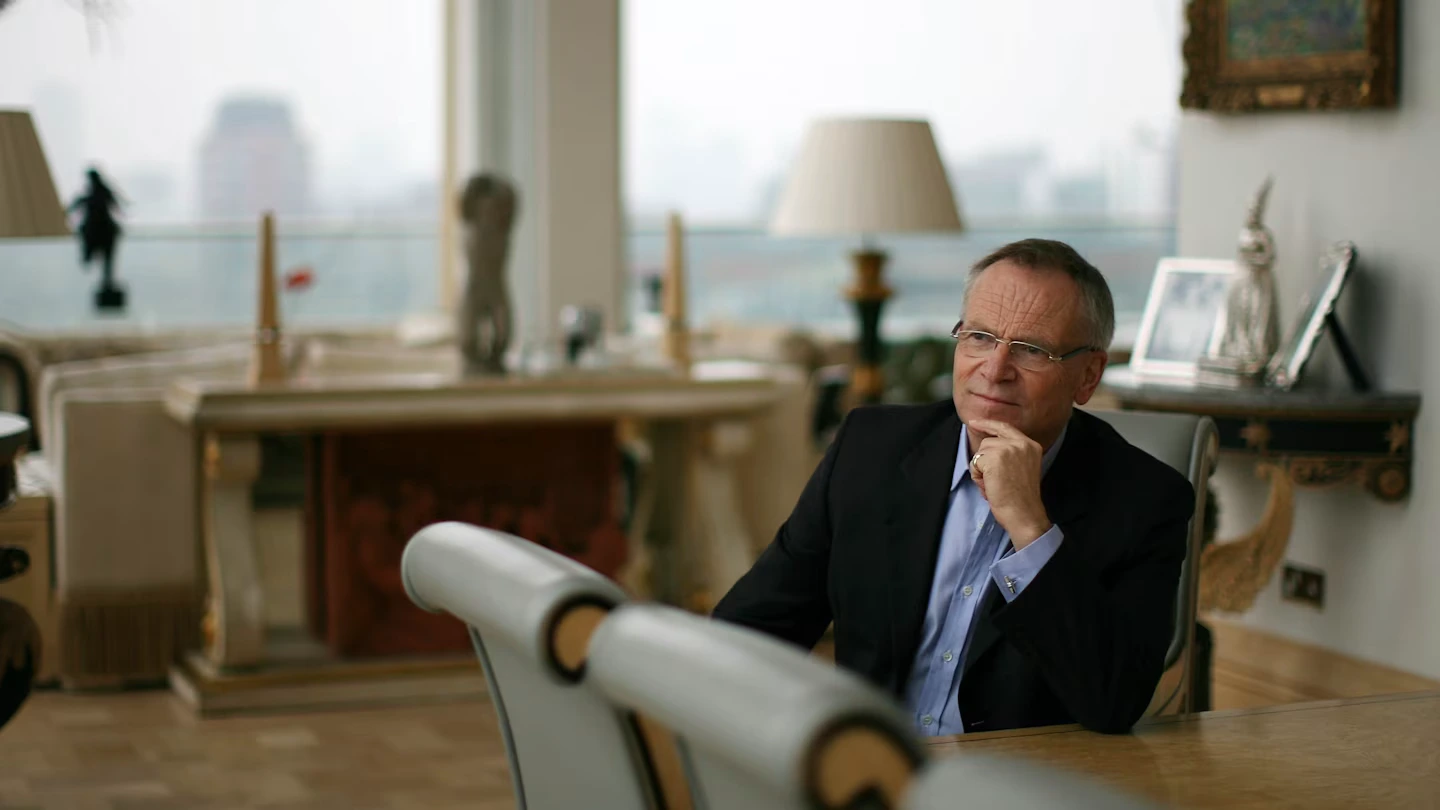
Where London offers spectacle and Grantchester offers heritage, Archer’s third residence, perched on a clifftop above the Mediterranean in Majorca, offers something altogether more elemental: silence. Constructed from honey-coloured local stone in a resolutely modern, minimalist idiom, the house is anchored by an L-shaped infinity pool that appears, from certain angles, to simply dissolve into the sea below. Yet the property’s true masterstroke lies not in its pool but in its separate, glass-fronted cabana, a 540-square-foot writing room deliberately isolated from the main house, conceived for the singular purpose of uninterrupted creative focus during the winter months. It is a space that speaks to the fundamental paradox at the heart of Archer’s life: a man who has spent decades courting crowds, headlines and high society, yet who understood, with the clarity only a working novelist possesses, that the books themselves demand solitude, discipline and a room with nothing to distract from the page.
Taken together, these three residences form something closer to a triptych than a property portfolio: London for performance, Cambridgeshire for lineage, and Majorca for the quiet, solitary labour that made the performance and the lineage possible in the first place.