


There are billionaires who buy islands, billionaires who collect superyachts and billionaires who apparently believe that a house is not a house unless it requires its own postcode. Then there is Tim Cook. The man who spent 15 years running Apple, helped turn it from a roughly $350 billion company into a $4.5 trillion behemoth and accumulated a fortune estimated by Forbes at around $3 billion does not exactly behave like someone who has been trying to spend every penny of it. On September 1, 2026, Cook officially stepped down as Apple CEO, handing the job to John Ternus and moving into the role of executive chairman. So this is not quite retirement, more a change of chair, office and probably the number of people asking him whether the next iPhone will have a folding screen.
The Fortune
Cook’s wealth is a rather good demonstration of how modern corporate fortunes are actually built. He did not found Apple and does not own a giant chunk of it. Instead, much of his fortune has come from decades of compensation, particularly stock awards. Forbes puts his current net worth at about $3 billion and says he owns more than three million Apple shares, while having sold more than $1 billion worth of shares over the years.
His annual pay has also been substantial. Apple’s 2025 filing shows total compensation of approximately $74.3 million, comprising a $3 million salary, more than $57.5 million in stock awards and $12 million in non equity incentive compensation. And even after leaving the CEO’s chair, Cook is hardly being sent home with a company mug and a thank you card. His new executive chairman package is reported at around $47 million, including a $2 million salary and $45 million in restricted stock.
The House That Does Not Scream Billionaire
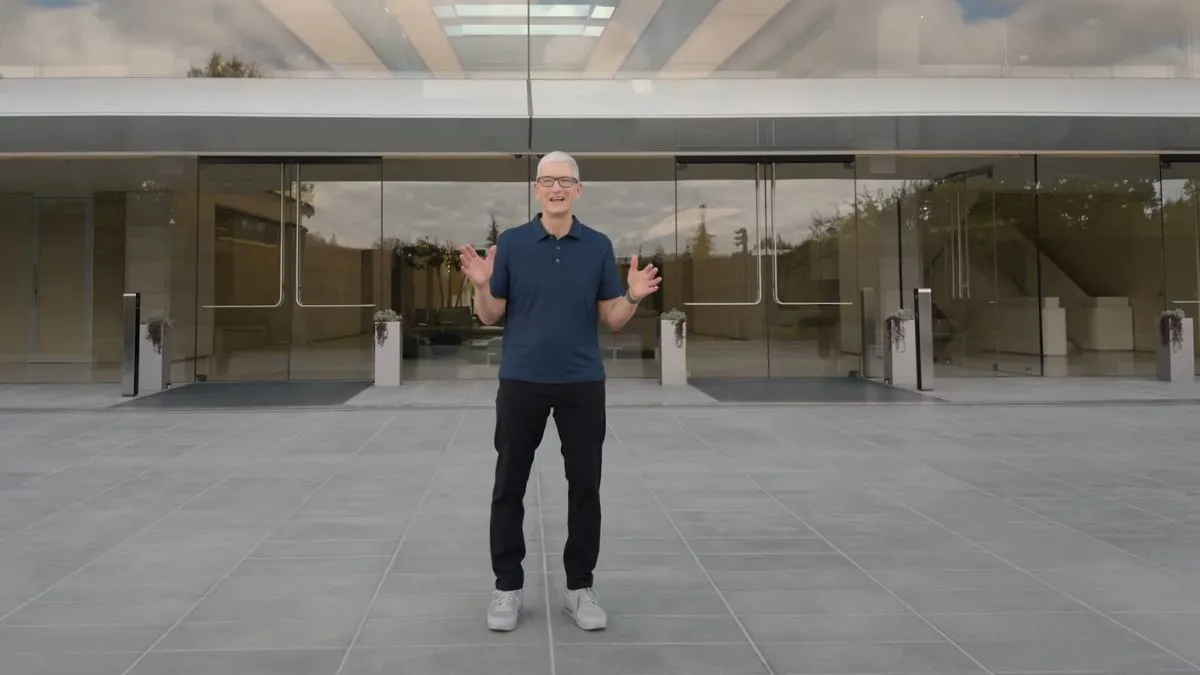
This is where Cook becomes rather unusual. His best known residence is in Palo Alto, California, and its story is almost hilariously restrained when compared with the homes of many technology billionaires. Fortune reported that Cook purchased the property in 2010 for about $1.9 million and described it as a modest home for someone in his position. Earlier reporting described the residence as roughly 2,400 square feet with four bedrooms. In Silicon Valley, where houses can cost more than small countries, that is not exactly the sort of property that causes estate agents to faint with excitement.
Cook has previously explained his preference for modest surroundings by saying that money was not his motivator and that living simply reminded him where he came from. That attitude has remained one of the more distinctive features of his public image. There have also been reports of Cook owning a desert property in La Quinta, California, reportedly acquired for around $9 million. However, details surrounding that property are less consistently documented than his Palo Alto home, so it is better viewed as part of the reported picture of his real estate holdings rather than an extravagant confirmed portfolio.
Also Read: The Porsche GT3 That Loves The Alps
The Apple Lifestyle

Of course, calling Cook’s life modest requires a little context. This is still the man who has accumulated billions of dollars and spent 15 years running one of the most valuable companies ever created. But his lifestyle has remained unusually disciplined. Cook is famously associated with early mornings, exercise and a highly structured routine. His approach to luxury seems to be less about excess and more about efficiency, privacy and control. That philosophy fits rather neatly with the Apple he leaves behind.
Under Cook, Apple expanded far beyond the iPhone, growing businesses around Apple Watch, AirPods, iCloud, Apple Pay, Apple Music and Apple TV. Apple says its active installed base now exceeds 2.5 billion devices and its Services business has grown into a more than $100 billion operation. He was never Steve Jobs. That was probably the point.
Jobs was the theatrical product visionary. Cook was the man who understood how to make the machine run, how to make the supply chain work and how to turn Apple’s enormous popularity into an even larger global business. During his tenure, Apple’s market value increased by more than tenfold. Now, as Cook moves upstairs, his personal fortune and lifestyle offer an interesting final footnote to his Apple story. He could have built a mansion. He could have filled a garage with supercars. He could have turned his billions into a travelling circus of conspicuous consumption. Instead, the most famous details of Tim Cook’s private life remain remarkably ordinary. Which, considering the man spent 15 years running a company that sells people increasingly expensive rectangles, is perhaps the most unexpected thing about him.