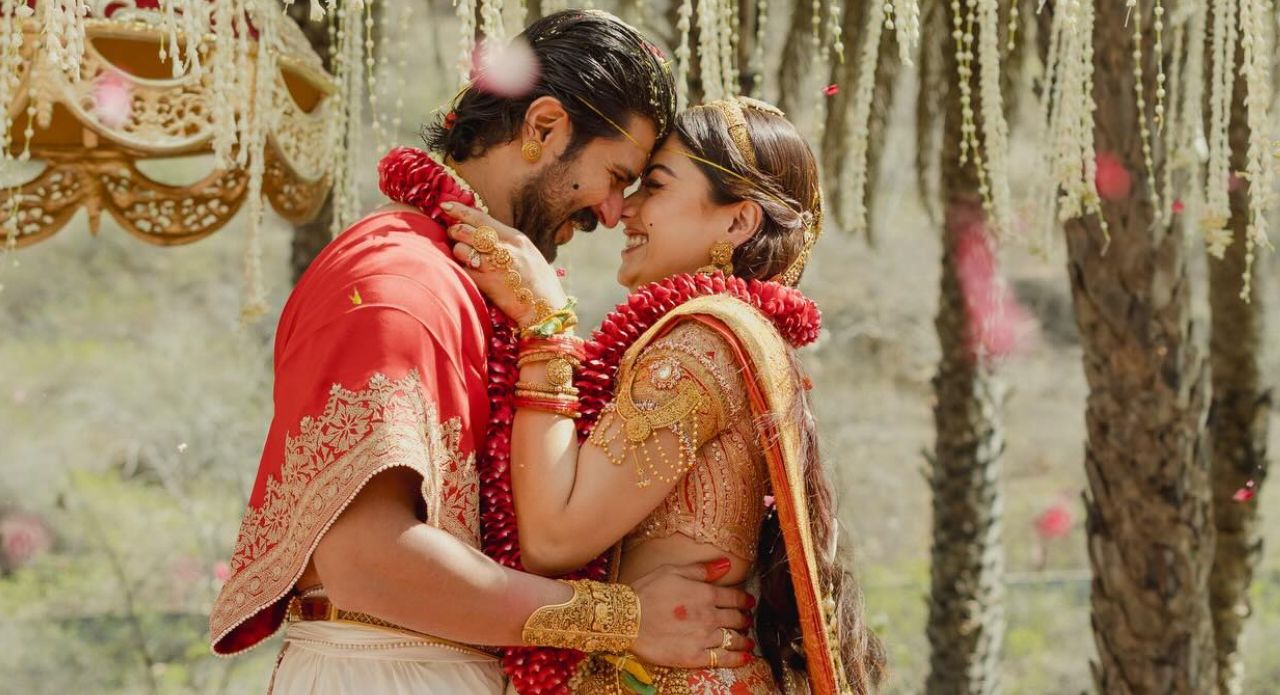


Was it four years ago, when Ranbir Kapoor and Alia Bhatt quietly redefined wedding aspirations by choosing an intimate ceremony at their Mumbai home, Vastu, that ultimately came to be described as “minimalist royalty”? Or did the shift take firmer root in the aftermath of COVID-19, when urban couples began to rethink scale, choosing instead smaller, more meaningful gatherings that privileged experience over spectacle? Having spent over three decades in the wedding industry, I have witnessed several evolutions. But this moment feels different.
The Rise of Considered Luxury
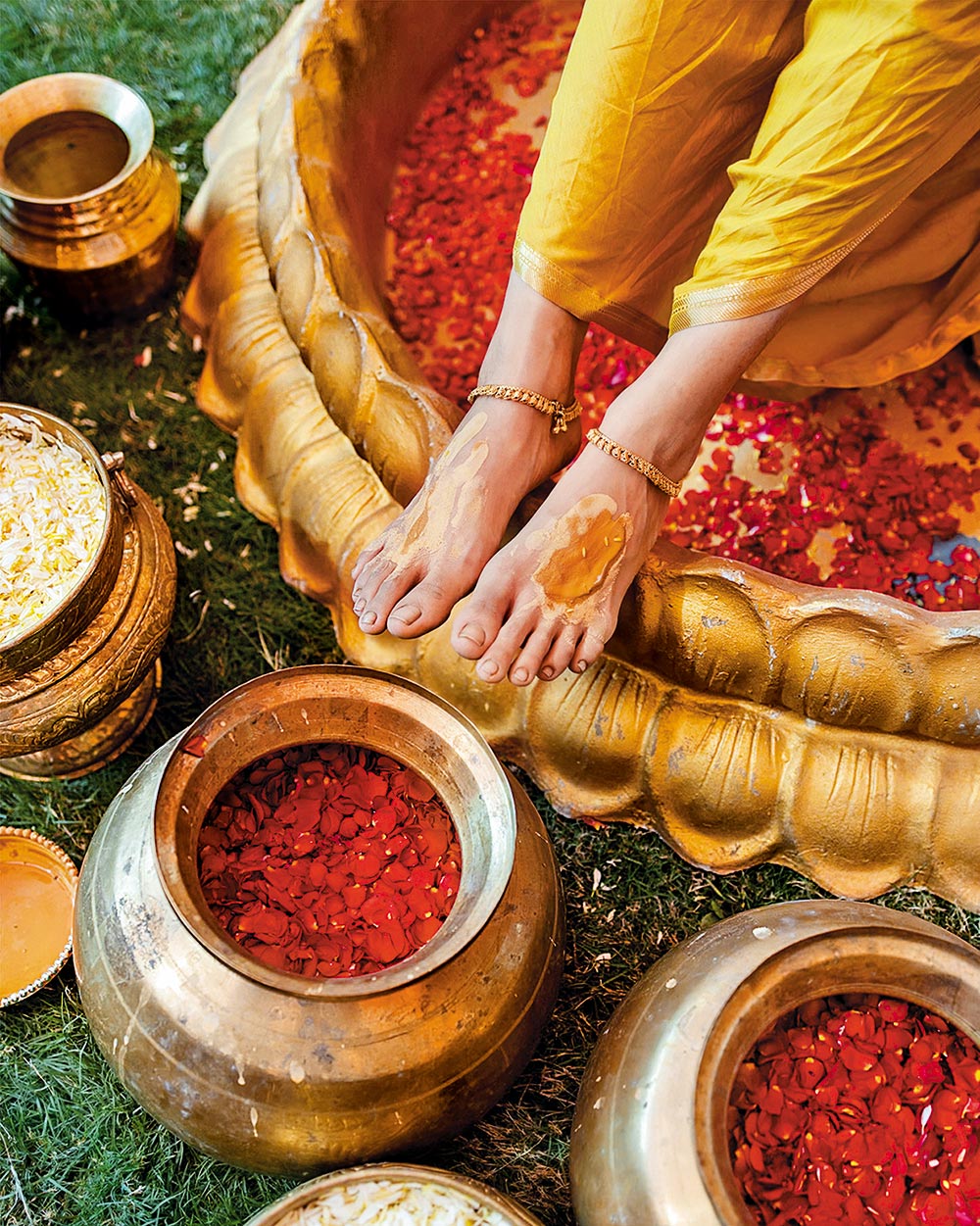
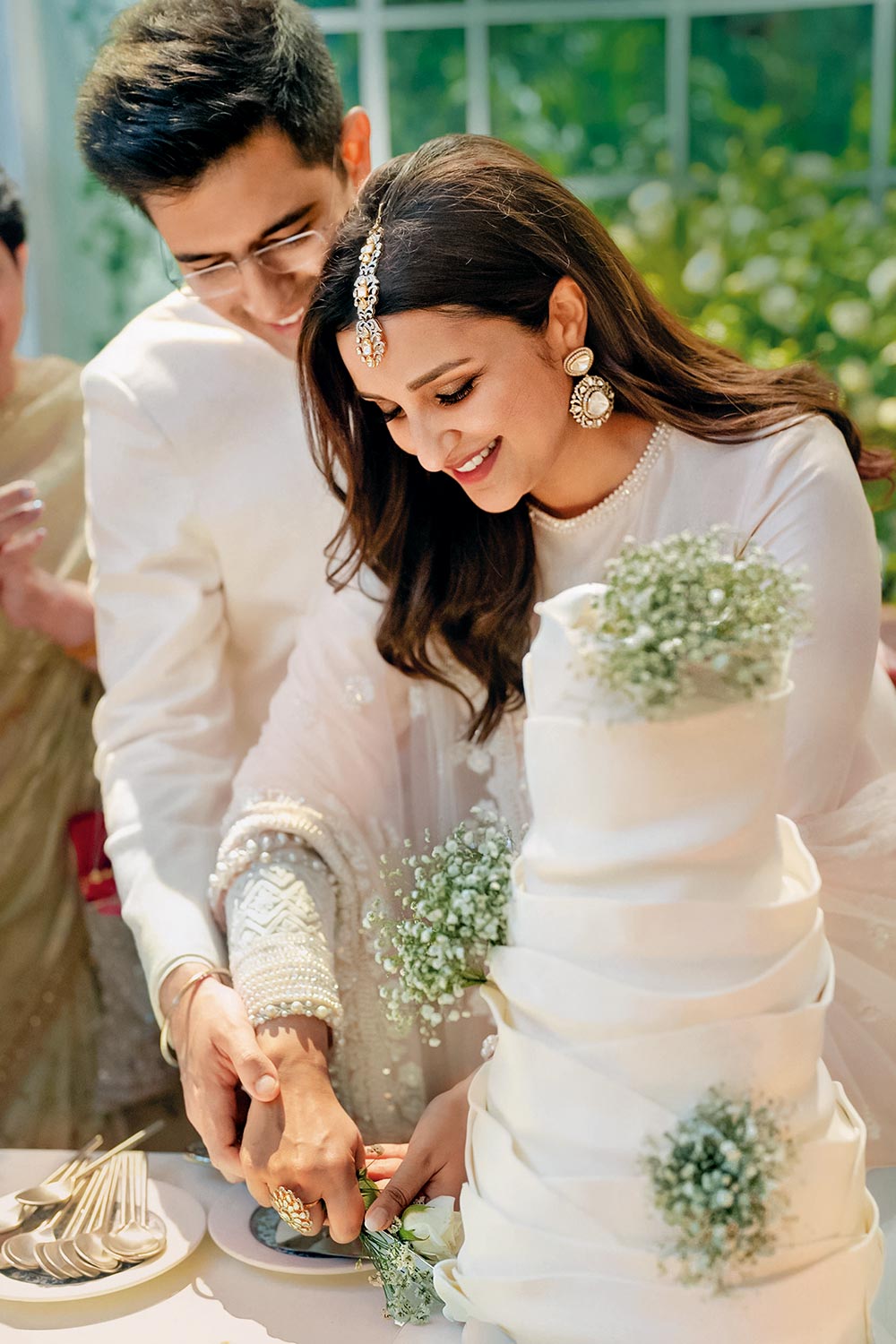
The intimate wedding, as it is emerging today, is defined by intention and not as limitation. Luxury, in this context, is no longer about scale but about thoughtfulness. Where fewer guests do not translate to less celebration, but rather to more meaningful moments. Where from the choice of venue, entertainment & cuisine to the texture of table linen, every small detail carries the weight of deliberate curation. Couples today are gravitating towards venues that feel personal and evocative: ancestral homes, boutique retreats, vineyards, forest lodges, or heritage properties that lend themselves to intimacy. The emphasis is on creating an immersive environment where each guest feels like a participant in a deeply personal narrative rather than a mere attendee.
Also Read: If Taylor Swift Chose India for Her Wedding, These Heritage Venues Would Top the List
As Tejveen Kaur, Founder & Creative Director of Tzires notes, “Intimate weddings featuring smaller guest lists & experiential focus have become the premier luxury trend. Couples are prioritizing curated details, unique venues and understated elegance. Weddings are increasingly held at unconventional personal or scenic spots like family homes, vineyards, palaces, or nature-inspired destinations. We recently did a wedding at Anand Kashi in Rishikesh, a property with just 25 en-suite villas. Couples are truly focusing on curated details that reflect their personal story. By reducing the guest count, the focus shifts to creating a high-end, immersive experience where every element—from table textures to menu—is uniquely intentional. Intimate weddings, to conclude, are truly an epitome of luxurious celebrations filled with warmth, elegance and exceptionally experiential.” This is a shift from visible luxury to experiential luxury, where what matters is not how much is seen, but how deeply it is felt.
The Enduring Power of the Big Fat Indian Wedding
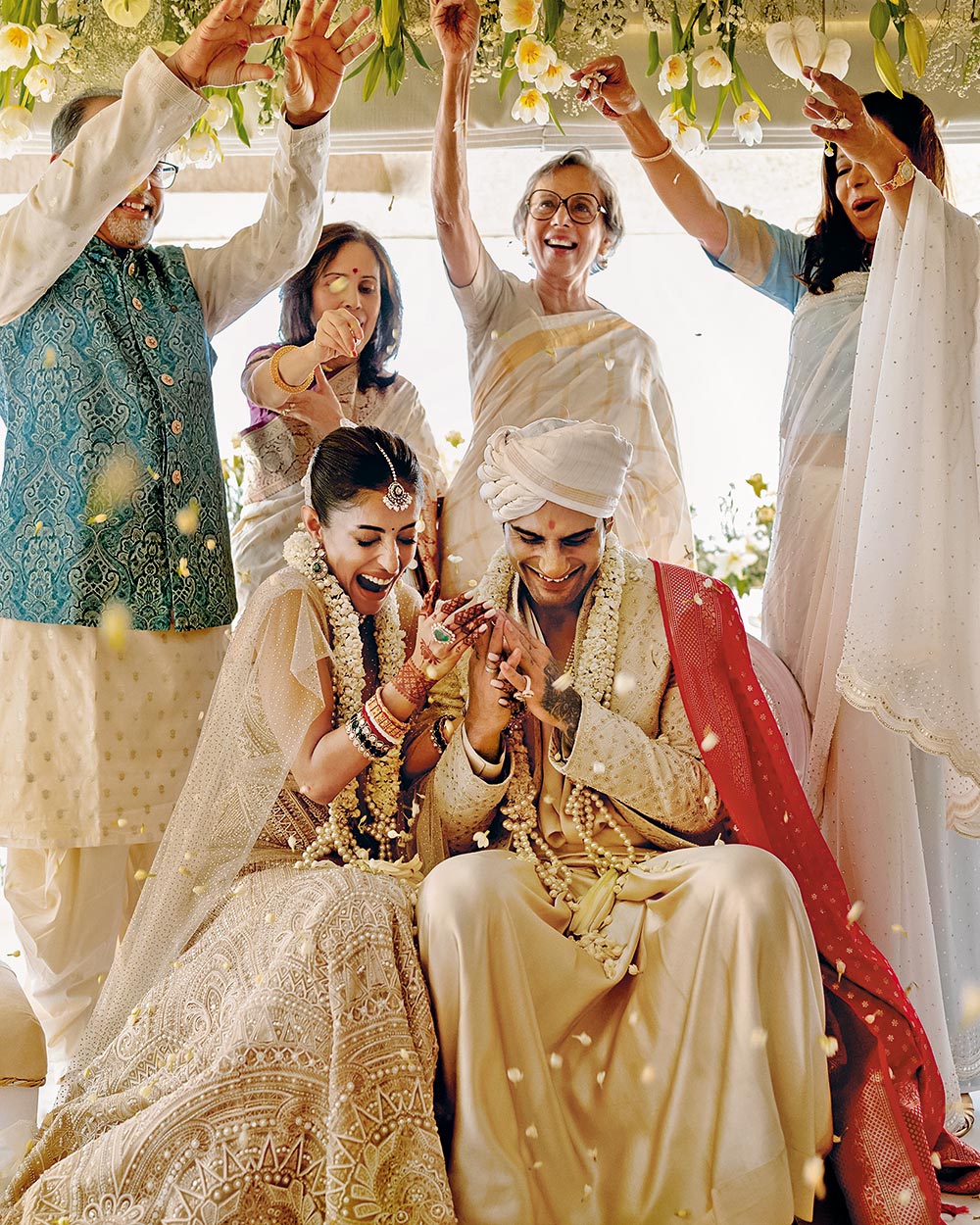
At the same time, the large-format Indian wedding continues to thrive alongside. India is not a monolith. Its social and economic diversity ensures that multiple wedding formats coexist, each reflecting a different set of values and expectations. As Parthip Thyagarajan, Co-founder & CEO of WeddingSutra, succinctly puts it: “So in India, the intimate desi wedding or the slim and smart wedding and the big fat wedding will coexist. For big business families, the big fat wedding is only getting bigger. Even the destination wedding guest list for some families has gone up from 400 to 600 and on rare occasions 800 and more.There are many Indias within India. So you have the professionals who may relate with the slim and smart wedding and the traditional business families wanting the big wedding guest list to get even bigger.” For many families, especially those rooted in traditional business communities, the wedding remains a public celebration. The big day becomes a marker of legacy, relationships and social standing. The guest list becomes a reflection of networks, history and identity.
Between Individual Choice and Collective Tradition
What is particularly interesting about the current moment is the negotiation between individual desire and collective expectation. Modern couples are more vocal than ever about what they want in terms of the aesthetic, the scale, the experience. Yet, in India, a wedding is rarely just about two people. It is, fundamentally, the coming together of two families. As Parthip Thyagarajan further observes: “In some cases, it’s the bride and groom or more often nowadays, it’s what the bride and groom want but let’s not forget in India, it’s the marriage of two families too…” This duality often results in hybrid formats of weddings that combine intimate ceremonies with larger celebratory functions. A small, meaningful phera ceremony may be followed by a grand reception. A destination wedding may host a tightly curated guest list for key rituals, while extending invitations to a wider circle for subsequent events. Rather than choosing one over the other, families are increasingly finding ways to integrate both.
Also Read: The Essence of Indian Weddings: Where Luxury Meets Legacy
Conversation Reflects the Shift
In a recent conversation with Shreya, a young PR professional and soon bride-to-be, what emerged was not just a personal preference, but a telling reflection of a broader generational mindset. “I am opting for a destination wedding,” she shared. “If I were to get married in Delhi, it would automatically become a very large gathering.
I wanted something smaller, more intimate.” Her reasoning was grounded in lived experience. “I come from a large family. I have seen big weddings all my life. And in Indian families, it is very difficult to cut down the guest list as everyone matters. Every maasa, every tau, every aunt and uncle.” What made her choice possible was context. “I have two older sisters. We have already had two big weddings in the family.
So, it was easier for me to convince everyone to try something different.” And yet, even here, “intimate” carried its own cultural definition. “For us, intimate is around 300 guests,” she said candidly. “It is not 50, but it is definitely more manageable than 800.” What her family eventually chose reflects a growing hybrid model: “We will have a smaller destination wedding for the main ceremonies. But for extended family and business circles, we might host a larger pre-wedding puja or a separate celebration later.” Her destination of choice, Udaipur feels almost symbolic of this balance: a setting that accommodates both intimacy and grandeur with equal ease.
Hospitality Industry Responds
India now boasts two distinct destination categories: boutique properties catering to intimate, exclusive weddings and expansive resorts equipped for large-scale celebrations. As Parthip Thyagarajan observes, “We do have a lot of resorts in India who are targeting the intimate wedding guest list, and there are many others who are made for the big Indian wedding. The next couple of years would see more luxury and four-star priced resorts targeting the intimate wedding.”
Designing Two Worlds
Wedding planning today demands a recalibrated approach. Large-format weddings focus on scale, managing complexity, and cohesion, while intimate weddings require precision, depth, and sensitivity. Smaller celebrations amplify emotional impact but allow no margin for error, transforming planners into storytellers. This shift isn’t a trend but a move toward authenticity and intentionality.