Top Austrian Architects Who Shaped Modern And Classical Architecture
From austere modernism to radical deconstructivism Austrian architects have continuously reimagined space form and philosophy shaping the built environment with intellectual rigour and artistic audacity
Austria, a nation often celebrated for its imperial grandeur and baroque splendour, has also served as an unlikely crucible for some of architecture’s most radical departures. Beneath the ornate facades of Vienna and beyond its storied avenues lies a lineage of architects who have persistently interrogated the very essence of form function and ornamentation. From the polemical austerity of early modernism to the explosive dynamism of deconstructivist expression, Austrian architects have not merely contributed to global discourse they have decisively shaped it.
At the forefront of this intellectual rebellion stands Adolf Loos, a man whose infamous repudiation of ornament was less an aesthetic preference and more a cultural manifesto. His seminal essay Ornament and Crime did not merely critique decorative excess it sought to liberate architecture from what he perceived as regressive embellishment. Buildings such as the Looshaus in Vienna exemplify his stark philosophy where unadorned surfaces speak with a quiet yet defiant eloquence. Loos did not design structures he crafted arguments in stone.
If Loos dismantled ornament, Hans Hollein reassembled architecture as an experiential medium. A polymath in the truest sense Hollein blurred the boundaries between architecture art and design. His assertion that “everything is architecture” expanded the discipline beyond buildings into a totalising cultural force. The Haas House in Vienna with its reflective surfaces engaging in a visual dialogue with the adjacent St Stephen’s Cathedral stands as a testament to his ability to juxtapose history with modernity without diminishing either.
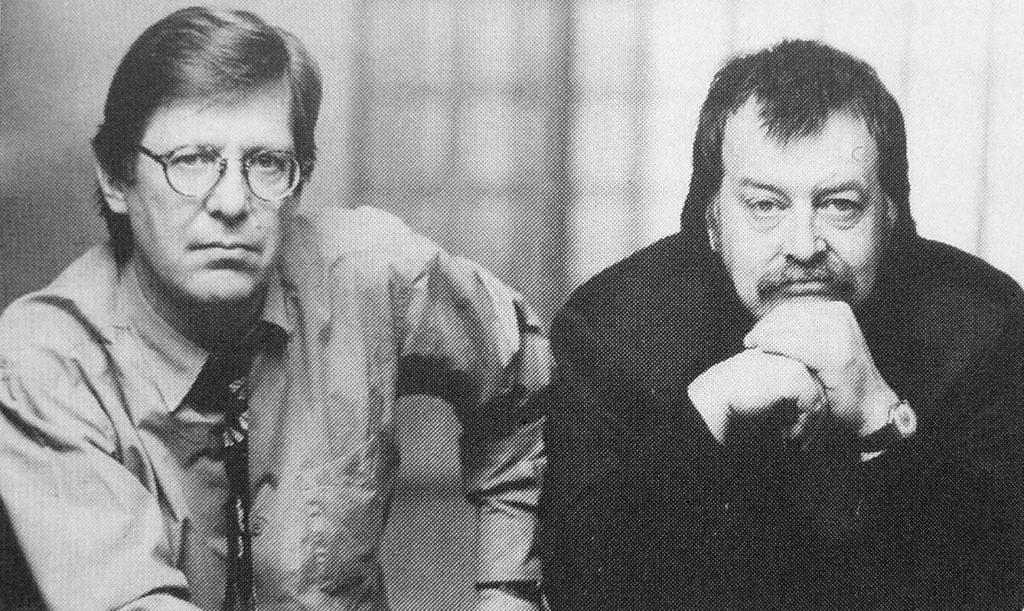
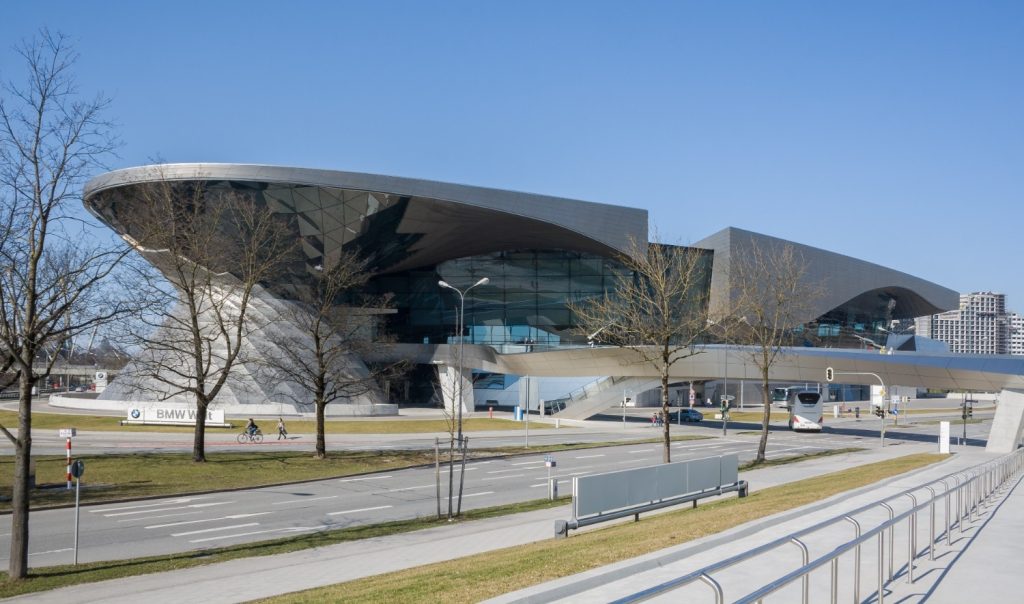
The late twentieth century witnessed an even more radical departure with the emergence of Coop Himmelb(l)au led by Wolf D. Prix, Helmut Swiczinsky, and Michael Holzer. Their work embodies a deliberate rejection of conventional geometry in favour of fragmentation and movement. Structures such as the BMW Welt in Munich appear almost airborne defying gravitational expectations while encapsulating a sense of controlled chaos. Here architecture becomes performance an unfolding narrative of steel and glass.
Also Read: Tropical Modernism Architecture: Origins, Design Principles, And Why It’s Trending Today
Bridging the continuum between tradition and innovation is Otto Wagner, whose influence on Viennese urbanism remains indelible. A key figure of the Vienna Secession Wagner championed modern materials and construction techniques while maintaining a refined aesthetic sensibility. His designs for the Vienna Stadtbahn and the Postal Savings Bank illustrate a harmonious marriage of utility and elegance signalling the transition from historicism to modernism.
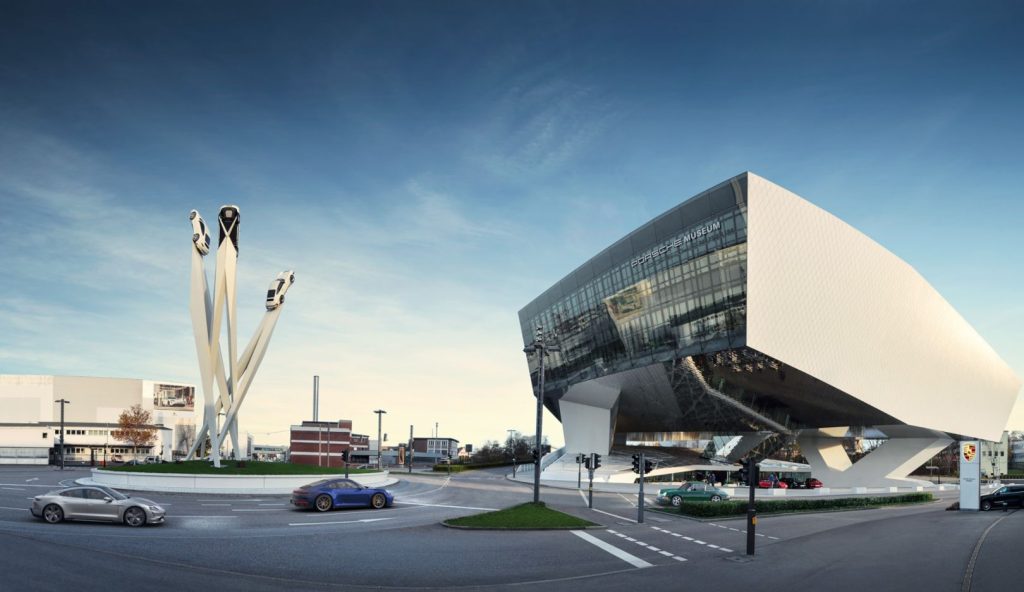
Equally compelling in the contemporary milieu is Delugan Meissl Associated Architects, a firm whose work encapsulates the kinetic energy of modern design. Their Porsche Museum in Stuttgart is not merely a building but a sculptural entity seemingly suspended in motion. It reflects a distinctly Austrian penchant for pushing structural boundaries while maintaining conceptual clarity.
What unites these disparate figures is not a singular style but a shared intellectual restlessness. Austrian architecture thrives on contradiction where minimalism coexists with exuberance and tradition collides with innovation. It is a discipline perpetually in dialogue with itself questioning its past while audaciously redefining its future.
In tracing this lineage one discerns a compelling narrative not of continuity but of reinvention. Austrian architects have consistently resisted complacency choosing instead to provoke challenge and inspire. Their legacy is etched not only in skylines but in the evolving language of architecture itself a testament to a nation that has mastered the art of building ideas as much as structures.