Gaurav Gupta Brings a Sculptural Edge to Bridal Couture on Sara Ali Khan
Sara Ali Khan wears Gaurav Gupta couture in The Bride Side, bringing a contemporary perspective to Indian bridal dressing. Through sculptural construction, distinctive draping and an ivory saree-gown accented with mogra embroidery, the designer explores the relationship between traditional Indian references and modern couture, offering a fresh take on luxury occasionwear
Bridal dressing does not always need a sweeping red lehenga or layers of traditional embellishment to make an impression. Sometimes, the statement lies in the architecture of a silhouette, the movement of a drape or a familiar floral detail placed somewhere unexpected. In Gaurav Gupta’s latest couture outing with Sara Ali Khan, these elements come together to offer a contemporary perspective on Indian bridalwear.
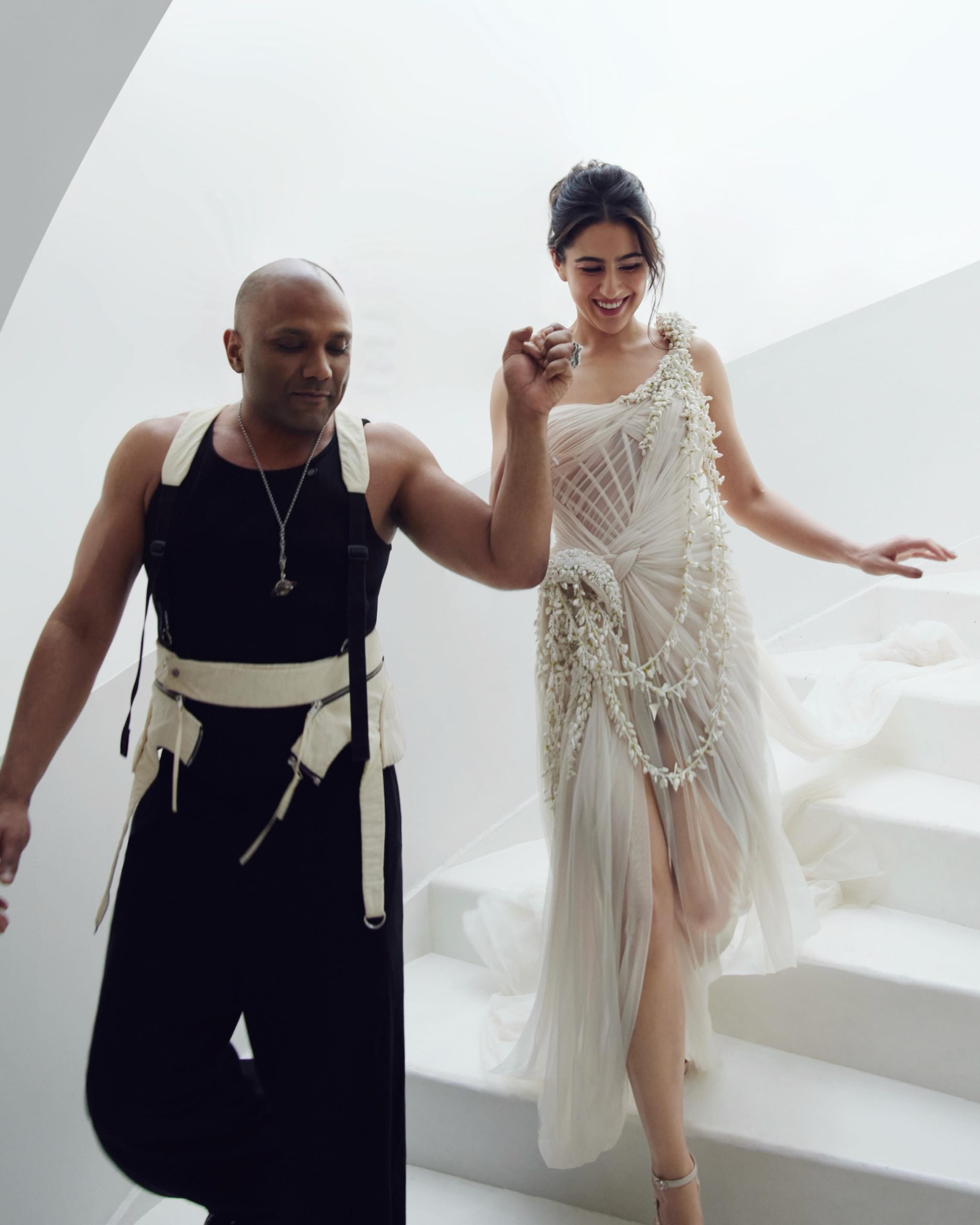
Featured in the seventh season of ‘The Bride Side’, the actor wears creations that reflect the designer’s interest in sculptural forms and unconventional draping. The campaign’s standout ivory ensemble, titled ‘Emergence’, brings these ideas into focus, combining the fluidity of a saree with the construction of a gown. The result is a look that draws on Indian dressing traditions without being bound by their conventional silhouettes.
Union of Structure and Fluidity
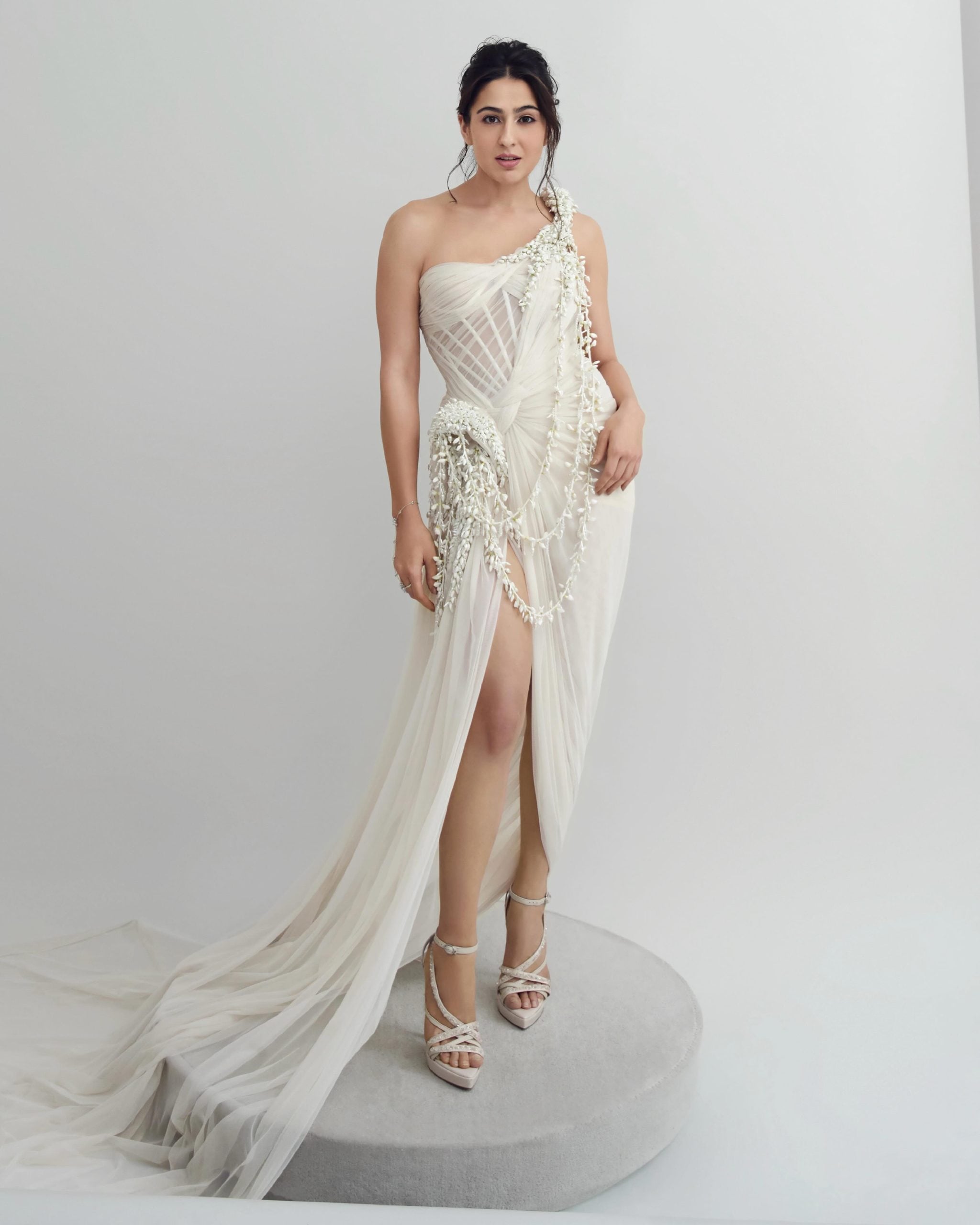
The ivory creation is part of Gaurav Gupta’s Spring/Summer 2026 Paris Couture Collection, ‘The Divine Androgyne’. Its sculpted, corset-like base lends definition to the torso, while the draped panels introduce movement and softness. Rather than relying on volume alone, the design creates drama through the interplay of structure, transparency and fabric.
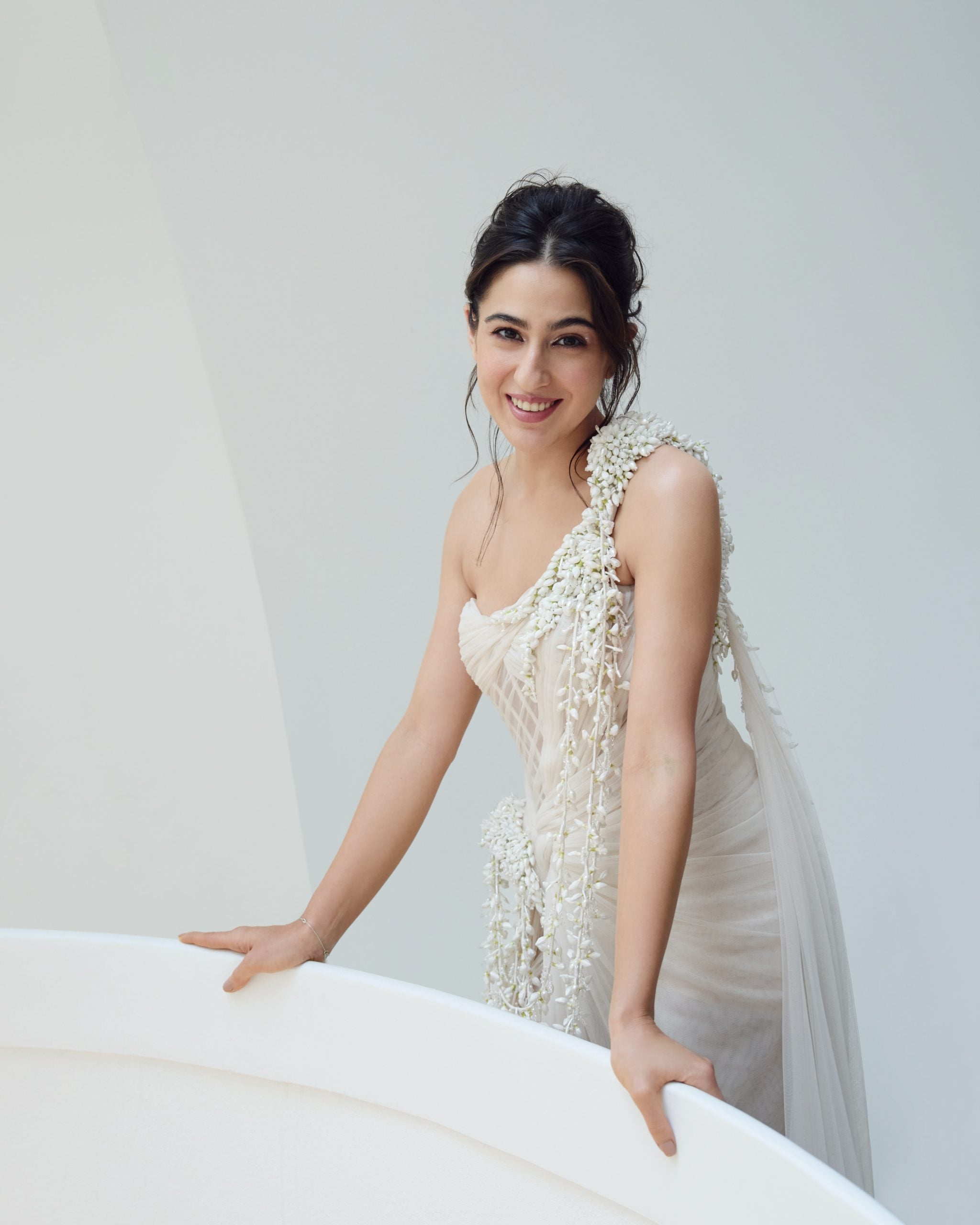
The detailing is equally significant. Hand-embroidered mogra tassels feature along the garment, bringing a recognisable element of Indian wedding and devotional traditions into a couture composition. The jasmine flower, commonly associated with garlands and bridal adornment, becomes part of the garment itself rather than remaining a separate accessory. This treatment gives the ensemble a cultural reference point without making it feel overtly traditional.
Gupta’s approach has long centred on transforming familiar forms through sculptural construction, and Sara’s three looks in the opening episode of the seventh season of ‘The Bride Side’, themed ‘The Scent of Divinity’, show that philosophy at work across an entire bridal wardrobe. Each takes a recognisable form, the saree, the lehenga and the gown, and reworks its relationship with the body.
Also Read: Gaurav Gupta Couture Gets Permanent Paris Address
The first, ‘Emergence’, drawn from his Spring/Summer 2026 Paris Couture collection, The Divine Androgyne, is rendered in ivory tulle. The saree remains recognisable through its fluid, draped panels, but sits on a corseted, architectural base, with a thigh-high slit adding movement. Hand-embroidered mogra tassels trace the shoulder and waist, lending the look an intimate connection to Indian bridal rituals, where the fragrant jasmine is traditionally worn in the hair. Here it moves from adornment to embellishment, while the sculpted construction gives the piece a distinctly modern identity. Neither element overwhelms the other.
Rethinking the Bridal Silhouette
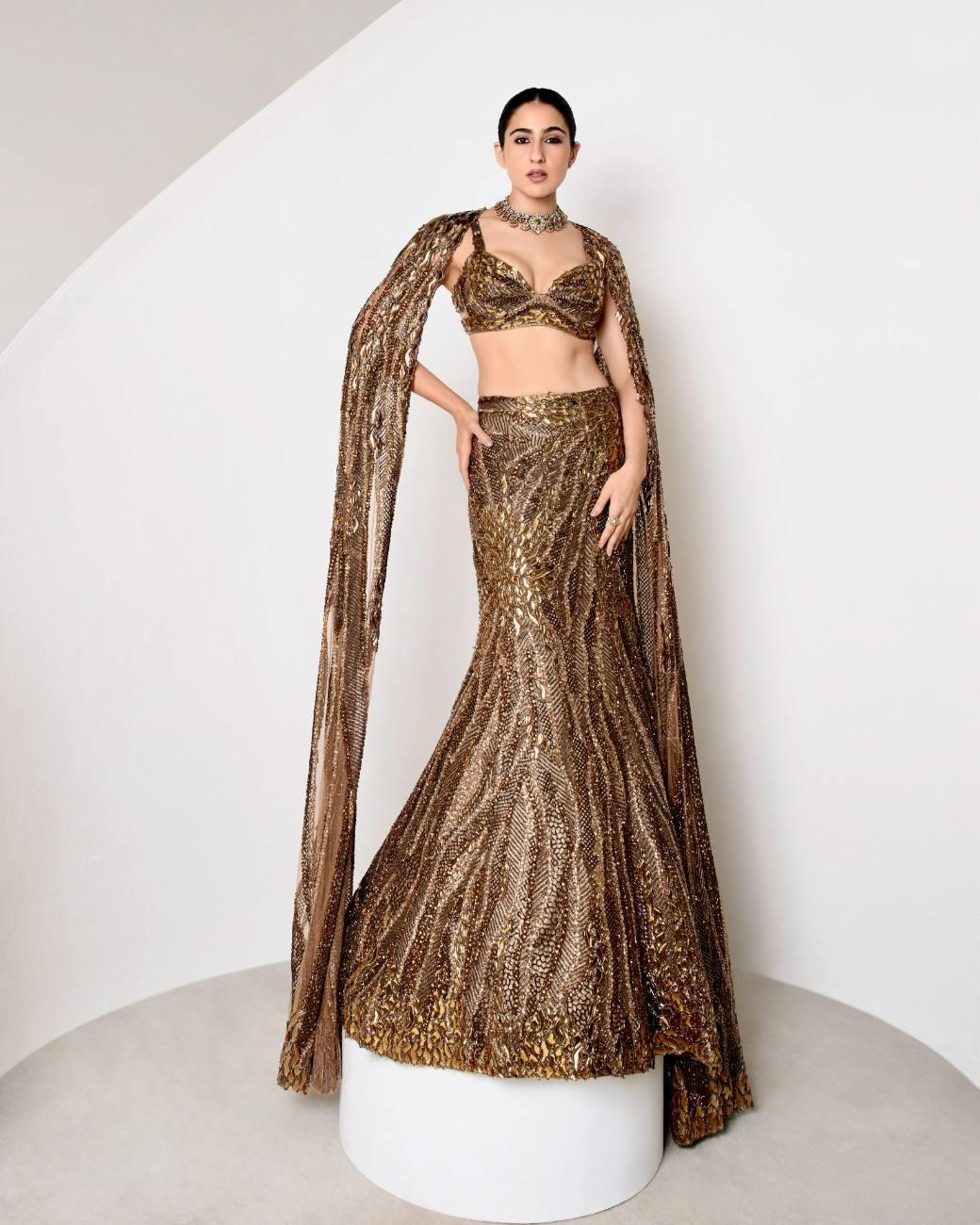
If ‘Emergence’ speaks to the quiet, ceremonial end of the wedding, the two looks that follow are built for its evenings. The second is a molten gold lehenga that reimagines the bridal staple through Gupta’s sculptural lens. A structured bralette blouse is encrusted with hand-placed metallic plates and dense bead work, while the skirt drops into a fitted fishtail that flares just above the floor.
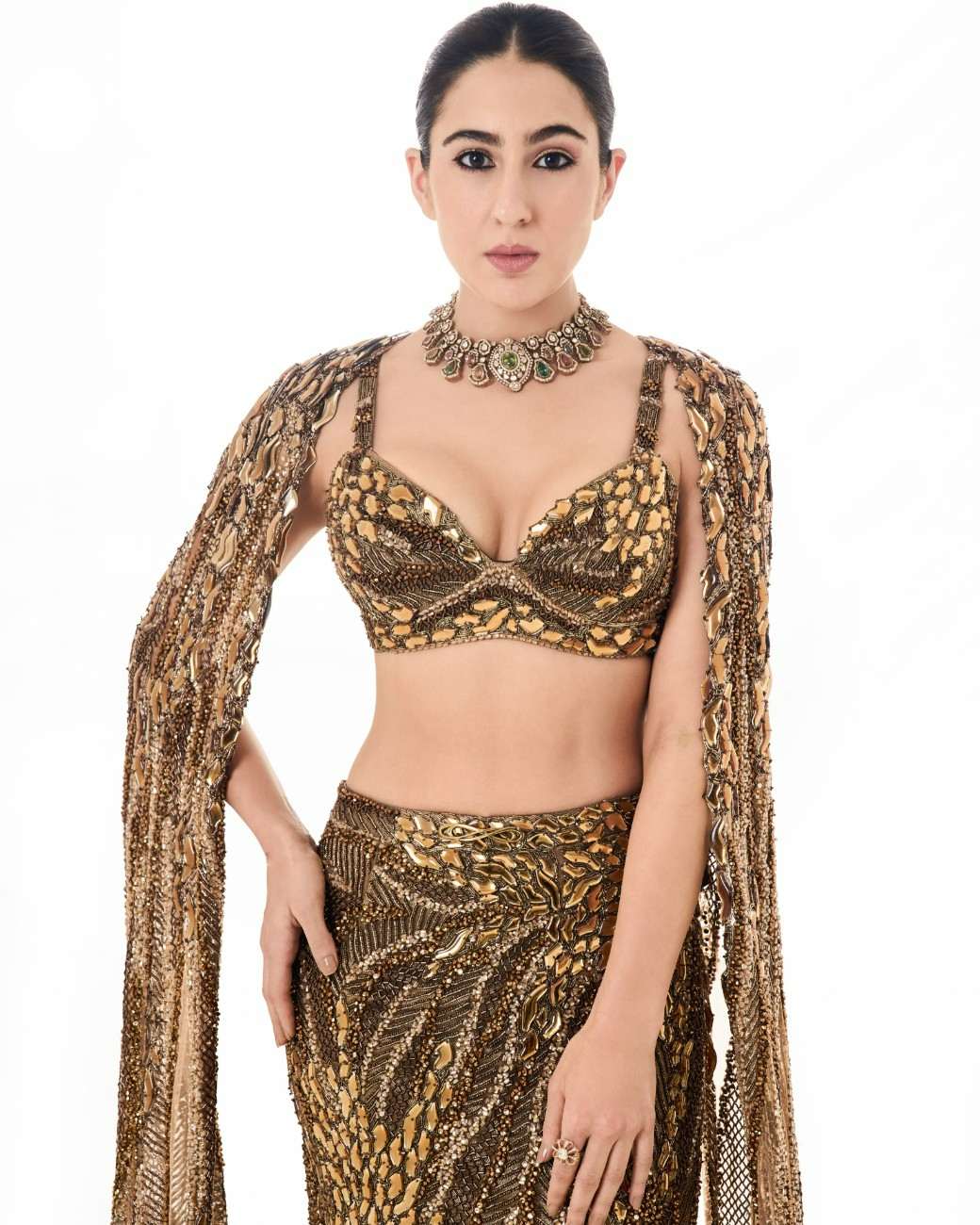
Its embroidery moves in long, swirling currents, catching light the way liquid metal might. In place of a conventional dupatta, sheer embellished panels fall from the shoulders like a cape. The styling leans regal, with a jewelled choker set with coloured stones, a sleek centre-parted bun and kohl-rimmed eyes. It is the most traditional of the three in palette, yet the least conventional in form, i.e., a lehenga that behaves like a gown.
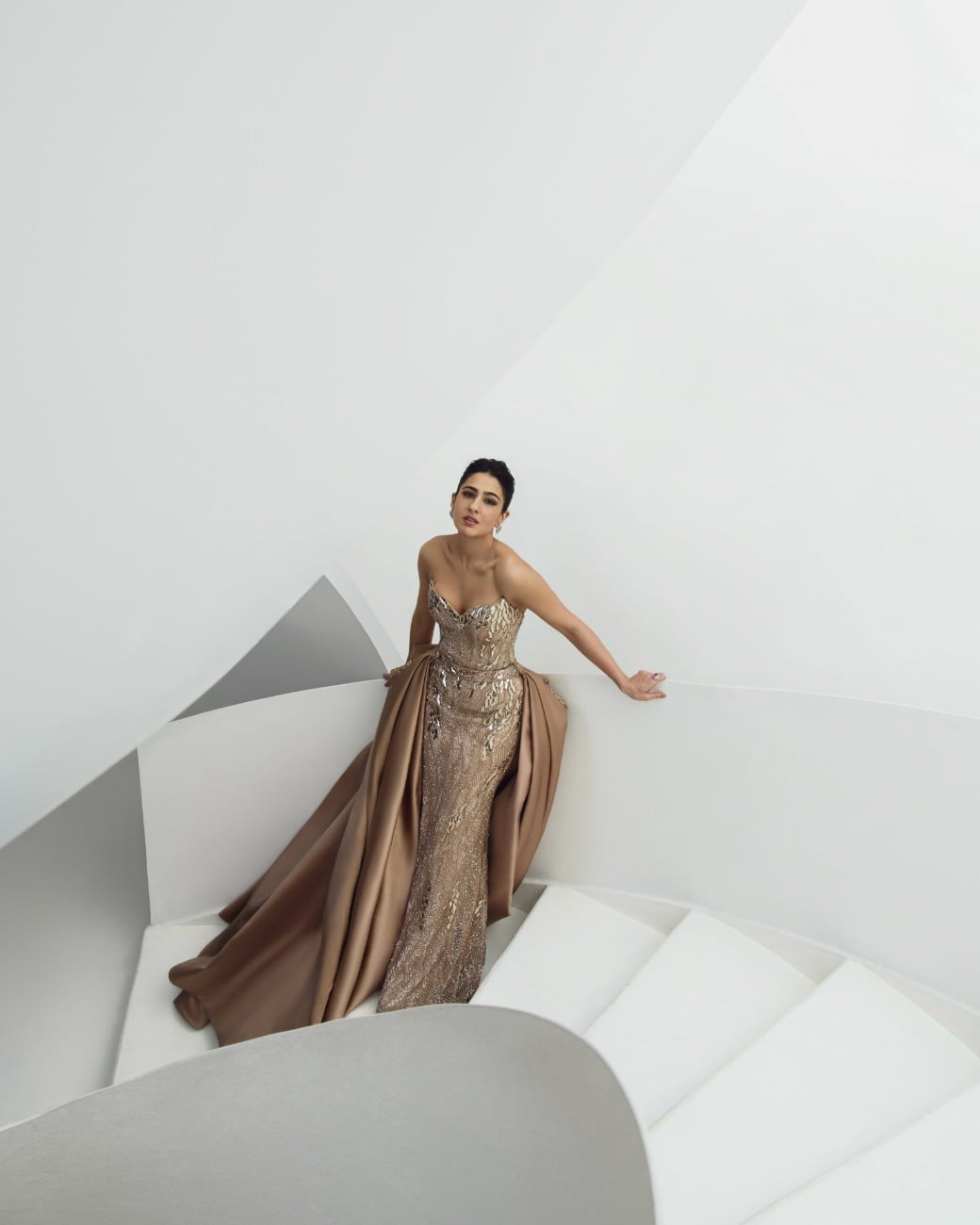
The third is a strapless column gown in champagne with a mauve undertone. Its sweetheart bodice is sculpted with polished, petal-like metallic appliqués that rise above the neckline almost like armour, giving way to fine bugle bead and crystal embroidery on a sheer base. A voluminous satin overskirt, open at the front, sweeps into a dramatic train and softens the structured column beneath.
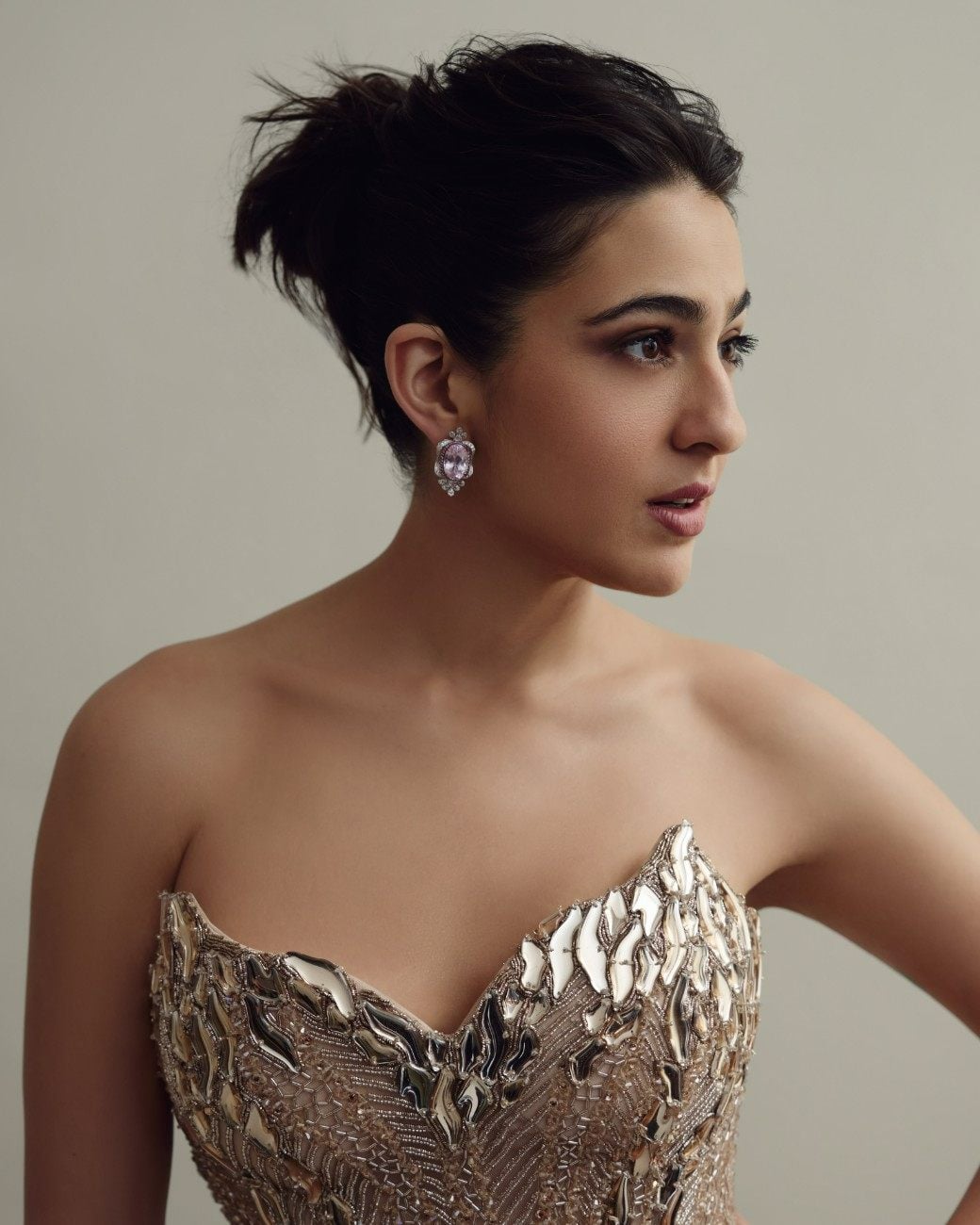
The styling turns romantic, with a loose, tousled updo, a smoky mauve eye and lilac-stone drop earrings that echo the warmth of the gown. It is the most overtly Western of the trio, and the natural choice for a reception or cocktail evening.
Also Read: Sara Ali Khan’s Residence: Inside The Home Of Udta Teer Star
Seen together, the three looks trace a full bridal arc, from a ceremony rooted in ritual to celebrations that allow for spectacle. They also reflect how Indian bridal fashion is evolving. Modern wedding wardrobes increasingly accommodate distinct expressions of personal style, whether through unconventional silhouettes, restrained palettes or details that carry cultural meaning without following a conventional template. What connects all three is Gupta’s signature language of sculpted bodices, fluid volumes and embellishment that feels organic rather than applied.
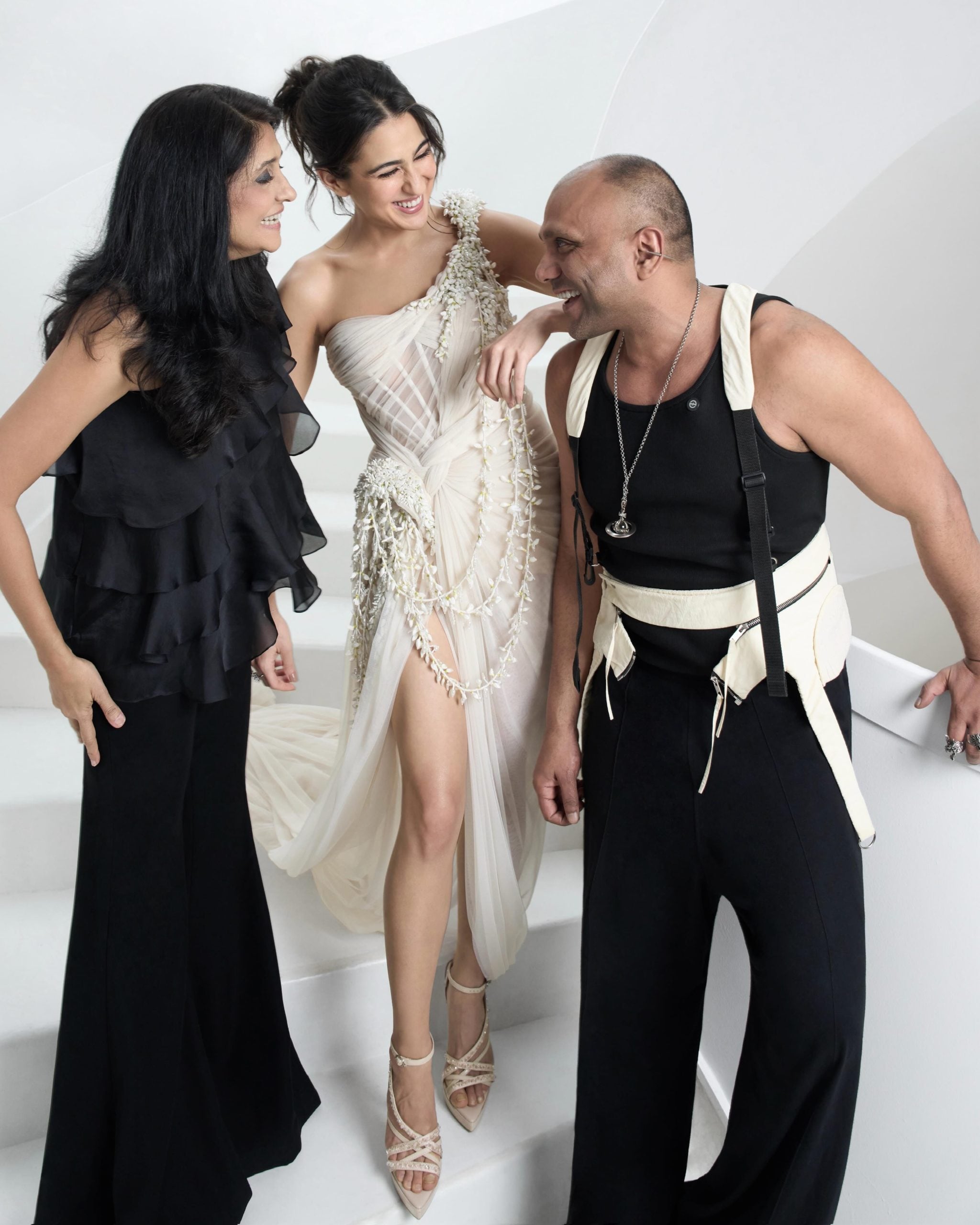
With this wardrobe, Gupta makes a case for bridal couture that is expressive without being excessive. On Khan, the saree-gown, the lehenga and the column gown become an exploration of how heritage can inform new silhouettes, allowing Indian bridal dressing to move forward without losing sight of the details that make it meaningful.