How An Indian Label Is Decarbonising Fashion With A 100% Plant-based Collection At Paris Fashion Week
Textile scientists turn entrepreneurs, Aishwarya Lahariya and Adhiraj Shinde, are on a mission to decarbonise and decolonise fashion with their sustainable label Jiwya. At their Paris Fashion Week showcase, Kala Kotton, Hemp, Jute, Khadi, dipped in plant dyes, ruled the runway, echoing ‘the future is plant-based’
When textile scientists Aishwarya Lahariya and Adhiraj Shinde walked away from high-paying jobs in the U.S. medical textile industry, landing at an international fashion show was far from their minds. The hands that once worked on devising textiles for bioresorbable medical devices used post-surgery were now working with plant-based fabrics like Kala Kotton, Hemp, Jute, and Khadi for a 16-piece collection, ‘Lata’, showcased on the Paris runway at La Galeria Bourbon near Arc de Triomphe, a historical venue formerly the residence of the Bourbon royal family of Spain in the 19ᵉ century.
View this post on Instagram
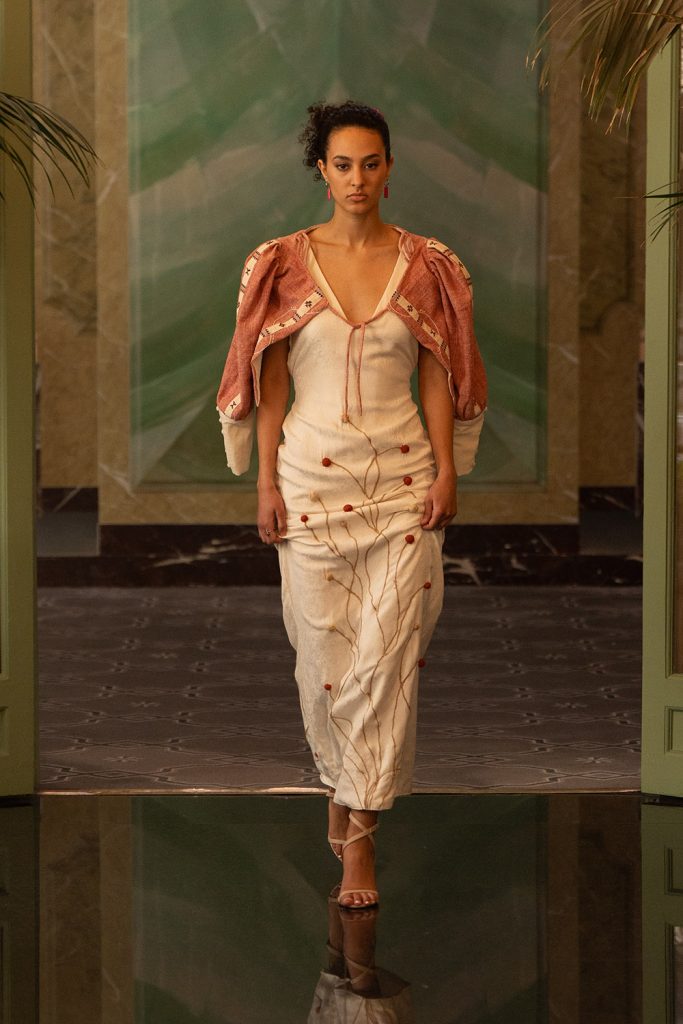
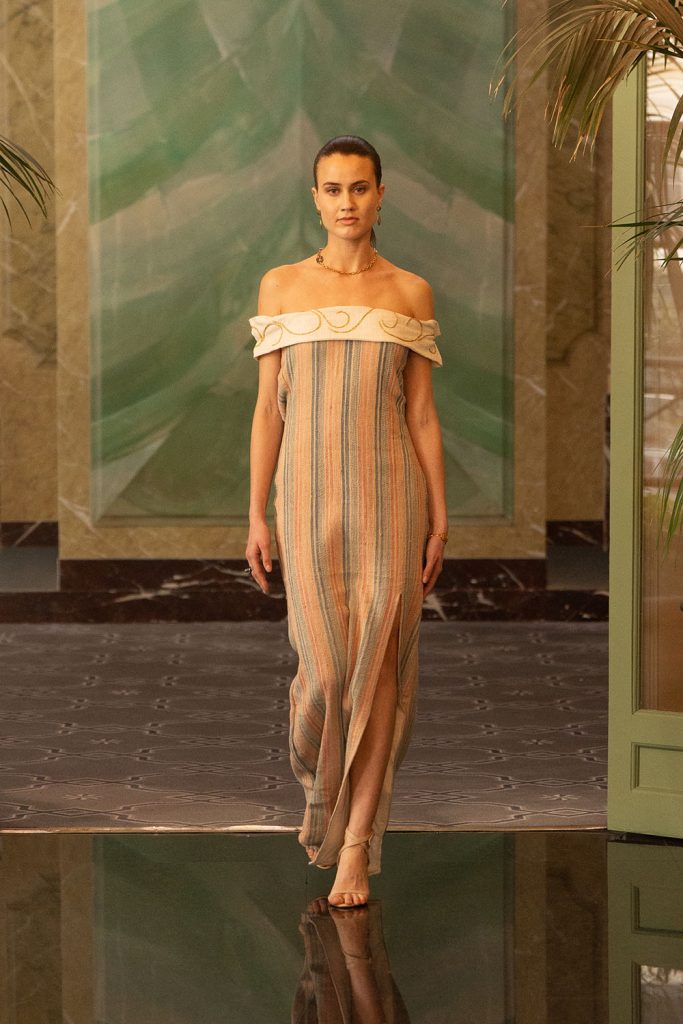
Beneath glorious chandeliers, wainscoted walls, and arched hallways, models glided over the opulent runway in rather plain yet sophisticated ensembles — a thigh-high slit gown with cowl back handspun with khadi and jute. An A-line gown with puffed sleeves, handspun from cotton and Khadi. A flared gown made of rainfed cotton in Himroo. A pant-suit in Kala Cotton with hand-block prints. Embroidered motifs of flower buds, creepers, and climbing plants delicately sit on the surfaces. The ensembles were dipped in plant dyes drawn from pomegranate and onion peels salvaged from fruit vendors, marigold procured from temple offerings, and myrobalan, palash blossoms, and madder roots. Together, they brought nature’s own palette with butter yellow, beige, light blue, and pale brick red, signifying shades of the Earth.
The message was clear: ‘the future is plant-based’ as embroidered on the cape gown that Aishwarya flexed at the end of the show. “Paris Fashion Week has not completely banned the usage of animal-based products on the runway. There were leather bags, boots, fur coats and hats, to 100% polyester creations. That’s why people were surprised to know we are 100 percent plant based!” says Aishwarya, talking to us from Paris post her debut show that also had the likes of Louis Vuitton, Chloé, Miu Miu, Hermès, amongst others. “We’re working exclusively with handlooms and partnering with over 150 artisan clusters across India to revive and reinterpret heritage textile arts. If being ordinary individuals, we can decarbonise fashion, why can’t the global luxury brands?” she adds poignantly.
As Aishwarya and Adhiraj address fashion’s most pressing issues— its environmental, ethical, and cultural cost, we trace their journey in regenerative fashion.
Textile Scientists Turn Entrepreneurs
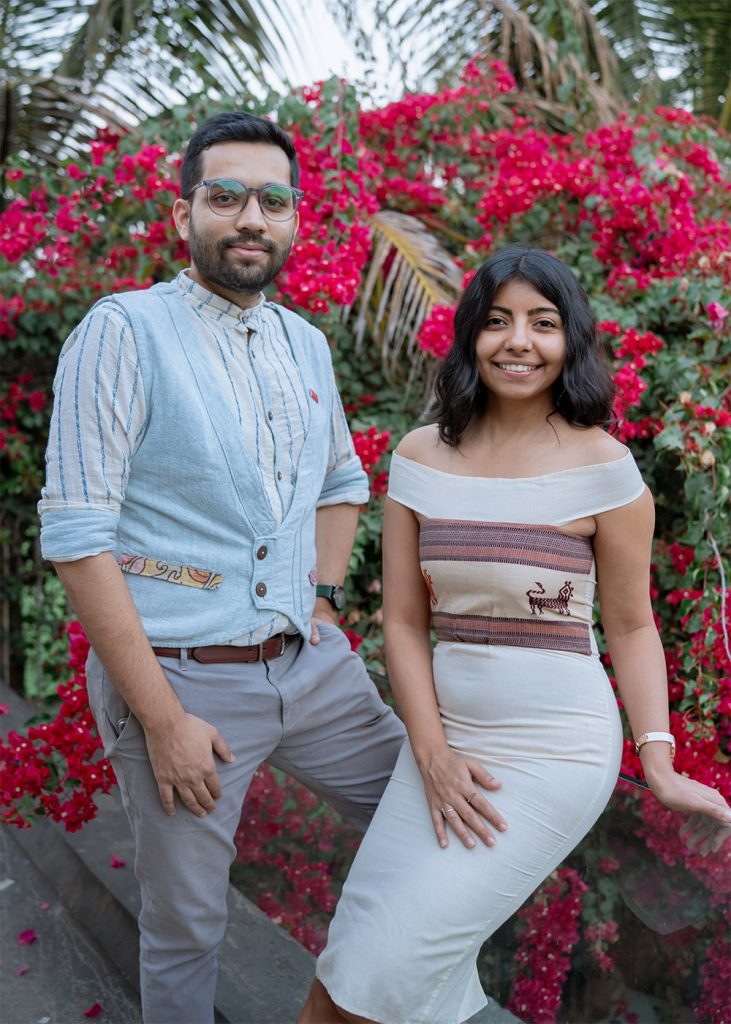
Aishwarya Lahariya and Adhiraj Shinde, Co-Founders of Jiwya, are first-generation entrepreneurs. Having met in 2013 as students at the Institute of Chemical Technology (ICT), Mumbai (formerly UDCT), both shared a compassion for the planet. They worked at the intersection of material science, sustainability, fibre research, and textile testing. But that was “not enough” to make an impact.
“We were working in textiles for bioresorbable medical devices. These textiles used post-surgery around the heart or spine were designed to perform a temporary therapeutic function and then safely dissolve, or be absorbed by the body within a certain timeframe. We were nagged by the feeling that, despite the technical know-how to engineer textiles, we were not doing much about it. We took the leap of faith and moved back to India to begin ground work for a fully-plant-based label.”
Spot The Maestros
Returning in July of 2022, they travelled 19,000 kilometres to 19 states of India to explore India’s land, people, and craft in building an ethical fashion ecosystem. “From those who excel at hand-embroidered muslin from Eastern India, a 30th generation artisan bringing Phad hand painting to garments, to artisans working with Sozni hand embroidery from North India, Soof embroidery, Batik hand-block prints, Kalamkari, to weavers working with Jamdani, Tangaliya and Ikat, we’re currently working with 18 Padmashree awardees, and 20-plus are national awardees who are preserving various art and craft forms.”
View this post on Instagram
A Clean Supply Chain
During their travels, the duo also questioned the material understanding within the Indian fashion industry and amongst buyers. “When it comes to sustainability understanding in India, there is a mixed logic that people apply: if a product lasts, it may be sustainable. If a polyester shirt lasts 50 washes, they’re fine to buy it. People don’t know that the same shirt is probably not the greatest for their skin, releases microplastics with every wash that eventually enter your body with drinking water. They are not taught to ask where the material is coming from or where it will land upon use. For instance, once a person who wore our 100% plant-based shirt asked me ‘will this shirt dissolve if I go out in the rain?’ I was appalled by our understanding of natural fibres,” says Aishwarya
She adds that the duo wanted to build the “cleanest possible supply chain” by probing fibres — their source, how they’re grown using rain-fed or irrigation method, spotting farmers to work with, and monitoring pesticide use.
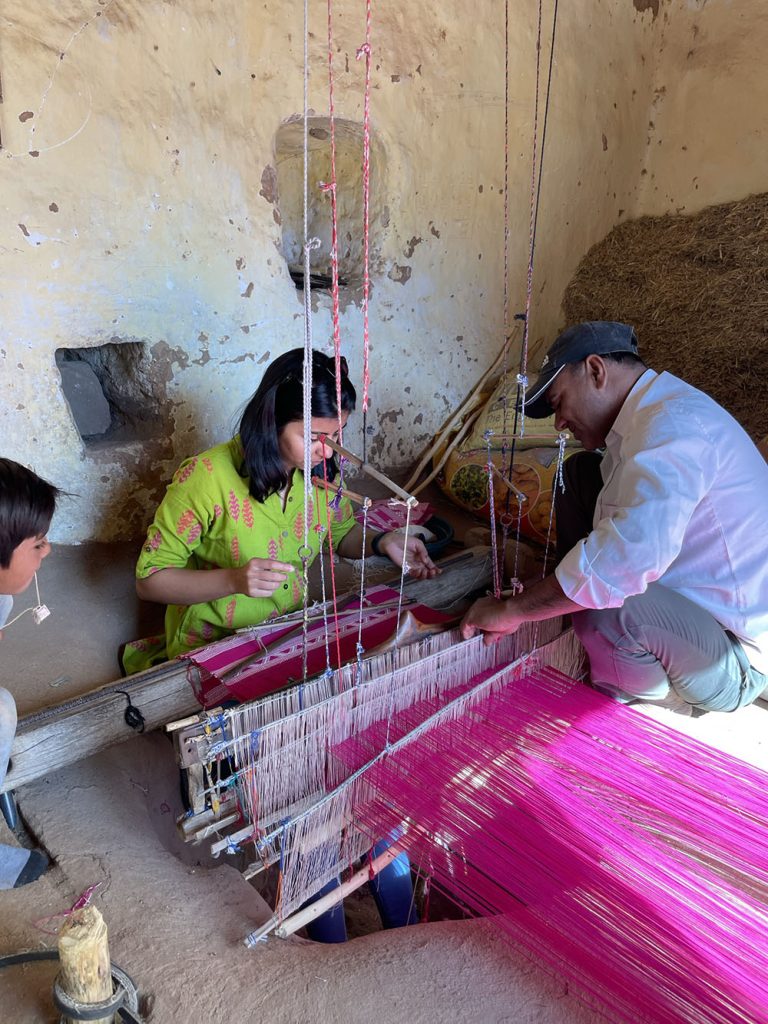
Then began the process of obtaining plant-based fabric from the yarn. “We met about 200 art clusters across rural India and told them not to change anything in their weaving system — just replace your yarn with our plant-based yarn to make the fabric. Our guarantee is to buy all of that fabric so they don’t face any losses. We never haggle with them because we have in person seen what it takes to preserve legacy arts and crafts,” tells Aishwarya.
Honour Life
Their research and travels culminated in the launch of Jiwya in October 2023. Born at the intersection of science, sustainability, and artisanal excellence, the eco-friendly creations are designed to come from the soil and return to it. “The name itself is rooted Sanskrit word ‘Jeev’ meaning life, soul, and spirit. We believe that fashion must honour life — in its making, being and afterlife,” tells Adhiraj, adding that the label operates on zero-waste philosophy. “Our discarded fabrics are repurposed into innovative fixtures, fabric buttons, and packaging, ensuring that nothing goes to waste.”
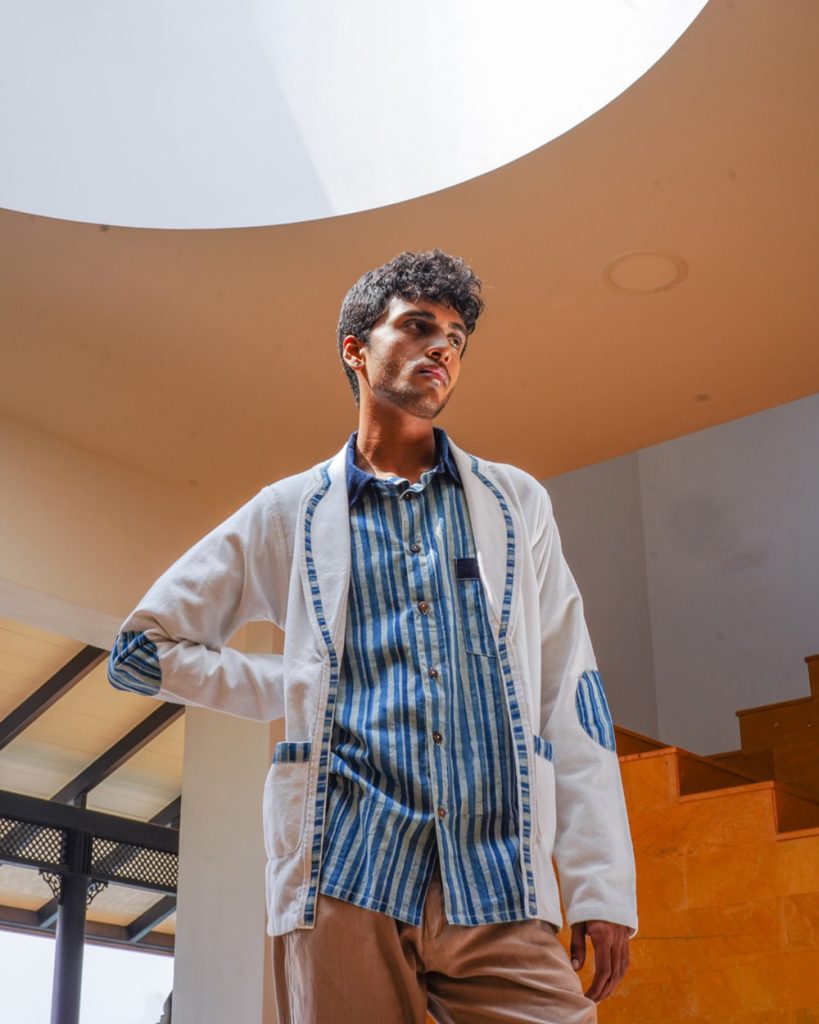
But circular fashion alone would not have resonated with the world if it lacked beauty. It had to inspire desire. The answer came with the label’s global runway debut at London Fashion Week last year through the collection Katidha. It translated plant-based fabrics and natural dyes into contemporary silhouettes—from gowns and off-shoulder dresses to shirt–pant sets, jumpsuits, and bodycons. It was presented inside a 250-year-old spice and textile warehouse in London, evoking “poetic justice” to years of colonial exploitation faced by India in the hands of imperial forces. It was around this moment that Aishwarya finally moved past a lingering impostor syndrome and began to fully embrace her identity as a textile designer.
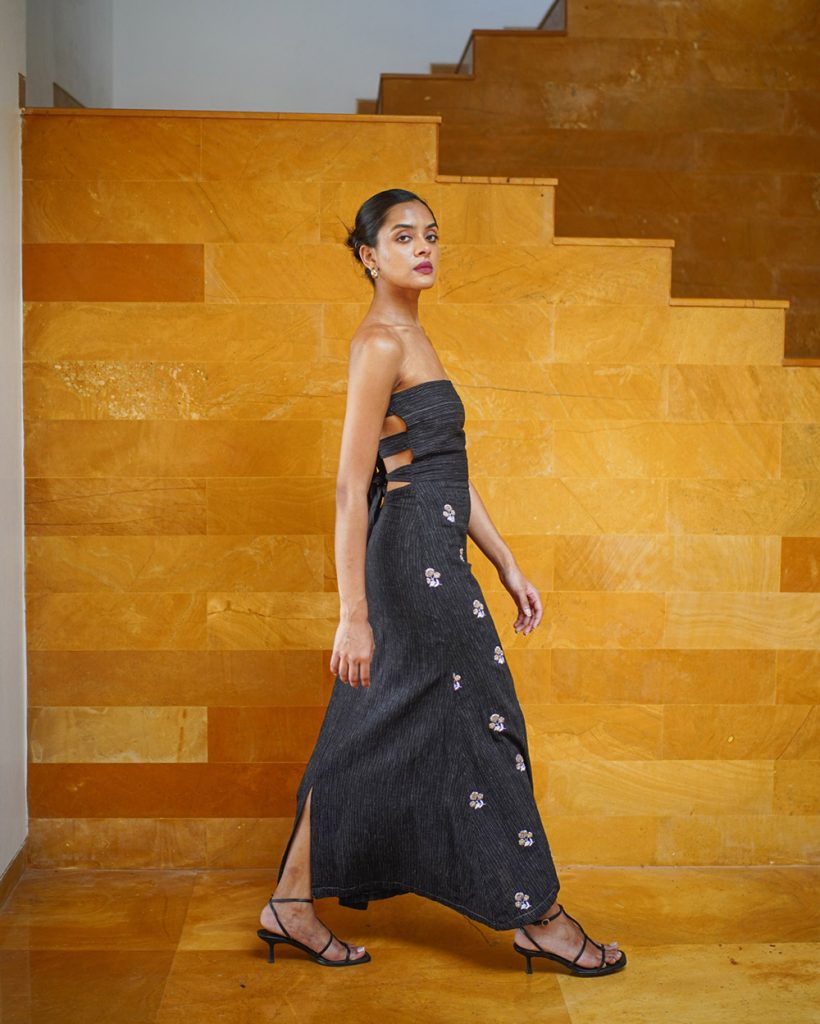
At their Paris debut this year, Aishwarya and Adhiraj returned with newfound confidence, bringing a collection with 16 weave structures in modern silhouettes that placed “underrepresented” plant fibres firmly within the language of global luxury.“Lata is my ode to a person I knew for a very short time, Adhiraj’s grandmother. She taught me loving without expectations, caring in the present, and making a difference through one’s life. This collection grows the way life does — finding strength in softness and purpose in every curve.”

Today, the couple’s personal life is an inspiring manifesto for sustainable living. “Our cook is trained to separate food scraps for composting. We have actively reduced plastic use in our kitchen and personal care products and use conscious personal care alternatives. We hope the world ditches polyester to preserve biodiversity and precious natural resources.”