How Tata Trusts’ Antaran Is Giving Indian Handlooms a Modern Makeover
Tata Trusts' Antaran is reimagining Indian handlooms for a new generation, blending heritage craftsmanship with modern design, entrepreneurship and conscious luxury
The backstrap looms of Nagaland have long woven stories of community and identity into every thread. Bengal’s intricate Jamdani, recognised by UNESCO as an Intangible Cultural Heritage of Humanity, continues to carry centuries of artistry in its delicate motifs. In Tamil Nadu, the lustrous Kanchipuram silk sari remains an enduring symbol of craftsmanship, with techniques passed down through generations of master weavers.
These textiles have not only preserved regional identities but also safeguarded the cultural memory of entire communities. Yet, heritage alone is no longer enough. Modern wardrobes demand versatility, younger consumers seek individuality and luxury increasingly favours pieces with both provenance and purpose.
India’s conventional weaving traditions are now finding themselves in conversation with a new generation of consumers who value craftsmanship but expect it to fit seamlessly into contemporary living.
Standing at the cusp of luxury offerings that advocate longevity while celebrating India’s traditional roots is Tata Trusts’ Antaran. By bringing together artisans, designers and entrepreneurs, the initiative is helping age-old weaving traditions find a new language without compromising their essence.
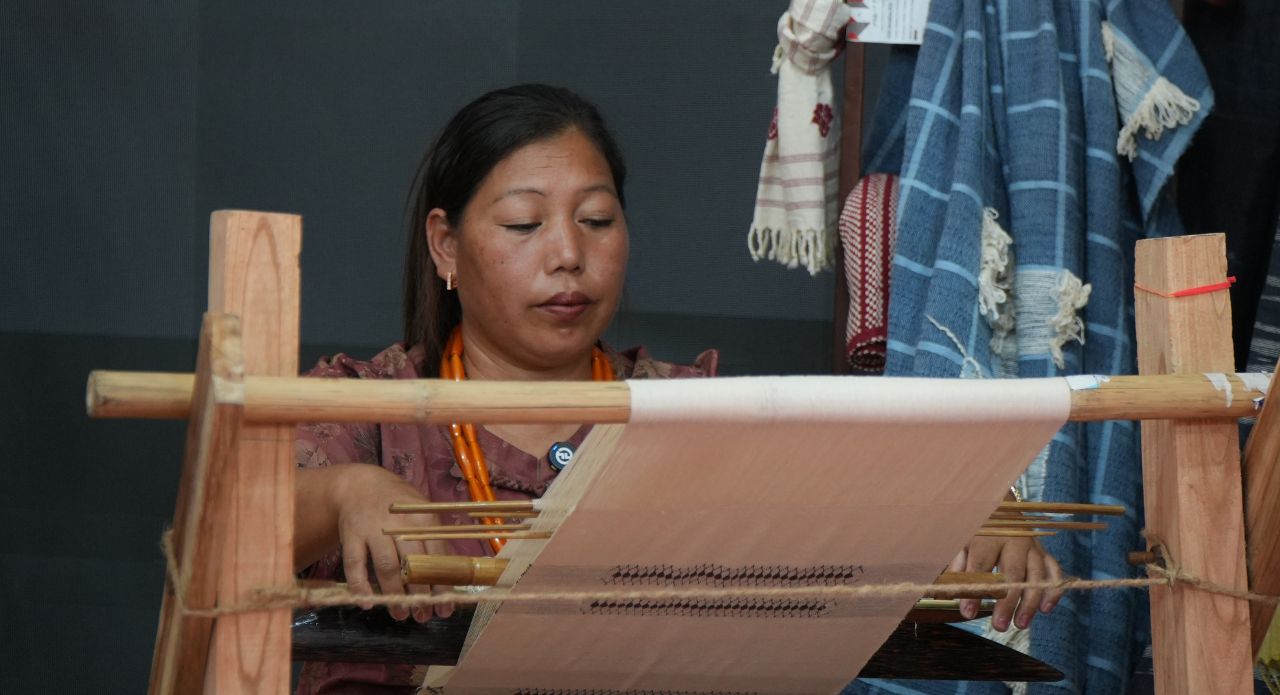
At Bharat Tex 2026, recently held at Bharat Mandapam in New Delhi, that vision came alive. Weavers from Assam, Odisha, Nagaland and Andhra Pradesh stood beside their creations, demonstrating how heritage can evolve while remaining deeply rooted in place. Traditional motifs appeared on jackets and home furnishings, handwoven textiles found contemporary silhouettes and centuries-old techniques were reimagined for a new generation.
Weaving Heritage Into Luxury
Luxury today is increasingly defined by authenticity. Consumers are looking beyond labels and towards provenance, craftsmanship and meaningful ownership. India’s handloom traditions, with their rich cultural histories, fit naturally into that evolving conversation.
Commenting on the way such conversations must be built between the community and consumer, Mridula Tangirala, Head – Tourism, Tata Trusts, said, “Handloom has to go beyond just the functional and the aesthetical look of it. The whole story and the knowledge have to go to the buyer.”
Speaking to Outlook Luxe on the sidelines of Bharat Tex 2026, Tangirala reflected on how India’s handloom sector has often remained disconnected from its audience. Consumers across the world readily educate themselves about international wines and luxury products, she noted, yet many remain unfamiliar with the stories, symbolism and labour that go into creating India’s own textiles.
Also Read: How Are Indian Handlooms Redefining Modern Luxury?
Antaran’s work begins in clusters that possess exceptional artisanal talent but limited market access. Odisha’s Maniabandha Ikat and Gopalpur Tussar, Assam’s Eri and Muga weaves, Nagaland’s Loin Loom textiles and Andhra Pradesh’s Zari Jamdani are among the traditions that have found renewed relevance through the initiative.
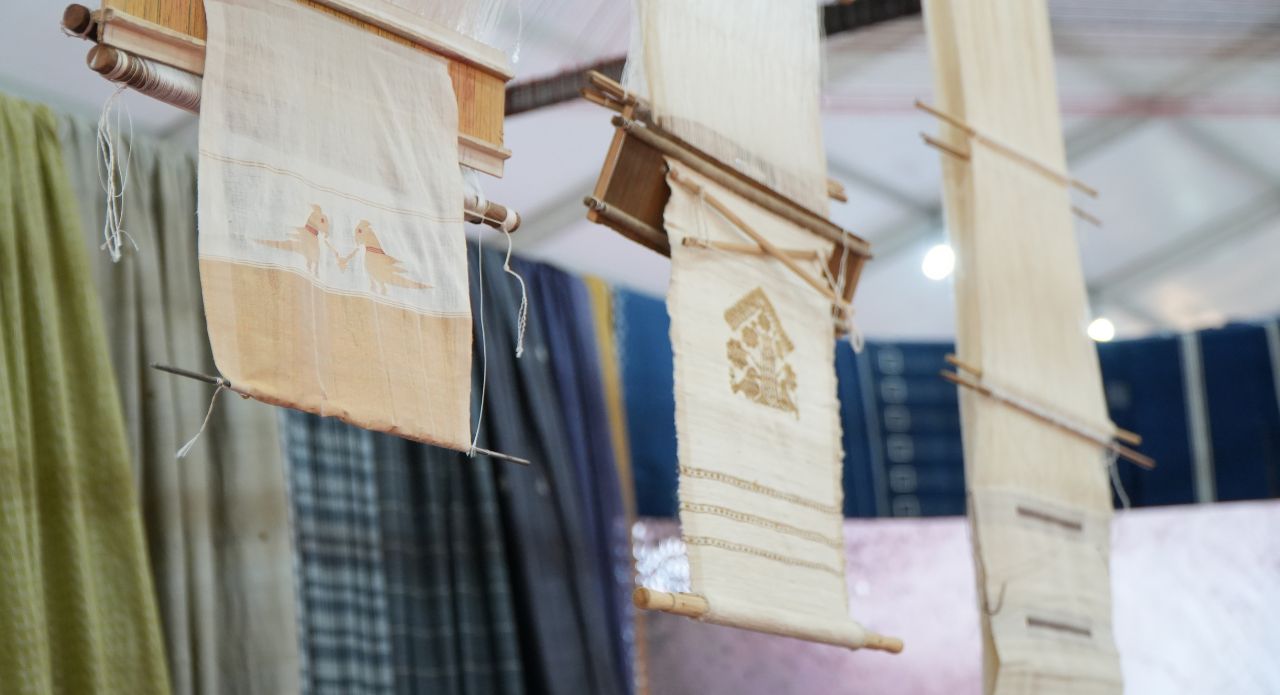
Over the last seven years, Antaran has helped artisans move beyond dependency on intermediaries by introducing entrepreneurship, design intervention and direct market linkages. Several participants now run their own labels and supply to established brands, proving that heritage and commerce can successfully coexist.
Design has emerged as one of the programme’s strongest pillars. Integrated Design Centres established across weaving clusters encourage artisans and designers to collaborate, resulting in products that retain their cultural identity while appealing to contemporary tastes.
“Luxury is redefining itself. People are looking for ways to express themselves and handcrafted textiles can become part of that story,” said M Parvez Alam, Creative Design Lead, Tata Trusts, who is also associated with Antaran’s cluster development programme.
Parvez further expressed that luxury itself is undergoing a transformation. Consumers today are seeking products that allow them to express who they are and handcrafted textiles offer a deeply personal connection that mass-produced alternatives cannot replicate. Traditional weaves, once reserved for special occasions, are increasingly finding a place in everyday life through contemporary design interventions.
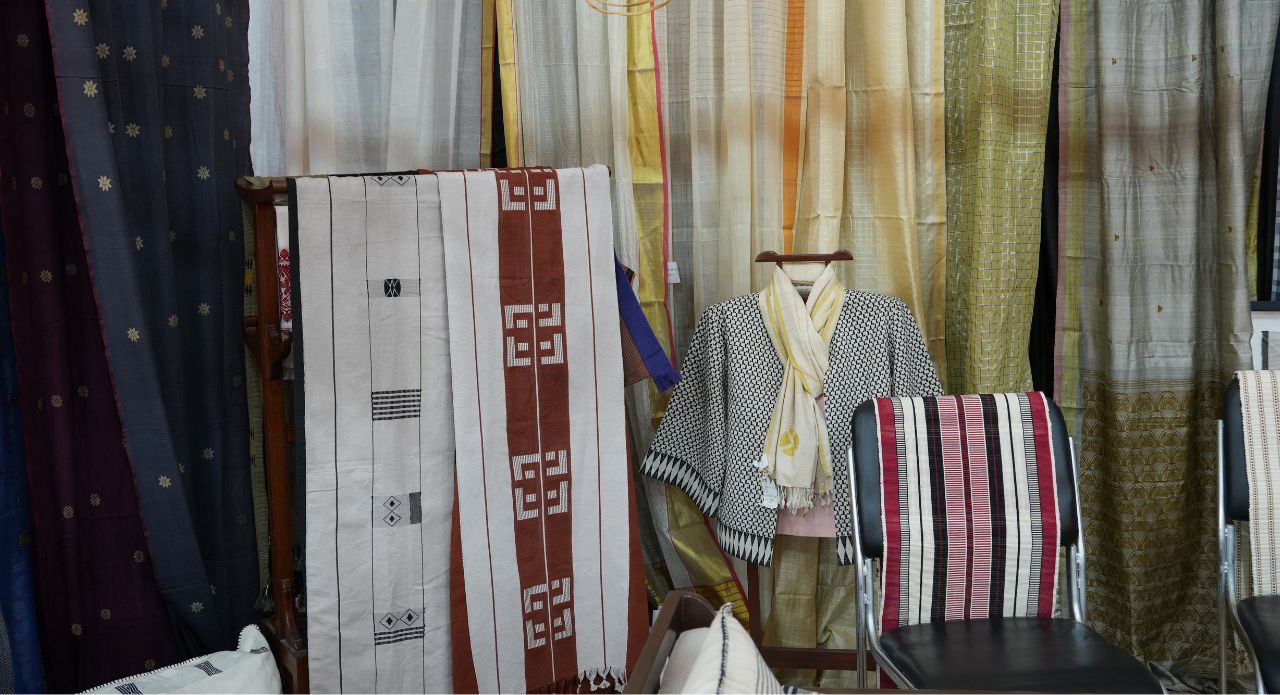
The results were visible across the Bharat Pavilion. Handwoven runners, jackets and contemporary separates stood alongside traditional garments, demonstrating that Indian handloom can comfortably exist beyond festive occasions.
The Future of Conscious Craft
Handloom’s relevance extends beyond aesthetics. Sustainability has become an equally important consideration for consumers seeking products with lasting value.
Many of Antaran’s weaving communities source materials locally, employ traditional dyeing techniques and maintain shorter supply chains. Their work supports a model of production that is inherently slower, more thoughtful and rooted in their respective regions.
“We believe the whole thing starts with design. After that comes communication, production and quality. If it cannot stand in the market, it cannot survive,” Alam added.
His observations underline a larger reality facing India’s craft sector. Preservation alone is not enough. Traditional textiles must also be commercially viable if they are to endure. Quality, communication and accessibility have become just as important as heritage in determining whether a craft can survive for another generation.
Tangirala believes that preserving heritage requires moving beyond individual success stories and building stronger ecosystems around craft communities. Antaran is now focused on strengthening clusters themselves, encouraging collective identities and creating models that can be replicated by others working in the sector.
Also Read: What Is Alia Bhatt’s Secret to Looking Elegant at Every Celebration
“The vision is to leave behind that approach, with its tools, people and networks readily accessible to others who want to do similar things. From doing, to helping others do, to leaving a path that others can emulate,” Tangirala said.
She also underscored that handloom carries a value that extends far beyond utility. Conversations with artisans often reveal perspectives on success, identity and belonging that feel increasingly rare in modern life. Their understanding of fulfilment is rooted not in accumulation, but in community, continuity and connection.
“India’s handloom traditions have so much more to give than just the act of weaving. I think all of us are hungry for that connection, and it’s sitting right here. We just need to find it,” she asserted.
Long after the looms fall silent and the exhibition halls empty, those stories remain woven into the fabric itself, contributing to India’s narrative of real luxury.