‘Khadi must feel young, fresh and global’: Shruti Sancheti on her Lakmē Fashion Week show
Shruti Sancheti speaks to Outlook Luxe on her Khadi-based showcase at Lakmē Fashion Week x FDCI. It was Bapu’s vision, but tailored for the “cool” kid on the block
“Khadi can be cool, it can be contemporary, and it can belong to the world,” says designer Shruti Sancheti as we speak to her post her showcase at the recently concluded Lakmē Fashion Week x FDCI in Mumbai. With just a 12-piece collection, shown alongside Samant Chauhan, CoEK–Khadi India, and Pawan Sachdeva under Navdhara Khadi special showcase by Khadi India, Sancheti could easily have slipped under the radar amid long and ultra-glamorous line-ups.
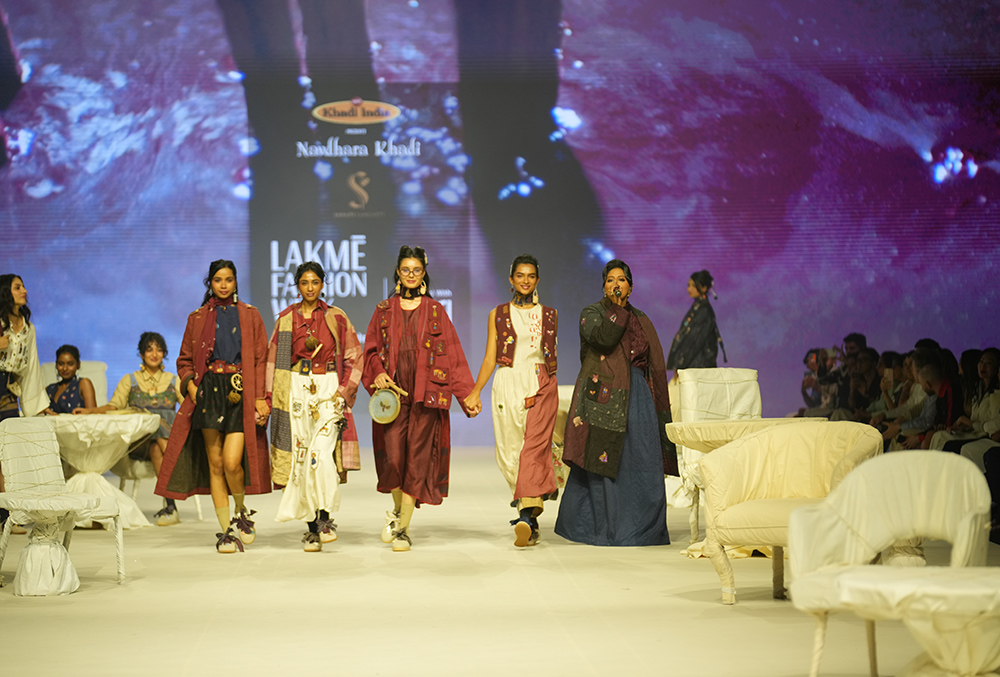
But she was a hard miss. Her presentation held it all together — the textile, embroidery crafts, motifs, styles, and colours. But most interestingly, she shook off the historical and traditionalist baggage often pinned on ‘Khadi’, swapping it for looks that felt cool as a breeze, youthful and forward-looking. On the runway, models flexed layered separates that came together as complete looks, such as jackets, skirts, co-ord sets, collared shirts, and quilted coats with soft edges.
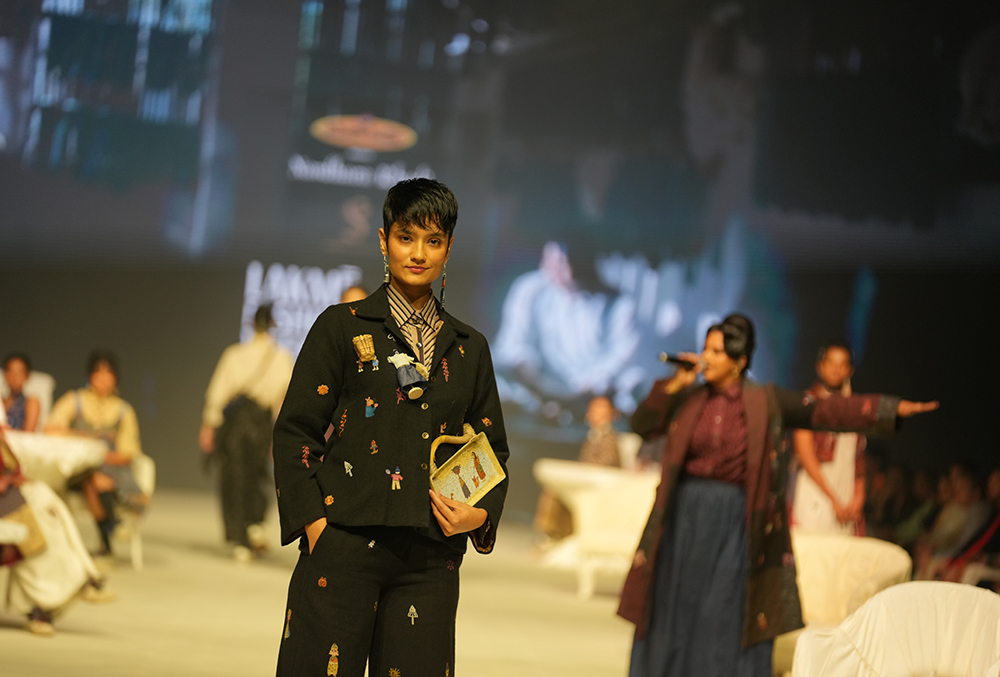
Distinct Nagpur checks and rich textures of Nasi, Gecha, Dupion, and Mulberry Khadi came alive with block printing, kantha embroidery, and folk impressions of Warli and Gond art keeping the collection grounded in the “livery of freedom” that Khadi stands for while playful details of handcrafted crockery, baskets, mannequins, earrings, badges, and clips placed it in contemporary imagination.
History to wearability
Within 12 looks, Sancheti’s collection brought a new thought for Khadi from Gandhi’s vision to making it a youth’s pride that she can dish out on the streets. “During the freedom movement, Gandhi gave Khadi a larger meaning. He asked India to wear handspun with dignity, to make it a symbol of self-reliance and pride. While Khadi has existed for centuries, what it represented a hundred years ago cannot remain the same today. In fact, its relevance has only grown stronger. Khadi today stands for sustainability, minimal water usage, hand craftsmanship, and an ethical way of living,” she tells Outlook Luxe, adding, “My collection was young, cheerful, and global. We explored different textures of Khadi and also drew from Warli and Gond art, reinterpreting them in a contemporary way to reflect today’s lifestyle and community spirit.”
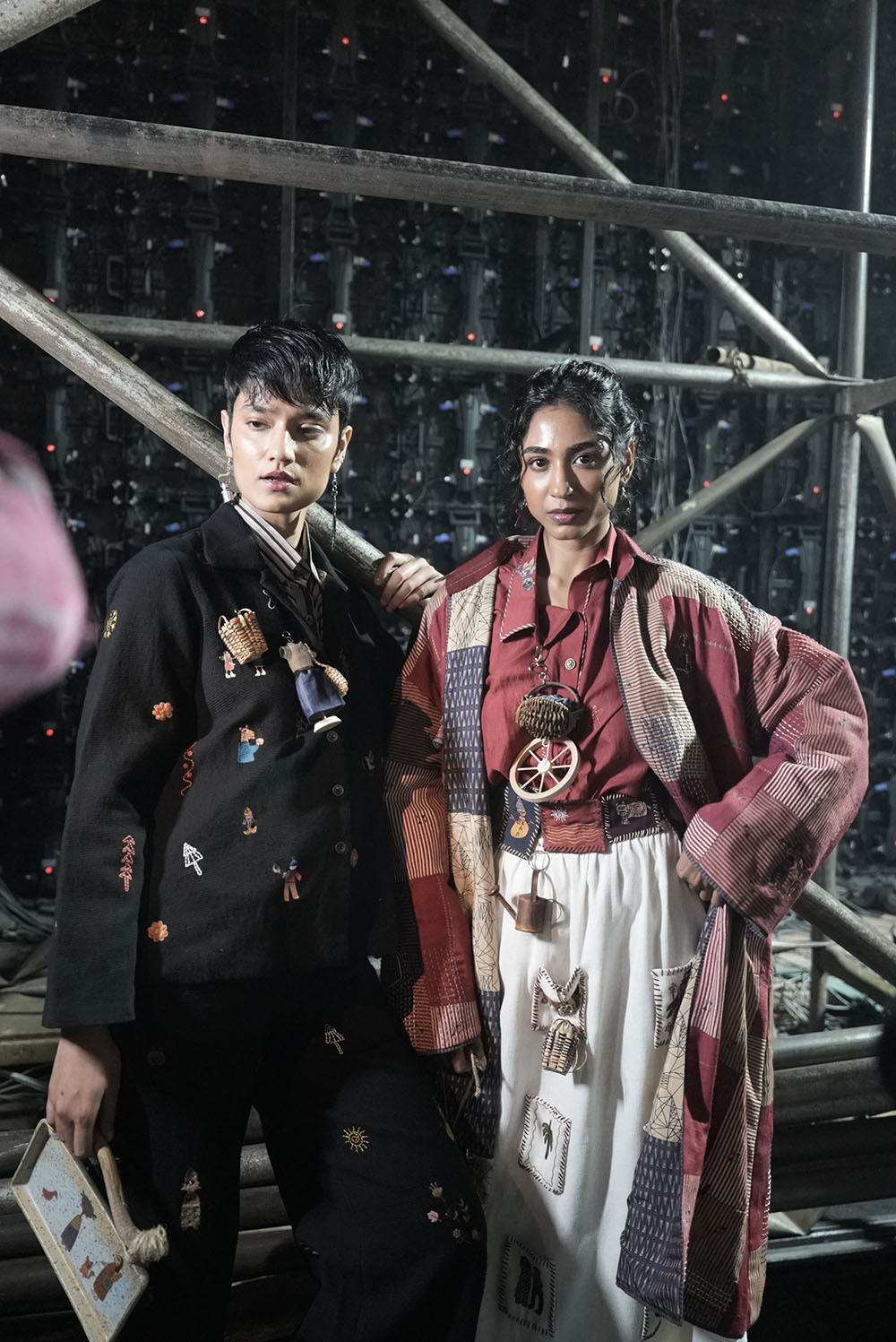
Sancheti has worked with Khadi since the inception of her label in 2009. Coming from Central India, Nagpur, she had access to clusters like Lodhikhera and Sevagram, where Khadi is produced. “Working with Khadi clusters allowed me to really push innovation. We experimented with blends like cotton and silk with Khadi, explored new textures, and worked towards creating fabrics that feel contemporary yet rooted. We also reimagined Nagpur checks, not in conventional cotton or silk, but using handspun yarns, which brought in a unique depth, texture, and character. The fabrics developed beautiful irregularities and richness that only handwork can offer. We also introduced a more global colour palette and focused on creating versatile, easy separates. The idea was to make Khadi feel relevant to today’s wardrobe.”
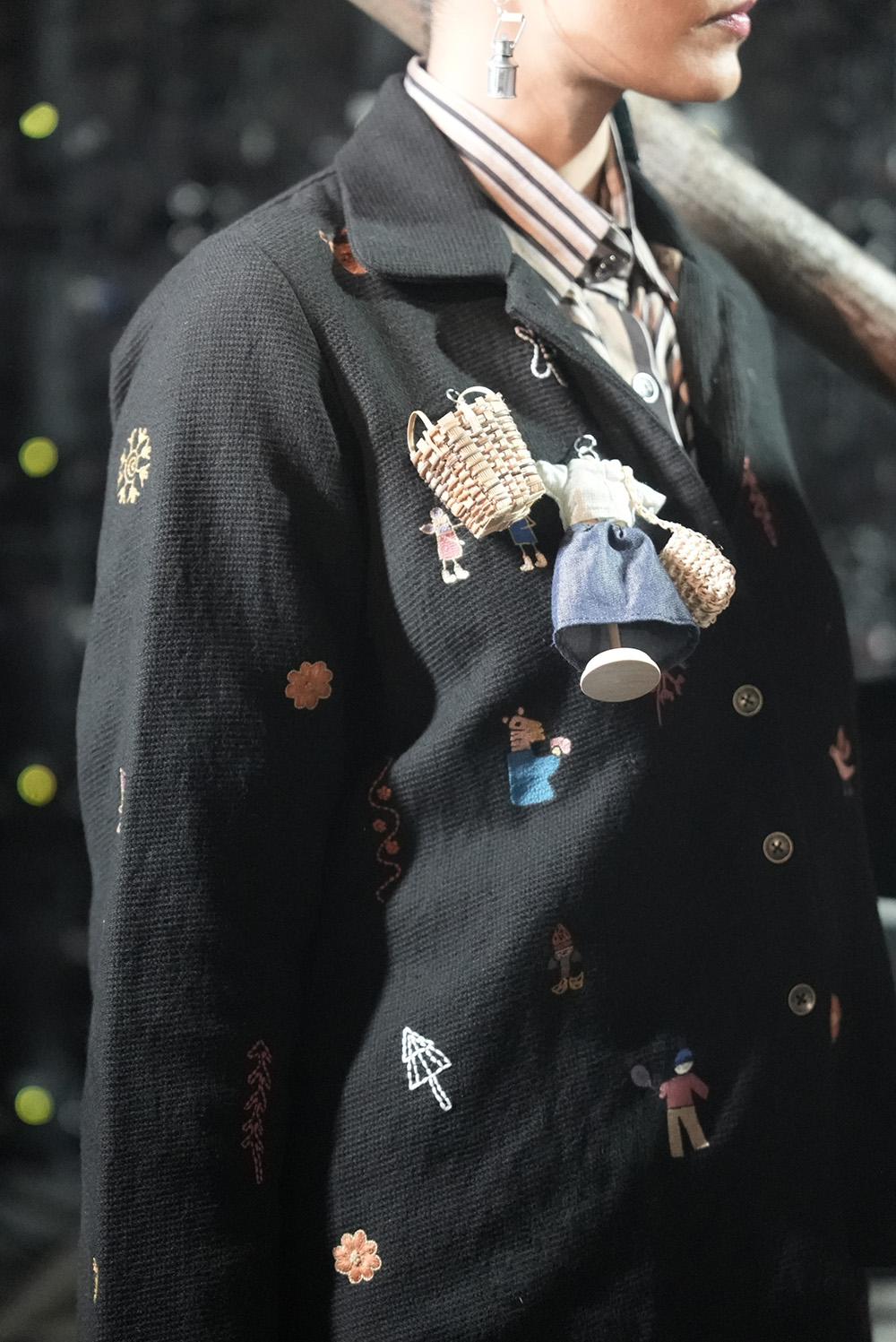
A forward-looking approach to Khadi is incomplete without the mention of sustainability. Sancheti’s collection also brought the ethical and conscious aspect of the fabric. “Khadi is entirely handmade, with handspun yarns, minimal water usage, and it supports a large community of artisans. Its natural slub and uneven texture are part of its beauty, making every piece unique. I believe it is important to continue sharing these qualities with the world.”
Khadi for The World
Being part of the Fashion Week since 2000, Sancheti feels that “Brand India” has grown into something the world truly looks towards.
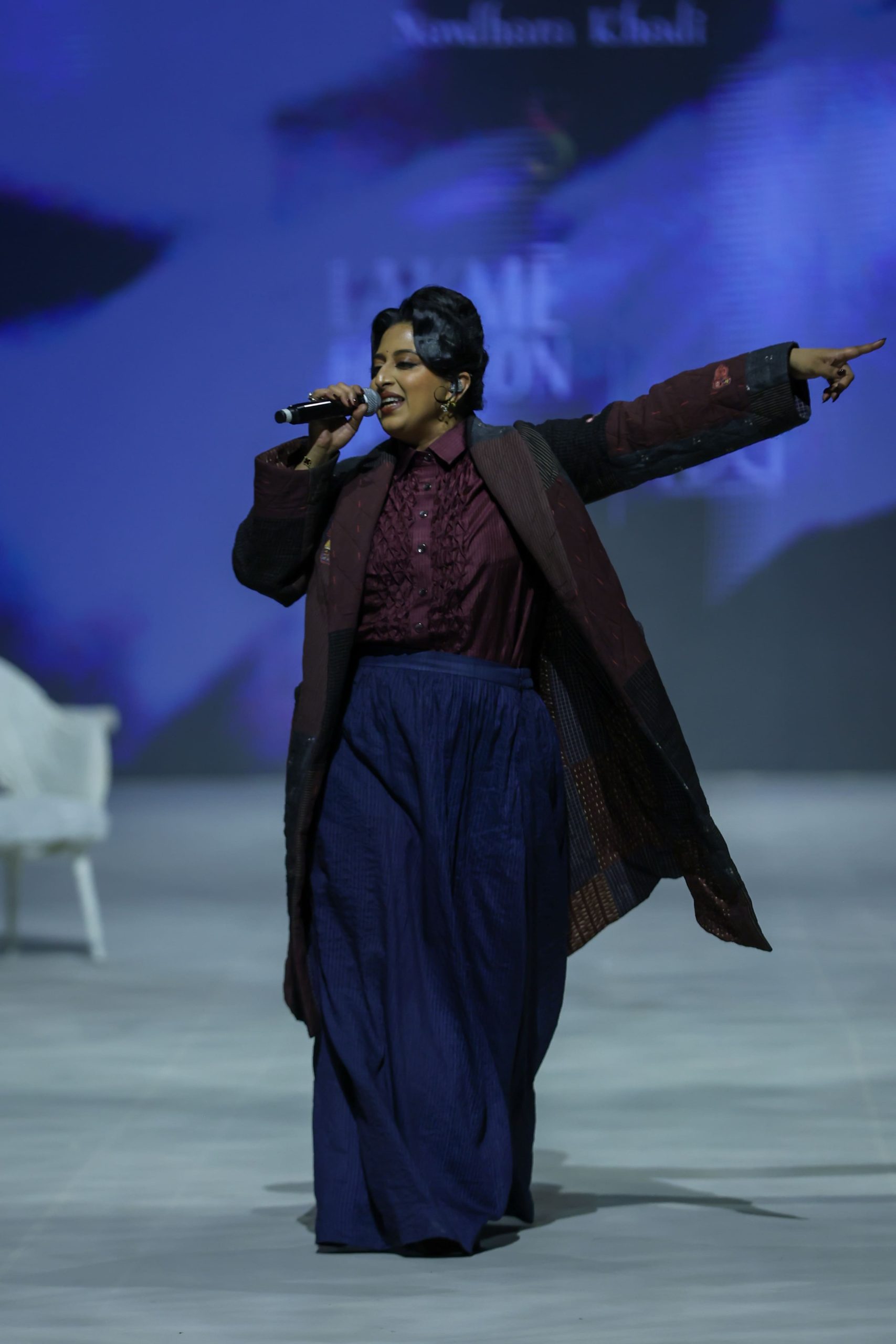
“The biggest shift I see is towards storytelling. Today, designers express their vision through diverse mediums, whether it is inclusivity, sets, off-site shows, or unique collaborations. In our case, the story was rooted in craft and art, with a youthful spirit. Raja Kumari, with her global presence and Indian soul, brought that narrative together beautifully, especially with her song Made in India, which captured the essence perfectly,” says the designer who had the Indian-American rapper as the showstopper dressed in a fluid skirt paired with an embroidered collared shirt and quilted coat.
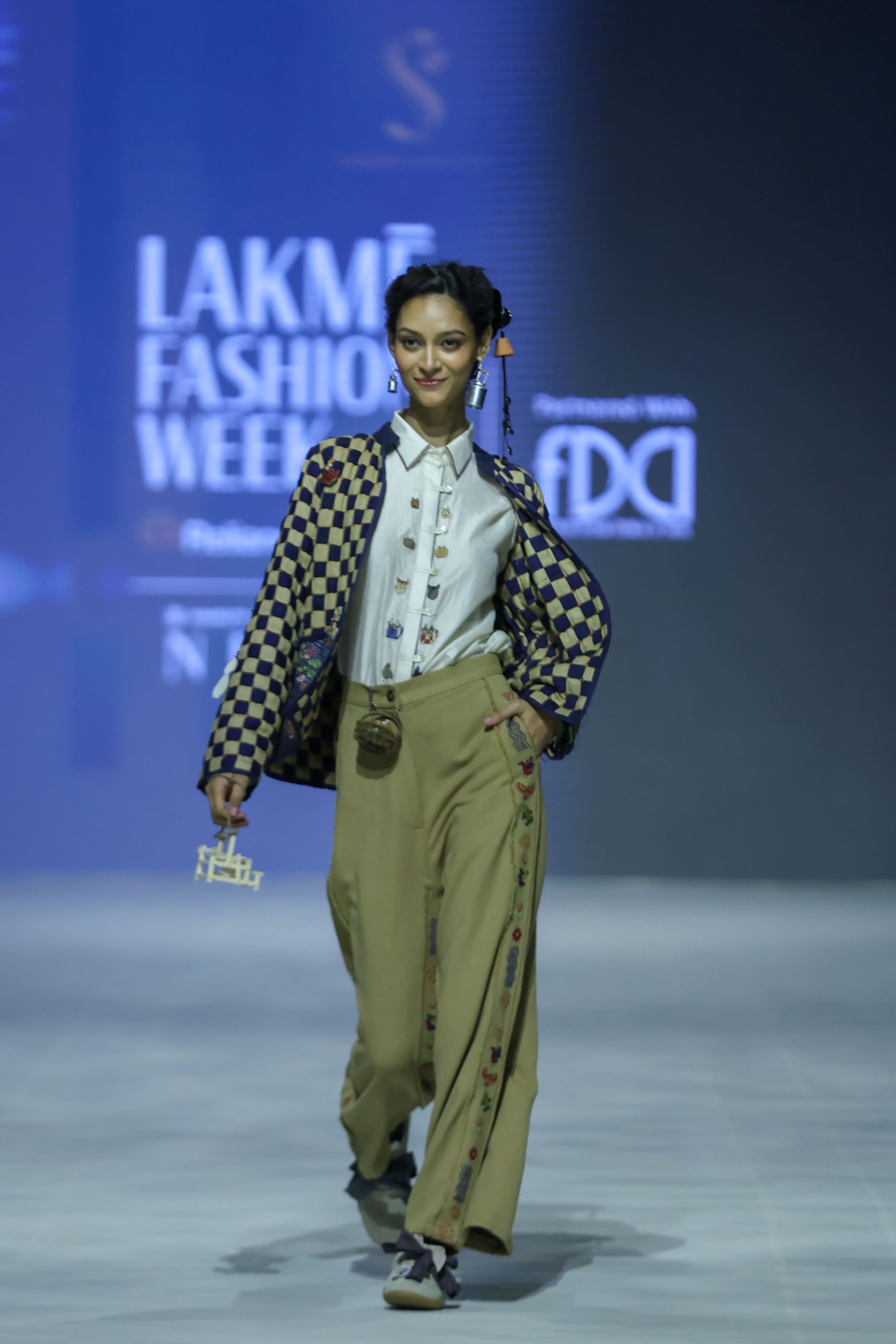
“Storytelling was key. We wanted to present the contemporary Indian youngster looking cool in Khadi, and to take that message to a global audience that Khadi can be modern, expressive, and relevant today,” she says as Kumari’s voice echoed Khadi taking its place on the world stage.