FIFA World Cup Trophy Rules Explained: Why Champions Don’t Keep The Original Trophy
It may be the most recognisable trophy in sport, lifted by legends from Pelé to Messi, but the original FIFA World Cup Trophy never truly belongs to the winners because beneath all the gold, glory, and confetti lies one of football’s strangest and most fiercely protected rules
There are few objects on Earth more powerful than the FIFA World Cup Trophy. Not economically powerful. Not politically powerful. Emotionally powerful. A small golden sculpture capable of making entire nations cry into beer glasses while grown men paint their faces and scream at televisions like medieval villagers witnessing dragon attacks. And as the 2026 FIFA World Cup approaches — spreading itself gloriously across the United States, Canada, and Mexico like a travelling football circus fuelled by billion-dollar sponsorships and impossible levels of patriotism — attention inevitably turns once again to the trophy itself. That glittering golden object lifted by Pelé, Maradona, Zidane, Iniesta, Messi and every footballing deity worshipped since 1974.
But here’s the strange bit. The winners do not actually get to keep it. Which feels rather unfair, really. Imagine climbing Everest only to be told the mountain belongs to somebody else. Or winning Le Mans and being handed a photocopy of the car keys. Yet that is precisely how FIFA operates. Because the original FIFA World Cup Trophy — the actual one made from 18-carat gold and green malachite, standing 36.8 centimetres tall and weighing just over six kilograms — never permanently leaves FIFA’s possession. Ever. The champions lift it, kiss it, cry onto it, parade it around open-top buses while hanging dangerously off railings, and then eventually FIFA quietly takes it back like an overprotective museum curator retrieving a priceless vase from drunk wedding guests. Instead, the winning nation receives a gold-plated bronze replica. Essentially football’s version of a luxury showroom display model.
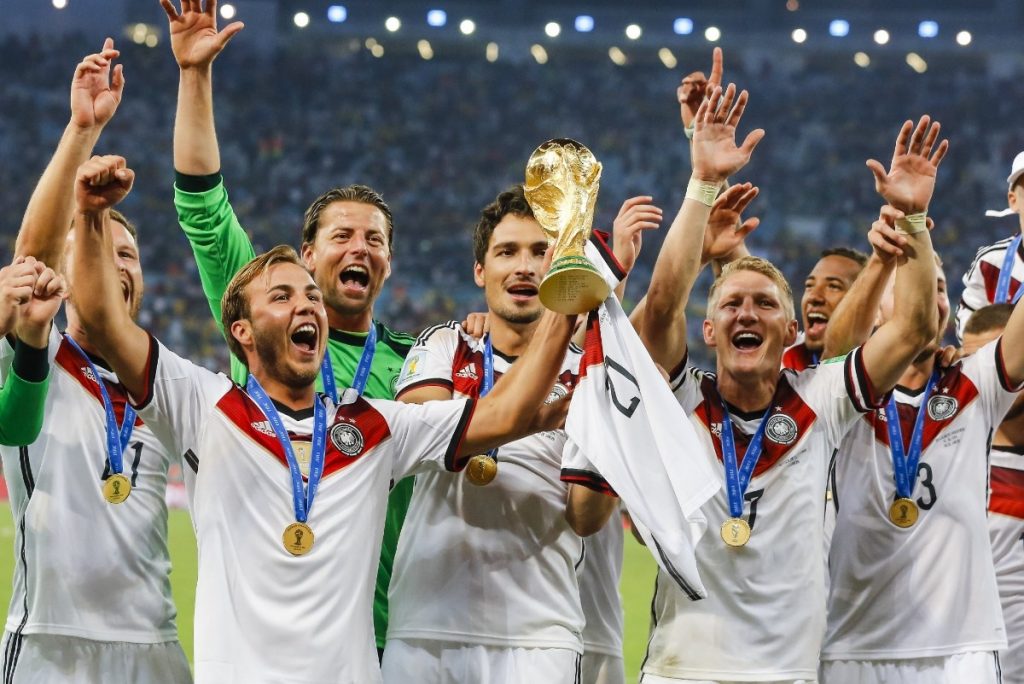
Now before angry fans begin foaming at the mouth, there is actually a very sensible reason for this. Several, in fact. Firstly, the trophy is genuinely priceless. Not in the melodramatic marketing sense where luxury brands describe handbags as “beyond value.” This thing is historically priceless. It is one of the most recognisable sporting objects on the planet. You could probably show it to an isolated tribe deep inside the Amazon rainforest and someone would still attempt a bicycle kick nearby. Secondly, football has a complicated history with trophies mysteriously disappearing. The original Jules Rimet Trophy — the predecessor to the current World Cup Trophy — was famously stolen in England in 1966 before eventually being discovered wrapped in newspaper by a dog named Pickles. Which already sounds less like a sports story and more like a rejected Guy Ritchie screenplay.
Then Brazil permanently retained that trophy after winning the World Cup for a third time in 1970. Wonderful idea in theory. Except in 1983, it was stolen again. This time permanently. Believed to have been melted down by thieves. Imagine melting football history for scrap metal. That is like stealing the Mona Lisa to use the frame as firewood. So FIFA understandably became slightly paranoid afterwards. The current trophy, introduced in 1974 and designed by Italian sculptor Silvio Gazzaniga, is now guarded with the kind of intensity normally reserved for nuclear launch codes and secret Formula One designs. Only a tiny handful of people are even allowed to touch it officially — FIFA executives, winning players, heads of state, and possibly Lionel Messi because frankly he has now reached mythological status.
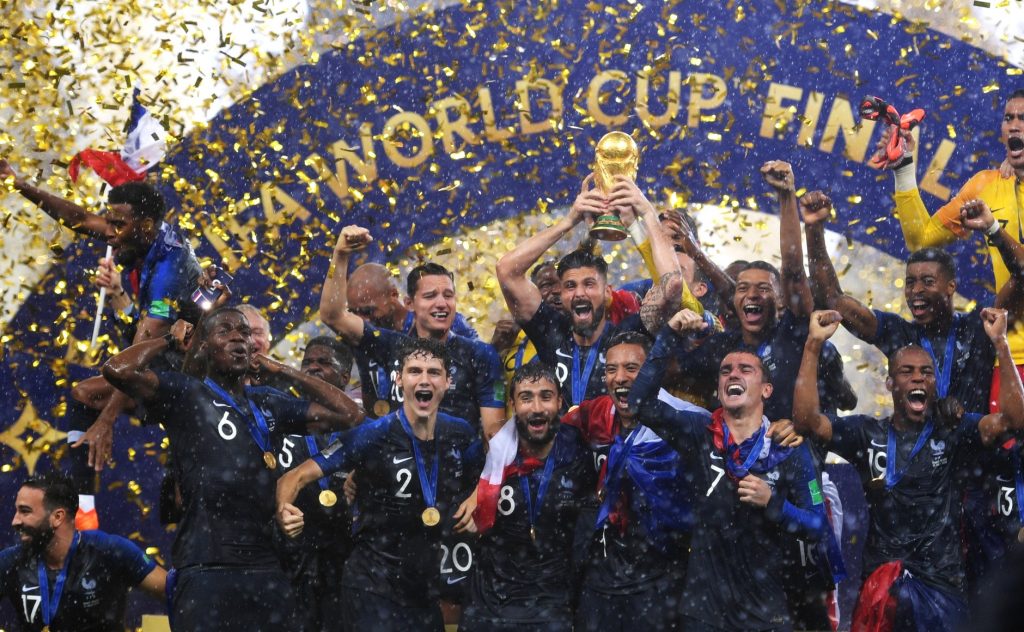
And this is where the mythology of the World Cup Trophy becomes even more extraordinary. Unlike league titles or domestic cups that spend most of their lives sitting in glass cabinets inside stadium museums collecting dust and fingerprints, the FIFA World Cup Trophy lives like a diplomatic celebrity. It travels constantly under extraordinary security. It appears at ceremonies, tours, corporate events, and global promotions. Entire transport protocols exist purely to move it safely between countries. Somewhere in Switzerland, there are probably people whose full-time jobs involve protecting a golden football sculpture from chaos. Which, given football fans, honestly seems reasonable.
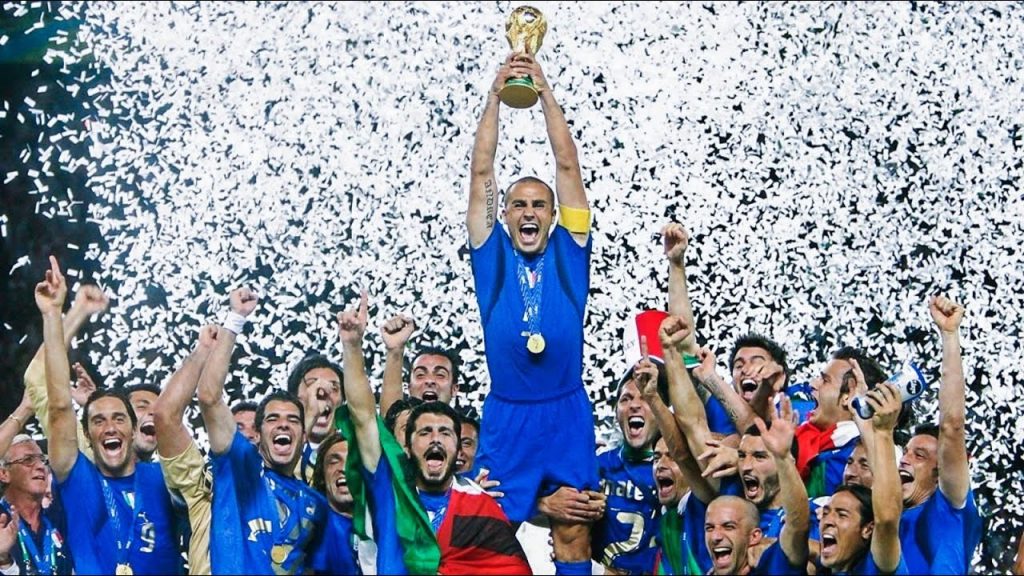
And as we approach the 2026 FIFA World Cup — the largest tournament ever staged, with 48 teams, sprawling host cities, and enough logistical complexity to make NASA nervous — the trophy once again becomes football’s ultimate obsession. Every player dreams about lifting it. Yet no nation truly owns it. Not Argentina. Not France. Not Brazil. Not Germany. Not even the winners of 2026. Because the World Cup Trophy does not belong to champions. It belongs to football itself. And perhaps that is fitting.
After all, this is not merely silverware. It is sport’s closest thing to a sacred relic — a golden artefact carrying generations of heartbreak, ecstasy, nationalism, genius, and madness across continents and decades. Which means FIFA will continue doing exactly what it always has: letting the winners hold it briefly before carefully taking it back again. Like a parent allowing someone to borrow a Ferrari for the weekend.