Samsung Spatial Signage Brings New Depth to India’s Luxury Retail
Inside The Claridges, a roomful of India’s most influential CEOs and CXOs stood transfixed, not by champagne or conversation but by a wall of glass that appeared to hold real depth without a single pair of 3D glasses in sight. Samsung had brought its newest display technology home, and the luxury world had shown up […]
Inside The Claridges, a roomful of India’s most influential CEOs and CXOs stood transfixed, not by champagne or conversation but by a wall of glass that appeared to hold real depth without a single pair of 3D glasses in sight. Samsung had brought its newest display technology home, and the luxury world had shown up to watch.
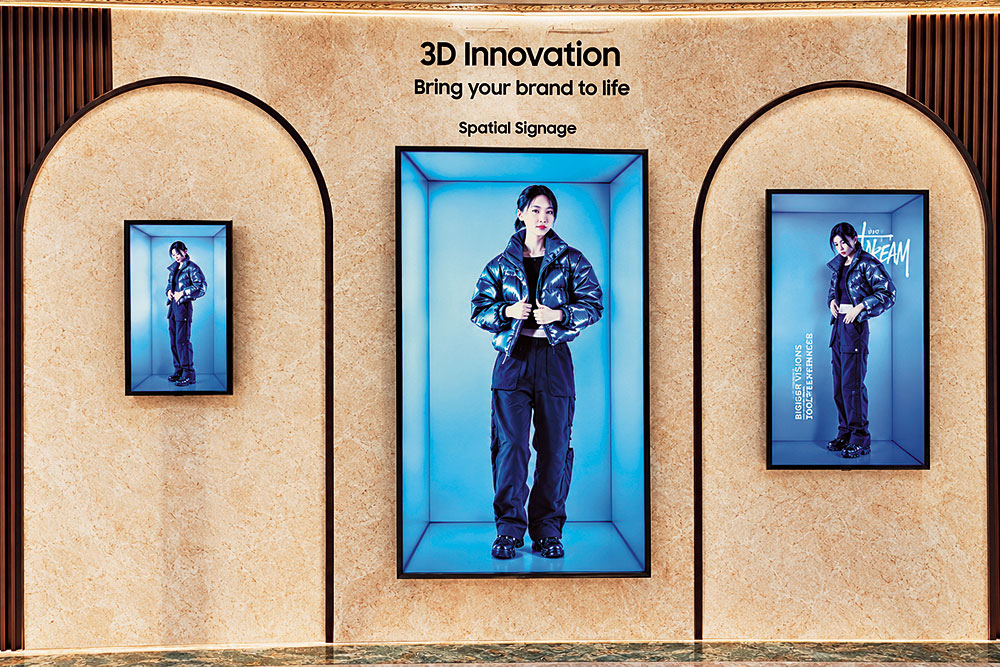
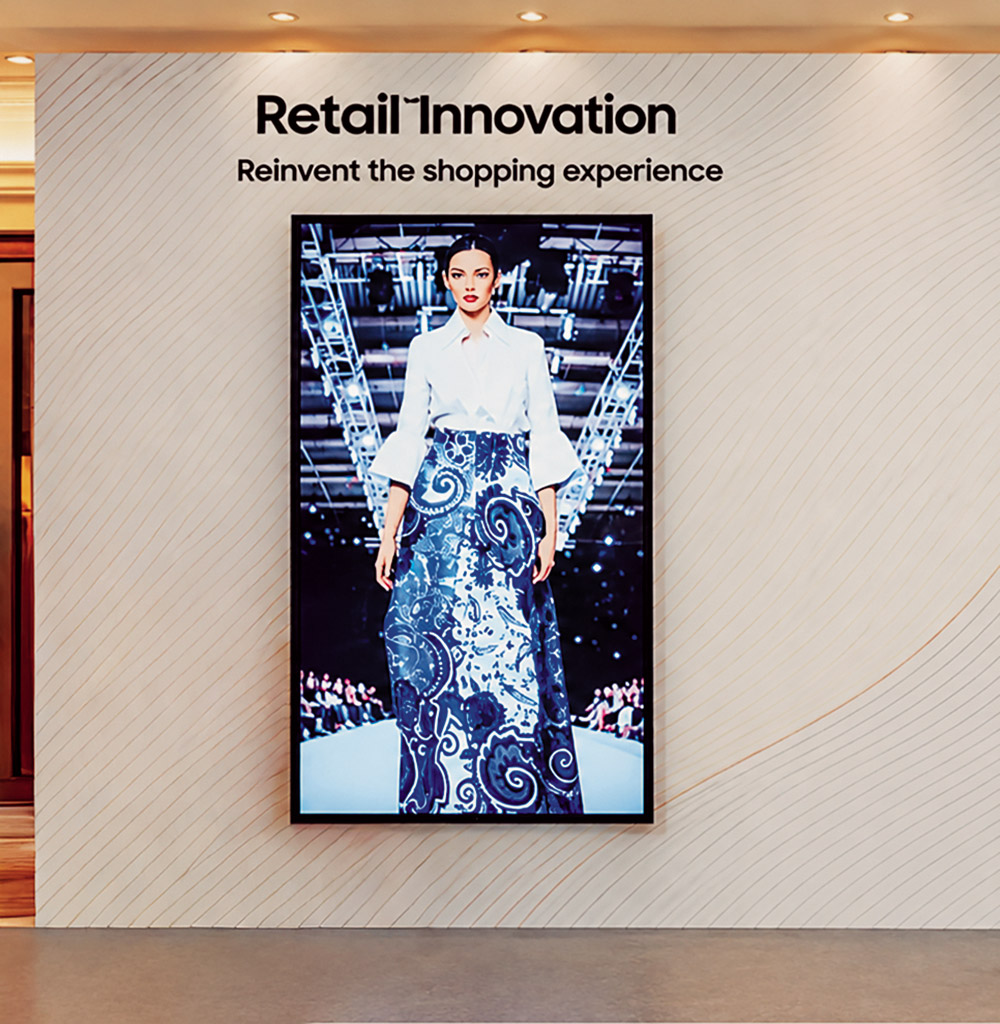
The occasion was a showcase of Samsung Spatial Signage for India’s retail and luxury circuit, hosted jointly with Outlook Luxe. Guests moved between illuminated arches showing sunglasses rotating in mid-air and lipstick campaigns that seemed to lift off the panel, the kind of visual trickery that makes a shopper stop mid-stride. Screens nearby carried the evening’s own tagline, promising to reinvent the shopping experience and turn content into something brands could create, connect and capture in one motion.
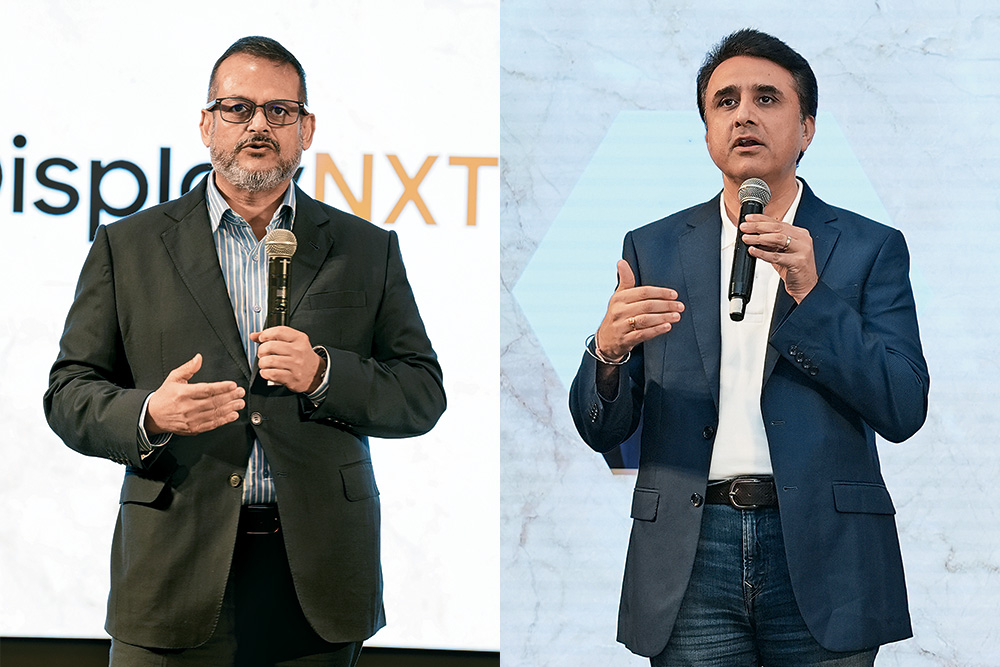
Puneet Sethi, Head of Enterprise Business at Samsung India, walked the room through DisplayNXT, calling it a technology which is “going to change the future of retail.” His remarks framed a wider portfolio of enterprise products meant to make store experiences seamless, from mobile and rugged devices built for retail floors to the supersized displays anchoring the space behind him.
Depth without the Glasses
The 85-inch Spatial Signage panel uses Samsung patented 3D Plate technology to create spatial depth behind the LCD, letting a single screen show a product’s front, back and side in a continuous 360-degree rotation. Content keeps the sharpness of ordinary 2D visuals while adding this natural-looking depth, without requiring specialised equipment such as 3D glasses, making it suited to retail counters, museum exhibits and entertainment spaces alike.
Driving the picture is Samsung Quantum Processor, which handles 4K UHD upscaling, 16-bit colour mapping and dynamic HDR refinement for sharper detail and consistent colour accuracy, while an anti-glare panel keeps visuals legible under bright or uneven store lighting. A companion AI Studio app, part of the Samsung VXT platform, turns flat images into signage-ready video without external editing tools, automatically refining shadow detail, adjusting margins and treating backgrounds so the output reads as more realistic on a Spatial Signage screen.
The panel carries CES 2026 Innovation Award and IFA 2025 honours, and its slim 52mm profile and 49kg build let it mount like ordinary signage rather than a boxy display case, a detail that matters enormously to designers of boutique storefronts. It pairs with a separately sold Slim Fit Wall Mount for cleaner installs in compact or design-sensitive spaces. Currently available globally as an 85-inch model, Samsung has confirmed 32-inch and 55-inch versions are due to follow, widening the format’s reach from flagship windows to smaller shelf and counter displays.
Elsewhere in Samsung enterprise lineup, supersized signage such as The Wall and Micro RGB displays now carry Cisco certification for boardroom video collaboration, while a new Logitech partnership brings Samsung 4K Smart Signage into Microsoft Teams Rooms setups, rounding out a portfolio built for everything from a flagship storefront to a corporate lobby.
Market Built for Luxury
Indranil Roy, Chief Executive Officer of Outlook Group, set the context for the room, pointing to India’s expanding base of aspirational luxury consumers and the homegrown brands now competing for their attention. It was that growing appetite, he suggested, that made an audience of India’s retail and luxury leadership the right one for Samsung to bring its newest display technology to.
L’Opéra’s Executive Chairman Kazem Samandari echoed the sentiment on why the country’s retail future feels bright, calling India a fantastic growing market with a bright future for high quality and luxury brands. For him, “luxury is a very personal experience,” rooted not in a price tag but in a product’s quality, its uniqueness and the relationship one builds with it.
That philosophy sat comfortably beside Samsung own supersized ambitions, all pitched at businesses chasing scale without compromise. What the evening at Claridges made clear is that the line between a luxury storefront and a technology showcase is thinning fast, and brands willing to treat their screens as extensions of craftsmanship, rather than mere hardware, stand to gain the most attention in a market only beginning to warm up to immersive retail.