The Nath Makes Its Third Cannes Appearance In 80 Years
The Indian nath has made only three appearances at Cannes in its entire history, and after a 13-year gap, Alia Bhatt just brought it back with a bang.
That tiny, delicate nath sitting on Alia Bhatt’s nose at the 79th Cannes Film Festival is doing more work than most jewellery collections combined. But before we get to the symbolism, the history, the whole sweeping cultural arc of it, let’s talk about her glorious look because the full picture deserves its moment.

Alia Bhatt Goes Full Filmy At Cannes
For her third appearance at Cannes 2026, Alia stepped out in a custom creation by Tarun Tahiliani – a structured corset saree paired with a custom-draped ivory chanderi dhoti skirt. The silhouette did that particular trick only great Indian fashion can pull off – it had the drama of a red carpet gown and the fluidity of a saree, all at once. The corset gave it architecture and the chanderi gave it soul. As she walked toward the venue, she carried a vintage-style parasol customised to match the outfit.
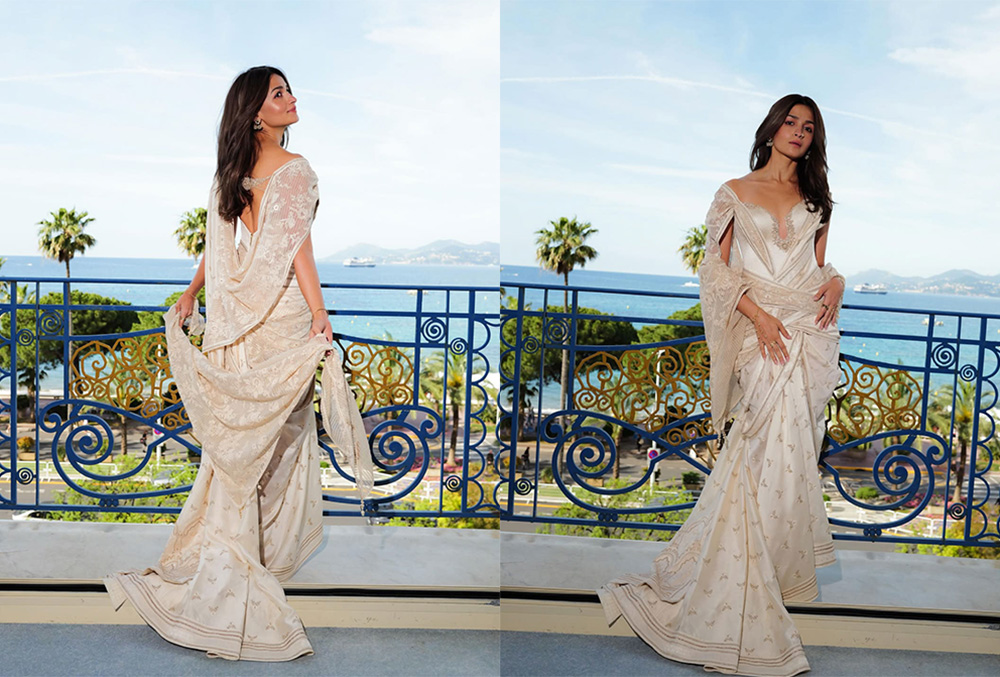
The jewellery was where things got truly interesting. She wore vintage-inspired haathphool, a tiny pearl bindi and a payal. Her earrings, it turned out, had been borrowed from Sunita Kapoor, mother of her stylist, Rhea Kapoor. And that nath. That small, perfectly placed nath. That is where the real story begins.
View this post on Instagram
The First Time India Brought Its Nose Ring To France
Because here’s what most people scrolling through the pictures don’t know. The nath has only appeared at Cannes twice before, at least to our knowledge, both times in 2013, at the 66th Cannes International Film Festival.
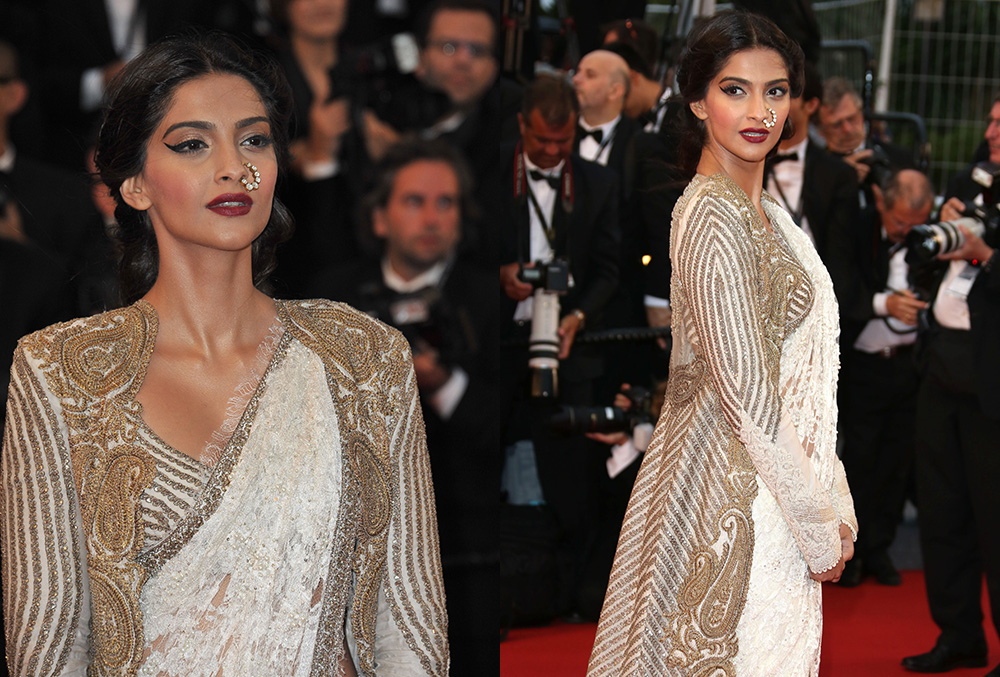
Sonam Kapoor chose a large nose ring to pair with an Anamika Khanna couture creation – an off-white and gold sari teamed with an embellished, full-sleeved jacket. It was a bold, maximalist statement, very Sonam. The pearl nath against that ivory fabric was unapologetic in the best possible way.

Then came Vidya Balan, who walked the red carpet at the premiere of Jeune & Jolie in a peach saree with a red blouse designed by Sabyasachi, wearing a golden nose ring. Where Sonam had gone big and embellished, Vidya went traditional – a proper Maharashtrian nath. That year, Vidya was also on the Cannes jury, so she was at the festival not just as a visiting star but as an authoritarian figure.
Thirteen Years Later, Everything Feels Different
And now, thirteen years later, Alia. Except where 2013 felt like a moment of audacity, 2026 feels like something different. More inevitable. The nath this time, on Alia, looks like it belongs.
Which, of course, it always did.

All thanks to actors like Sonam Kapoor and Vidya Balan for flaunting it on the Cannes red carpet a decade ago.
Origin Of Nath
The nath’s history in India is older and more complicated than most people realise, and the debate around its origins is genuinely fascinating. Historians suggest that nose piercings were introduced to South Asia as early as the 10th century, and by the 15th century they were common across the subcontinent. The nath, in its full jewelled form with a chain connected to a hairpiece, became a symbol of a woman’s marital status. It is widely believed that nose rings were introduced to India by the Mughals in the 16th century, who brought the tradition from their cultural ties with the Middle East and Persia.

The nath, once upon a time, used to display the economic status of the wearer. Royals and aristocrats wore naths made of pearls, sapphires, and various gems set in gold, while others wore those made of silver or brass. The ornament became particularly popular during the 17th and 18th centuries. It spread across the subcontinent and fragmented into regional identities. In Maharashtra, women wear a nath that is crescent-shaped and studded with pearls and precious stones. In Bengal, the nath is usually a large gold hoop. These regional variations are a testament to India’s cultural diversity.
Also Read: The Biggest Jewellery Trends Of 2026