

Some buildings capture attention because they are visually impossible to ignore. Others stay with us because they create a feeling that is difficult to explain. The work of Hiroshi Nakamura belongs to the rare category where architecture becomes more than structure; it becomes an experience shaped by atmosphere, emotion and the unseen elements that surround human life.
Through his Tokyo based practice Hiroshi Nakamura & NAP, Nakamura has created some of the most recognisable contemporary buildings to appear across the world. His projects often become instantly memorable images, yet their true brilliance lies beyond their appearance. Behind every curve, surface and material choice is a deeper exploration of light, sound, wind, water, memory and human connection. For Nakamura, architecture is not simply about creating objects in a landscape. It is about understanding the invisible forces that define how people experience a place.
Architecture Built Around Invisible Elements
Unlike approaches that focus primarily on form or visual impact, Nakamura begins with the relationship between people and their surroundings. Natural light, movement, sound and even silence become architectural materials. His buildings often feel carefully balanced between technology and nature, combining advanced construction methods with traditional Japanese sensitivity. This philosophy allows his spaces to feel highly engineered yet deeply organic, where every detail serves a purpose beyond appearance. His architecture asks a simple but powerful question: how can a building make everyday experiences more meaningful?
Also Read: Libraries That Became Architectural Marvels Around The World
Optical Glass House: Transparency With Privacy
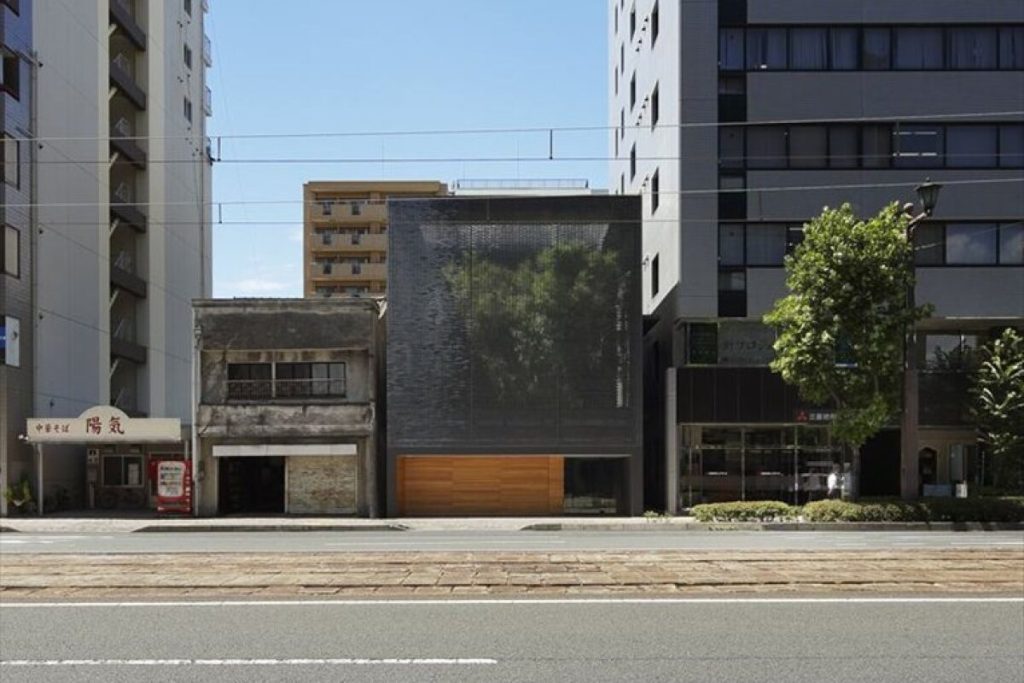
The Optical Glass House in Hiroshima remains one of Hiroshi Nakamura’s most celebrated works and perhaps the strongest expression of his design philosophy. Located along a busy urban street, the house faced a difficult challenge: creating privacy without disconnecting residents from the city. Nakamura’s solution was a remarkable façade made from nearly 6,000 custom optical glass blocks. Instead of creating a solid barrier, the wall filters the outside world. The city remains visible but transformed. Light passes through the glass, traffic noise is softened and the home becomes a private sanctuary without losing its connection to urban life. The façade is not simply an architectural feature; it becomes a living surface that changes throughout the day with shifting light and atmosphere.
Sayama Forest Chapel: Where Architecture Disappears Into Nature
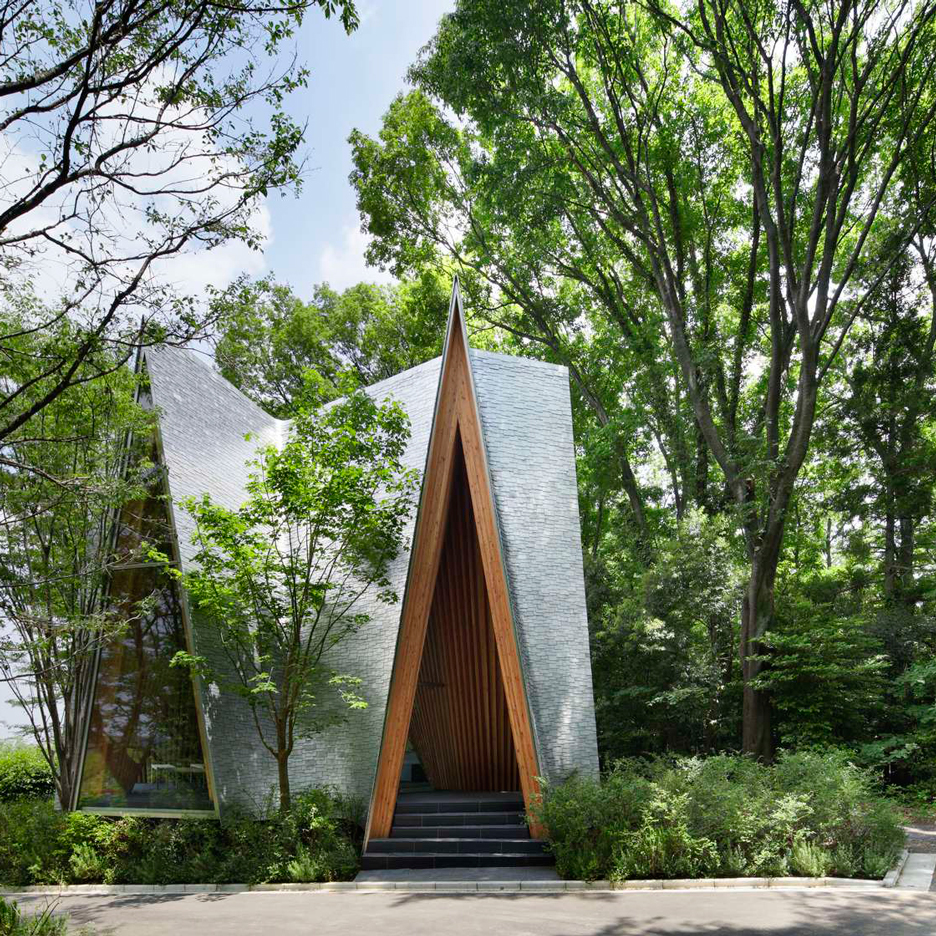
At the Sayama Forest Chapel near Sayama Lakeside Cemetery, Nakamura explores a completely different emotional landscape. Designed as a place of reflection and remembrance, the chapel avoids dominating its surroundings. Instead, it gently merges with the forest, allowing nature to become part of the architecture itself. The structure follows the movement of surrounding trees, creating a space where visitors experience a sense of calm and connection. The chapel demonstrates Nakamura’s belief that architecture should not compete with nature but create a dialogue with it.
Also Read: How Rudolf Steiner Turned Spiritual Ideas Into Architectural Masterpieces
A New Voice In Contemporary Japanese Architecture
Hiroshi Nakamura represents a generation of architects redefining what modern architecture can achieve. His buildings may first attract attention through their unusual forms, but they remain memorable because they create a deeper sensory connection. In a world increasingly focused on speed and digital imagery, Nakamura’s work reminds us that architecture is ultimately about how spaces make people feel. His buildings are not only designed to be seen; they are designed to be experienced. And that is what makes Hiroshi Nakamura one of the most distinctive architectural voices of today.