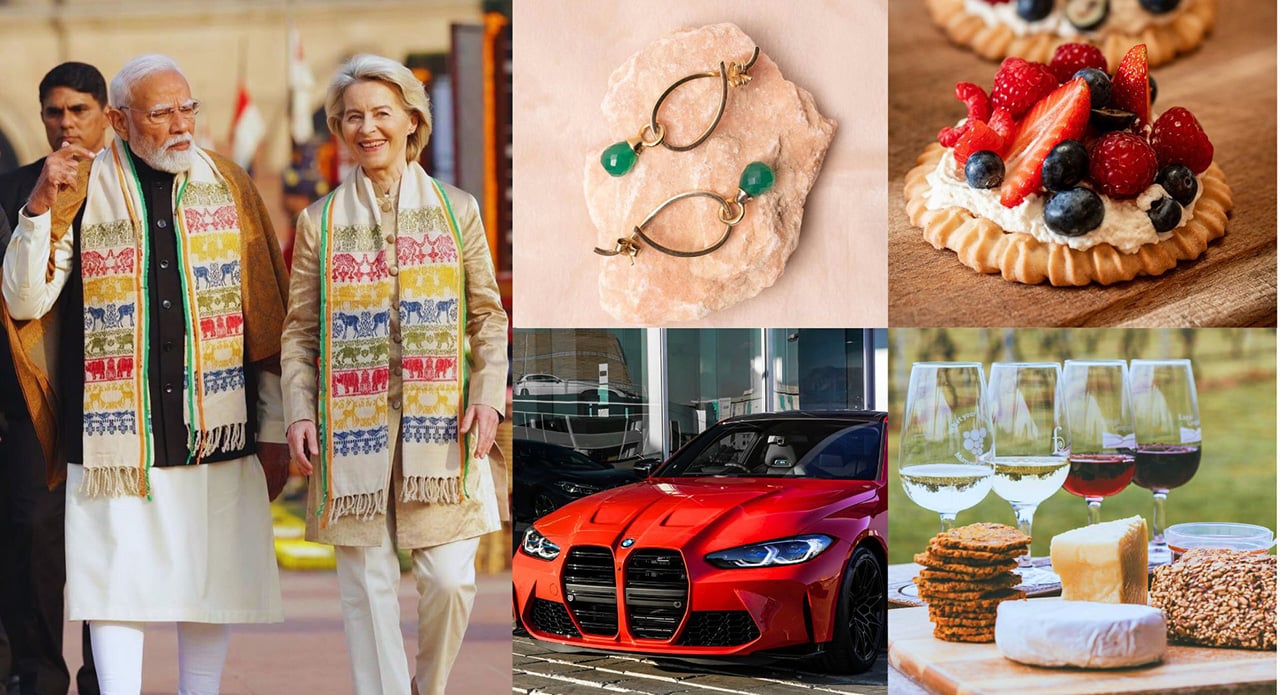


After nearly two decades of negotiations, India and the European Union have finally sealed the historic India–EU Trade deal for Free Trade Agreement (FTA). The new agreement signals a strategic deepening of ties between the 27-nation EU bloc and India, which together account for nearly 25 per cent of global GDP and a consumer base of around two billion people. The agreement comes at a significant time when the world, including India, is facing global trade tensions with the United States, with Washington imposing steep tariffs of 50% on certain Indian goods.
However, the new agreement fosters free trade between India and the EU with tariffs and taxes on imports being slashed across sectors prompting European Commission President Ursula von der Leyen call it “the mother of all trade deals”.
What is the India–EU Trade Deal?
The India-EU Trade Deal opens European markets wider to Indian goods while making European imported goods significantly more affordable in India. According to the European Commission, India will reduce tariffs on European products worth approximately $4.7 billion a year, as a result of major price corrections across categories like luxury cars, gourmet foods, and drinks.
View this post on Instagram
On the other hand, the EU will cut tariffs on 99.5 per cent of Indian imports over seven years in categories like marine products, leather, textiles, chemicals, rubber, base metals, gems and jewellery, which will eventually enter Europe duty-free. This is a key win for India’s export-driven sectors, which will get a significant boost. “The India–EU trade agreement is a significant step forward for the luxury sector, especially for fine jewellery. At present, gems and jewellery shipped to the EU face import duties of 2 to 4 per cent, but moving to zero duty will give brands more freedom to set fair prices. With these duty savings and smoother trade processes, gold and diamond jewellery designed in India can reach more European customers at attractive prices. This development is likely to boost demand and further raise India’s profile in the world of luxury,” tells Disha Shah, founder and designer of fine jewellery brand DiAi Designs.

Ashni Bhansali, Co-founder, House of Yarané, chimes in, “The India-EU trade deal is a clear inflection point for Indian fine jewellery. Eliminating the 2-4 per cent duty instantly improves price competitiveness in Europe, allowing design-led Indian brands to compete on equal footing in the premium luxury segment.”
Will Luxury Goods Get Cheaper in India under FTA?
For Indian shoppers with a taste for refinement, the India–EU Trade Deal will bring down the prices of fine wines, spirits, beers, and gourmet foods such as olive oil, confectionery, biscuits, pasta, chocolates, pet food, and even European imported fruits such as pears and kiwis.

Luxury buyers can expect European wines see a big price drop with India slashing wine tariffs from 150 per cent to 75 per cent, with a gradual reduction to 20 per cent over time. Duties on spirits will also fall from 150 per cent to 40 per cent, making cognac, premium gins, and vodkas far more accessible. “The FTA is likely to make European wines more accessible to Indian consumers who associate wine regions such as France and Italy with superior quality. Increased accessibility should also bring greater diversity to retail, encouraging wider exploration of wines from European regions like Portugal, Greece, etc. The same holds for Belgian and German beers, and spirits such as gin, vodka, cognac, liqueurs, etc.,” says Sonal C Holland, India’s First Master of Wine. She adds that reciprocal tariff reductions in the EU will open new export opportunities for Indian wine producers, strengthening the wine trade on both sides.

Tanveer Kwatra, founder of Delhi-based European dine-in, Grammie, says that FTA can give greater access to European wines and ingredients in Indian restaurants. “It will let Indian chefs elevate menus and wine programs without pushing prices up. What’s largely limited today to big-budget luxury weddings can finally move into mainstream fine dining.”
However, Nikhil Agarwal, a leading wine and spirits expert, critically weighs in that wines which currently sell at Rs 2500 and below are not affected by the FTA. “This will enable the price to the consumer to come down by 10 to max 15% or so with the first duty reduction, which is the sharpest since it happens in stages. However, the Euro to INR has shot up by 20% in the last year alone, with an expectation that it might go to 125 INR to 1 Euro in another year. At this rate, any benefit from the duty reduction will be lost.”
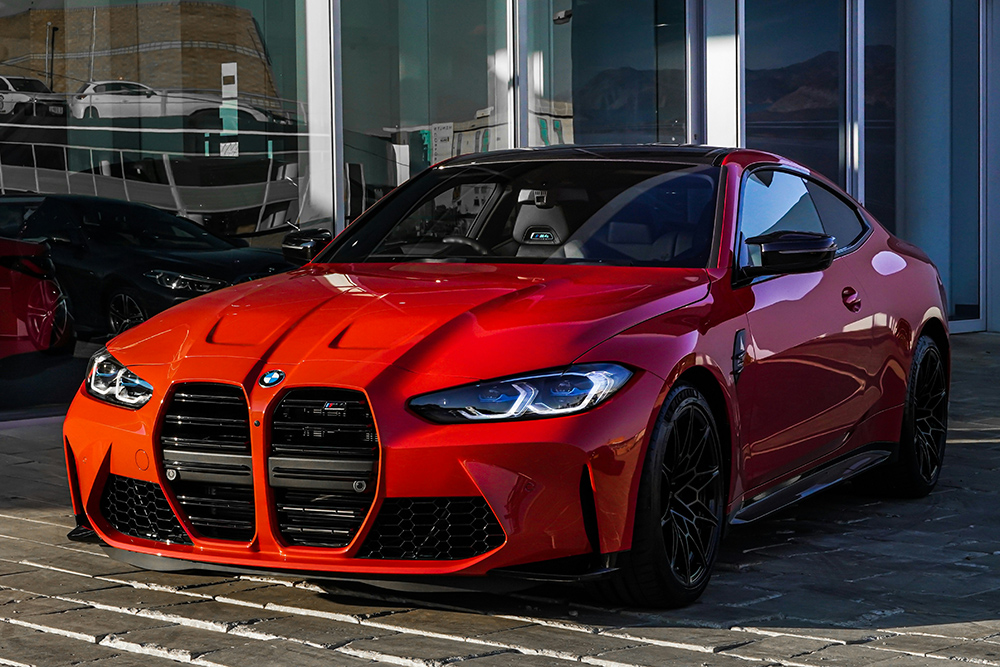
The new trade deal will have a major effect on the automotive sector as India has agreed to cut tariffs on imported fully built cars from the European Union to 10 per cent over five years, down from the previous 110 per cent. This means that vehicles priced above €15,000 (approximately ₹16 lakh) will initially attract a 40 per cent duty, which will then be reduced to 10 per cent. This will benefit European automakers such as Mercedes-Benz, Lamborghini, Porsche, Volkswagen, BMW, and Renault, as it will open the Indian market for European luxury cars after the price drop. Reduced trade barriers will enhance manufacturing competitiveness, expand export potential and support seamless integration into global supply chains.
Impact of India-EU Trade Deal on Indian luxury consumers
For Indian consumers, the deal promises greater access to European luxury and gourmet goods that will be available at more affordable prices after the deal comes into force early next year. For luxury brands, it cements India’s position as a high-growth, high-potential market that is no longer on the sidelines of global strategy. In effect, the India–EU trade deal is less about tariffs alone and more about access: to markets, to premium craftsmanship, and free exchange of lifestyle offerings across continents.