

Most car companies honour their founders with plaques, polite speeches, and perhaps a special badge nobody notices. Brabus, however, looked at the legacy of Bodo Buschmann and decided that was nowhere near dramatic enough. So they built a hypercar. And not just any hypercar. They called it the BODO. This is not subtle. It is not modest. It is not designed for people who think a quiet life is a virtue. It is a rolling monument to the man who founded Brabus in 1977 in Bottrop and spent decades proving that ordinary performance was for other people. Limited to just 77 units worldwide, with only 10 to 15 built annually, the BODO is less a car and more a declaration of intent.
Also Read: American vs European V8 Engines: Key Differences in Power, Sound & Performance
Carbon Fibre, Because Steel Is For Civilians
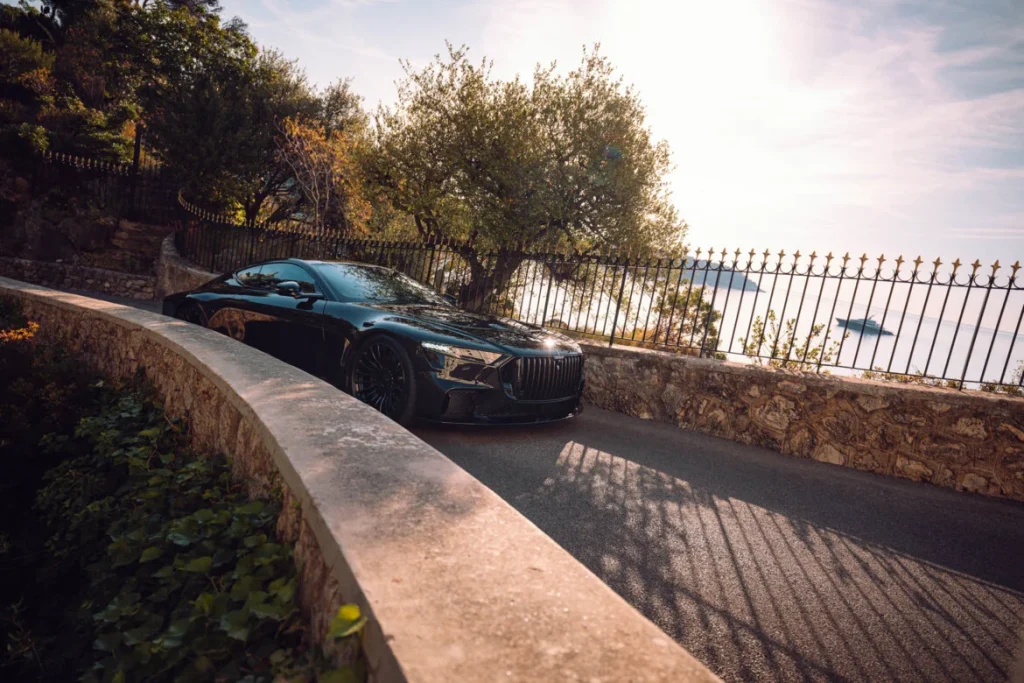
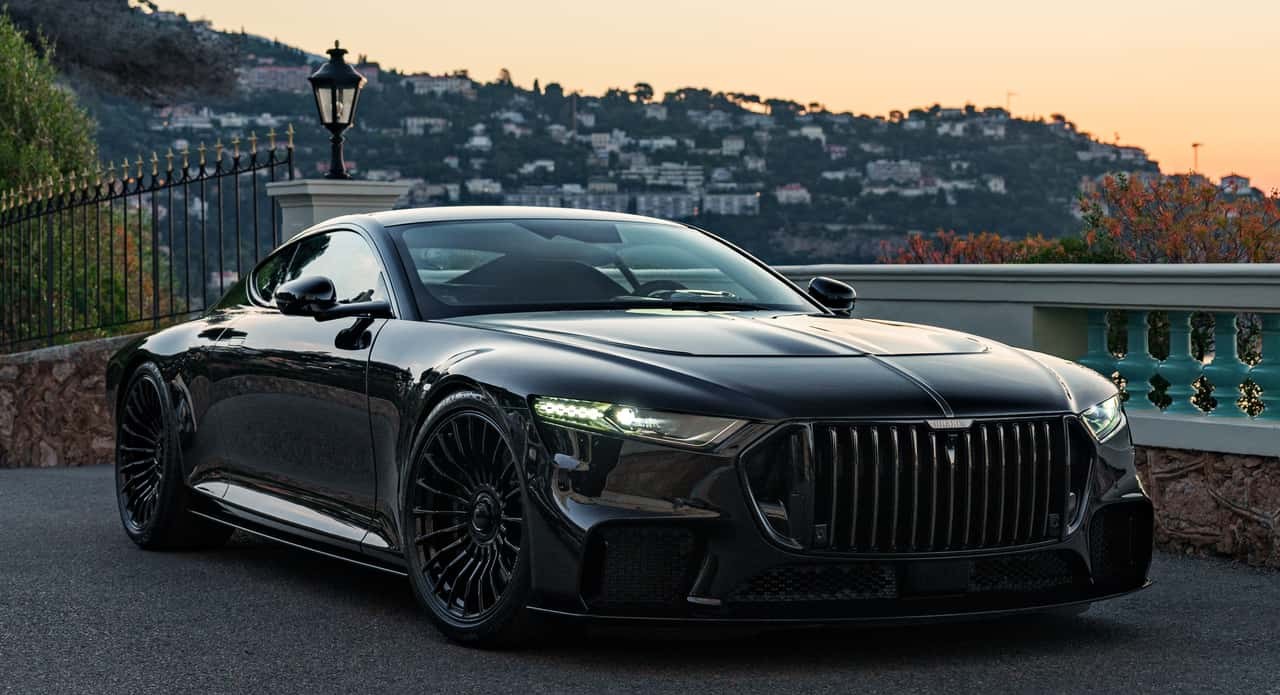
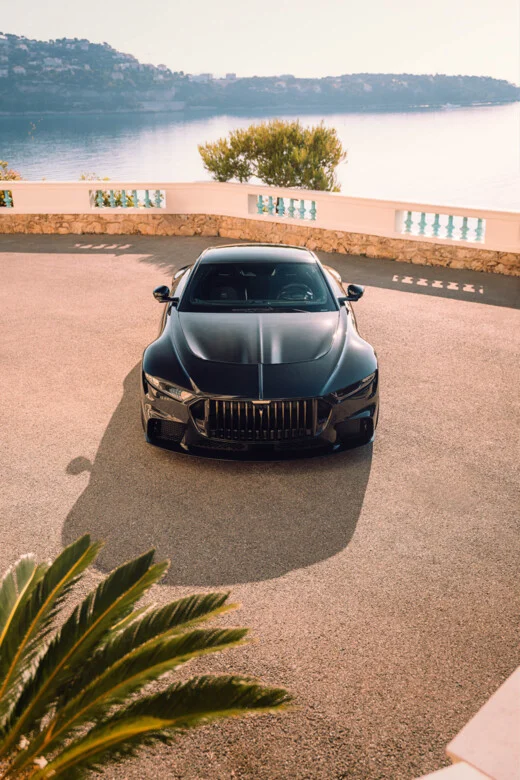
The first thing you notice is that it looks like it has been designed by someone who thinks fighter jets are a bit too restrained. Every panel, apart from the windows and the fixed panoramic glass roof, is made from high-strength carbon fibre. Not for fashion, but because when your goal is 360 km/h, weight becomes the enemy and aerodynamics becomes religion.
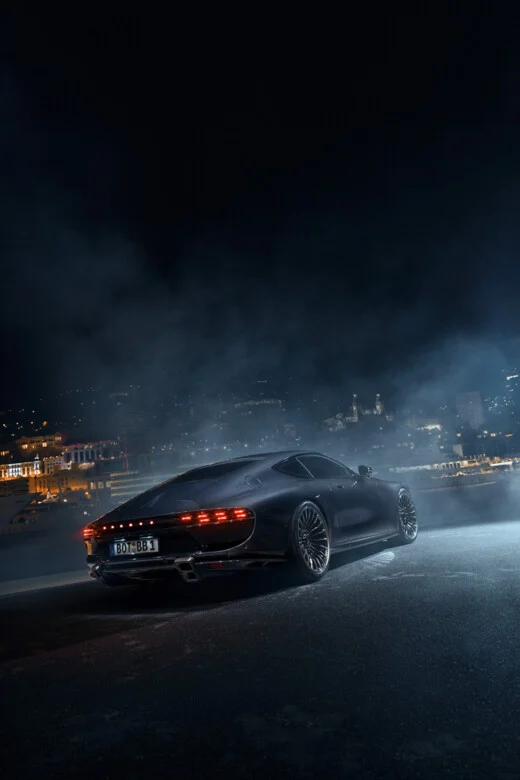
At the front, there are LED matrix headlights, a radiator grille with 13 vertical slats, and two massive RAM-AIR ducts feeding the V12 like a bodybuilder being handed protein shakes. The exposed-carbon front spoiler creates serious downforce, while the side profile stays absurdly low at just 130 cm tall. At the rear, things get properly theatrical. A two-stage electric spoiler rises automatically at speed and even stands vertically under hard braking, acting as an air brake. Yes, an air brake. Because apparently regular brakes were too ordinary. And just beneath the rear glass sits the “77” logo, a reminder that this madness began in 1977.
The Heart Of The Madness
Now for the important bit: the engine. It uses a hand-built 5.2-litre V12 biturbo, because if you are naming a car after your founder, giving it four cylinders would be an insult worthy of legal action. This monster produces 1,000 horsepower and 1,200 Nm of torque. That is enough force to rearrange your internal organs. Power goes to the rear wheels through an eight-speed automatic gearbox with carbon-fibre paddle shifters, while an electronic differential can lock up to 100%.
The numbers are, frankly, absurd. 0 to 100 km/h in 3.0 seconds, 0 to 200 km/h in 8.5 seconds, 0 to 300 km/h in 23.9 seconds, Top speed: electronically limited to 360 km/h. Electronically limited, mind you. Which means left alone, it would probably attempt to invade neighbouring countries.
Also Read: Rolls-Royce Unveils Black Badge Cullinan By Cyril Kongo With Exclusive Hand-Painted Artwork
Wheels, Grip
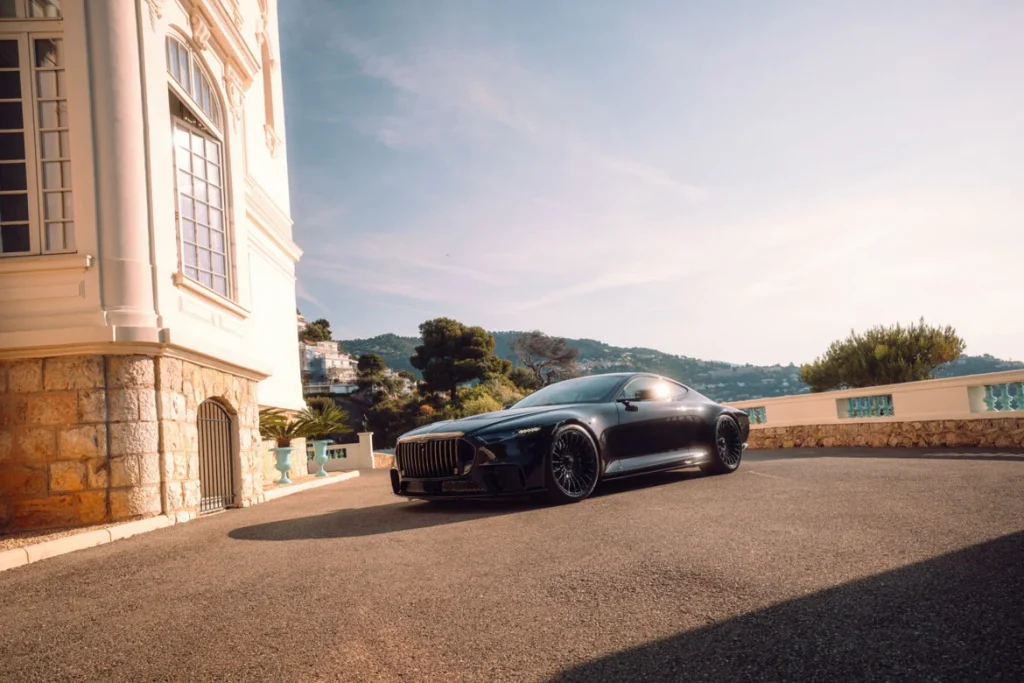
The BODO rides on 21-inch Brabus Monoblock Z-GT Shadow Edition forged wheels, wrapped in specially developed Continental SportContact 7 Force tyres. At the front, 275-section rubber keeps things pointed in roughly the right direction. At the rear, enormous 325-section tyres attempt to translate all that V12 violence into actual forward motion rather than public embarrassment. Suspension comes via double wishbones at the front and a sophisticated multi-link rear setup, with five driving modes ranging from civilised grand tourer to “good luck.” There is also a lift system that raises both axles by 25 mm for speed bumps, because even hypercars must occasionally survive supermarket parking ramps.
Piano Black And Proper Theatre Inside
Open the door and the cabin greets you like a very expensive nightclub. The interior is trimmed in smooth black leather and black Nubuck, with carbon fibre across the steering wheel, dashboard, centre console, and doors. Shadow Gray accents add a technical sharpness, while the embroidered signature of Bodo Buschmann reminds you whose ghost is supervising the build.
The seats are sculpted for long-distance comfort and aggressive cornering, while the rear seats continue the same leather treatment with Brabus Shell quilting and Double-B logos. Even the floor mats and trunk liner get the same obsessive attention. There is also a matching leather Weekender bag and a blockchain-based Digital Product Passport, because apparently even your luggage now needs authentication.