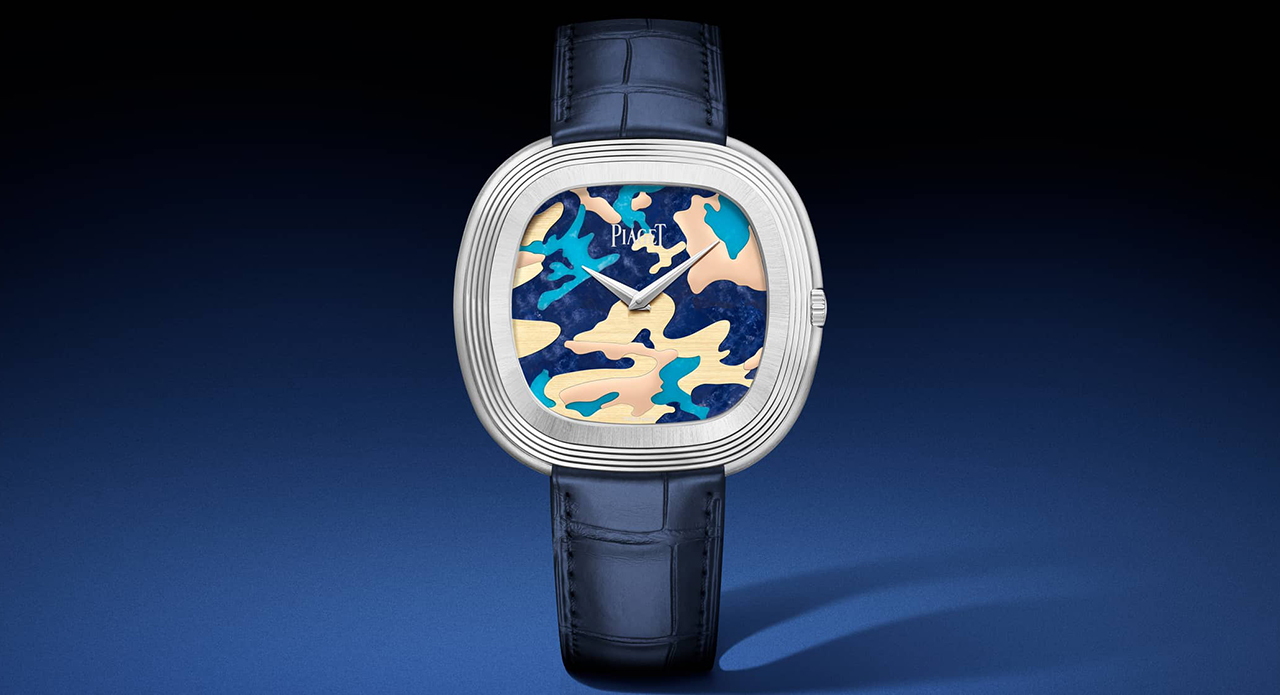


Some faces were made to be remembered, and some are made to be hidden in plain sight. Picture the artist in 1986, the silver wig, the stare that dared the camera to look away, and then picture the pattern that crept across it: bold, restless, wearing his own fame like a disguise. Colour pours across the image like a tide, and for a moment the man and the mask become one. Now imagine that tide frozen in stone, a rippling current of blue set in gold, sealed under glass and wrapped around a wrist. Here is time, but not as the clock sees it. Here is time as a canvas, and the canvas is alive. The story begins with a long friendship between a maison and an artist. Piaget has always kept close ties with the creative figures of its day, and none left a deeper mark than Andy Warhol, the King of Pop Art, a compulsive watch collector who owned no fewer than seven Piaget models.
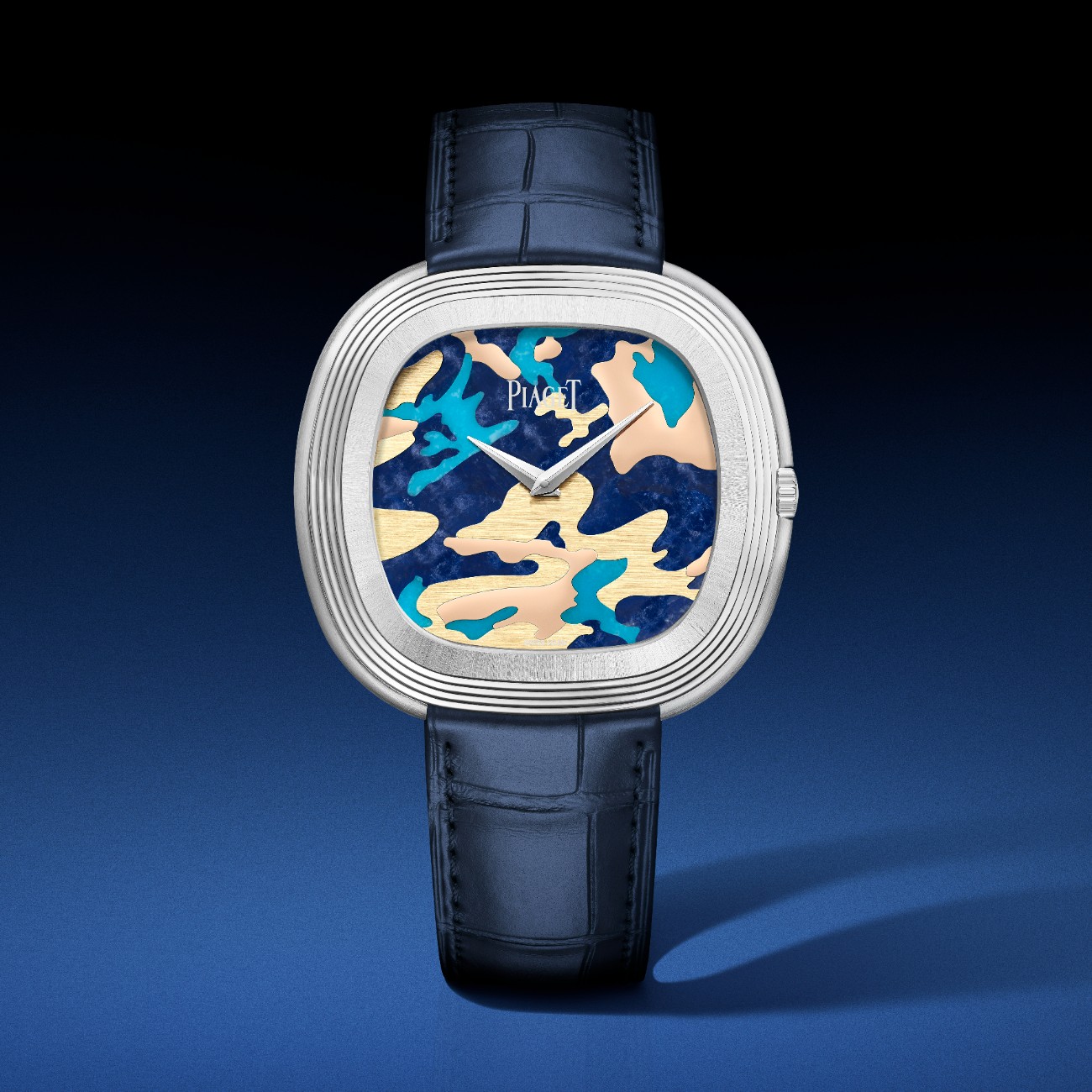
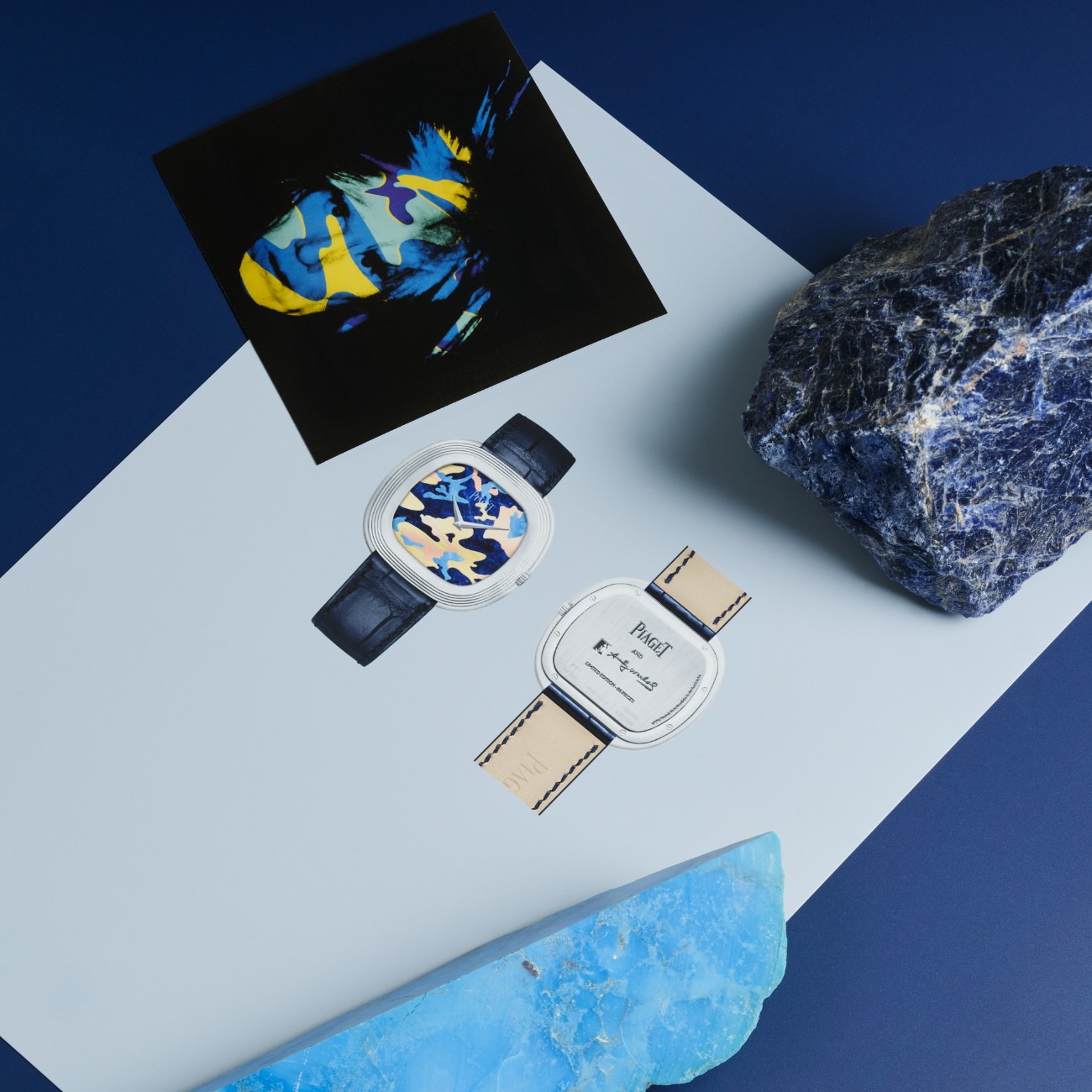
Among them was the famous reference 15102, a 45mm cushion-shaped watch designed by the maison’s artistic director of the time, Jean-Claude Gueit, and produced in small series from 1972 to 1977. The design was reinterpreted in 2014 as the Black Tie Vintage, and in 2024 Piaget became a licensed collaborator of the Andy Warhol Foundation for the Visual Arts, finally earning the right to use his name. The collection was renamed, and the maison now creates one timepiece a year inspired by his work. After the 2025 Collage, with its blocks of pink opal, green chrysoprase and yellow serpentine, comes the 2026 Camouflage, limited to 86 pieces. It draws on his 1986 self-portraits, in which he explored the duality of fame by revealing its shadow side as a camouflage pattern. Artistic Director Stéphanie Sivrière explains that the aim is to take inspiration from his works without simply copying them, with colour and ornamental stones as the common thread.
Also Read: Piaget’s New Colours of Extraleganza Collection Debuts With Ananya Panday As Friend Of The Maison
The case measures 45mm and is crafted in 18ct white gold with a rhodium finish, in the iconic gadrooned cushion shape that Piaget has made its own. It is 8.08 mm thick and water-resistant to 3 bar. There is no separate frame; instead, the gadrooned case surrounds the dial in place of one, letting the artwork inside speak without interruption. The dial is where the drama lives. Piaget deconstructed the original Warhol image and reinterpreted it through marquetry of sodalite and turquoise, set against satin-finished yellow gold and polished rose gold, giving the camouflage pattern an architectural dimension rarely seen in this type of design.
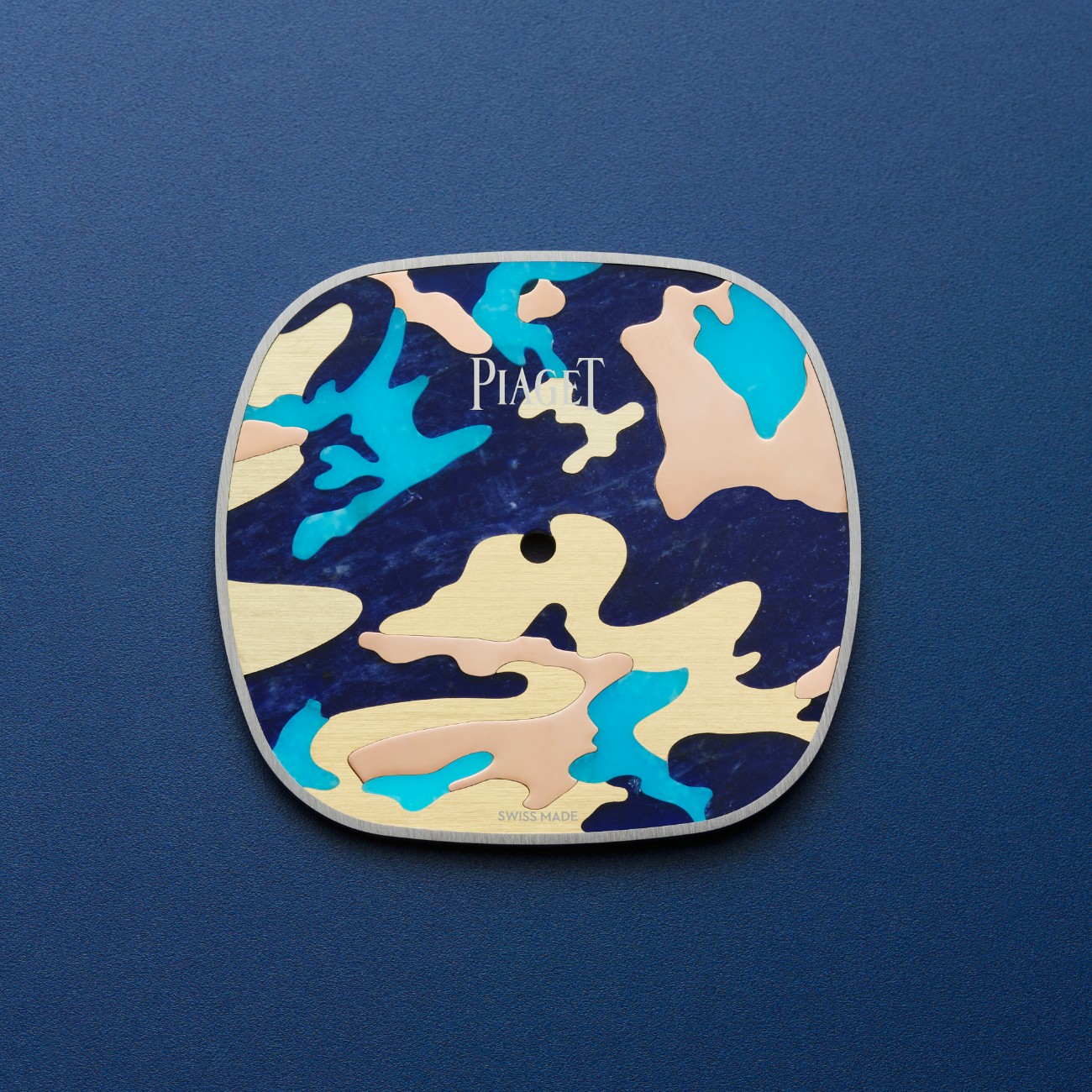
The contrast between the oceanic sodalite, the cerulean turquoise and the two textures of gold is rendered across 27 pieces of stone, and more than one hundred hours of work were needed to research, design and craft each dial. Slender dauphine hands move across it, their tapered shape adding a light, elegant counterpoint to the weight of the stone. It is a nod to a maison that, since introducing colour and gold in the early 1960s, has used some 50 ornamental stones, from lapis lazuli and opal to jade and coral.
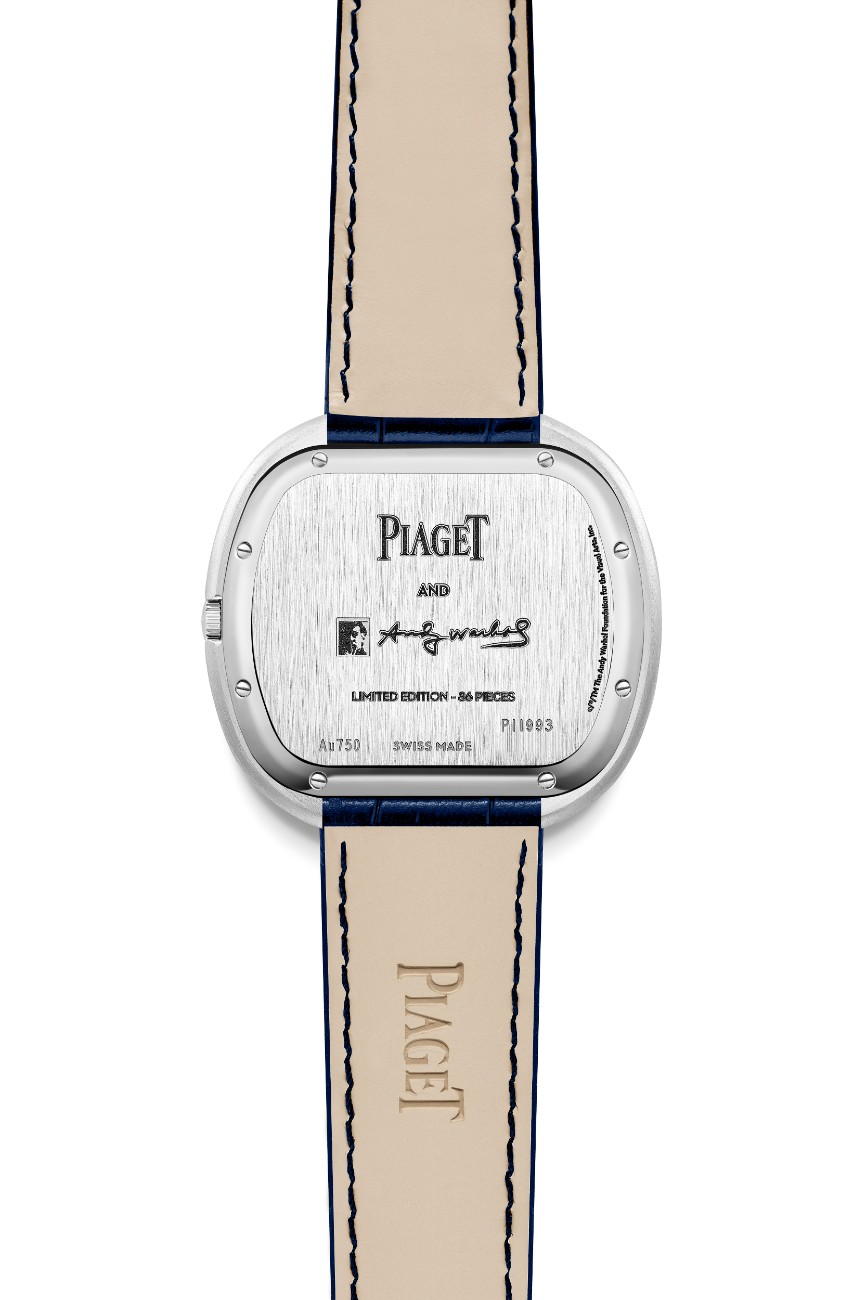
Inside beats the Manufacture calibre 501P1, a self-winding mechanical movement with approximately 40 hours of power reserve. Its finishing is as careful as the dial: circular Côtes de Genève, a circular-grained plate, a bevelled bridge and blue coloured screws, with a slate grey oscillating weight made of tungsten. On the back of each watch, Piaget engraves Andy Warhol’s famous signature along with the number of pieces in the limited series. The watch is worn on a blue alligator leather strap, fastened with an ardillon buckle in rhodium-finished gold. For collectors, it offers the sensation of wearing a true work of art on the wrist, and a quiet demonstration of how a maison can infuse its own style into art.