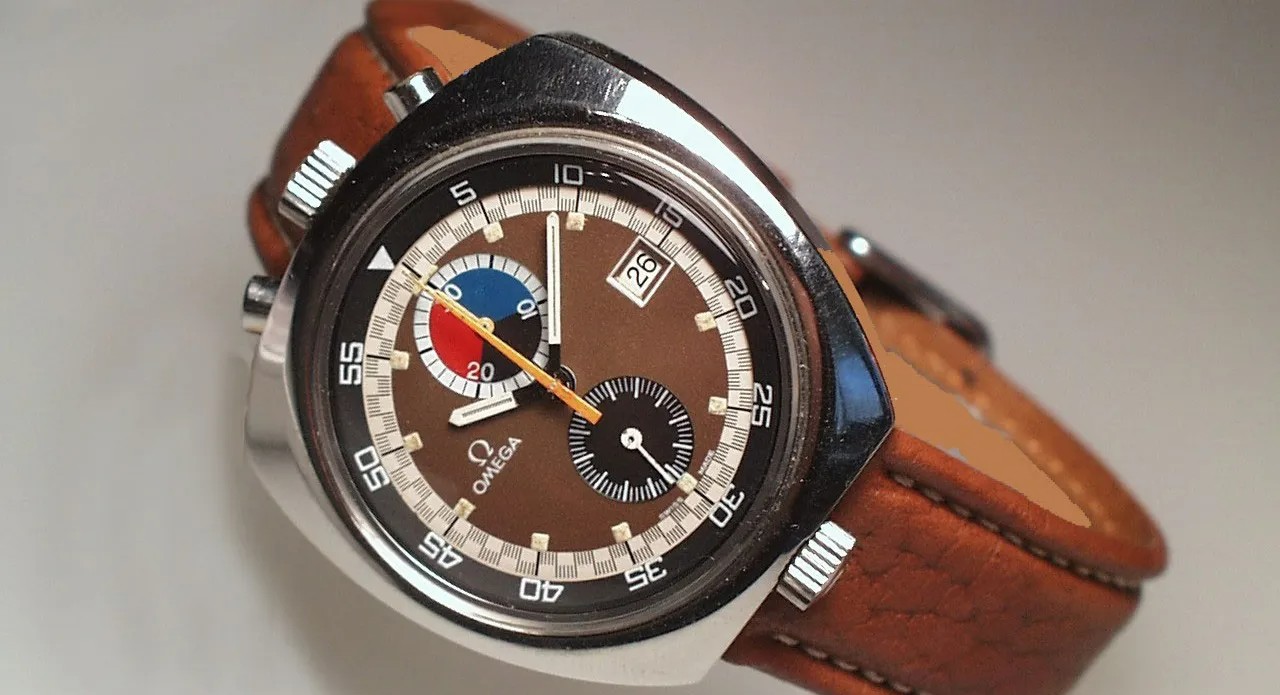


The traditional chronograph has always been rather straightforward to look at. The crown sits on the side of the case and the chronograph pushers usually flank it, giving the watch the familiar arrangement that has been repeated for decades. Then, during the 1970s, watch designers apparently decided that symmetry and convention had become terribly boring. The result was the bullhead chronograph, a wonderfully odd breed in which the crown and chronograph pushers are moved to the top of the case, usually around the 12 o’clock position.
The name comes from the shape. Viewed from above, the projecting controls can resemble the horns of a bull. It is not subtle. Nor is it meant to be. The bullhead turns the chronograph layout into a visual statement and, more importantly, places the controls in a position that can be operated with the thumb and fingers without the case pressing awkwardly into the wrist. In broad terms, a bullhead still does exactly what a conventional chronograph does. Press one pusher to start the stopwatch function, press it again to stop, and use another to reset the hands to zero. The difference is where the controls live and how the case is shaped around them. It is a small change that produces a surprisingly large difference in character.
Why Put The Buttons On Top?
The logic is easier to understand if you think about what a chronograph is actually for. A stopwatch function needs controls that can be reached quickly and operated positively. By moving the pushers to the top of the case, designers could create a watch that sat slightly differently on the wrist and offered an alternative hand position for operating the chronograph. The arrangement also made the dial easier to read while the wearer was using the timing function. The case could slope towards the wearer, producing a more cockpit like presentation in some designs. It was not merely a styling exercise, although 1970s watchmaking certainly had no objection to looking spectacularly strange while doing its engineering.
The Omega That Started The Madness
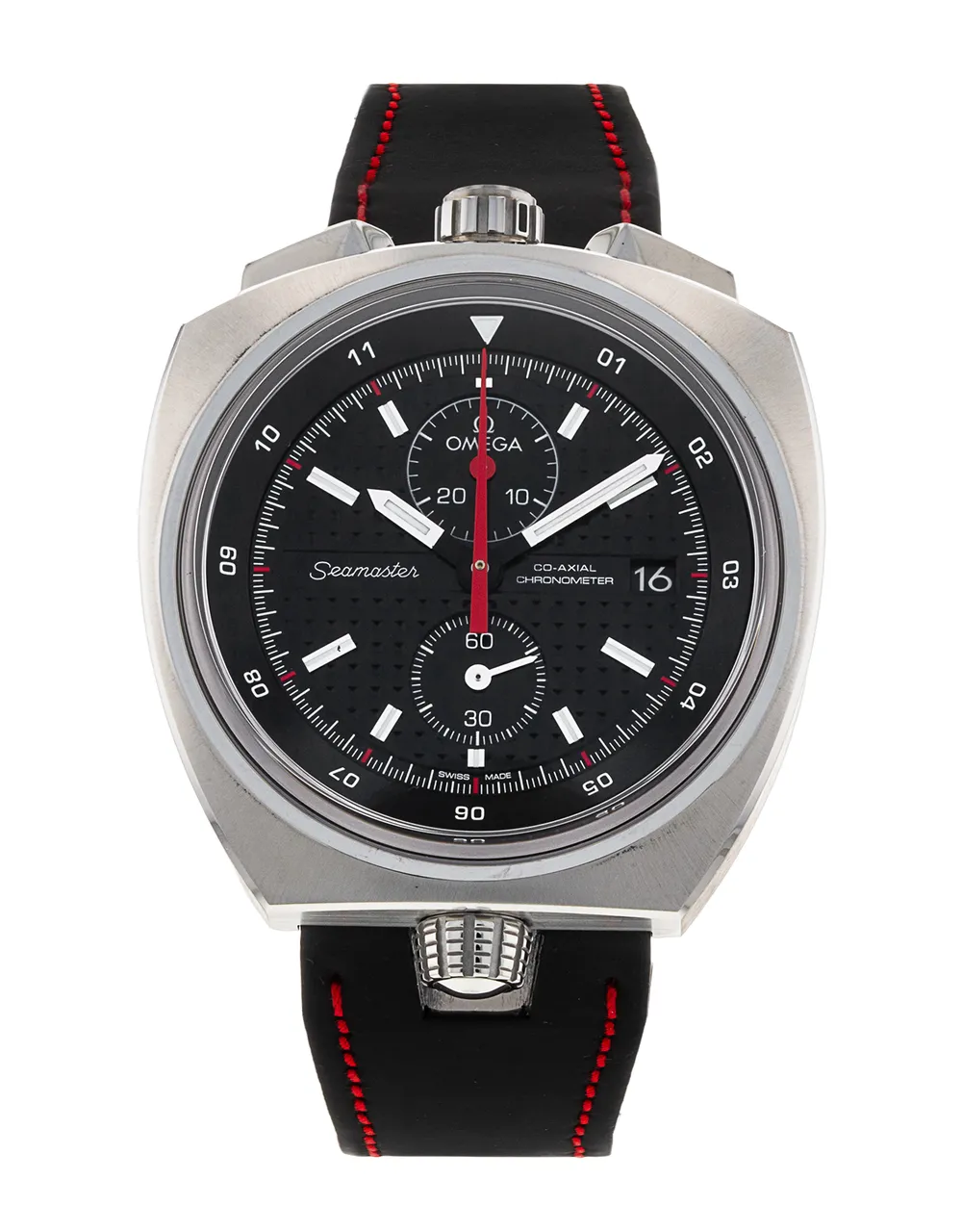
The Omega Bullhead is perhaps the most famous name attached to the form. Its distinctive case places the crown and chronograph pushers at the top, while the dial and case geometry give the watch an unmistakable wedge like profile. It was powered by an automatic chronograph movement and became one of Omega’s more adventurous expressions of the period. The Bullhead’s appeal today is partly down to its sheer visual confidence. It does not resemble a conventional dress chronograph that has accidentally wandered into a racing paddock. It looks as though somebody deliberately designed a racing instrument and then decided that ordinary case proportions were for other people.
Also Read: From Patek Philippe To Richard Mille: Inside Logan Paul’s Luxury Watch Collection
Seiko 6138 And The Japanese Answer
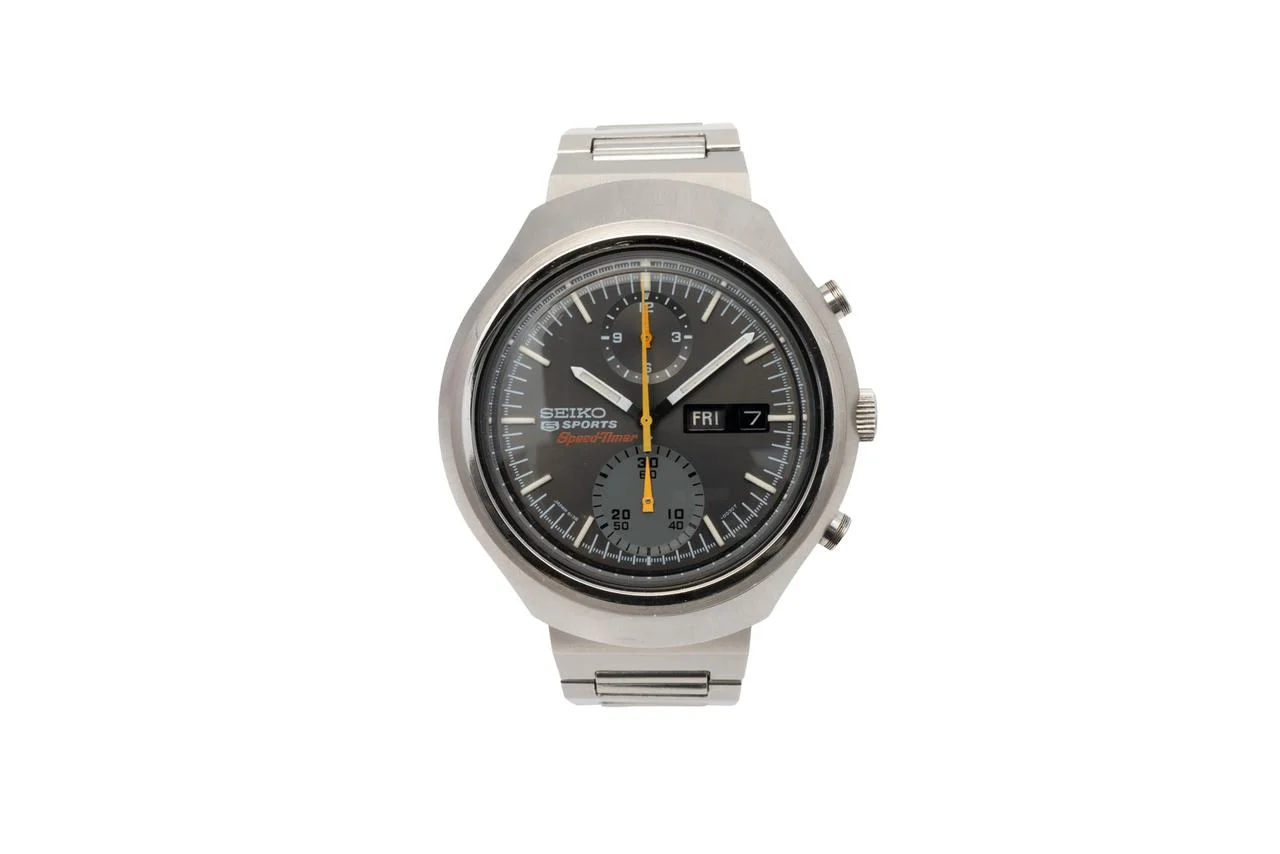
If Omega demonstrated that the bullhead could be luxurious and theatrical, Seiko proved that the idea could be engineered into a highly capable mass produced chronograph. The Seiko 6138 Bullhead is one of the most recognisable vintage Seiko chronographs, powered by the company’s 6138 automatic chronograph movement. The 6138 family is significant because it brought serious automatic chronograph engineering into a period when Japanese watchmaking was challenging established Swiss assumptions about where sophisticated watchmaking had to come from.
The Bullhead version added the unusual case architecture to an already technically interesting movement, creating a watch that has become particularly desirable among vintage Seiko collectors. The layout is instantly recognisable. The crown and pushers sit across the top of the case, while the dial presents the elapsed time information through its chronograph registers. It looks slightly like a dashboard designed by someone who had been told that normal dashboards were forbidden.
Citizen Challenge Timer Goes Its Own Way
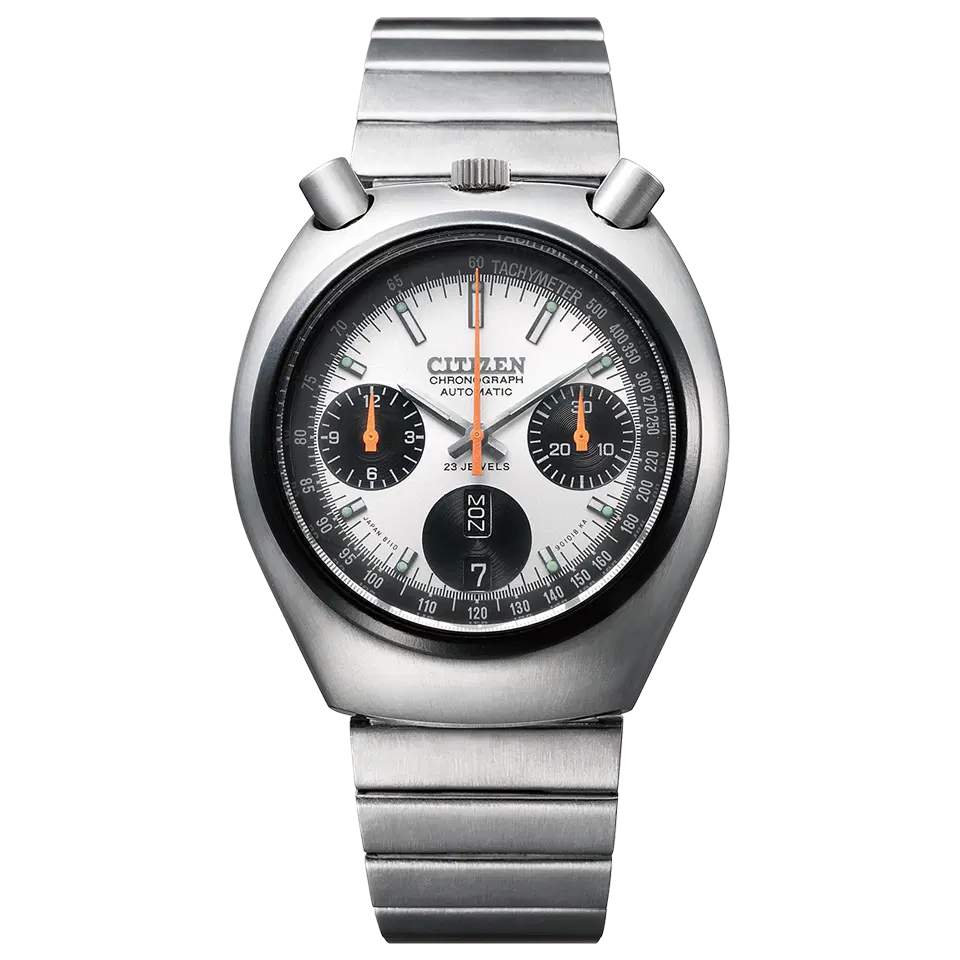
Citizen’s Challenge Timer belongs to the same fascinating era of Japanese experimentation. The name itself sounds like something you would expect to see attached to a stopwatch being used by a man wearing flared trousers and an aggressively large pair of sunglasses, which is entirely appropriate for the period. The Challenge Timer’s bullhead configuration moved its operating controls to the top of the case and gave the watch a strongly instrumental appearance.
Like the Seiko, it represents a period when Japanese manufacturers were developing increasingly ambitious automatic chronographs and were not particularly interested in making them look conservative. Today, the Challenge Timer has developed a strong following because it captures precisely what makes 1970s chronographs so entertaining. It is functional, technically interesting and stylistically impossible to confuse with almost anything else on the wrist.
Breitling Pupitre Was The Swiss Wild Card
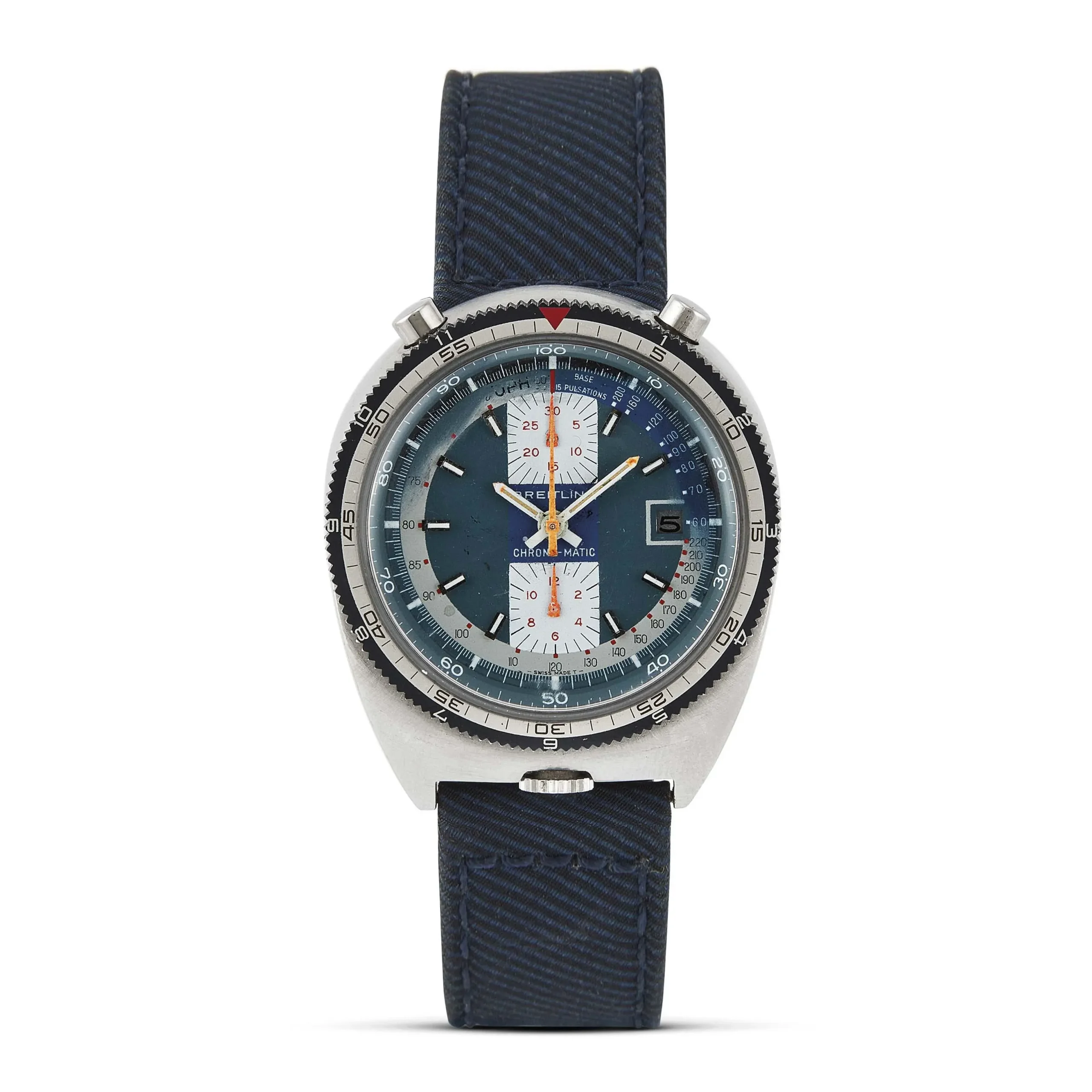
Then there was Breitling, which had spent much of its history making chronographs for people who actually wanted to time things and therefore had little reason to behave sensibly when the 1970s arrived. The Breitling Pupitre is another unusual expression of the period’s fascination with unconventional chronograph layouts. Its distinctive architecture places the controls towards the top of the case and gives the watch a highly individual profile.
The Pupitre, whose name refers to a lectern or writing desk, reflects Breitling’s willingness during the era to experiment with case forms while retaining the brand’s chronograph identity. It is precisely the sort of watch that looks strange for approximately ten seconds, after which ordinary chronographs begin to look rather dull.
So How Does A Bullhead Actually Work?
Underneath all the theatrical casework, the basic principle remains familiar. A mechanical chronograph uses a dedicated timing mechanism to control the start, stop and reset functions of the stopwatch. When the start pusher is pressed, the chronograph mechanism engages and the central seconds hand begins measuring elapsed time. Pressing the stop pusher disengages the timing mechanism, freezing the indication. Pressing reset returns the chronograph hands to their starting positions.