Inside Zeitz MOCAA: How a Grain Silo Became Africa’s Most Iconic Museum
A forgotten industrial giant becomes a cultural landmark where concrete, history and creativity merge into one extraordinary architectural experience
Architecture has always had a strange habit of deciding what deserves to survive. Old buildings are often treated like yesterday’s newspapers, useful for a moment and then discarded when the world moves on. But sometimes, a structure refuses to disappear. Sometimes, the bones of a building are so powerful that the only sensible thing to do is listen to them.
Standing proudly beside Cape Town’s waterfront, the Zeitz Museum of Contemporary Art Africa (Zeitz MOCAA) began life far away from the world of galleries and global culture. Built in the 1920s, the massive grain silo complex once stored maize harvested from across South Africa before being shipped around the world. For decades, its towering concrete cylinders dominated the skyline. Then, like many industrial monuments, it became obsolete. The machines stopped. The grain disappeared. The future looked uncertain. Until architecture decided to rewrite the ending.
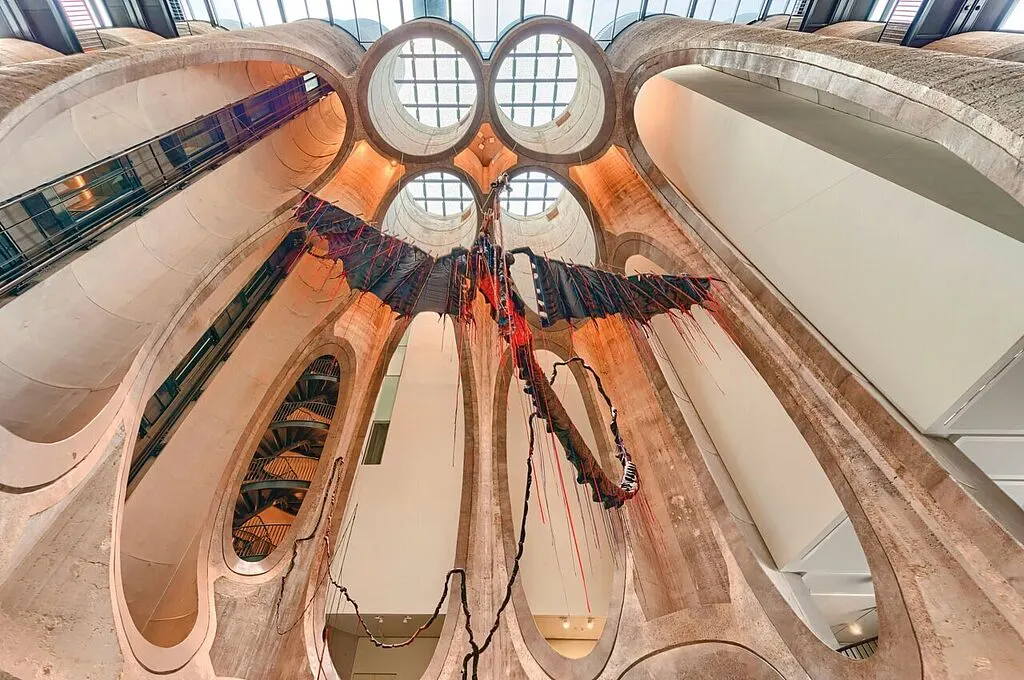
Heatherwick Studio Turned Concrete Into A Living Sculpture
The challenge was almost absurd. How do you transform one of Africa’s largest industrial structures into a museum without destroying the very thing that made it special? The answer from Heatherwick Studio was simple but incredibly difficult: do not hide the past. Reveal it. Instead of flattening the silo and starting again, the designers treated the concrete structure like a block of stone waiting for a sculptor.
The transformation involved carving into the dense collection of 42 concrete tubes, creating a breathtaking central atrium that feels less like a building entrance and more like a modern cathedral. The removed sections were not random demolitions. They became carefully calculated cuts, creating a vertical interior space where sunlight floods through the building’s former industrial heart. The result is a place where visitors walk through history before they even reach the art.
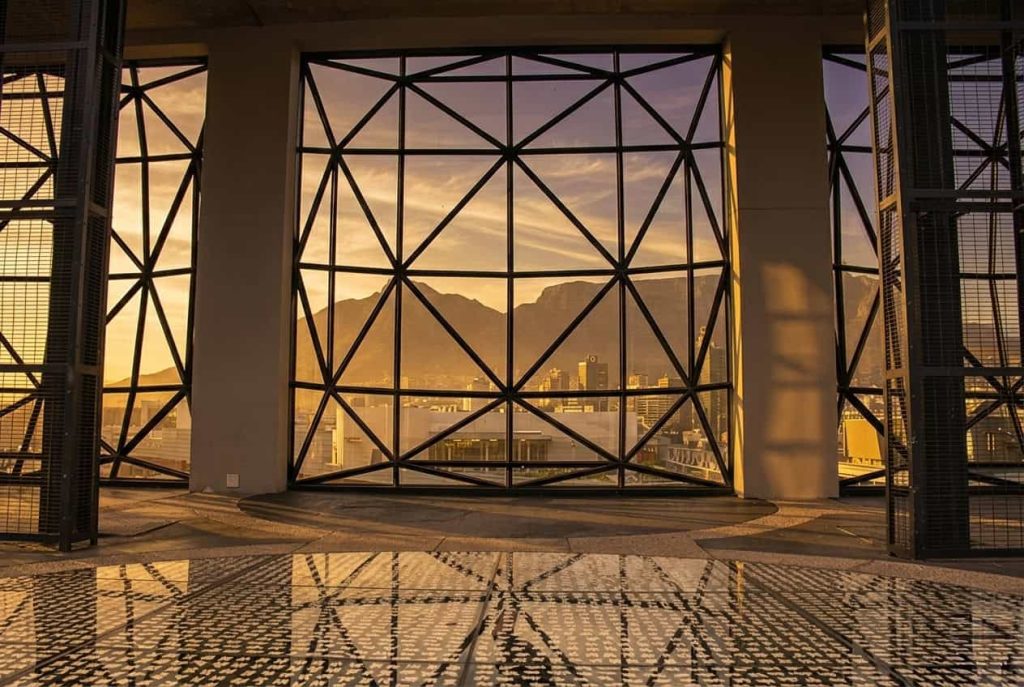
A Cathedral Built From Storage Tubes
The genius of Zeitz MOCAA lies in its contradiction. The building is heavy, yet it feels weightless. The concrete is rough, yet the experience feels refined. The industrial machinery has vanished, but the memory of the silo remains everywhere. The enormous cylindrical forms create a rhythm throughout the museum, with galleries carved inside the original tubes and connected by bridges, staircases and walkways. Moving through the museum feels like exploring a futuristic city built inside an ancient machine. The central atrium becomes the emotional centre of the building, where shadows, light and texture constantly change throughout the day. It is not architecture that simply houses art. It becomes art itself.
Also Read: Who Is Mickey Muennig? Exploring the Legacy Of America’s Organic Architect
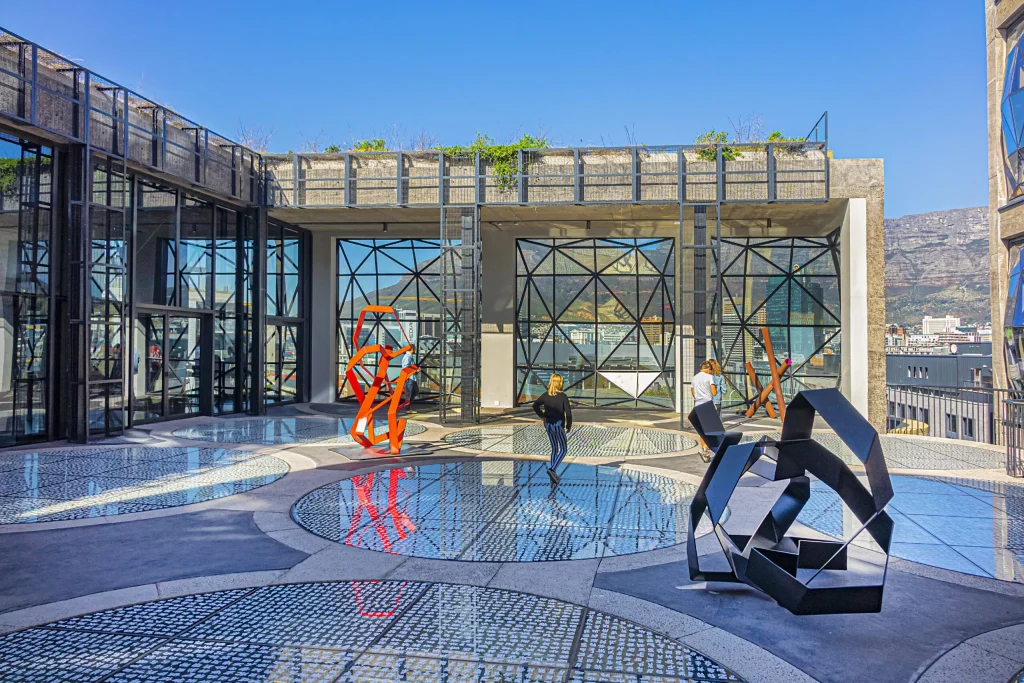
Where African Creativity Meets Architectural Reinvention
Zeitz MOCAA was created to celebrate contemporary African art, but the building tells a parallel story about transformation. The museum does not pretend that Africa’s industrial past never existed. Instead, it places that history directly beside the future. The raw concrete walls become a backdrop for paintings, sculptures and installations. The building’s imperfections become part of the experience. Every crack, curve and surface carries a reminder that this place had a previous life. This is what makes adaptive reuse so powerful. It is not just recycling buildings. It is recycling memories.